
Date posted: 01-07-2026 | Last updated : 07-07-2026
Michael, a 70-year-old Australian customer, visited Kangnam Aesthetic Hospital Saigon with significant excess and sagging skin in the cheek and neck areas. After examination, the doctor recommended a Deep Plane Facelift combined with a SMAS Facelift to address the deeper tissue layers. After approximately 30 days of recovery, his facial contours became noticeably more refined.
For international customers like Michael, deciding to undergo a major facial rejuvenation surgery in Vietnam requires extremely careful consideration.
Michael chose Kangnam Aesthetic Hospital Saigon first and foremost because of its legal credibility: it is a fully licensed aesthetic hospital operating under strict regulations granted by the Ministry of Health.
What gave him complete peace of mind was that the entire process, from examination and consultation to surgery, was performed directly by an experienced team of specialized doctors, with no intermediaries or technicians acting as substitutes.
In addition, language barriers and differences in medical culture were among Michael’s biggest concerns. However, those concerns were quickly resolved once he began the consultation process. With professional language support, Michael was given clear and transparent explanations about every aspect of his case: from his actual condition and the proposed treatment method to the expected results.
Michael, a 70-year-old Australian customer, came to see Dr. Felix Trần, Medical Director at Kangnam Aesthetic Hospital Saigon, with significant excess and sagging skin in the cheek and neck areas:
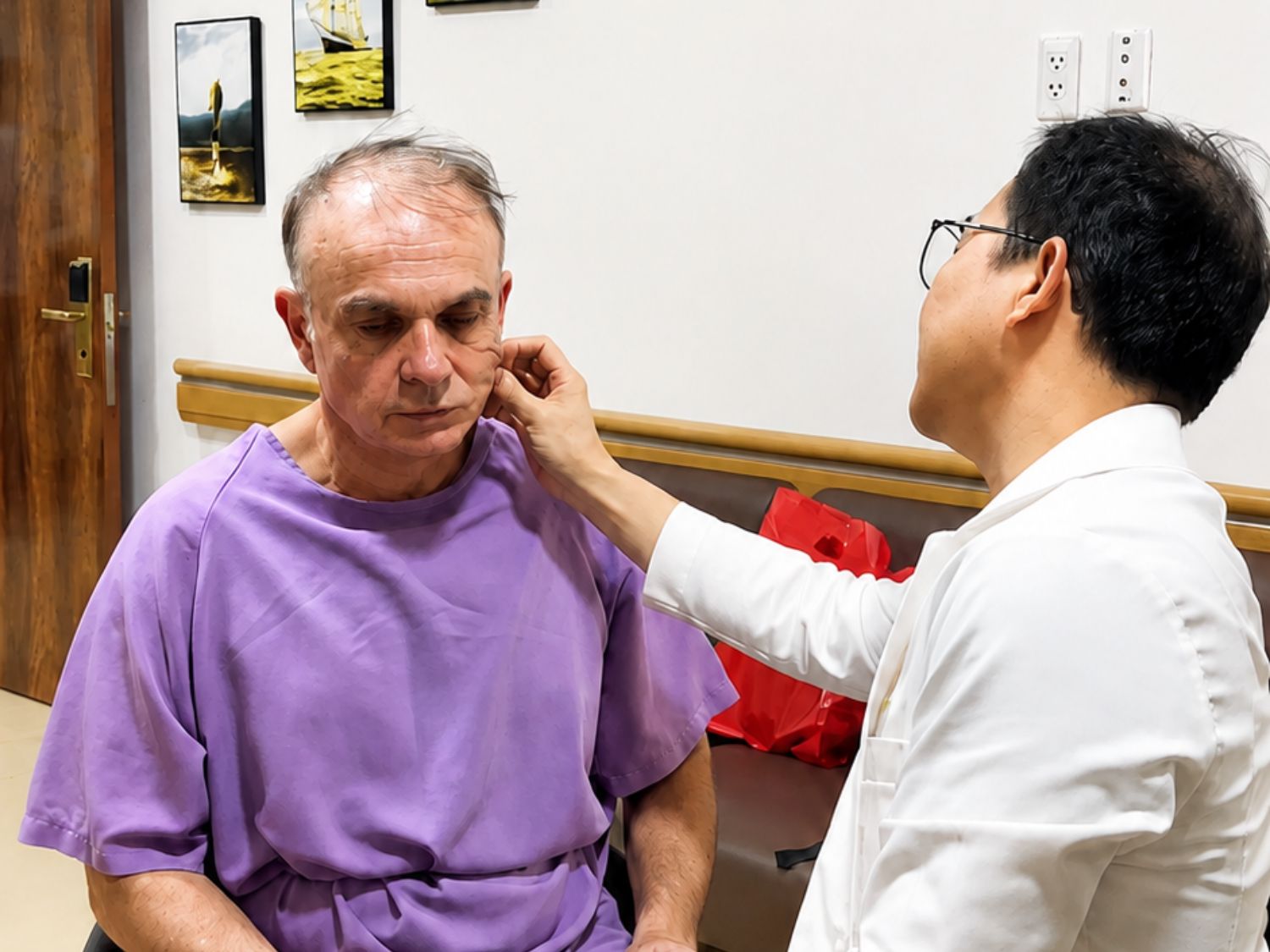
Dr. Felix Trần noted: “For cases with significant excess skin in the cheek and neck areas like Michael’s, it is necessary to intervene at a deeper layer of the facial structure.”
To achieve optimal results while ensuring safety for Michael, Dr. Felix Trần designed a specialized surgical plan: a Deep Plane Facelift combined with a SMAS Facelift.
Professional concept: The SMAS is the superficial musculoaponeurotic system, a fibromuscular layer located beneath the skin and fat that surrounds the facial expression muscles. Meanwhile, the Deep Plane technique goes beneath the SMAS layer, releasing the retaining ligaments to reposition the entire sagging muscle-fat tissue unit back to its original position.
Dr. Felix Trần made incisions along natural anatomical borders, hidden close to the ear margins and within the hairline, to access the deep plane beneath the SMAS layer.
The doctor then released the retaining ligaments in the cheek and jaw areas, which are often responsible for holding deep folds and wrinkles in place.
Once released, the descended cheek fat pads and SMAS layer were gently lifted as one unified unit in an upward diagonal direction.
Advantage: This helps reposition the facial tissues closer to their youthful anatomical position without placing excessive tension on the skin surface, while preserving the facial nerves and nourishing blood vessels.
As a highly experienced specialist and Medical Director at Kangnam Saigon, Dr. Felix Trần always prioritizes safety standards and personalized treatment planning. Michael’s entire surgery took place in a closed sterile operating room system under a strict medical protocol:
Step 1: General health screening
The customer underwent thorough checks of blood clotting function, cardiovascular health, and blood pressure to ensure he was eligible for major surgery.
Step 2: Technical marking and measurement
Dr. Felix Trần personally calculated the tissue repositioning ratios and accurately marked the hidden incision lines behind the ear folds and within the hairline to maximize scar concealment after healing.
Step 3: Surgery
With skilled surgical technique and support from magnified endoscopic equipment, the doctor performed precise dissection down to each millimeter within the Deep Plane space. Bleeding control was carefully managed, helping minimize trauma to surrounding tissues.
Step 4: Aesthetic wound closure
Specialized cosmetic sutures were used to close the incision in layers, separating the muscle layer and skin layer. This helps the future scar become thin and smooth like a fine line, blending naturally with the ear creases.
In the first few days after surgery, Michael experienced mild swelling and bruising in the treated areas, which is a normal bodily response after a facelift.
His recovery progressed through the following stages:
Professional Review: Dr. Trần Huỳnh, Specialist Level I — Dr. Felix Trần, Medical Director of Kangnam Aesthetic Hospital Saigon
Disclaimer: Aesthetic results may vary depending on each person’s constitution, age, and overall physical condition. This article is for reference only and does not replace a direct medical examination with a doctor.