Sliding Genioplasty in Vietnam: Chin Reshaping Surgery for a More Balanced Facial Profile

Date posted: 26-10-2024 | Last updated : 05-01-2026

An increasing number of international patients are choosing Vietnam for sliding genioplasty. With modern hospital facilities and highly experienced surgeons, this procedure delivers a natural-looking chin and enhances facial harmony from every angle.

I – What Is Sliding Genioplasty?

Sliding genioplasty is a surgical procedure that reshapes the chin by directly modifying the patient’s own bone, rather than using artificial materials such as silicone implants. During the procedure, the surgeon makes a controlled cut in the chin bone, advances it forward, and then secures it in place with medical-grade plates and screws to create a well-balanced chin contour.

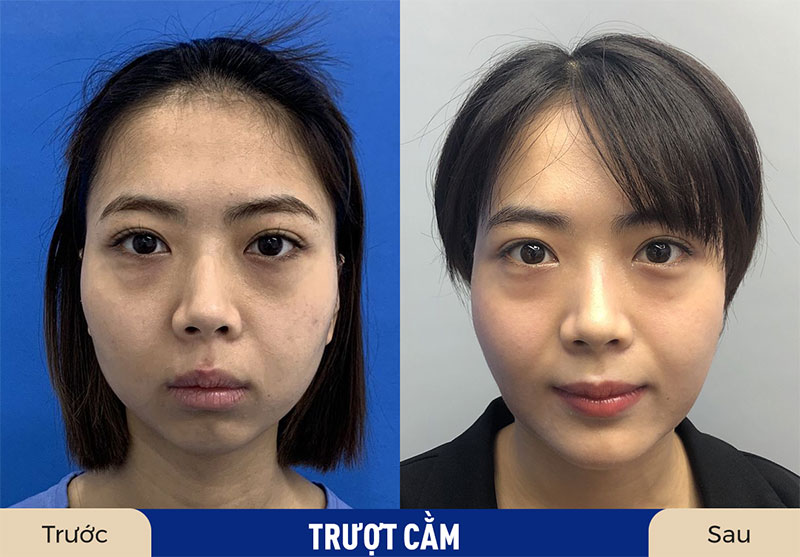
Customers Achieve V-line Chin After Sliding Genioplasty

Customers Achieve V-line Chin After Sliding Genioplasty

Objectives of sliding genioplasty:

  • Completely correct a recessed, short, or asymmetrical chin
  • Balance facial proportions and create harmony between the forehead, nose, and chin
  • Improve the side profile and enhance the lower jawline contour

II – Why Do Many International Patients Choose Sliding Genioplasty in Vietnam?

An increasing number of international patients and overseas Vietnamese are traveling to Vietnam for sliding genioplasty due to advantages in advanced technology, highly experienced surgeons, specialized aesthetic hospitals, reasonable costs, and suitability for Asian facial structures common among patients from the U.S., Australia, and Europe.

  • Vietnam as a growing center for aesthetic surgery: Hospitals in Vietnam are equipped with advanced technologies such as Cone Beam 3D CT imaging and ultrasonic bone-cutting systems, supporting precise and safe surgical planning.
  • Reputable aesthetic institutions: Many aesthetic hospitals in Ho Chi Minh City and Hanoi hold international certifications, ensuring sterile and safe surgical procedures comparable to those in developed countries.
  • Highly skilled surgeons: Vietnamese surgeons perform thousands of procedures on Asian patients each year, giving them a refined aesthetic sense and highly precise techniques to create chin contours that harmonize naturally with Asian facial features.
  • Specialized hospital systems: In Vietnam, jaw and facial bone surgeries are performed at major hospitals such as Kangnam Aesthetic Hospital, which offer comprehensive anesthesiology and post-operative care services, providing patients with complete peace of mind.
  • Cost-effectiveness: Despite comparable quality, the cost of sliding genioplasty in Vietnam is typically only one-third to one-half of that in the United States, Australia, or European countries.
The doctor examines, consults, and evaluates the customer.

The doctor examines, consults, and evaluates the customer.

III – Who Is a Suitable Candidate for Sliding Genioplasty?

Sliding genioplasty is suitable for individuals who require structural chin correction using their own bone to achieve natural and long-lasting results. This procedure is commonly indicated for the following cases:
  • Individuals with a recessed or short chin due to jawbone structure
  • Facial imbalance between the forehead, nose, and chin when viewed in profile
  • Patients who are not suitable for, or do not wish to undergo, artificial chin implantation
  • Mild chin asymmetry requiring realignment of the chin bone axis
  • Individuals aged 18 and above, in good overall health, with fully developed jawbones
Dr. Richard Huy safely performs chin sliding for clients.

Individuals with a recessed or short chin due to jawbone structure

IV – How Is Sliding Genioplasty Different from Chin Implant Surgery?

Below is a comparison table between sliding genioplasty and chin implant surgery:

Criteria Sliding Genioplasty Chin Implant Surgery
Nature of the procedure Cutting and advancing the patient’s own chin bone to reposition it Placing an implant material (silicone, Gore-Tex, etc.) into the chin
Durability Long-lasting and stable, following the natural bone structure May require revision or replacement over time
Risk of rejection  None (uses the patient’s own bone) Possible, especially with low-quality artificial materials
Suitable candidates Patients with severe chin recession, asymmetry, or those requiring bone structure correction Patients with mild chin deficiency seeking quick improvement
Cost Higher Lower

V – Sliding Genioplasty Procedure in Vietnam

In Vietnam, sliding genioplasty is performed at major aesthetic hospitals in accordance with strict standards set by the Ministry of Health. Below is the standard sliding genioplasty procedure:

  1. Consultation & 3D simulation: The surgeon evaluates facial structure and performs X-rays or Cone Beam CT scans to assess the jawbone. 3D technology is used to simulate post-operative results, helping patients choose their preferred chin shape.
  2. Health screening: Patients undergo necessary tests such as blood and urine analysis, blood pressure measurement, and cardiovascular evaluation.
  3. Anesthesia: General anesthesia is administered, ensuring the patient experiences no pain or discomfort throughout the surgery.
  4. Surgical procedure: The surgeon makes a small incision inside the oral cavity, uses an ultrasonic bone-cutting device to section a portion of the chin bone, advances it forward, and secures it firmly with titanium plates and screws.
  5. Post-operative care: The incision is closed with aesthetic sutures, and the patient rests at the hospital for approximately 24 hours for monitoring.
The surgical process is conducted in a closed, medically-standardized room.

The surgical process is conducted in a closed, medically-standardized room.

VI – Is Sliding Genioplasty in Vietnam Safe?

Sliding genioplasty in Vietnam is safe when performed at specialized maxillofacial medical facilities by highly qualified surgeons following standardized protocols. This technique uses the patient’s own chin bone, minimizing the risk of rejection and providing stable, long-term results.

Key factors ensuring safety include:

  • Experienced maxillofacial surgeons with in-depth knowledge of chin bone anatomy and surrounding nerve structures
  • Thorough pre-operative evaluation with CT scans and 3D imaging to accurately assess bone structure
  • Sterile operating rooms with safe anesthesia and post-anesthesia care protocols
  • Proper post-operative monitoring and adherence to aftercare guidelines

These factors are why Kangnam Aesthetic Hospital is widely regarded by international patients as a safe and reputable destination for sliding genioplasty in Vietnam. Kangnam is home to a team of maxillofacial surgeons with over 10 years of experience, who have successfully performed numerous complex cases involving jaw asymmetry, protrusion, and retrusion, with a deep understanding of Asian facial bone structure and aesthetics.

VII – Recovery Timeline After Sliding Genioplasty

The recovery process after sliding genioplasty occurs in the following stages:
  • First 7–10 days: The chin area may experience significant swelling, accompanied by tightness or mild bruising. This is a normal response to bone intervention. Adequate rest, cold compresses, and prescribed medications are essential during this period.
  • Weeks 2–4: Swelling reduces noticeably. Patients can resume light daily activities and return to office-based work. The chin bone is securely fixed, but strenuous activity or direct impact should still be avoided.
  • Months 1–3: The chin bone continues to heal and stabilize, and facial contours become more harmonious.
  • Months 3–6: The bone structure is fully stabilized, and the chin shape appears clear and natural. This is the stage at which final aesthetic results can be accurately evaluated.
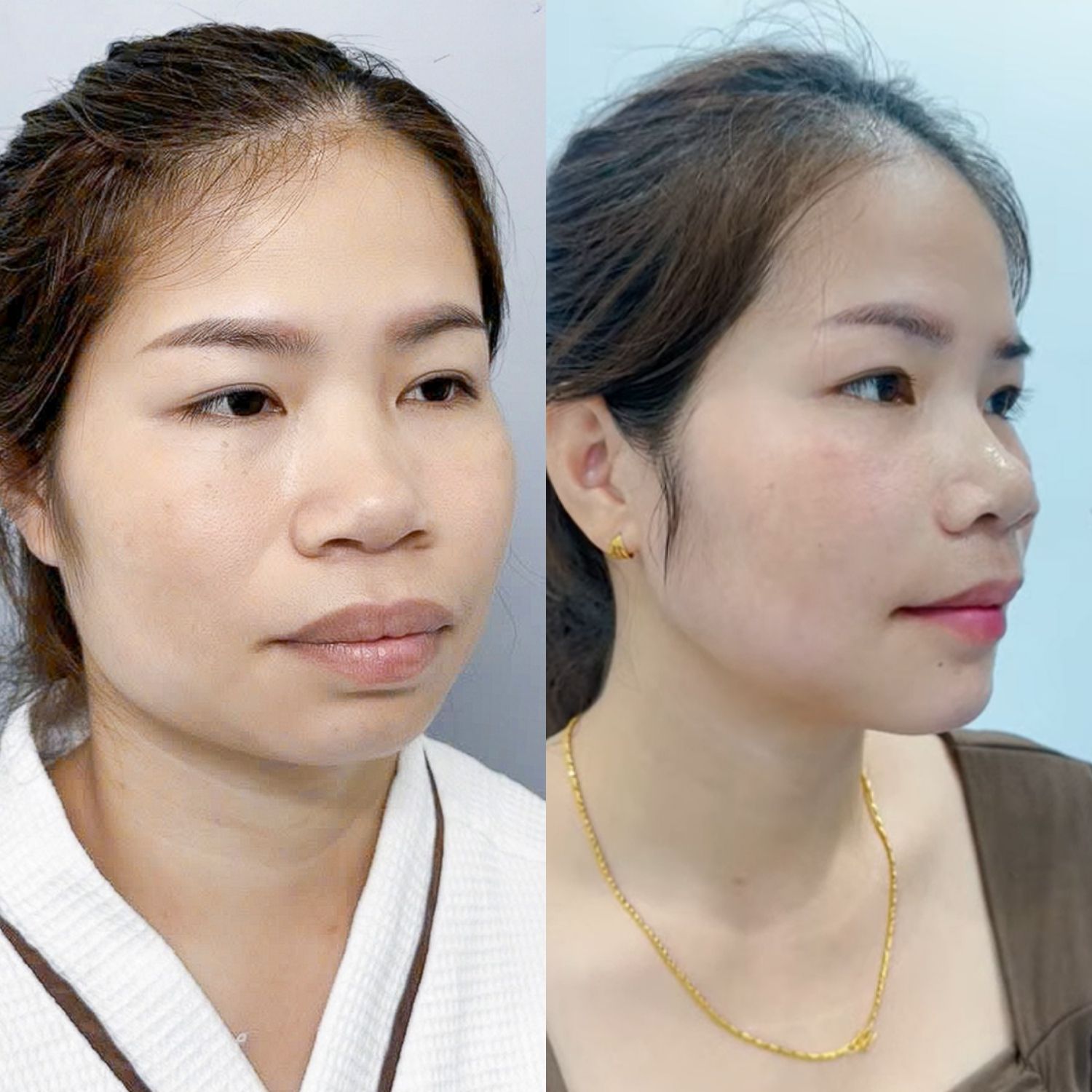
Sliding genioplasty helps balance facial proportions

Sliding genioplasty helps balance facial proportions

VIII – Frequently Asked Questions

1.  Is sliding genioplasty in Vietnam painful?

Sliding genioplasty is performed under general anesthesia, so patients do not feel pain during the procedure. After surgery, mild pain or tightness may occur in the first few days, but this is usually minimal and can be effectively controlled with medications prescribed by the doctor.

2. Does sliding genioplasty leave scars?

Sliding genioplasty does not leave visible external scars because the incision is made inside the oral cavity, through the inner lower lip. This incision heals quickly, is naturally concealed, and does not affect facial aesthetics. With proper postoperative care, the internal scar gradually fades and becomes almost unnoticeable over time.

3. How long should patients stay in Vietnam after sliding genioplasty?

Patients are generally advised to stay in Vietnam for 7–10 days after sliding genioplasty. This period allows doctors to monitor swelling, perform follow-up examinations, remove sutures, and ensure that the chin bone is stably fixed before air travel. If recovery progresses well without complications, patients can return to their home country and continue remote follow-up according to medical instructions.

When performed at specialized aesthetic hospitals, sliding genioplasty is not only safe but also delivers natural, long-lasting results.
Messenger