Date posted: 21-07-2026 | Last updated : 25-07-2026
Facial liposuction helps remove localised fat from the cheeks and chin, creating a slimmer face with more defined contours. It may provide relatively quick aesthetic improvement for suitable patients.
However, facial liposuction is an invasive procedure and cannot be guaranteed to be completely risk-free. To reduce complications, it should be performed by a qualified surgeon at a licensed medical facility.
The following article explains the facial fat-reduction technology currently offered at Kangnam Aesthetic Hospital.
Facial liposuction is a cosmetic procedure that directly targets excess fat in areas such as the cheeks and chin.
Depending on the technique used, the fat may be loosened or liquefied before the surgeon removes it through a small liposuction cannula.
During surgery, facial liposuction may be combined with other contouring or facial-rejuvenation procedures when clinically appropriate. The aim is to create a slimmer and more natural-looking facial shape.
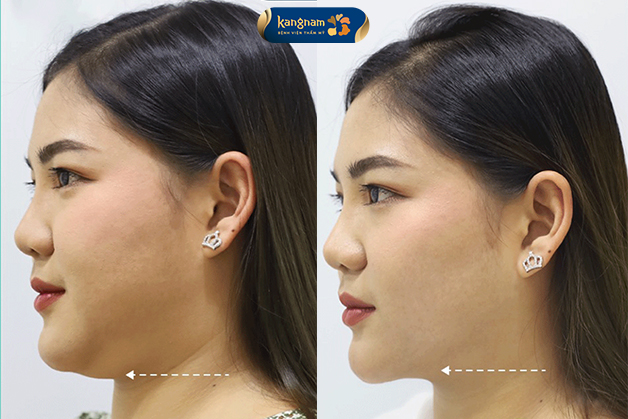
Cheek and chin liposuction may help create a slimmer and more defined facial contour.
Facial liposuction is most effective when fullness is caused primarily by localised fat. It cannot correct every cause of a large or round face, such as:
Patients can learn more about the general principles of the procedure in What Is Liposuction?.
According to aesthetic specialists, facial liposuction may be considered for patients who:
Patients should not have uncontrolled or serious medical conditions that may increase surgical risk, including:
The original content also refers to obese patients with heavy, sagging facial fat and difficulty breathing. However, difficulty breathing is not a routine indication for cosmetic facial liposuction and requires medical evaluation to identify the underlying cause.
Facial liposuction is not a treatment for obesity or breathing disorders.
The doctor should first determine whether facial fullness is caused by fat, muscle, bone structure, loose skin, or another condition.
Patients with excess fat concentrated mainly beneath the chin may also review information about Chin Liposuction.
Kangnam Aesthetic Hospital applies Lipo 360 technology to selected facial fat-reduction procedures.
The hospital states that the technique is designed to improve facial contours while limiting unnecessary tissue trauma.
A tumescent solution may be introduced into the treatment area to help loosen fat, reduce bleeding, and support pain control.
The surgeon then removes the selected fat through a small cannula.
Although promotional content may describe “millions of microscopic water molecules,” the clinical purpose of tumescent fluid is to facilitate fat removal and reduce surgical bleeding and discomfort.
The technique aims to limit unnecessary damage to nearby tissues, which may help reduce:
Some patients may notice improved facial contours after a relatively short procedure.
The procedure may take approximately 20 minutes in small treatment areas, but the total time may be longer when consultation, preparation, anaesthesia, and recovery are included.
Small incisions may result in minimal scarring, but no surgical procedure can guarantee that scars will be completely invisible.
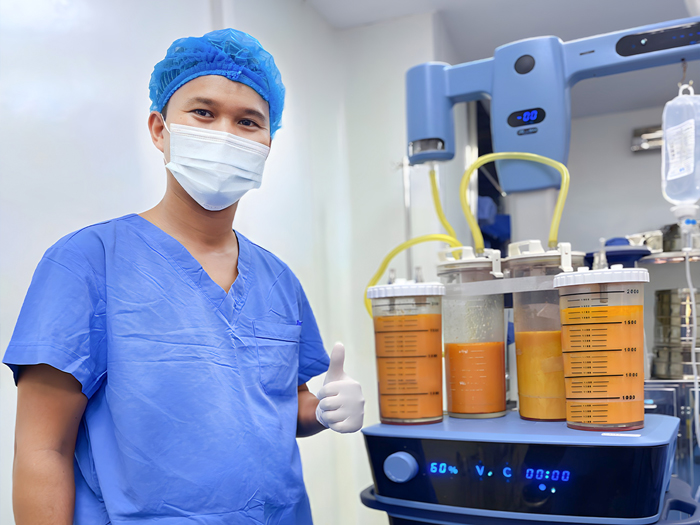
Kangnam’s Lipo 360 system may use a small cannula with a rotating tip to remove fat from selected areas.
The procedure may be combined with additional technology intended to support tissue contraction.
After surgery, the skin and soft tissue gradually adapt to the new contour. The face may appear slimmer and firmer once swelling has subsided.
The speed of recovery depends on:
Claims that recovery is exactly three times faster than older techniques should be considered promotional unless supported by direct comparative evidence.
Patients with significant loose skin may need a lifting or tightening procedure because liposuction alone does not remove excess skin.
Lipo 360 includes several technical improvements compared with traditional manual liposuction.
However, it is not possible to guarantee absolute safety or the absence of complications.
Potential risks of facial liposuction include:
Choosing a qualified surgeon and following a medically supervised procedure can reduce, but not completely eliminate, these risks.
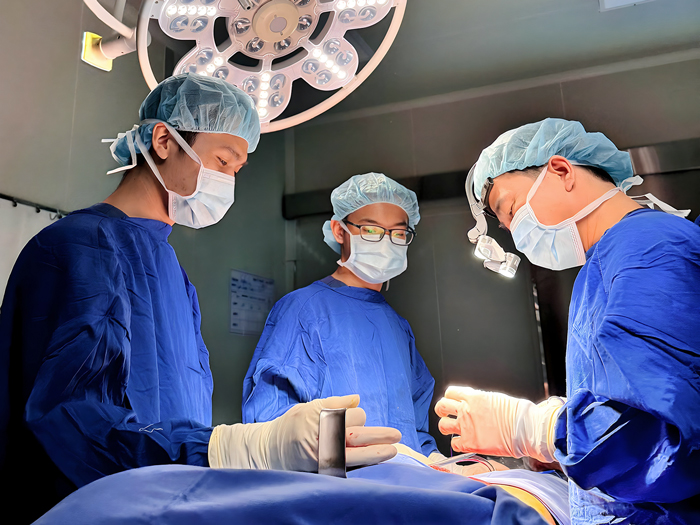
At Kangnam, facial fat reduction is performed by an aesthetic surgical team in an appropriately controlled procedure room or operating theatre.
The medical team is supported by surgical equipment and institutional protocols.
An experienced surgical team performs facial contouring procedures at Kangnam.
Patients should verify the individual surgeon’s:
Supervision by a senior doctor or professional association membership does not independently guarantee a successful result.
International patients considering cosmetic surgery in Vietnam may also review Liposuction in Ho Chi Minh City for International Patients.
Facial liposuction at Kangnam is performed through a structured medical process.
Before recommending treatment, the doctor examines the face and assesses:
The doctor then identifies the treatment areas and recommends a suitable approach.

The doctor examines the patient and recommends an appropriate facial-contouring plan.
Patients may undergo examinations such as:
Ultrasound may help evaluate the treatment area, but it is not required in exactly the same way for every patient.
Local anaesthesia, sedation, or general anaesthesia may be selected depending on the treatment extent and the patient’s health.
Anaesthesia helps reduce pain and discomfort during the procedure.
Patients should be monitored by qualified medical personnel throughout the treatment.
Based on the preoperative assessment, the surgeon selects the appropriate technique and treatment settings.
Small incisions are created, and a cannula is inserted to remove the selected fat.
The doctor must remove fat conservatively to reduce the risk of:
For patients considering treatment in other body areas, additional information is available in Kangnam’s Lipo 360 Body-Contouring Technology.
After the procedure, the patient is transferred to a recovery area for monitoring.
The medical team may:
The original content refers to “recovering from anaesthesia,” although some facial liposuction procedures may use only local anaesthesia or sedation. The recovery process depends on the actual anaesthetic method used.
Mild pain, tightness, swelling, and bruising are common after surgery.
Patients should seek medical advice promptly if they experience:
Overseas Vietnamese patients should allow sufficient time in Vietnam for an initial postoperative examination before travelling.
The original article presents before-and-after images of patients who underwent facial or double-chin liposuction at Kangnam.
Examples include:
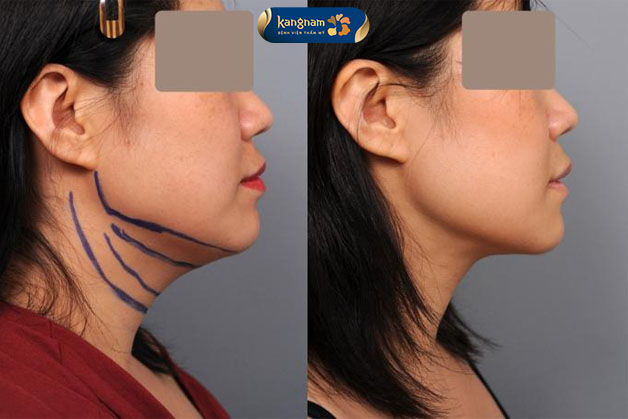
Male patient with a more defined facial contour after double-chin liposuction at Kangnam.
Before-and-after images represent individual cases and do not guarantee the same outcome for every patient.
Results depend on:
The initial improvement may be visible after the swelling begins to subside, but final results may take several weeks or months to develop.
Facial liposuction is an invasive procedure that may effectively remove localised fat from the cheeks and chin, creating a slimmer and more defined facial contour.
At Kangnam, Lipo 360 technology is used for selected patients with excess facial fat. However, the procedure should only be performed after an in-person examination to confirm that fat removal is the appropriate solution.
Overseas Vietnamese patients interested in this service may contact Kangnam via hotline 001650-2852-885 for a preliminary consultation.
Patients should provide sufficient time for medical assessment, surgery, initial recovery, and postoperative monitoring before returning overseas.
What Is Liposuction? Procedure, Cost, and Safety Considerations
Kangnam’s Lipo 360 Body-Contouring Technology