In Vietnam, USD cash cannot be used directly to pay for cosmetic surgery services unless the transaction falls under a legally permitted exception for foreign currency use. However, international patients can still use USD funds through legal payment methods, such as exchanging USD for VND at licensed banks or currency exchange counters, paying by international card, or making an international bank transfer if supported by the hospital or clinic.
USD cash: Customers are not permitted to use USD cash directly for surgical services in Vietnam.
International cards: Visa, Mastercard, or other cards supported by the facility can be a convenient option for overseas clients.
Bank transfer: Clients can inquire about international bank transfers if supported by the facility, and should verify the exact account details and accepted currency.
Deposit: Deposit policies vary among facilities, so clients should clarify the deposit amount, payment schedule, and terms for refunds or rescheduling.
Exchange rate: If quotes are provided in USD but paid in VND, make sure to confirm the applicable exchange rate and the exact timing of its application.
International clients: It is advisable to prepare at least one backup payment method and keep copies of all price quotes, invoices, and deposit receipts prior to traveling to Vietnam.
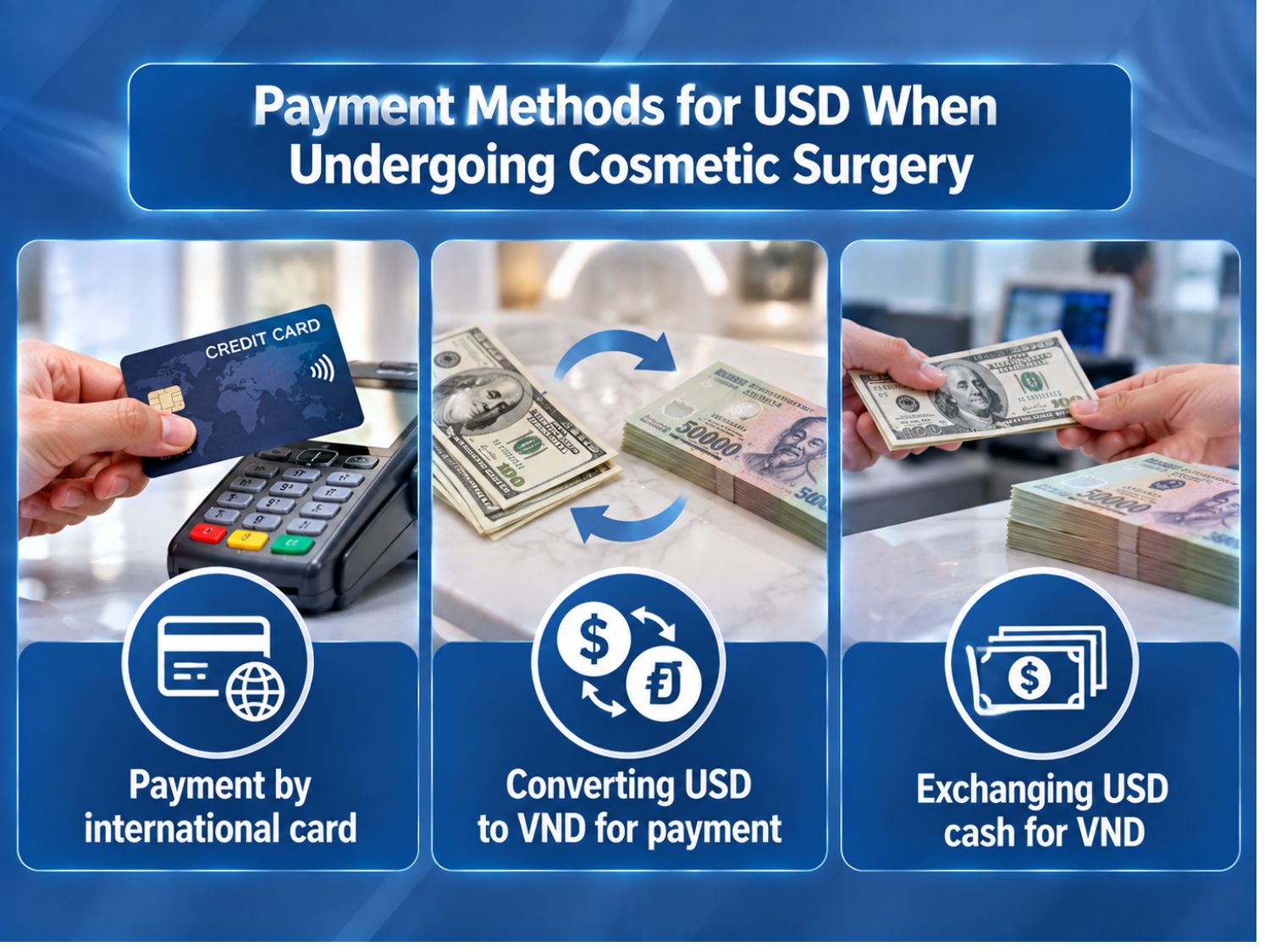
1. Payment Methods for USD When Undergoing Cosmetic Surgery
International patients can use USD through several legal payment methods, most commonly by paying with an international card, exchanging USD for VND before payment, or making an international bank transfer if supported by the medical facility.
- Payment by international card: Visa, Mastercard, American Express, or other cards accepted by the facility may be used through a POS terminal or international payment gateway. Transactions in Vietnam are processed in VND, after which the card-issuing bank converts the amount into the currency of the cardholder’s account. Foreign exchange and international transaction fees vary by bank, so patients should check applicable fees and card limits before making a large payment.
- Converting USD to VND for payment: Some facilities may provide estimated prices in USD to help international patients plan their budget. However, this does not mean that payment can be made directly in USD cash. If payment must be made in VND, patients can exchange USD at a bank or an authorized foreign exchange counter. It is advisable to confirm the exchange rate, when the rate will be applied, and the actual amount payable in VND in advance.
- Exchanging USD cash for VND: Patients carrying USD cash can exchange it for VND at a bank or a licensed foreign exchange agent. Before exchanging money, check the exchange rate, use an authorized provider, count the amount received, and keep the receipt or transaction record if available. For high-value surgical procedures, it is also advisable to prepare an international card or another suitable payment method as a backup.
2. What Legal Regulations Should You Be Aware of When Paying in USD in Vietnam?
Under Vietnam’s foreign exchange regulations, the listing, quotation, pricing, and payment of goods and services in foreign currencies within Vietnam are generally restricted, except in cases specifically permitted by law.
For patients paying for cosmetic surgery, the following points should be noted:
- USD cash should not be used directly to pay a hospital or cosmetic surgery facility unless the transaction falls under a legally permitted exception for the use of foreign currency.
- Domestic service fees are generally listed and paid in VND.
- Patients carrying USD cash may exchange it for VND at a licensed bank or authorized foreign exchange provider before making payment.
- When using Visa, Mastercard, or other international cards, patients may pay by card if the facility accepts it. USD/VND conversion and any applicable fees will be determined according to the exchange rate, regulations, and policies of the card issuer or bank.
- For foreign currency bank transfers, patients should confirm the payer’s status, the receiving account details, and whether the transaction is legally permitted in foreign currency rather than assuming that every hospital can accept USD.
Circular No. 32/2013/TT-NHNN and its amendments and supplements regulate restrictions on the use of foreign currencies within the territory of Vietnam. The State Bank of Vietnam also maintains the general principle of restricting the use of foreign currencies for domestic transactions. State Bank of Vietnam
3. Do I Need to Pay a Deposit Before Cosmetic Surgery?
A deposit may be required before cosmetic surgery, depending on the policy of each hospital or cosmetic surgery facility. The deposit is typically used to secure the surgery date, surgeon, operating room, and other necessary preparations, and is then deducted from the total cost of the procedure.
Before paying a deposit, you should confirm the deposit amount, payment method, how long your appointment will be held, and the refund, cancellation, or rescheduling policy. International patients should also confirm which cards are accepted, any foreign currency conversion fees, and how the remaining balance can be paid.
In particular, you should not transfer money to a personal bank account or pay a deposit without clear confirmation from the hospital. Keep all invoices, receipts, and transaction records for future reference if needed.
4. How Is the USD/VND Exchange Rate Calculated When Making a Payment?
The USD/VND exchange rate depends on the payment method and the bank or financial institution handling the currency conversion at the time of the transaction. Therefore, the actual amount in VND may vary between banks and at different times.
- International card payment: If you use Visa, Mastercard, JCB, or another international card, the bank or card issuer will convert the transaction using the exchange rate applicable when the transaction is processed. Foreign currency conversion fees or international transaction fees may also apply.
- Exchanging USD cash for VND: The amount received is calculated based on the USD buying rate offered by the bank or licensed foreign exchange provider at the time of exchange.
- International bank transfer: Exchange rates and fees depend on the sending bank, receiving bank, account currency, and transfer method.
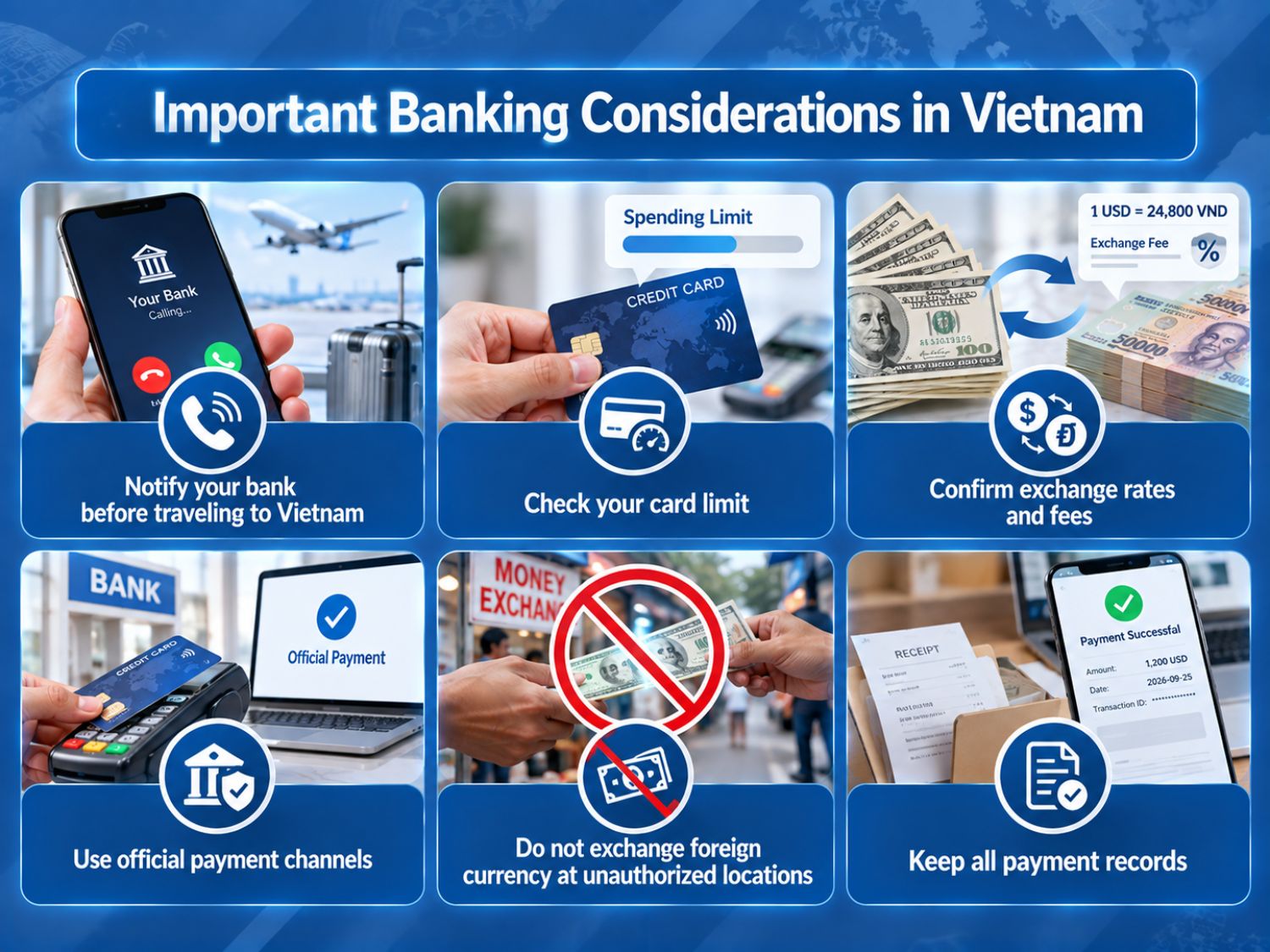
5. Important Banking Considerations in Vietnam
When paying for cosmetic surgery in Vietnam, especially as an international patient, you should check the payment method, exchange rate, transaction limits, and banking fees in advance to avoid declined transactions or unexpected charges.
- Notify your bank before traveling to Vietnam: Some banks may require you to enable international transactions or may apply additional security checks to high-value transactions.
- Check your card limit: The cost of surgery may exceed your daily card payment limit. Check your limit or request an increase from your bank before making the payment if necessary.
- Confirm exchange rates and fees: International card payments may incur foreign transaction fees, currency conversion fees, or other charges, depending on the card issuer’s policy.
- Use official payment channels: Only transfer money to an account officially provided and confirmed by the hospital or medical facility. Carefully verify the account name, account number, and payment details before transferring funds.
- Do not exchange foreign currency at unauthorized locations: If you need to exchange USD cash for VND, use a licensed bank or authorized foreign exchange provider.
- Keep all payment records: Save invoices, receipts, card transaction slips, and bank transfer confirmations, particularly for deposits and high-value payments.
International patients should contact both the hospital and their bank before the scheduled surgery date to confirm accepted payment methods, transaction limits, exchange rates, and applicable fees.
6. What Payment Methods Should International Patients Prepare Before Surgery?
International patients should prepare one primary payment method and at least one backup option, while confirming the total cost, deposit amount, exchange rate, and payment terms with the surgical facility in advance.
- Primary international card: Check your transaction limit and whether the card can be used in Vietnam before traveling.
- Backup card: Consider carrying another card issued by a different bank in case your primary card is declined.
- VND cash: Carry a reasonable amount for smaller expenses.
- USD cash: If you bring USD, identify in advance where you can legally exchange it for VND.
- Deposit: Keep the receipt, email, or other payment confirmation.
- Price quotation: Request written confirmation of the total cost and the services included.
- Exchange rate: Ask how the exchange rate will be calculated if the price is quoted in USD but payment is made in VND.
- Bank: Check transaction limits and any additional verification requirements before making a large payment.
7. What Should International Patients Know When Paying for Cosmetic Surgery in Vietnam?
International patients and overseas Vietnamese should confirm in advance whether they can use foreign-issued cards or bank accounts, what international transaction fees may apply, how USD/VND currency conversion is handled, and what the deposit policy is to avoid unexpected issues after arriving in Vietnam.
Before your flight, you should check:
- Whether your card can be used for transactions in Vietnam.
- Your international payment limit.
- Whether your bank charges foreign currency conversion fees.
- Whether high-value transactions require additional verification.
- Whether the cosmetic surgery facility accepts international cards.
- If paying by bank transfer, whether the facility can receive payments from overseas.
- Whether your deposit can be retained or transferred if you need to reschedule your surgery.
You should also save your quotation, deposit confirmation, and payment records on your phone or email so they can be easily accessed when needed.

8. Frequently Asked Questions About Cosmetic Surgery Payments in Vietnam
Are Visa, Mastercard, and American Express Accepted?
They may be accepted if the facility’s payment system supports the relevant card network. Patients should confirm which cards are accepted and check their transaction limits in advance.
Are There Any Fees When Paying by International Card?
Foreign currency conversion fees or international transaction fees may apply, depending on the issuing bank and type of card. You should not assume that a fixed fee applies to all cards.
Is My Deposit Refundable If I Cancel My Surgery?
This depends on the deposit terms and policies of each facility. Before making a payment, patients should confirm the conditions for refunds, deductions, or transferring the deposit to a new surgery date.
Top 5 Leading Aesthetic Plastic Surgeons in Vietnam
Top 3 most reputable plastic surgery clinics in Vietnam