Date posted: 12-10-2026 | Last updated : 12-10-2026
Kangnam Aesthetic Hospital provides remote aftercare and follow-up support for international patients after cosmetic surgery in Vietnam. Patients can stay connected with the hospital after returning home for recovery updates, wound-care guidance, and postoperative concerns. Response arrangements depend on the patient’s care plan, while urgent symptoms always require immediate medical attention at a local healthcare facility.
Kangnam Aesthetic Hospital’s remote aftercare service allows international patients to maintain communication with their medical team after returning to their home country. It supports postoperative recovery monitoring, answers routine care questions, and helps patients determine when further medical assessment may be necessary.
Patients undergoing rhinoplasty, eyelid surgery, breast augmentation, liposuction, facial contouring, or other cosmetic procedures may require different follow-up arrangements depending on the complexity of surgery and their individual recovery.
Remote postoperative support may include:
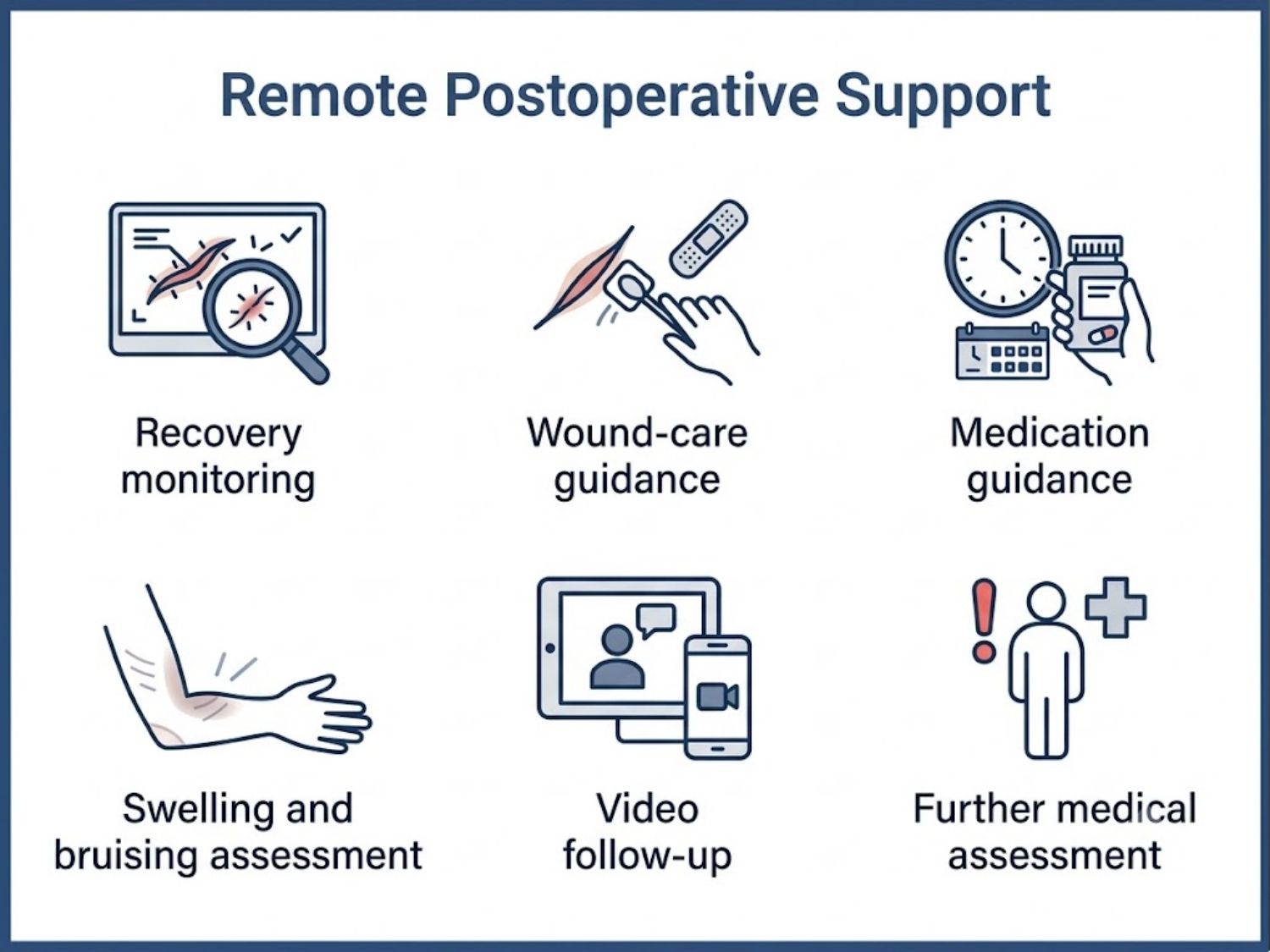
The frequency, duration, communication channels, and clinical scope of remote follow-up are determined according to the patient’s procedure and postoperative care plan.
Remote assessment has limitations. Photographs and video calls cannot reliably identify every complication, and some concerns require physical examinations, laboratory tests, or diagnostic imaging.
International patients can continue their postoperative communication with Kangnam through a coordinated follow-up process.
Before leaving Vietnam, patients should receive instructions covering wound care, medication use, physical activity restrictions, follow-up appointments, and warning signs.
The medical team should also clarify whether further examinations are necessary before international travel.
After returning home, patients can contact their designated international patient coordinator or medical team using the communication channel arranged with the hospital.
Depending on availability, communication may take place through online messaging, photographs, or video consultation.
Patients should use the official contact details confirmed by Kangnam rather than relying on unverified accounts.
Patients may be asked to provide:
Photos should be taken in good lighting without beauty filters or image alterations.
The hospital team can review the information and provide postoperative advice within the scope of remote care.
Depending on the findings, patients may receive routine recovery instructions, a recommendation for another online consultation, or advice to visit a local healthcare professional.
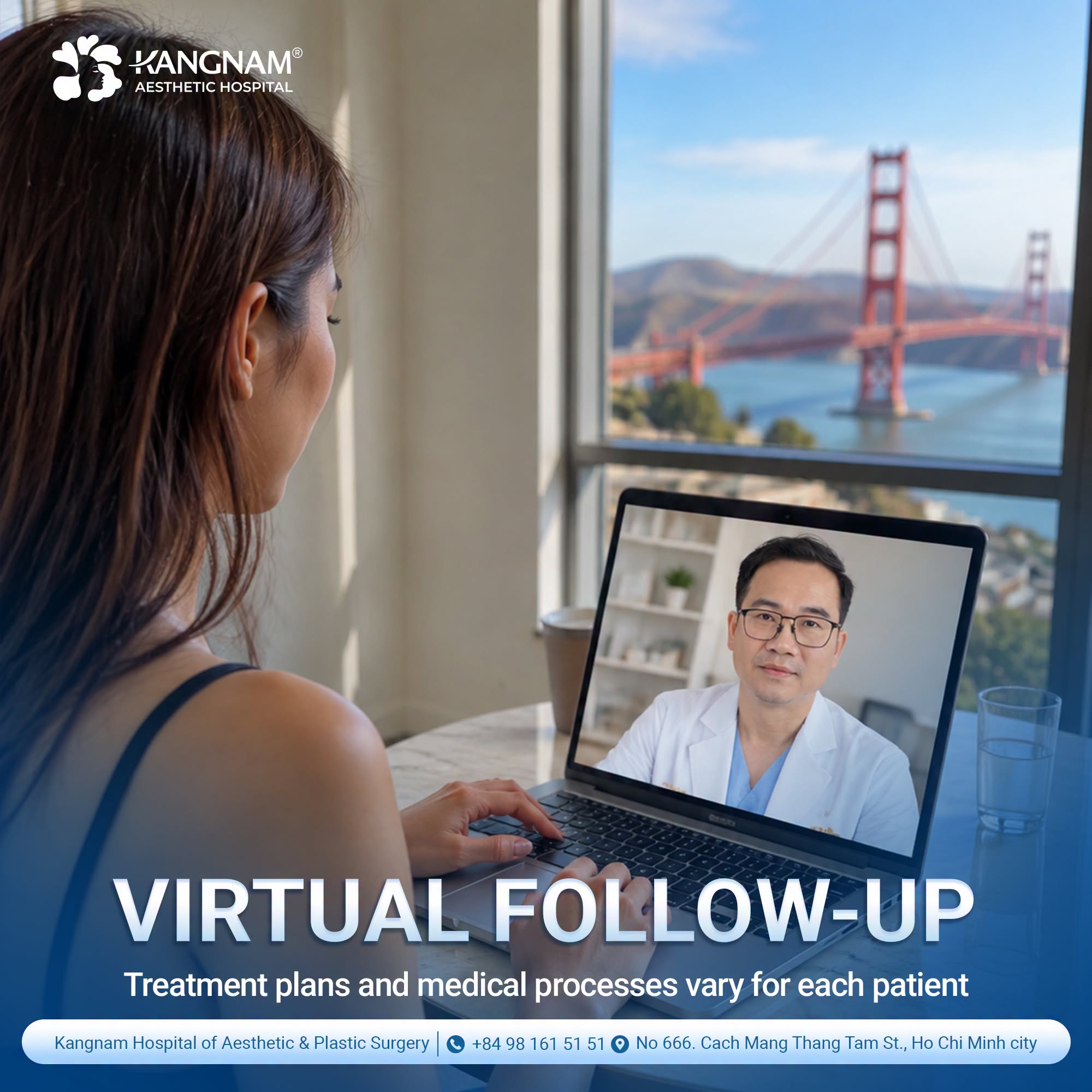
Additional follow-up appointments may be arranged to review healing, postoperative swelling, scar development, and surgical results.
The timing and frequency of follow-up depend on the procedure, individual healing progress, and the surgeon’s recommendations.
Kangnam offers online communication and postoperative support for international patients, but a specific guaranteed clinical response time has not been publicly established for every remote aftercare request. Patients should confirm their designated communication channel, available support hours, and expected response window before leaving Vietnam.
Response arrangements may vary according to the type of inquiry, staff availability, clinical assessment requirements, and the patient’s postoperative care plan.
| Type of Request | Recommended Communication and Action |
| Routine recovery questions | Send a message through the designated aftercare channel and follow the agreed response arrangement. |
| Scheduled photo updates | Submit photographs according to the individual follow-up schedule. |
| Medication or wound-care questions | Contact the postoperative care team for clarification. |
| New or worsening symptoms | Request prompt medical advice and arrange local assessment when indicated. |
| Severe or potentially life-threatening symptoms | Seek immediate emergency care locally without waiting for an online response. |
The postoperative follow-up schedule should be individualized rather than based on a fixed timeline for every patient. Recovery after minor cosmetic procedures differs significantly from recovery after major surgery.
The following table illustrates common monitoring priorities at different recovery stages. It is not a mandatory or guaranteed Kangnam appointment schedule.
| Recovery Period | Main Follow-Up Priorities |
| First 24–72 hours | Pain, bleeding, early swelling, medication tolerance, and immediate postoperative concerns. |
| Days 4–7 | Incision healing, bruising, swelling changes, dressings, and possible infection symptoms. |
| Weeks 2–4 | Wound closure, scar development, activity restrictions, and recovery progress. |
| Months 1–3 | Residual swelling, tissue changes, scar maturation, and functional or aesthetic concerns. |
| Longer-term follow-up | Evaluation of surgical results and any persistent symptoms according to clinical indications. |
Some procedures require more frequent follow-up, while others may need additional evaluations over several months.
Patients should attend all recommended in-person follow-up visits before departure and arrange further examinations locally when advised.
Patients should seek urgent local medical care if they develop severe, rapidly worsening, or unexpected symptoms after cosmetic surgery. Remote follow-up must never delay treatment for a potentially serious postoperative complication.
The following signs may indicate bleeding, infection, blood clots, impaired circulation, or other complications requiring physical assessment.
Seek immediate emergency medical care if you experience:
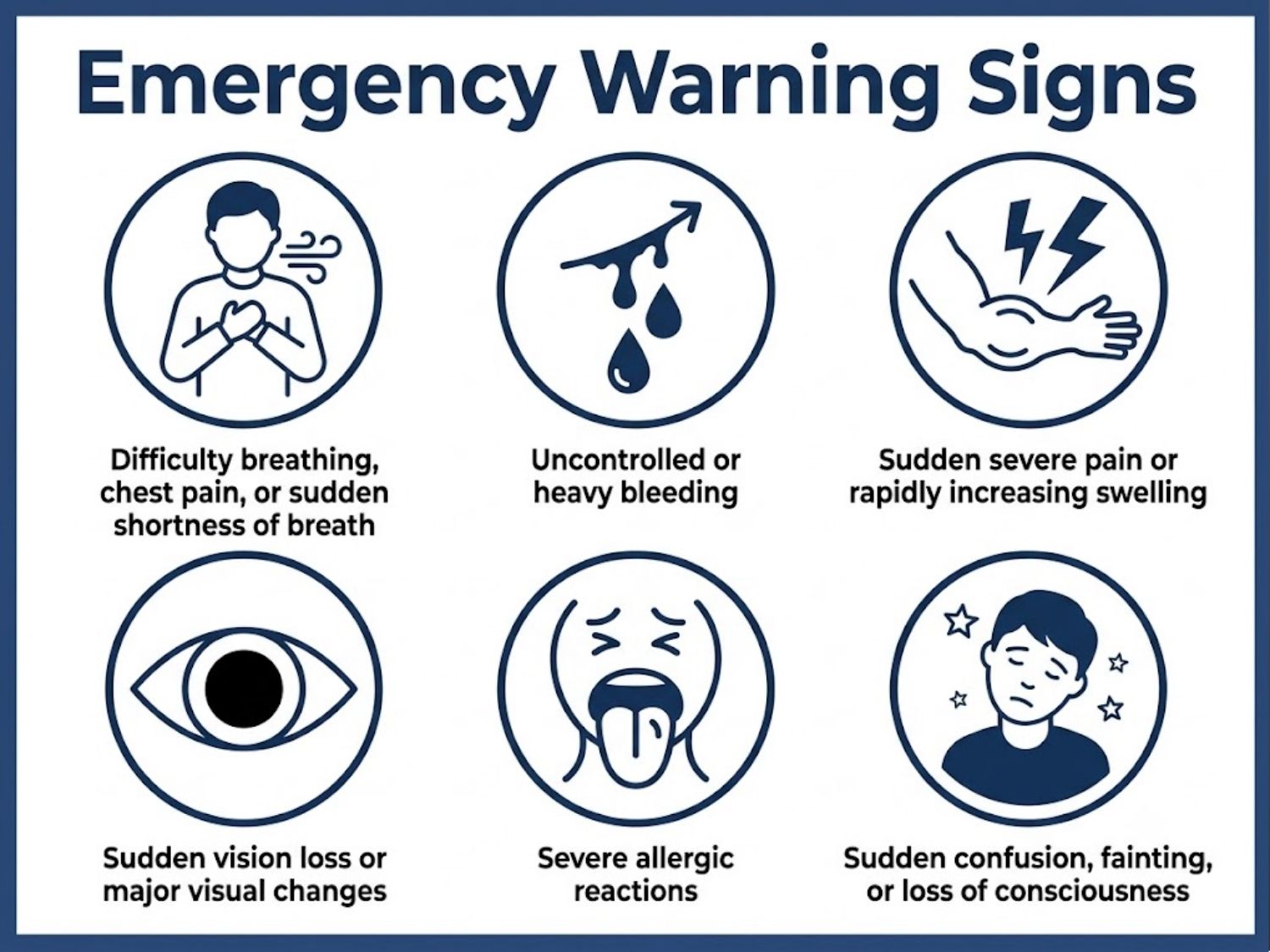
Patients should also seek prompt in-person medical evaluation for:
Do not attempt to diagnose or treat serious complications using online advice alone.
If any of these signs occur, visit the nearest appropriate emergency department or healthcare facility. Patients can inform Kangnam about the situation after obtaining urgent local medical assistance.
If a postoperative complication is suspected, the first priority is obtaining appropriate medical treatment without unnecessary delay.
Step 1 — Assess the urgency. Identify whether the symptoms involve breathing problems, severe bleeding, sudden visual changes, rapidly increasing swelling, or other emergency warning signs.
Step 2 — Seek local medical care. Contact emergency services or visit a healthcare facility capable of evaluating postoperative complications. Do not postpone treatment while waiting for a remote consultation.
Step 3 — Provide your medical information. Inform the local doctor about the surgical procedure, surgery date, medications, implants where applicable, and any previous complications.
Step 4 — Inform Kangnam. Once immediate medical needs are addressed, contact the hospital’s postoperative care team and share relevant clinical findings or reports.
Step 5 — Coordinate ongoing follow-up. When appropriate, Kangnam and the treating local clinician may use available medical information to support subsequent recovery planning.
For serious complications, decisions about hospitalization, medications, drainage, or additional surgery must be made by appropriately qualified healthcare professionals following an in-person assessment.
Kangnam Aesthetic Hospital offers postoperative support as part of its services for overseas Vietnamese and international patients.
The hospital’s published international patient information describes several aspects of its aftercare approach.
Continued Communication After Returning Home
Remote follow-up allows patients to remain in contact with Kangnam after leaving Vietnam, reducing the need to return solely for every routine recovery question.
Postoperative Care Guidance
Patients can receive guidance concerning surgical wound care, medication instructions, recovery monitoring, and the identification of concerning symptoms.
Online Consultation Options
Depending on the care arrangement, online communication and video consultations may be used to review postoperative recovery.
Coordinated Patient Support
International patient coordinators can help patients communicate with the hospital’s medical team and arrange appropriate follow-up when available.
While these services support continuity of care, they do not eliminate surgical risks or replace access to local healthcare.
Patients who have undergone cosmetic surgery at Kangnam should use their designated postoperative contact channel for routine follow-up and recovery-related questions.
Kangnam Aesthetic Hospital
Patients should confirm their individual postoperative support arrangements with the hospital, including contact availability, response times, and the appropriate pathway for medical concerns.
Need postoperative guidance after returning home?
Contact Kangnam Aesthetic Hospital to discuss your recovery progress, arrange a remote follow-up consultation where available, or clarify your postoperative care instructions.
Remote aftercare is intended for routine monitoring and non-emergency postoperative support. For urgent symptoms, seek immediate medical attention at a local healthcare facility.
Yes. Kangnam Aesthetic Hospital provides remote postoperative follow-up support for international patients who have returned to their home countries. Depending on the procedure and individual care plan, follow-up may include photo assessments, online consultations, recovery guidance, and communication with the medical team. Patients should confirm the duration and schedule of their follow-up before leaving Vietnam.
Kangnam may review postoperative photographs as part of remote follow-up to assess visible healing changes and provide guidance. However, photographs cannot reliably diagnose every infection, hematoma, circulation problem, or other surgical complication. Patients experiencing severe pain, rapidly increasing swelling, unusual discharge, or worsening symptoms should obtain an in-person medical evaluation rather than relying only on photographs.
Seek medical attention at an appropriate local healthcare facility if you develop concerning postoperative symptoms. For emergencies such as breathing difficulties, severe bleeding, sudden vision loss, or loss of consciousness, contact emergency services immediately. Once your immediate medical needs are addressed, inform Kangnam and share relevant treatment records to help coordinate further postoperative follow-up.