Date posted: 21-07-2026 | Last updated : 25-07-2026
How long should a compression garment be worn after arm liposuction to achieve the best possible result while supporting a safe recovery? Wearing the correct garment for the recommended period is an important part of postoperative care and may help maintain the new arm contour.
A compression garment is generally recommended after arm liposuction. It applies controlled pressure to the treated tissues, helping the skin adapt to the underlying contour as the arms recover.
A suitable compression garment may also help:

A compression garment should generally be worn consistently after arm liposuction.
However, compression garments do not completely prevent complications such as seroma, fibrosis, asymmetry, or uneven skin. The garment must be used together with appropriate wound care, follow-up examinations, and the surgeon’s postoperative instructions.
Patients can learn more about the treatment and recovery process in Arm Liposuction in Vietnam.
Patients are commonly advised to wear an arm compression garment for approximately four to six weeks after liposuction.
The exact duration depends on:
The following schedule may be recommended during recovery.
During the first one to two weeks, patients may be advised to wear the garment almost continuously, including while sleeping.
It should generally only be removed for:
Continuous compression during this period may help support the arms and reduce swelling and discomfort.
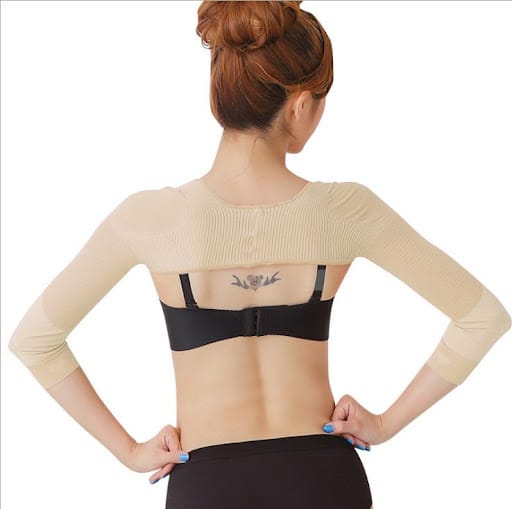
During the early recovery period, the compression garment may need to be worn throughout the day and night.
The garment should not cover wet dressings or be placed directly over wounds unless this has been approved by the medical team.
Once swelling and bruising have decreased, the surgeon may allow the patient to reduce garment use to approximately 12 hours per day.
Depending on the patient’s comfort and daily routine, it may be worn:
The patient should not independently shorten the compression period solely because the arms appear less swollen.
After approximately six weeks, some patients may no longer need regular compression.
Others may be advised to wear the garment during exercise, travel, or prolonged activity if swelling continues.
Extended garment use is not automatically necessary for every patient. The surgeon should assess the arms and determine whether continued compression is beneficial.
To achieve appropriate compression without causing unnecessary discomfort, patients should select a suitable garment, apply it correctly, keep it clean, and follow the recommended wearing schedule.
The garment should feel firm and supportive without being excessively tight.
A garment that is too tight may cause:
A garment that is too loose may not provide adequate support.
Patients should follow the surgeon’s or nurse’s sizing recommendations rather than purchasing a garment based only on ordinary clothing size.
The garment should:
Patients should regularly check the skin for redness, blistering, or areas of excessive pressure.
The garment should be washed regularly to maintain hygiene and reduce the risk of skin irritation.
Patients may be advised to:
The garment should not be worn while damp.
Patients should wear the garment for the period prescribed by their surgeon.
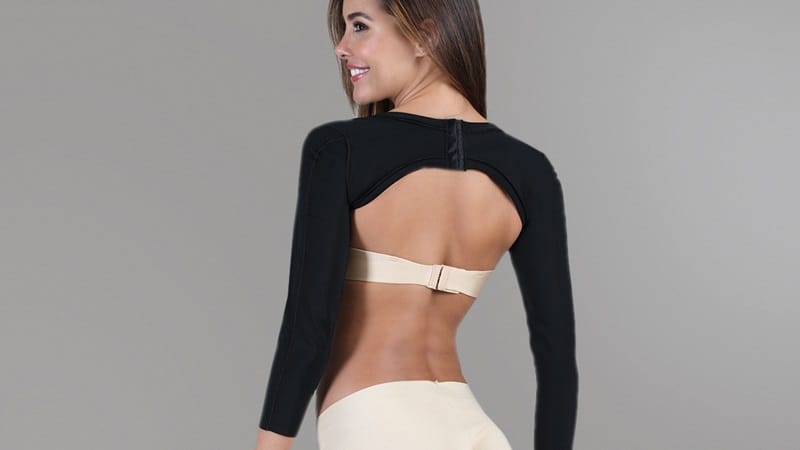
A correctly fitted arm compression garment supports recovery after liposuction.
Contact the medical team promptly if the garment causes:
The patient should not simply tighten the garment further when swelling appears.
Not wearing the compression garment or discontinuing it earlier than recommended may affect recovery in some patients.
Possible consequences include:
The upper arms may appear uneven or may not settle into their final contour during the early recovery period.
However, a compression garment does not determine the result by itself. Surgical technique, the amount of fat removed, skin elasticity, wound healing, and postoperative activity also affect the final contour.
Revision treatment is not automatically required when a patient misses several hours of garment use. The surgeon should first evaluate the arms after swelling has subsided.
Patients may review the general liposuction process and potential complications in What Is Liposuction?.
In addition to wearing a compression garment, patients should follow several postoperative care measures.
Patients should eat a balanced diet containing:
Excessive salt may worsen fluid retention and swelling in some patients.
Adequate hydration is also important, but patients should follow any fluid restrictions provided for an existing medical condition.
Heavy lifting and intense upper-body exercise should generally be avoided during the early recovery period.
However, gentle movement is encouraged when approved by the surgeon because it may:
Patients should not force stretches or exercise through significant pain.
Follow-up examinations allow the surgeon to assess:
Patients should follow the wound-care instructions provided by the medical team.
The treated area should be kept clean and dry as directed. Patients should avoid soaking in baths, swimming pools, or hot tubs until the incisions have healed and the surgeon has approved these activities.
Smoking and nicotine may reduce blood flow and delay wound healing.
Alcohol may interact with medication, increase dehydration, and worsen swelling or bruising. Patients should follow the surgeon’s instructions regarding how long to avoid these substances.
Overseas Vietnamese patients undergoing arm fat reduction at Kangnam Aesthetic Hospital may receive services designed to support treatment planning and accommodate a limited stay in Vietnam.
Kangnam applies Lipo 360 technology to selected arm liposuction procedures.
Ultrasound or energy-assisted techniques may help loosen the fat before removal, allowing the surgeon to contour the arms more precisely.
The procedure aims to reduce localised arm fat while limiting unnecessary injury to surrounding tissues.
However, no technology can guarantee that there will be no tissue damage, swelling, scarring, or other complications.
More information about this approach is available in Kangnam’s Lipo 360 Body-Contouring Technology.
A small cannula and limited incisions may help reduce tissue trauma compared with larger or less controlled techniques.
Some patients may be able to resume light daily activities after approximately 24–48 hours. However, this does not mean they have fully recovered or are ready for work, exercise, or long-distance travel.
Recovery depends on:
Overseas patients may speak with a doctor through an online consultation before travelling to Vietnam.
The preliminary consultation may cover:
An online consultation cannot replace an in-person examination or confirm medical suitability for surgery.
Kangnam may arrange consultation, examinations, and treatment according to the patient’s travel schedule and appointment availability.
Overseas patients should still plan enough time in Vietnam for:
Transportation between the airport and hospital may be available as part of selected service packages.
Patients should confirm:
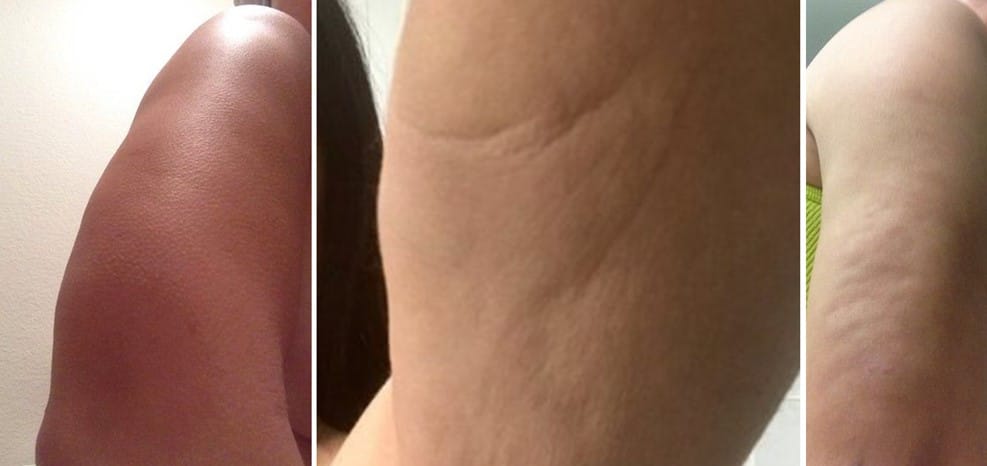
Arm liposuction may create slimmer contours and make patients feel more comfortable wearing different styles of clothing.
Patients should avoid flying immediately after liposuction without the surgeon’s approval because prolonged travel may increase discomfort and the risk of blood clots.
International patients may also review Liposuction in Ho Chi Minh City for International Patients when planning their treatment and recovery period.
Contact Kangnam to arrange an online medical consultation and schedule an appointment.
Following the surgeon’s compression-garment and aftercare instructions may help the arms heal into a smoother and slimmer contour while reducing avoidable risks during recovery.
Patients should remember that four to six weeks is a general guideline rather than a fixed schedule for everyone. The treating surgeon should determine how long the garment is required based on the patient’s progress.
Arm Liposuction in Vietnam: Procedure, Cost, and Recovery
What Is Liposuction? Procedure, Cost, and Safety Considerations