Date posted: 31-12-2025 | Last updated : 02-01-2026
Proper post-operative care plays a key role in maintaining stable and long-lasting aesthetic results. For international patients, understanding and following essential aftercare instructions helps ensure a safe recovery, even after returning home.
I – Post-Aesthetic Surgery Care by Recovery Stages
Post-aesthetic surgery care should be carried out according to each stage of recovery to ensure safety and maintain long-term results. Each phase requires specific precautions to help reduce swelling, minimize complications, and support a stable healing process.
First 7 Days After Surgery
Goal: Protect initial results and prevent early complications.
- Complete rest: Allow the body sufficient time to recover; avoid heavy work or strenuous activities.
- Follow medical instructions: Take medications on schedule; do not stop or alter prescriptions without medical approval.
- Incision care: Keep the wound dry and clean; cleanse with sterile saline solution as instructed.
- Avoid pressure or impact: Do not touch, scratch, or apply pressure to the operated area.
Service-specific notes:
- Rhinoplasty: Avoid wearing glasses, sleeping face down, or forcefully blowing the nose.
- Eye aesthetic procedures: Do not rub the eyes; wear sunglasses outdoors to protect against dust and sunlight.
- Liposuction & breast augmentation: Compression garments or shaping bras must be worn 24/7 as instructed.

Follow the prescribed duration for wearing the compression bra
Days 7–30 After Surgery
Goal: Stabilize soft tissues, reduce swelling, and refine aesthetic results.
- Follow-up visits & suture removal: Attend scheduled appointments (typically 7–10 days post-surgery).
- Maintain shaping support: Continue wearing splints or compression garments to preserve optimal contours.
- Light activity: Gentle walking is allowed; avoid high-intensity sports or heavy lifting.
- Daily activities & work: Patients may gradually return to normal work routines.
- Early scar care: Begin applying scar treatment creams or silicone sheets once the incision has fully closed.
Service-specific observations:
- Rhinoplasty: The nasal structure becomes more stable; tightness gradually decreases.
- Eye aesthetics: Incisions heal well; eyelids appear more natural and refined.
- Breast augmentation: Implants gradually soften and settle into a natural breast shape.
- Liposuction: Swelling subsides; body contours become more clearly defined.
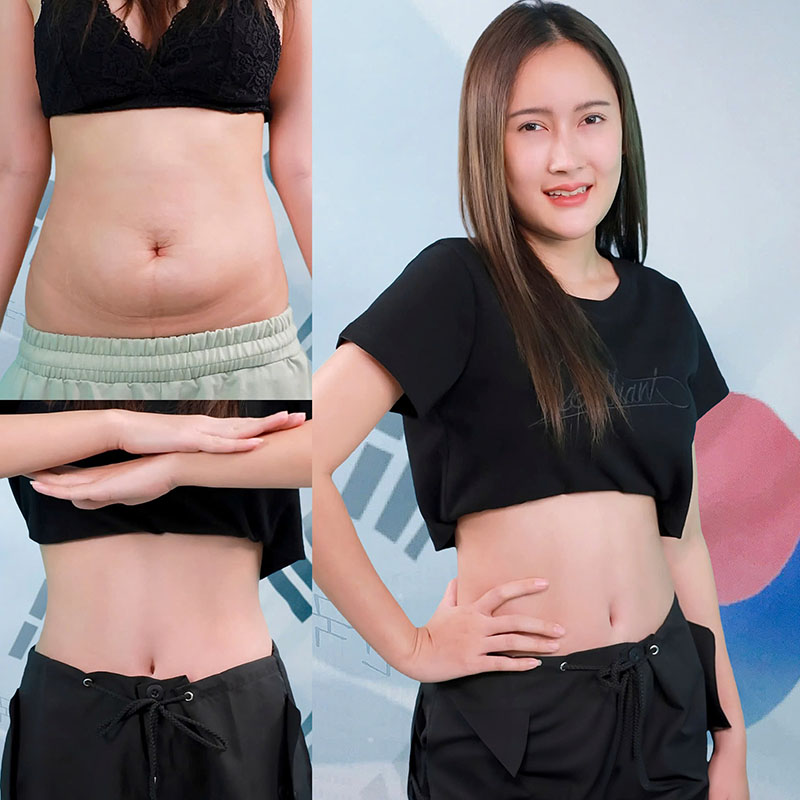
Liposuction areas without scarring
1–3 Months After Surgery
Goal: Maintain stable contours and protect long-term aesthetic results.
- Weight control: Avoid sudden weight gain or loss to prevent distortion of aesthetic outcomes.
- Physical activity: Begin light exercises such as yoga or brisk walking, following the doctor’s guidance.
- Ongoing monitoring: Contact the doctor if there are any concerns regarding sensations or changes in the soft tissues at the surgical site.
Progress by procedure:
- Rhinoplasty: Soft tissues have fully adapted; the nasal tip becomes softer and more natural.
- Eye aesthetics: Scars gradually fade, soften, and blend seamlessly with the eyelid crease.
Breast augmentation: The breasts settle into a natural shape, and any tightness or discomfort resolves. - Liposuction: Skin elasticity improves; body contours appear firmer and more well-defined.

Full, natural-looking breasts
3–6 Months After Surgery
Goal: Preserve natural results and long-lasting beauty.
- Tissue condition: Underlying tissues have fully stabilized and integrated naturally with the body.
- Result evaluation: This is the ideal period to observe the most refined appearance and assess the overall success of the procedure.
- Healthy lifestyle: Maintain a balanced diet and healthy daily habits to sustain long-term results.
- Weight management: Especially important for liposuction and body contouring procedures to prevent changes in shape.
- Periodic follow-up: Continue monitoring subtle changes and contact the doctor if further guidance on maintenance is needed.
6–12 Months and Long-Term After Surgery
Goal: Preserve aesthetic results and adapt to the natural aging process.
- Stable results: At this stage, all swelling has completely resolved, and both soft tissues and scars have reached their most stable condition.
- Influencing factors: It is important to note that natural aging, lifestyle habits, and body weight directly affect the longevity of aesthetic results.
- Regular follow-up: Periodic check-ups are especially important for procedures such as breast augmentation (to monitor implant condition) and liposuction (to maintain body contours).
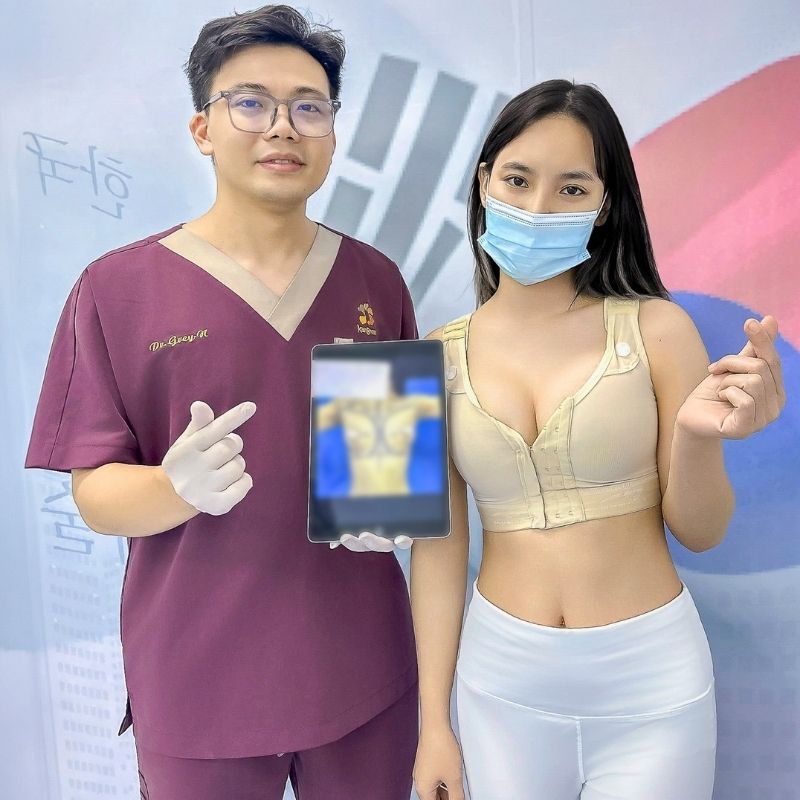
Regular follow-up visits to maintain a beautiful breast shape
II – Factors Affecting the Longevity of Aesthetic Surgery Results
The durability of aesthetic surgery outcomes depends on several key factors, including the surgical technique, the surgeon’s expertise, individual physiology, post-operative care, body weight, and lifestyle habits.
- Surgical technique: Each surgical method has different levels of durability and tissue compatibility. Choosing advanced, minimally invasive techniques not only promotes faster healing but also helps maintain more stable and long-lasting aesthetic results.
- Surgeon’s expertise: The surgeon’s skill and experience determine accurate material placement and precise surgical manipulation, minimizing tissue trauma. Procedures performed by highly experienced surgeons significantly reduce the risk of complications.
- Individual physiology: Healing capacity, skin elasticity, and the body’s response to foreign materials vary from person to person. Individuals with resilient physiology and healthy skin tend to retain their results longer and experience faster scar healing compared to those with more sensitive constitutions.
- Post-operative care: Final outcomes depend up to 50% on post-surgical care after leaving the operating room, from medication adherence to proper wound hygiene. Neglecting splints, compression garments, or resuming physical activity too early may lead to shifting or distortion of the surgical contours.
- Body weight & lifestyle habits: Sudden weight fluctuations or unhealthy habits such as smoking and lack of sleep accelerate aging and tissue sagging. In contrast, maintaining a healthy lifestyle and stable weight is the most important “key” to preserving beauty after aesthetic surgery.
At Kangnam Aesthetic Hospital, patients receive detailed recovery guidance at every stage, along with continuous follow-up support to ensure optimal and long-lasting aesthetic results.
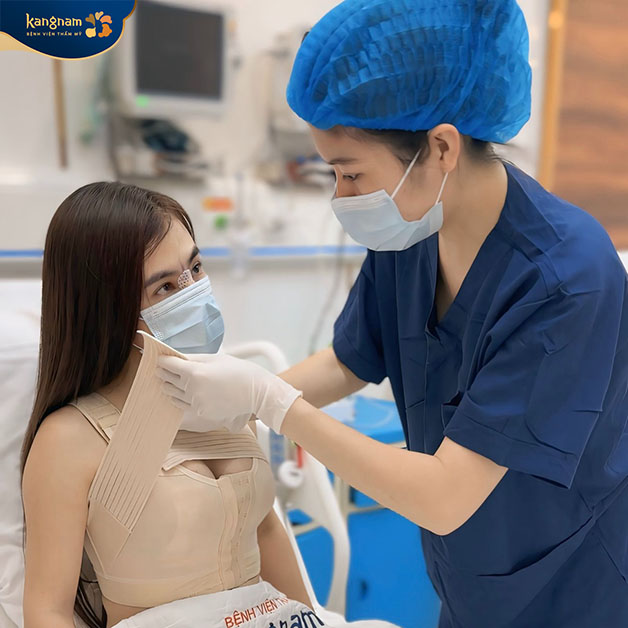
Clients undergoing breast augmentation at Kangnam receive dedicated and attentive care
III – 4 Post-Aesthetic Surgery Mistakes That Can Affect Results
Many patients make mistakes after surgery that can compromise the longevity of their aesthetic results, including becoming complacent after early improvements, not following instructions, rapid weight changes, and engaging in intense physical activity too soon.
- Becoming complacent after early results: Some patients notice reduced swelling and a pleasing shape just 1–2 weeks after surgery and may become lax with post-operative care. In reality, internal tissues are still in the process of stabilizing. Stopping the use of shaping devices or discontinuing medications too early can lead to wound reopening or sudden distortion.
- Not following instructions: Applying unapproved creams, consuming irritating foods, or failing to maintain proper incision hygiene are leading causes of infection and delayed healing.
- Rapid weight gain or loss: Sudden changes in fat volume or skin elasticity can directly alter the surgically created contours. Rapid weight loss can cause sagging skin, while excessive weight gain may reduce the sharpness and definition of the surgical results.
- Engaging in intense physical activity too soon: Activities such as running, high-intensity gym workouts, or heavy lifting increase blood pressure and cause strong muscle contractions around the surgical area. This not only triggers pain and swelling but also carries the risk of displacing implants or tearing internal sutures.
IV – Signs That Require Immediate Medical Attention After Aesthetic Surgery
Most patients recover normally after aesthetic surgery if proper care is followed. However, the following abnormal signs indicate the need for immediate medical evaluation:
- High fever above 38°C that does not subside after taking medication
- Severe, progressively worsening, or unusually persistent pain
- Significant swelling, intense redness, warmth, or burning at the surgical site that does not improve after several days
- Heavy or prolonged bleeding, or discharge with unusual odor or color
- Wound reopening, suture separation, or signs of infection
- Abnormal deformation or asymmetry of the operated area
- Difficulty breathing, dizziness, or prolonged fatigue
V – Frequently Asked Questions from International Patients About Aesthetic Surgery
1. How long do aesthetic surgery results last?
The longevity of aesthetic surgery results typically ranges from 5–10 years or longer, depending on the procedure and individual physiology. When performed with proper technique and care, interventions such as rhinoplasty, eyelid surgery, or breast augmentation can maintain their shape for 10–15 years, and in some cases, even longer.
2. How soon can I resume normal daily activities after surgery?
Generally, patients can resume near-normal activities around 3–4 weeks post-surgery, once swelling has significantly reduced and soft tissues have stabilized. This stage corresponds to more complete wound healing and tissue adaptation to the new structure. However, intense physical activity or direct impact should still be avoided for the first 6–8 weeks to ensure lasting results.
3. Will gaining weight affect the results of my surgery?
Weight gain may impact aesthetic results depending on the area treated. Procedures involving fat or body contours are more likely to change, whereas structural interventions like rhinoplasty or eyelid surgery are less affected. Maintaining a stable weight helps preserve long-term results.
4. Do aesthetic surgery clinics in Vietnam provide remote follow-up for international patients?
Yes. Many clinics in Vietnam, such as Kangnam Aesthetic Hospital, offer remote post-operative monitoring for international patients. This allows doctors to track recovery progress and provide timely guidance, even after patients have returned to their home countries.
Thanks to standardized medical procedures, structured post-operative care, and remote follow-up systems for international clients, Kangnam Aesthetic Hospital is recognized as a reputable and safe destination for aesthetic surgery in Vietnam. Kangnam prioritizes not only immediate aesthetic outcomes but also accompanies patients throughout the recovery process to ensure long-lasting beauty.