
Date posted: 24-07-2026 | Last updated : 25-07-2026
Gummy smile, also known as excessive gingival display, is a condition where too much gum tissue is exposed when smiling, making the smile less attractive and lacking aesthetic appeal. So what causes a gummy smile, and how can you identify the different levels of severity? Let’s explore the following article to grasp important insights into this issue.
A gummy smile occurs when the upper gum tissue is overexposed during laughter or smiling, making the smile visually unappealing. This is considered a cosmetic flaw that makes many people feel self-conscious and hesitant to smile openly.
Although excessive gingival display is not a medical illness, it is an aesthetic flaw that creates a communication barrier for many people. If you are experiencing this issue, understanding your specific level of gummy smile will help you find an appropriate corrective solution.
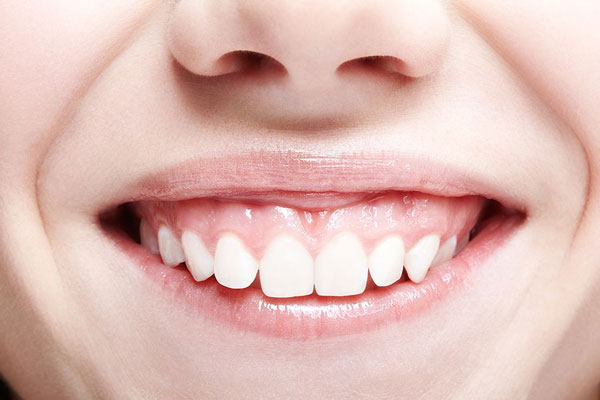
There are 3 levels of gummy smile severity, determined by the amount of gum tissue exposed when smiling:
Once the level of gum exposure is identified, you can evaluate the severity of its impact on your smile’s aesthetics. From there, you can consult with a dentist to explore options for correcting and improving your smile.
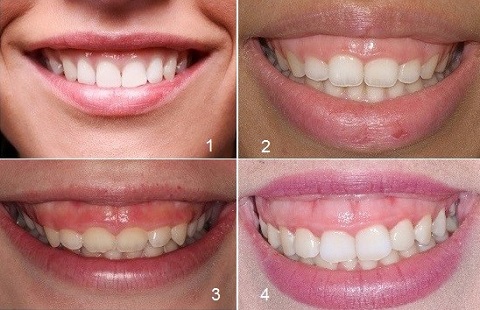
Short clinical crowns, uneven upper teeth, protruding alveolar bone, hyperactive lip muscles, and maxilla (upper jawbone) overdevelopment are key causes of gummy smiles in both men and women.
One of the most common causes of a gummy smile is short crowns. When the visible portion of the tooth is short, more gum tissue is revealed than normal when smiling, leading to an unbalanced and unappealing smile.
When upper teeth grow unevenly, it can lead to irregular gum exposure—showing more in some areas and less in others when smiling. This significantly impacts the gracefulness of the smile, making the individual feel self-conscious.
Irregular upper teeth cause greater gum exposure when smiling
An irregular or protruding alveolar bone can cause teeth to become crooked and unbalanced along the dental arch. This structural issue also contributes to excessive gum display during smiles.
Some individuals have hyperactive upper lip muscles. When they smile, the upper lip elevates higher than normal, exposing a large area of gum tissue and creating a gummy smile defect.
Overdevelopment of the maxilla (upper jawbone) can stem from genetics or other factors. When the upper jawbone develops excessively, it can cause upper jaw protrusion (overbite), leading to significant and aesthetically unpleasing gum exposure during smiles.
Overdevelopment of the upper jawbone
Physiognomy (face reading) evaluates the personality, fortune, and life path of men and women with gummy smiles as follows:
Men with gummy smiles are often straightforward and outspoken, which can sometimes inadvertently offend others. Because they may lack tactful communication skills, they often face difficulties in interpersonal interactions and career advancement.
Their career trajectory tends to be unremarkable; without exceptional effort, achieving promotions can be difficult. As they age, they may encounter financial challenges. This also contributes to a complicated love life, as a lack of foresight or ability to shoulder family responsibilities makes it challenging to find a ideal life partner.
Men with gummy smiles are often straightforward in personality
Ancient beliefs suggest that women with gummy smiles are dishonest, cunning, and willing to compromise principles for personal gain. Their careers rarely flourish; they may not be highly regarded by supervisors, struggle to build strong rapport with colleagues, and frequently face gossip due to thoughtless speech.
Their romantic life is often rocky. It can be difficult to find their soulmate early on, often requiring multiple relationships before settling down.
Women with gummy smiles were traditionally viewed as dishonest and cunning
To correct a gummy smile without surgery, several methods are available:
Lip muscle injections to correct a gummy smile
For severe gummy smiles caused by upper jawbone protrusion (overbite), orthognathic surgery for jaw protrusion is recommended by doctors as a permanent solution.
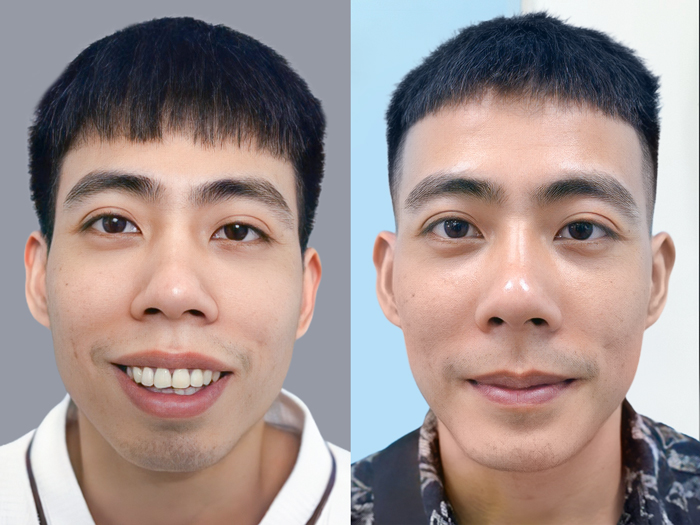
Kangnam Aesthetic Hospital is proud to be a premier, trusted destination for orthognathic surgery. Backed by a team of surgeons with over 10 years of experience and standardized equipment systems, Kangnam has helped thousands of clients regain radiant smiles and confident appearances through gummy smile jaw corrections.
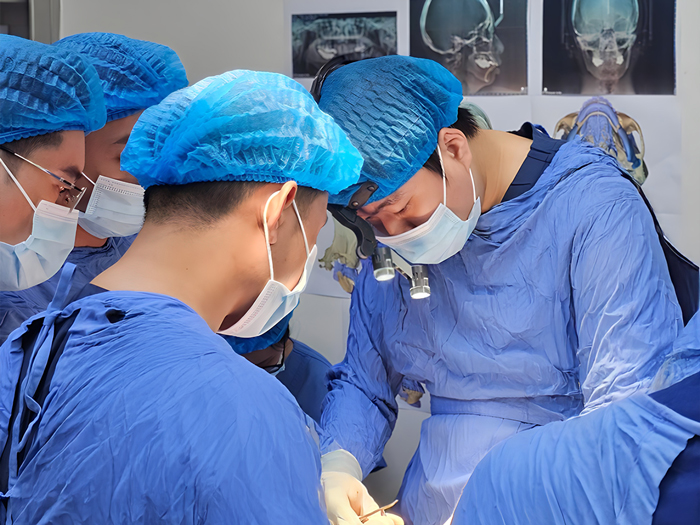
Furthermore, orthognathic surgery at Kangnam minimizes recovery time. After approximately 5–7 days, clients return for dressing changes and stitch removal, reaching stable recovery in just 2–3 weeks post-surgery. This is ideally suited for overseas Vietnamese clients planning a trip back home to correct jaw protrusion while maximizing time and cost savings.
Correcting jaw protrusion for comprehensive gummy smile correctionClients regain a beautiful, charming smileRapid recovery process thanks to modern surgical technologyClients undergoing gummy smile treatment at Kangnam regain confidence and attractive beauty
Orthognathic surgery for gummy smile correction is suitable for individuals with severe gum exposure caused by upper jaw overdevelopment, uneven or imbalanced jawbones, or jaw asymmetry that causes irregular and excessive gum display when smiling.
However, the decision to undergo orthognathic surgery requires professional diagnosis and recommendation from a highly qualified doctor. The specialist will conduct thorough examinations and determine the appropriate approach for each case.
Cindy Nguyen (27 years old, overseas Vietnamese from Australia) asked: “Is orthognathic jaw surgery painful, Doctor? I have severe jaw protrusion, which causes significant gum exposure whenever I smile, heavily affecting my appearance and daily life. I want to undergo surgery to correct this, but I’m afraid of pain. Please advise.”
Dr. Victor Vu, Maxillofacial Surgeon at Kangnam Aesthetic Hospital, explains that the orthognathic surgery process involves no painful sensations because endotracheal anesthesia is administered prior to the procedure. You will not experience any discomfort during surgery.
Post-surgery, mild swelling and soreness in the jaw area may occur, which are completely manageable. Your doctor will guide you on applying cold compresses to reduce swelling and using prescribed pain medication at proper dosages to ensure a comfortable recovery.
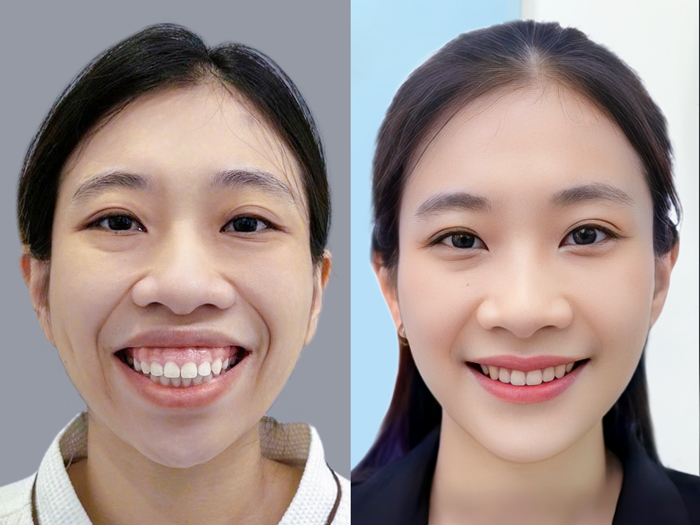
A gummy smile is a facial flaw that many people desire to correct quickly. Excessive gingival display impacts overall aesthetics, creating self-consciousness and hindering communication in many social settings. Various methods exist to improve a gummy smile—including orthodontics, lip muscle injections, and orthognathic surgery. To choose the right solution, you should seek consultation and examination from a reputable Maxillofacial specialist.
Cheekbone Augmentation: Lifting Flat, Low Cheekbones
Temple Augmentation: Filling Hollow Temples for a Fuller Face