
ICEFUE Hair Transplant at Kangnam – Preserving Hair Follicles, Restoring Natural-Looking Hair

Date posted: 16-09-2026 | Last updated : 16-09-2026

ICEFUE hair transplantation at Kangnam Aesthetic Hospital is an autologous hair restoration technique that combines Sapphire FUE with a specialized cooling system for hair follicle preservation. Individual follicular units are extracted from the donor area, immediately preserved in a controlled cooling environment, and then transplanted into thinning or balding areas. This approach aims to maintain follicle viability, minimize tissue trauma, and achieve natural-looking hair density.

Exclusive Technology: ICEFUE combines Sapphire FUE (precision microchannel creation) with a specialized cooling preservation system, lowering the storage temperature of extracted follicles to optimize viability and survival rates.

Expertise & Advanced Equipment: Performed directly by doctors with over 10 years of experience using modern equipment, ensuring a comfortable experience under local anesthesia with minimal scarring (leaving only tiny, fading micro-dots).

Personalized Solutions: Treatment plans are tailored for each client (men and women aged 30+, experiencing hereditary baldness, hormonal hair loss, a high hairline, or scalp scars) based on donor density, target coverage area, and facial proportions.

4-Step Medical-Standard Procedure: Includes Assessment & Planning, rightarrow, Hairline Design, rightarrow, Hair Transplantation (6–8 hours),rightarrow, Recovery & Follow-up.

Clear Recovery Timeline: Follows three natural physiological stages: Shock Loss (Weeks 2–8), New Hair Growth (Months 3–4), and Long-term Maturation with Natural Density (after 8–12 Months).

Strict Post-Op Care Guidelines: Requires sleeping on your back with your head elevated (first 12 nights), gentle cleansing with specialized foam after 48 hours, and avoiding strenuous exercise, swimming, or saunas for the first month.

1. What is ICEFUE Hair Transplantation at Kangnam?

ICEFUE Hair Transplantation at Kangnam is an advanced autologous hair restoration solution developed from the FUE (Follicular Unit Extraction) technique. Individual follicular units are carefully extracted from the donor area and then immediately placed in a Specialized Cooling System, which helps lower and control the temperature of the preservation environment after the follicles are removed from the scalp.

The controlled cooling process is designed to maximize follicle viability and protect the cellular structure of the hair follicles while they remain outside the body before transplantation.

At Kangnam, the procedure combines two advanced technologies: Sapphire FUE, which uses precision sapphire blades to create microchannels while minimizing tissue trauma, and ICEFUE, which provides specialized cold preservation for the extracted follicles. Together, these technologies are designed to support denser, natural-looking hair growth while maximizing follicle survival.
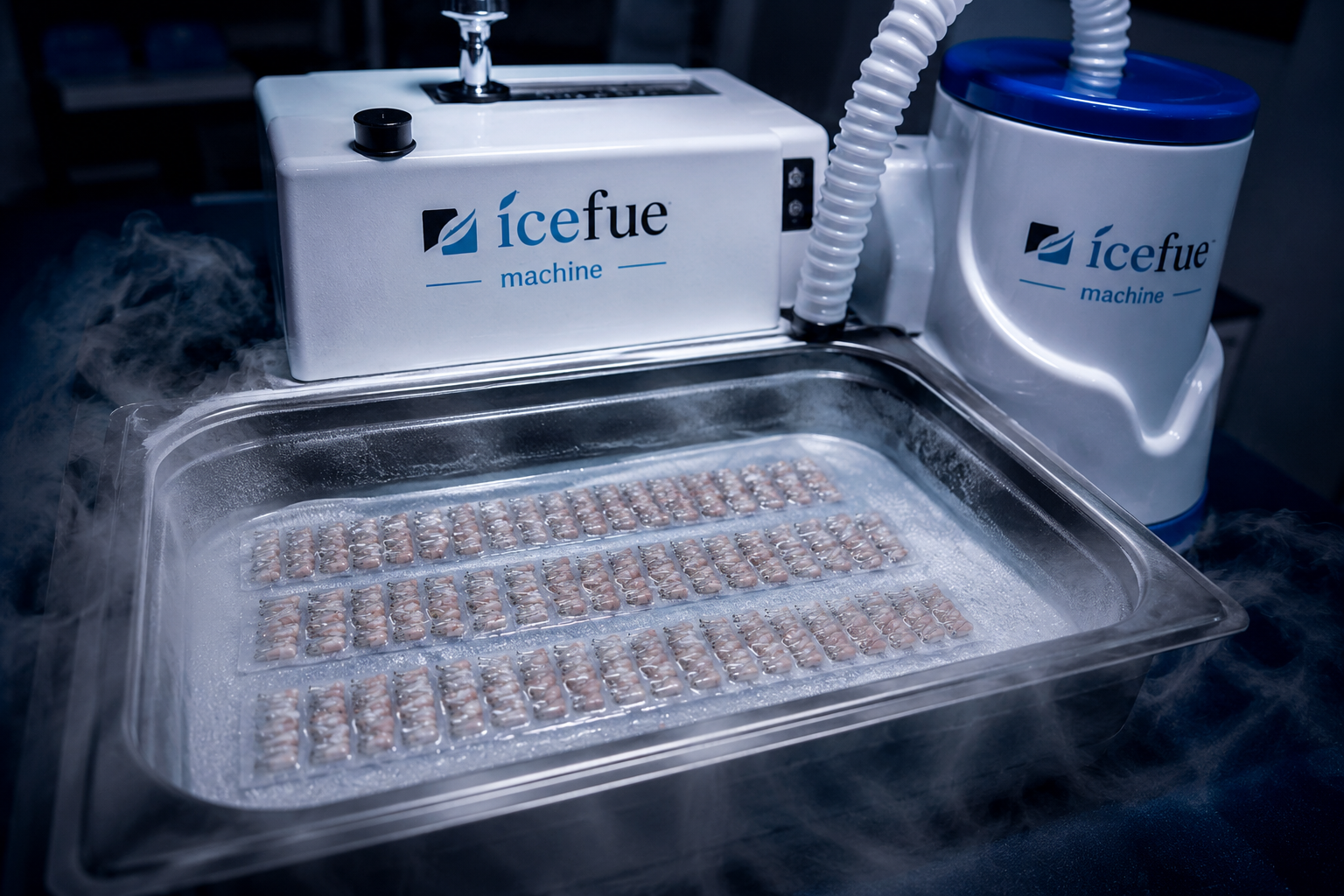
The ICEFUE system helps maintain a low-temperature environment to preserve extracted hair follicles before they are transplanted into areas requiring hair restoration.

2. Key Advantages of ICEFUE Hair Transplantation at Kangnam

ICEFUE hair transplantation at Kangnam Aesthetic Hospital is designed to provide a comfortable, safe, and aesthetically optimized experience through the following advantages:
  • Minimal discomfort: The hair transplant procedure is performed under local anesthesia. Clients may experience a brief, mild stinging sensation during the anesthetic injection, while discomfort is effectively controlled throughout the procedure.
  • Minimal scarring: The technique extracts individual follicular units through tiny openings, leaving only small dot-like marks in the donor area. These marks gradually fade and typically become difficult to notice once the area has healed.
  • Donor areas: Hair follicles are primarily harvested from the back of the scalp and the temporal areas, where follicles tend to be more resistant to the hormonal effects associated with hereditary hair loss. For male clients, follicles from the beard area beneath the chin may also be assessed as an additional donor source when appropriate.
  • Optimized procedure time: A standard hair transplant procedure typically takes approximately 6–8 hours, depending on the number of follicles required and the treatment area.

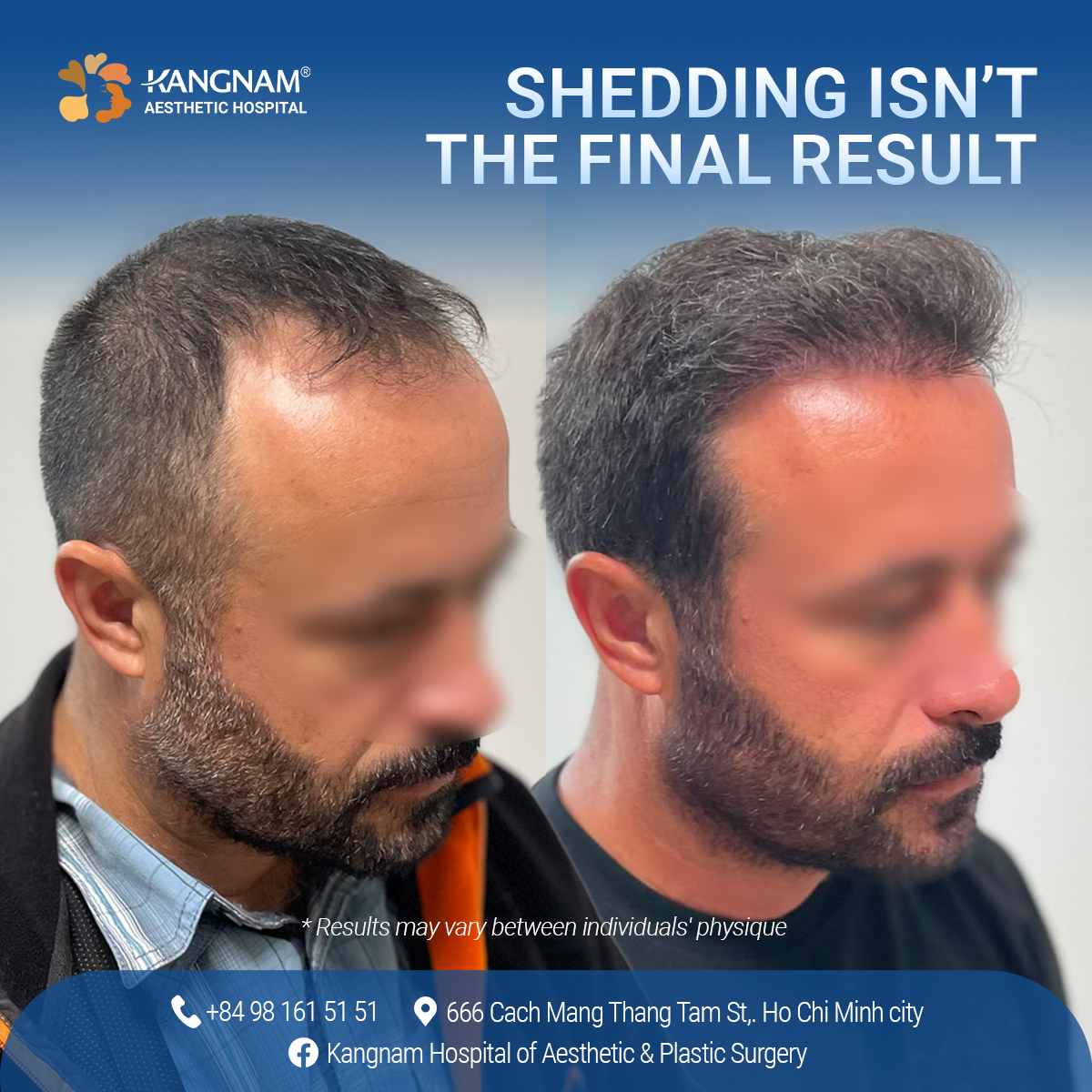
Results after ICEFUE hair transplantation at Kangnam, showing fuller, denser, and natural-looking hair growth.

3. Who Is a Suitable Candidate for ICEFUE Hair Transplantation at Kangnam?

ICEFUE autologous hair transplantation at Kangnam is designed for both men and women, particularly those aged 30 and above, who experience the following conditions:
  • Hereditary or long-standing hair loss: Individuals with crown baldness, an M-shaped receding hairline, or extensive areas of long-term hair loss that have shown limited improvement with topical or oral treatments.
  • High or thinning hairline and receding temples: Individuals who want to lower or reshape their hairline, reduce the appearance of a high forehead, and create more balanced facial proportions.
  • Hair loss associated with hormonal changes: Men and women experiencing persistent thinning related to hormonal changes, including stabilized postpartum hair loss or age-related thinning.
  • Scalp scars: Individuals with scars caused by trauma, accidents, surgery, or burns where damaged tissue prevents natural hair regrowth.
  • Those seeking a long-term hair restoration solution: Clients who want natural-looking, healthy hair growth with lasting results rather than temporary options such as wigs or non-autologous hair implantation.

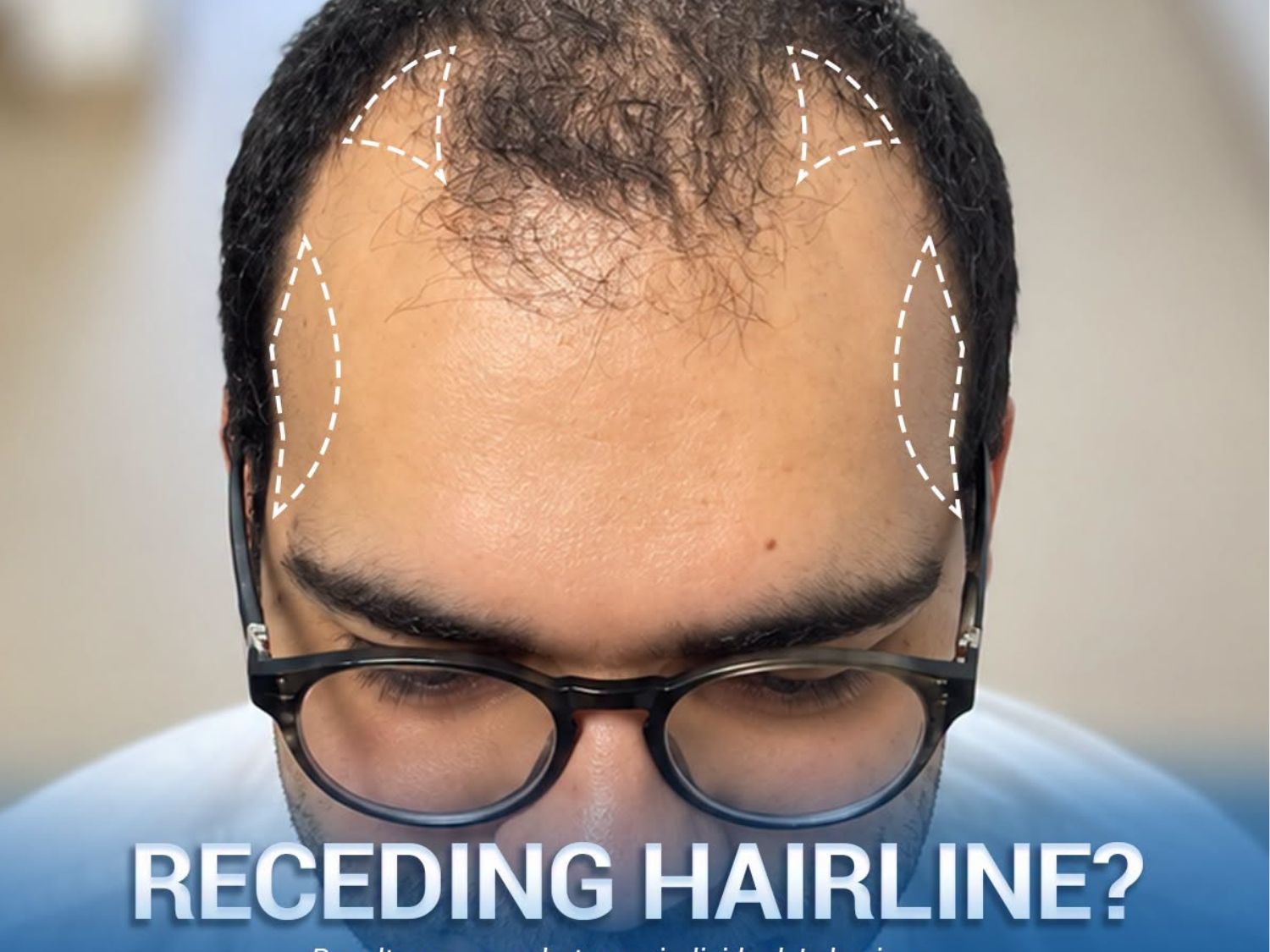
A receding hairline is often most noticeable across the frontal hairline and temples, making the forehead appear higher and the hair at the front look thinner.

4. What Are the Steps in Kangnam’s Medical-Standard Hair Transplant Procedure?

The hair transplant procedure at Kangnam Aesthetic Hospital follows a structured, closed-process protocol designed to meet medical safety standards:
  • Step 1 – Assessment and Treatment Planning: The doctor examines the client’s hair loss pattern, evaluates the density of the donor area and the area requiring transplantation, estimates the number of follicular units needed, and develops a personalized treatment plan.
  • Step 2 – Hairline Design: The doctor designs the hairline based on the client’s facial proportions, age, and aesthetic preferences, while determining the appropriate hair density, direction, and distribution.
  • Step 3 – Hair Transplantation: The treatment areas are prepared and local anesthesia is administered. Individual follicular units are extracted using the FUE technique and placed in the ICEFUE cooling preservation system. The doctor then creates microchannels using Sapphire blades and implants the follicles according to the predetermined growth direction and density. A standard procedure typically takes approximately 6–8 hours, depending on the number of follicles and the size of the treatment area.
  • Step 4 – Recovery and Follow-up: After the procedure, clients receive detailed instructions on caring for the donor and recipient areas, sleeping position, hair washing, and daily activities. Follow-up appointments are scheduled to assess healing and monitor new hair growth.

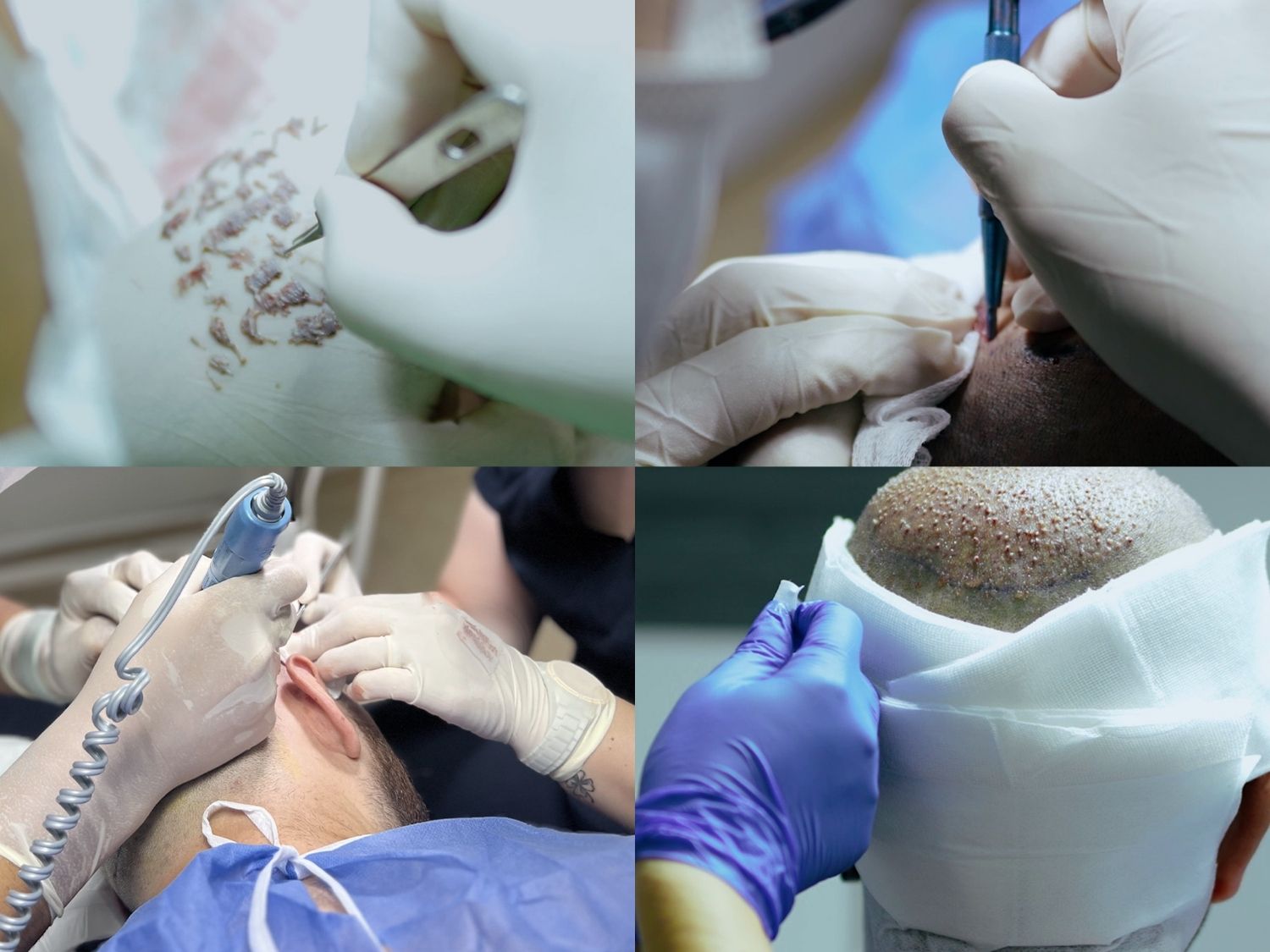
The hair transplant procedure includes harvesting and sorting follicular units, creating recipient sites, and implanting the grafts according to the predetermined direction and density.

5. How Do Transplanted Hair Follicles Develop After the Procedure?

After an ICEFUE hair transplant, the transplanted hair typically progresses through three main stages of recovery and growth:

  • Shock Loss – Weeks 2 to 6–8: The transplanted hair shafts may shed while the follicles remain beneath the scalp. This is a normal part of the post-transplant hair growth cycle.
  • New Hair Growth – From Months 3–4: New hair gradually begins to emerge from the transplanted follicles and continues to grow over the following months.
  • Stabilization and Maturation – After 8–12 Months: Hair gradually becomes fuller and denser, with the overall aesthetic result becoming more apparent. Once successfully established, transplanted follicles can continue producing hair over the long term.

6. Why Choose ICEFUE Hair Transplantation at Kangnam?

ICEFUE hair transplantation at Kangnam Aesthetic Hospital is built around three key elements: the use of autologous hair follicles, specialized follicle preservation with the ICEFUE cooling system, and precise microchannel creation using Sapphire FUE blades.

6.1 Personalized Treatment Plans and Follicle Numbers

Each degree and pattern of hair loss requires an individualized treatment plan. For example, crown baldness cannot be treated with the same approach used for thinning at the temples.

At Kangnam, doctors determine the appropriate number of follicles based on three key factors: the area requiring coverage, the desired hair density, and the number of follicles that can be safely harvested from the donor area.
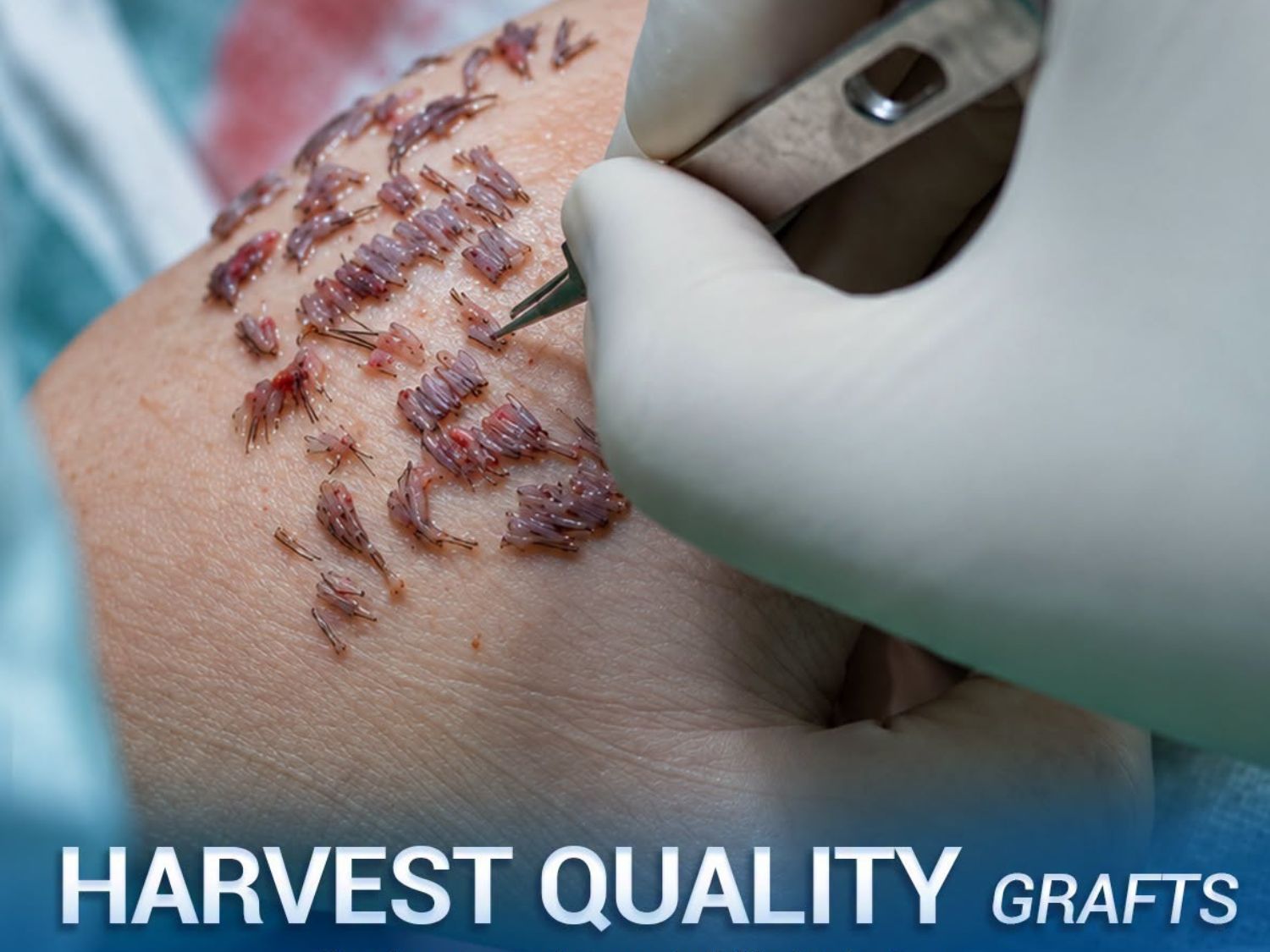
After harvesting, hair follicles are carefully examined and classified before transplantation to select suitable grafts and optimize hair density and growth potential.

6.2 Hairline Design Based on Facial Proportions

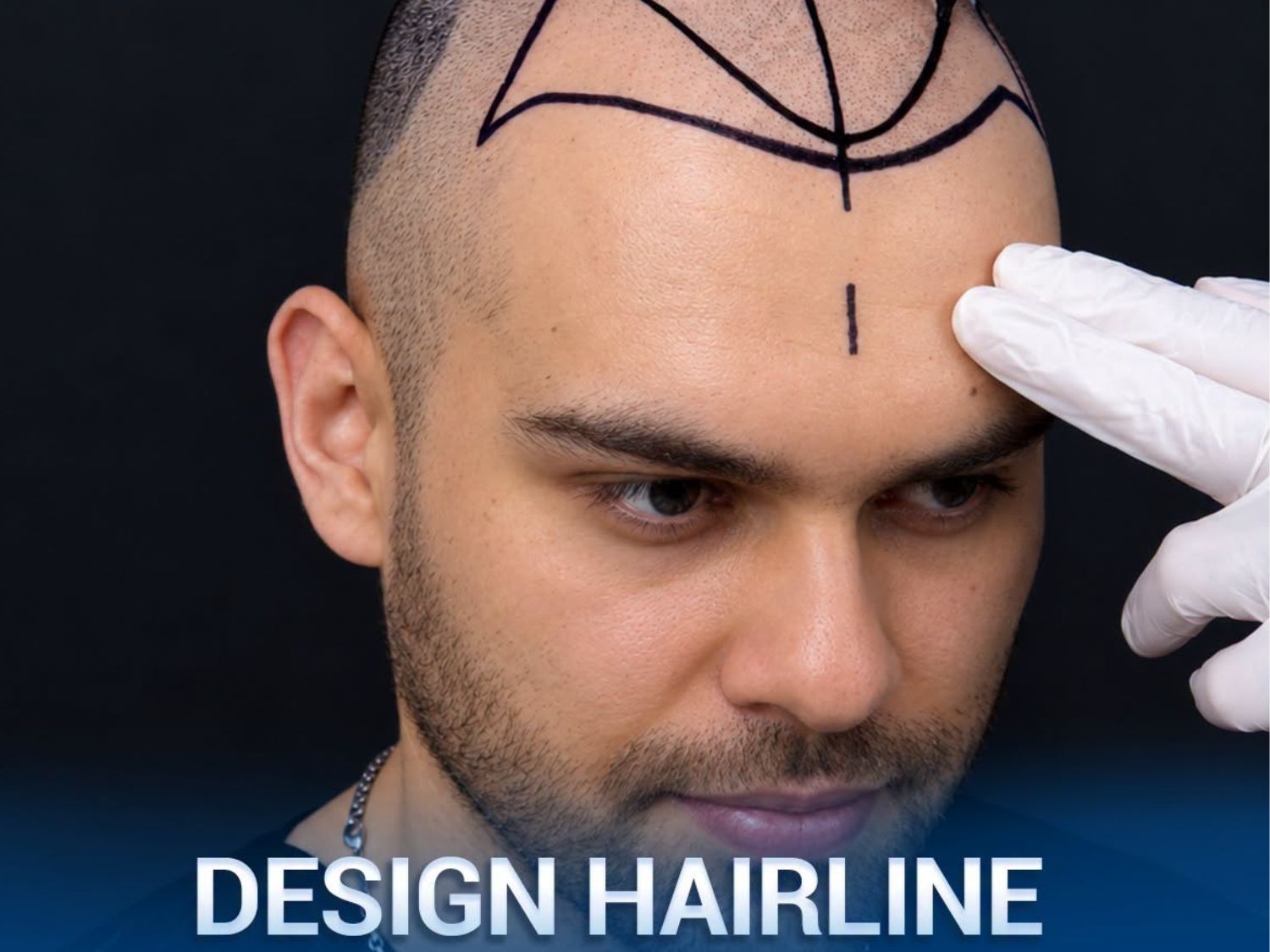
A natural-looking hairline does not necessarily need to be positioned very low or transplanted at an excessively high density. At Kangnam, the hairline is carefully measured and designed to achieve optimal facial harmony based on:
  • Facial proportions.
  • The client’s gender and age.
  • The natural direction of hair growth.
  • The actual follicle density available in the donor area.
  • The anticipated progression of future hair loss.

The hairline design stage determines the appropriate shape, height, and treatment area based on the client’s facial proportions before transplantation.

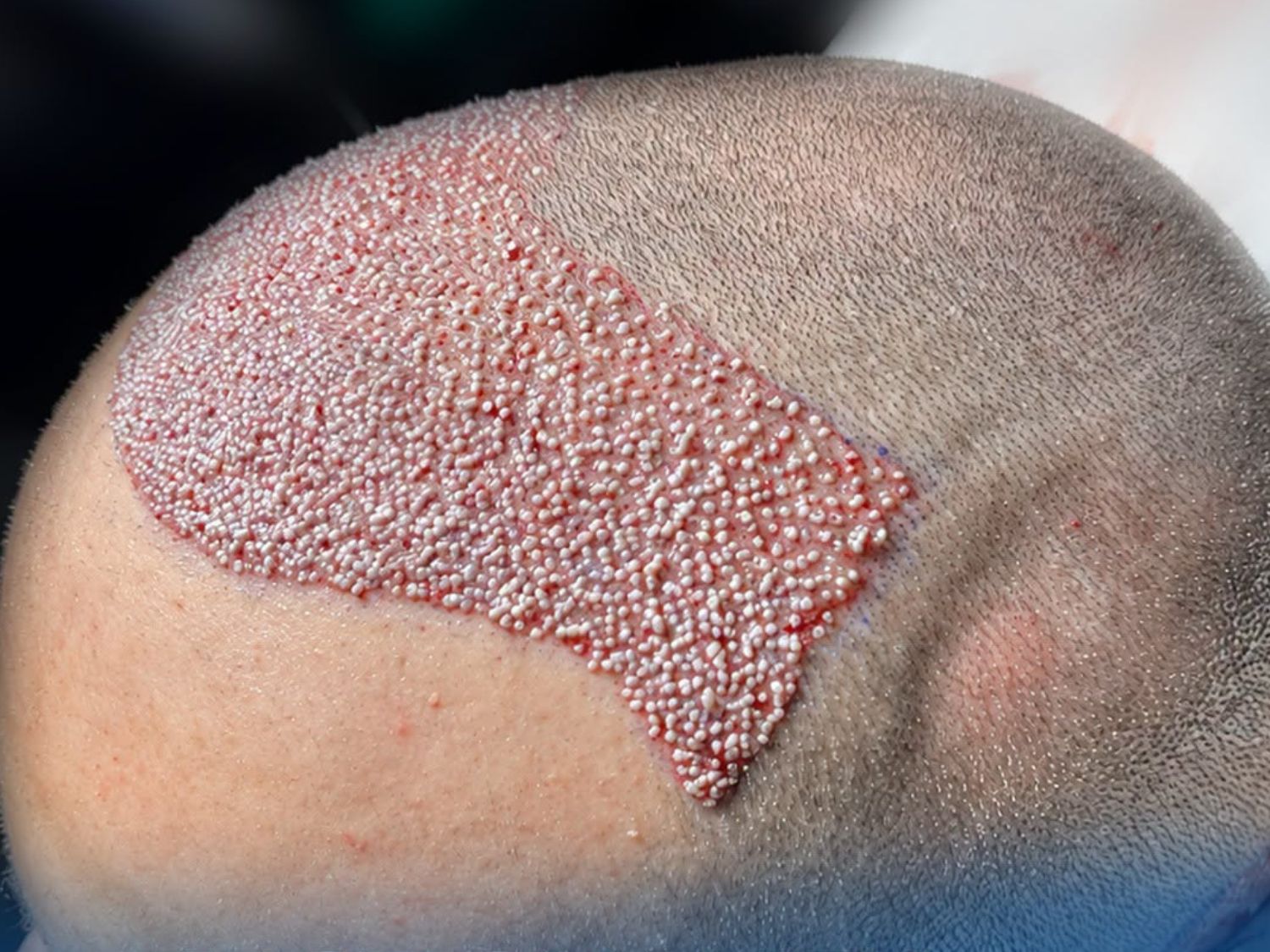
The recipient area immediately after transplantation, with follicles positioned according to the predetermined density and growth direction to reconstruct the hairline and improve thinning areas.

6.3 Advanced Technology to Support Hair Follicle Preservation

Kangnam is equipped with advanced technology and modern medical equipment to support every stage of the hair transplant procedure, from follicle extraction and preservation to implantation.

The ICEFUE system provides a specialized low-temperature environment to preserve follicles immediately after extraction, while Sapphire FUE uses precision sapphire blades to create small microchannels in the recipient area. This allows the doctor to control the position, density, angle, and direction of the transplanted follicles according to the treatment plan.

6.4 Experienced Hair Transplant Doctors at Kangnam

Hair transplant procedures at Kangnam are performed by doctors with more than 10 years of experience in hair restoration and hairline design.

The doctors directly assess the donor and recipient areas, calculate the number of follicles required, design the hairline, and control the direction of implantation to achieve an appropriate density for each client.

6.5 Close Follow-up Throughout the Recovery Process

Hair transplant results develop gradually and cannot be fully evaluated within just a few days. Kangnam accompanies clients throughout each important stage of recovery and hair growth, including initial healing, shock loss, new hair growth, increasing density, and final maturation.

The overall result is typically evaluated after approximately 8–12 months, when the transplanted hair has had sufficient time to grow and mature.
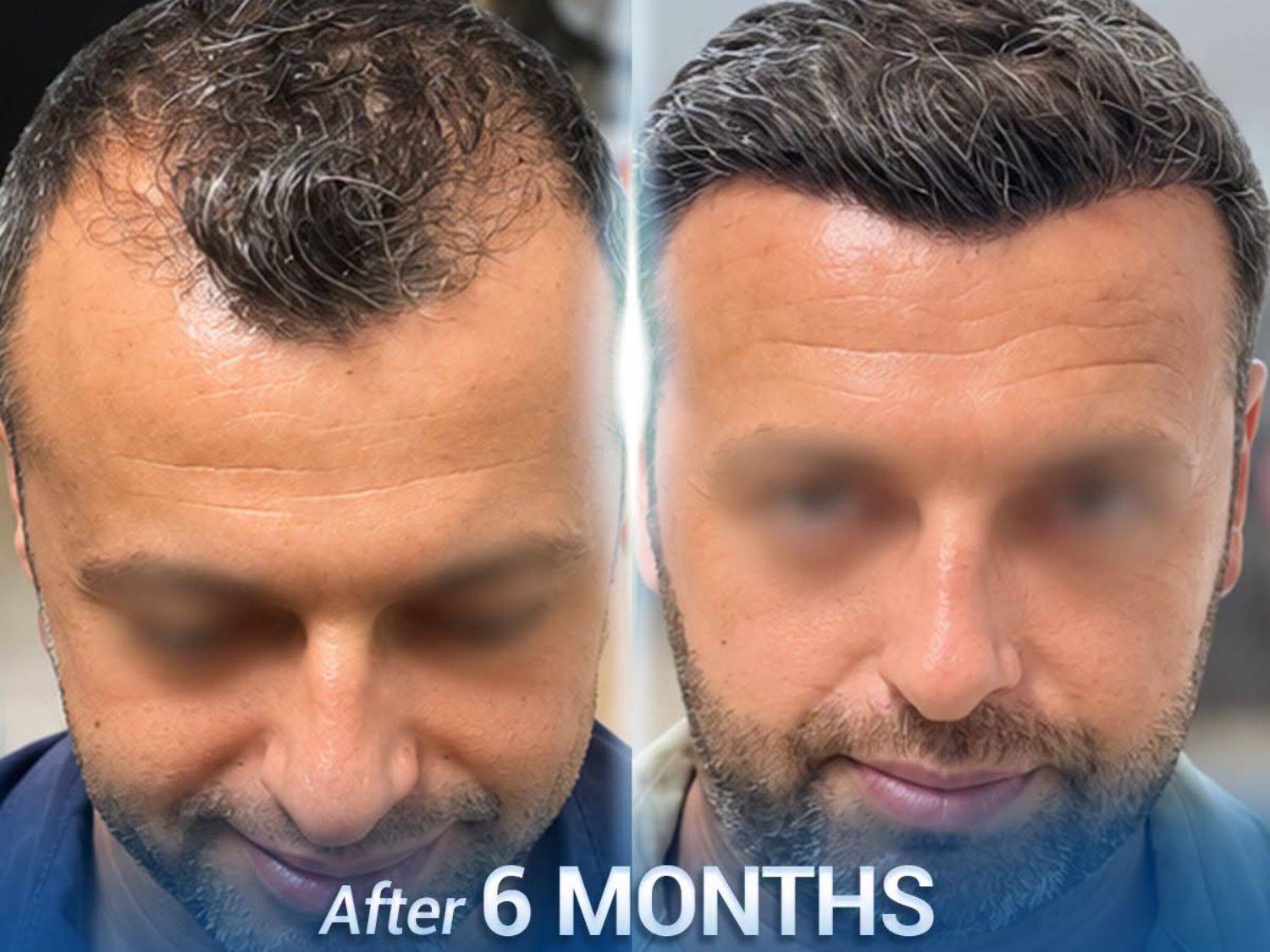
Six months after hair transplantation, the client shows improved coverage across the frontal area and hairline, with the hair gradually becoming fuller and more natural-looking over time.

7. Medical-Standard Post-Hair Transplant Care Guidelines

During the first few days after a hair transplant, it is important to minimize touching, scratching, or rubbing the recipient area. According to Kangnam’s post-transplant care guidelines, clients can begin cleansing the scalp after 48 hours, maintain a protective sleeping position for the first 12 nights, and avoid strenuous exercise, swimming, sauna use, and direct sun exposure during recovery.

7.1 Protecting the Transplanted Area During the First Few Days

First night and first week: Do not touch, scratch, or rub the transplanted area, as this may dislodge or damage newly implanted follicles.

  • Sleeping position (first 12 nights): Sleep on your back with your head elevated. A U-shaped travel pillow or a rolled towel placed under the neck may be used, with pillows positioned on both sides of the shoulders to help prevent turning during sleep.
  • Clothing and hats: During the first week, wear button-up or zip-up tops to avoid pulling clothing over the head and rubbing against the scalp. A loose, breathable hat may be worn after day 7. Avoid direct exposure to strong sunlight for the first 2 months.
Clients should sleep on their back with the head elevated during the first few days after hair transplantation.

Clients should sleep on their back with the head elevated during the first few days after hair transplantation.

7.2 Hair Washing and Scalp Cleansing – Starting After 48 Hours

  • Apply cleansing foam: Spray the recommended specialized foam onto both the recipient and donor areas and leave it on for approximately 30 minutes.
  • Rinse gently: Rinse with lukewarm water at low pressure. Do not use a strong water stream, rub, or massage the transplanted area.
  • Dry carefully: Gently blot the hair and scalp with a tissue or paper towel. Do not rub the area or use a hair dryer.

7.3 Physical Activity and Daily Routine

  • Returning to work: Clients with office-based jobs may return to work from approximately day 3.
  • Exercise: Avoid strenuous exercise, swimming, sauna use, and prolonged sun exposure for 1 month. Light walking may be resumed from the second week.
  • Sexual activity: Avoid sexual activity during the first 5 days after the procedure.

8. Frequently Asked Questions About ICEFUE Hair Transplantation

8.1 Does ICEFUE Hair Transplantation Leave Scars?

ICEFUE uses the FUE technique to extract individual follicular units, so it does not leave a long linear scar like strip harvesting methods. Tiny dot-like marks may appear in the donor area where follicles are extracted, but they typically become less noticeable after healing and are concealed by the surrounding hair.

8.2 Is ICEFUE Hair Transplantation Painful?

The procedure is performed under local anesthesia, which helps control discomfort during follicle extraction and implantation. Clients may feel a brief stinging sensation during the anesthetic injection. After the procedure, mild tightness, redness, or sensitivity may occur temporarily, depending on individual response.

8.3 Are ICEFUE Hair Transplant Results Long-Lasting?

Once the transplanted follicles have successfully established themselves and entered a new growth cycle, they can continue producing hair over the long term. However, natural hair in non-transplanted areas may continue to thin if the underlying cause of hair loss progresses. Therefore, doctors also consider the available donor follicle reserve and the potential pattern of future hair loss when planning the procedure.

8.4 How Soon Can I Return to Work After a Hair Transplant?

Clients with office-based jobs may return to work from approximately day 3, provided recovery is progressing well. For jobs involving strenuous physical activity, protective headgear, or frequent outdoor exposure, the return-to-work timeline should be adjusted according to the doctor’s instructions.

8.5 Does Hair Shedding After a Transplant Mean the Procedure Has Failed?

No. Transplanted hair may undergo a shock loss phase between weeks 2 and 6–8, during which the hair shafts shed while the follicles remain beneath the scalp. New hair typically begins to grow from around months 3–4.

8.6 When Can I See the Final Hair Transplant Results?

New hair typically begins to grow from around months 3–4, then gradually becomes thicker and more mature over time. The overall results can usually be assessed more clearly approximately 8–12 months after the procedure.


You may also be interested in
Messenger