Date posted: 21-07-2026 | Last updated : 25-07-2026
Large legs with excess fat may not only affect a person’s appearance but can also make movement feel heavier and interfere with daily activities. For suitable patients, leg liposuction may be considered to remove localised fat and improve leg contours.
However, the procedure should be performed at a reputable, licensed medical facility to reduce surgical risks and achieve an appropriate aesthetic result.
Calf liposuction is a cosmetic procedure that removes localised fat from the legs to create a slimmer and more proportionate appearance.
During the procedure, the surgeon breaks down or loosens the excess fat before removing it through a small liposuction cannula.
After treatment, the circumference and contour of the legs may improve noticeably. This procedure may be considered by people who have persistent localised fat despite maintaining a suitable diet and exercising regularly.
However, liposuction is not a weight-loss treatment and cannot correct large calves caused mainly by muscle, bone structure, swelling, or an underlying medical condition.
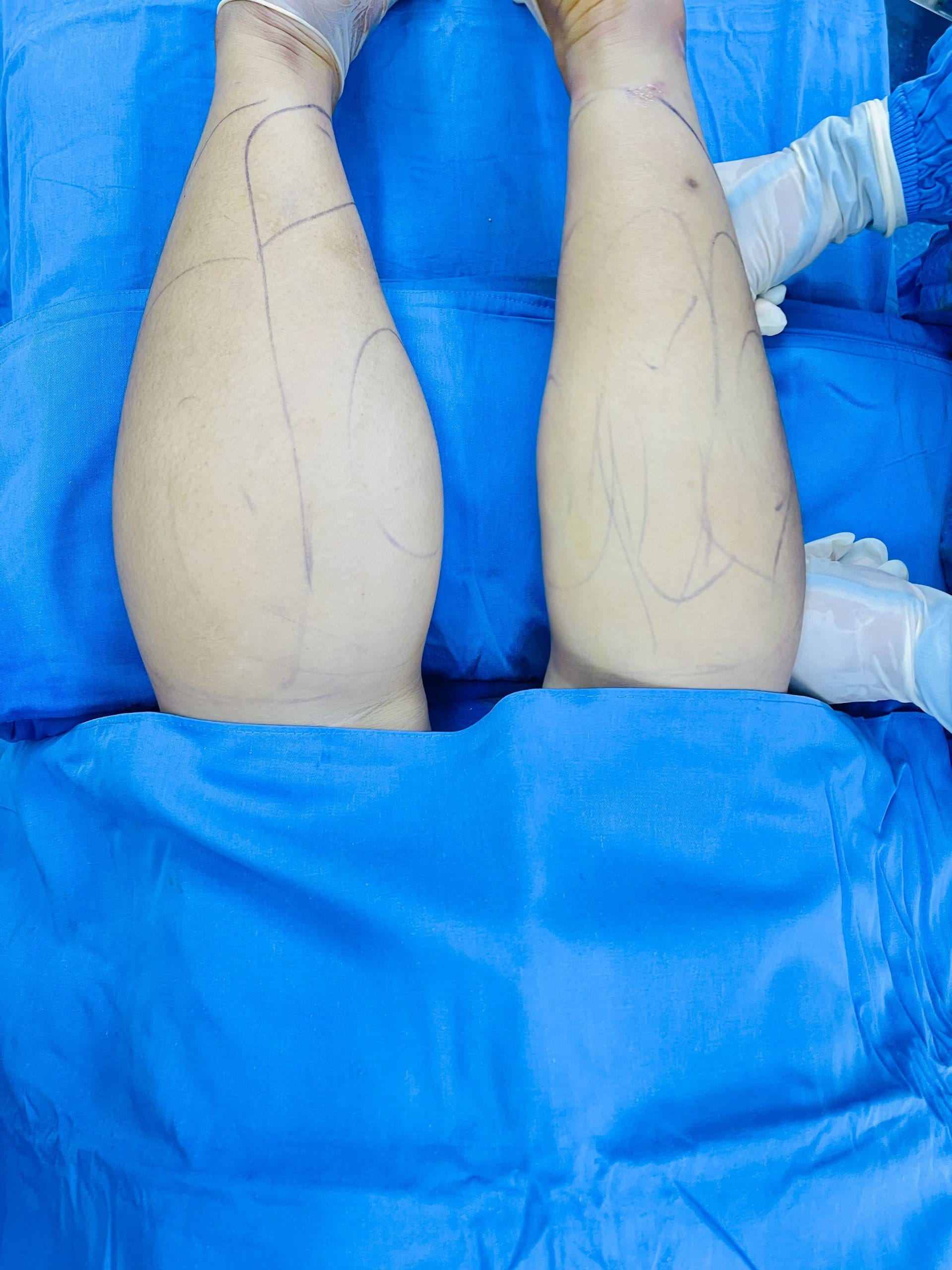
Leg liposuction removes localised excess fat to improve the shape of the legs.
Leg liposuction may provide several benefits, including:
Liposuction removes existing fat cells from the treated area. However, it cannot completely prevent future fat accumulation. Remaining fat cells may increase in size if the patient gains weight after surgery.
The final result is not immediate because swelling, bruising, and tissue firmness may remain for several weeks or months.
Leg liposuction may be suitable for people who:
Patients must generally be at least 18 years old and medically suitable for surgery.
People with certain conditions may not be appropriate candidates or may require additional medical assessment, including those with:
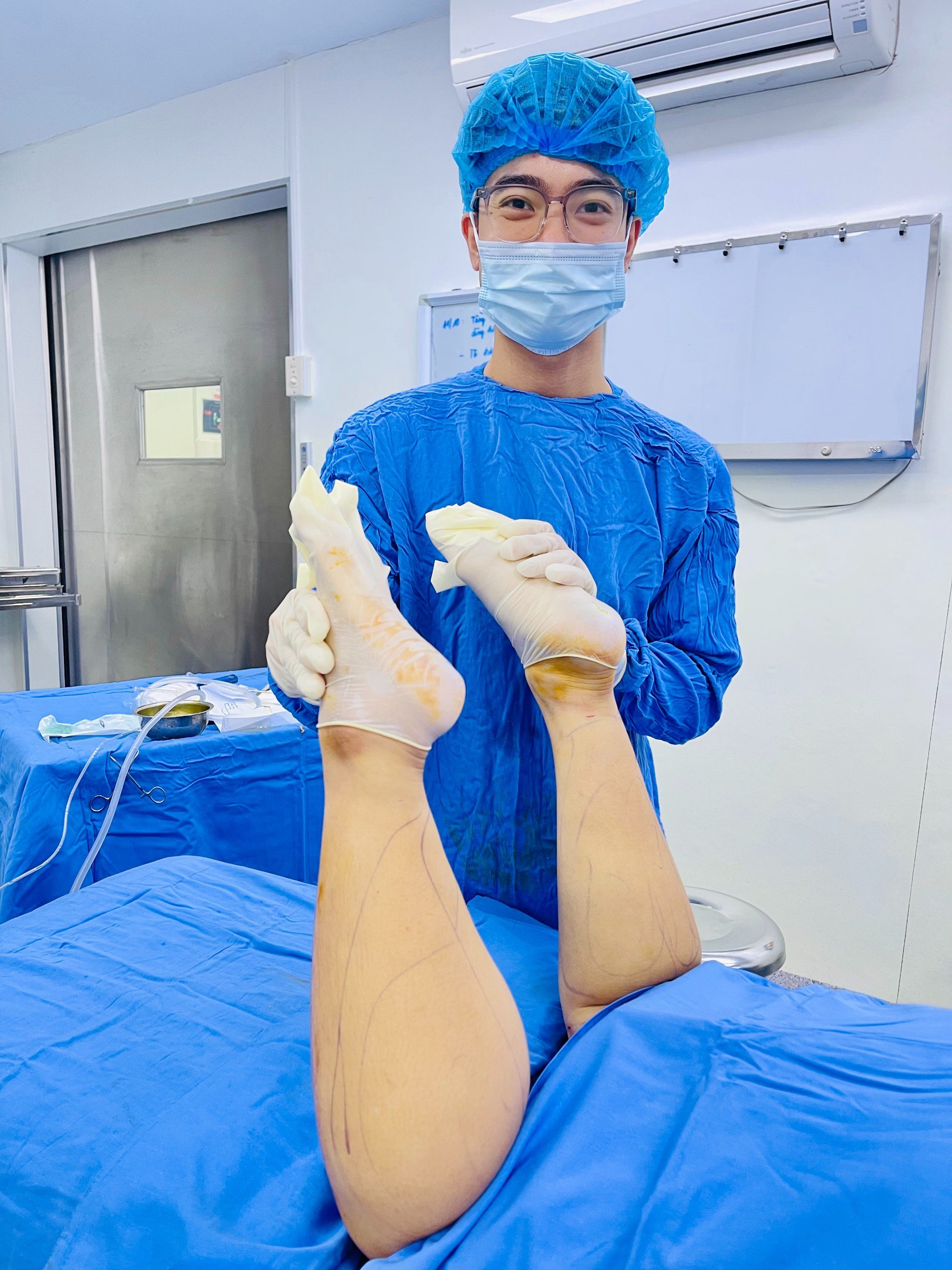
Liposuction may be suitable when large calves are caused mainly by excess fat.
A medical examination is required because large or swollen legs may also be associated with muscle hypertrophy, oedema, lipedema, lymphedema, or vascular disease. These conditions require a different treatment approach.
To support patient safety and achieve an appropriate result, leg liposuction should follow a structured medical process.
The surgeon examines the patient, evaluates the fat distribution, measures the calves, reviews the patient’s expectations, and recommends a suitable treatment plan.
The doctor should also determine whether the size of the legs is caused mainly by fat, muscle, swelling, or skeletal structure.
The patient undergoes appropriate examinations, which may include:
These examinations help determine whether the patient is medically fit for surgery.
The procedure may be performed under local anaesthesia with sedation or general anaesthesia, depending on:
Anaesthesia should be administered and monitored by appropriately qualified medical personnel.
The surgeon marks the treatment areas, creates small access incisions, and inserts a liposuction cannula to remove the selected fat.
The fat should be removed conservatively and evenly to reduce the risk of:
The term “endoscopic liposuction” should only be used when an endoscope is genuinely involved in the procedure.
After removing the fat, the surgeon assesses the skin and overall contour.
Depending on the technology used, an energy-based device may be applied to support tissue contraction. However, no device can guarantee immediate skin tightening or complete collagen regeneration.
Patients with significant loose skin may require a different procedure because liposuction alone removes fat but does not remove excess skin.
Depending on the extent of surgery and the patient’s condition, hospital observation for approximately one to two days may be recommended.
The medical team will:
At Kangnam Aesthetic Hospital, the listed cost of leg liposuction is as follows:
| Service | Approximate price (USD) |
|---|---|
| Lipo 360 calf fat reduction | 1,710 |
The price does not include promotional programmes and may change depending on:
Patients should request a written quotation explaining all included and potential additional costs before surgery.
Among the many aesthetic facilities available, Kangnam Aesthetic Hospital provides leg liposuction for patients seeking treatment for localised fat.
The service includes the following features:
Kangnam applies the Lipo 360 technique as part of its body-contouring services.
A tumescent solution is introduced into the treatment area to:
A small cannula is then used to remove the loosened fat and shape the treatment area.
Claims involving “millions of microscopic water molecules,” “6D pulses,” or automatic whole-body collagen regeneration should be presented cautiously unless supported by clear evidence for the exact device and procedure.
Energy-assisted liposuction technologies may support tissue contraction in selected patients, but the result depends on skin quality, technique, treatment extent, and individual healing.
Kangnam’s leg liposuction service is performed through a structured surgical process with operating-room infection-control measures and medical equipment.
Safety measures should include:
No surgical environment can guarantee absolute sterility or completely eliminate infection and other complications. Proper protocols reduce risk but do not remove it entirely.
Leg liposuction at Kangnam is performed by aesthetic surgeons under the institution’s professional framework.
The surgical team evaluates the distribution of fat and plans the treatment to reduce unnecessary injury to nearby tissues.
Membership in a professional association does not by itself guarantee treatment quality. Patients should verify the individual surgeon’s:
Leg liposuction may remove a meaningful amount of localised fat and improve the contour of suitable patients.
However, claims that the procedure removes up to 98% of calf fat should not be interpreted as a guaranteed or medically appropriate target. Removing excessive fat may increase the risk of:
The procedure may also be considered in selected revision cases, but correcting previous liposuction is generally more complex and may carry greater risks than a first procedure.
Leg liposuction may help reduce localised fat and create slimmer, more balanced leg contours. It is most suitable for adults in good health whose large calves are caused primarily by fat rather than muscle, swelling, or bone structure.
As with any surgical procedure, leg liposuction carries potential risks, including:
Choosing a licensed hospital, an appropriately qualified surgeon, and a medically supervised treatment process is essential.
Patients interested in leg liposuction should undergo an in-person medical examination to determine whether the procedure is suitable and to receive a personalised treatment and cost estimate.
What Is Liposuction? Procedure, Costs, and Important Considerations
Liposuction in Vietnam – Advanced Body Contouring With Modern Technology
Best Liposuction in Ho Chi Minh City for International Patients