
Date posted: 03-07-2026 | Last updated : 07-07-2026
After years of noticing her face becoming increasingly hollow due to age-related volume loss in the forehead, temples, and tear troughs, Rachel Taylor decided to undergo autologous fat grafting at Kangnam Aesthetic Hospital in hopes of restoring a fresher, more youthful appearance. Following a personalized treatment plan, the hollow areas of her face were naturally replenished, resulting in a fuller, more balanced, and rejuvenated facial contour.
As people age, facial aging is not only characterized by wrinkles but also by the gradual loss of facial volume. This was the primary concern that made Rachel Taylor feel increasingly self-conscious whenever she looked in the mirror.
Her forehead and temples had become noticeably sunken, while deepening tear troughs beneath her eyes gave her face a tired and fatigued appearance despite maintaining a healthy lifestyle. These changes are common signs of facial aging, resulting from the progressive loss of subcutaneous fat that naturally occurs over time.
After researching various facial rejuvenation options, Rachel sought a treatment that could restore facial volume using her own tissue while maintaining natural-looking facial harmony.
During her search, Rachel discovered Kangnam Aesthetic Hospital, one of Vietnam’s leading aesthetic hospitals that welcomes a large number of domestic and international patients each year.
What ultimately convinced her to choose Kangnam was its comprehensive consultation process, experienced surgeons specializing in autologous fat grafting, and well-equipped medical facilities. For many international patients, Kangnam is also recognized for its professional services, standardized treatment protocols, and dedicated patient care throughout the entire aesthetic journey.
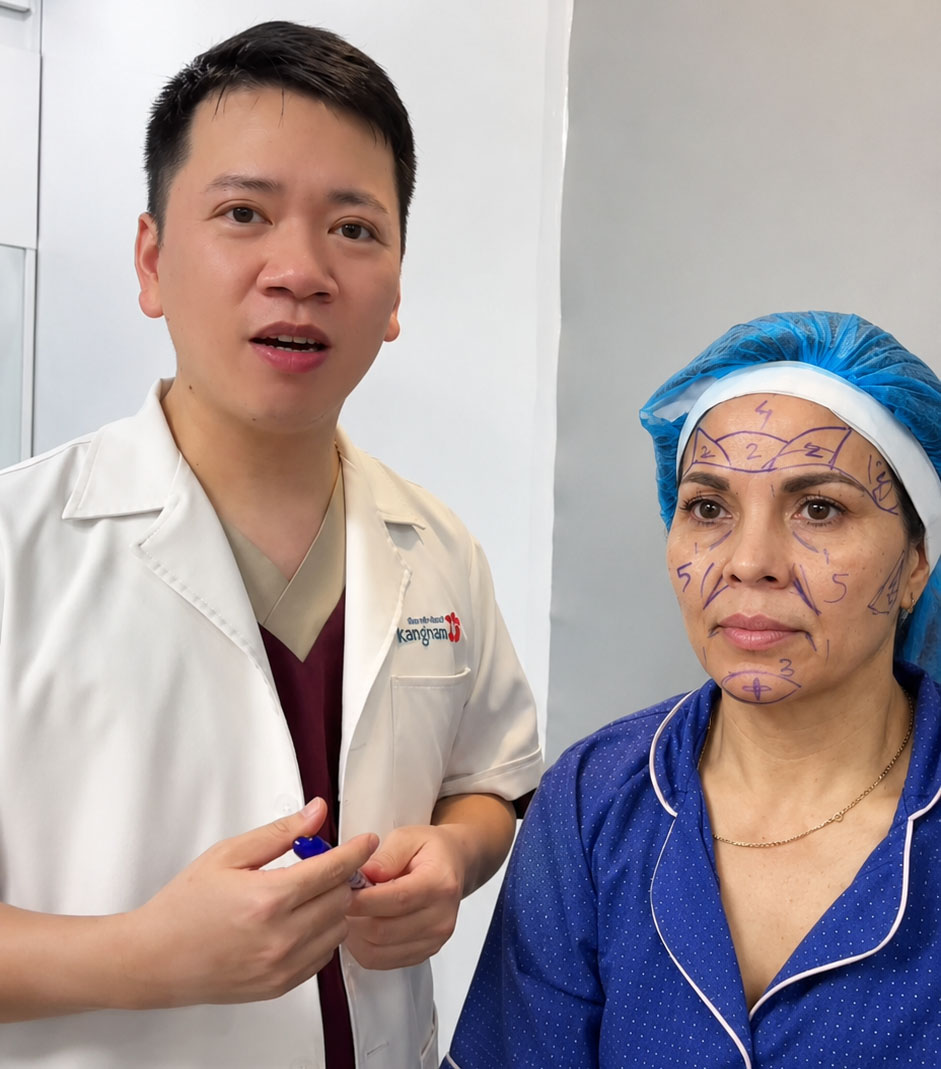
During her consultation, Nguyen Duc Quynh, M.Sc., M.D. (Dr. Daniel Nguyen) personally evaluated the degree of volume loss affecting Rachel’s forehead, temples, and tear troughs. After a comprehensive facial assessment and general health evaluation, Dr. Nguyen developed a personalized autologous fat grafting treatment plan tailored to her facial anatomy and aesthetic goals.
Based on the clinical assessment, Dr. Nguyen recommended autologous fat grafting to restore volume to the sunken areas of Rachel’s face.
Unlike synthetic dermal fillers, autologous fat grafting utilizes the patient’s own fat tissue, which is harvested, processed, purified, and strategically reinjected into areas requiring volume restoration. This technique is widely chosen by individuals seeking a natural approach to correcting facial volume deficiency while preserving facial harmony.
At Kangnam Aesthetic Hospital, the procedure follows a standardized clinical protocol:
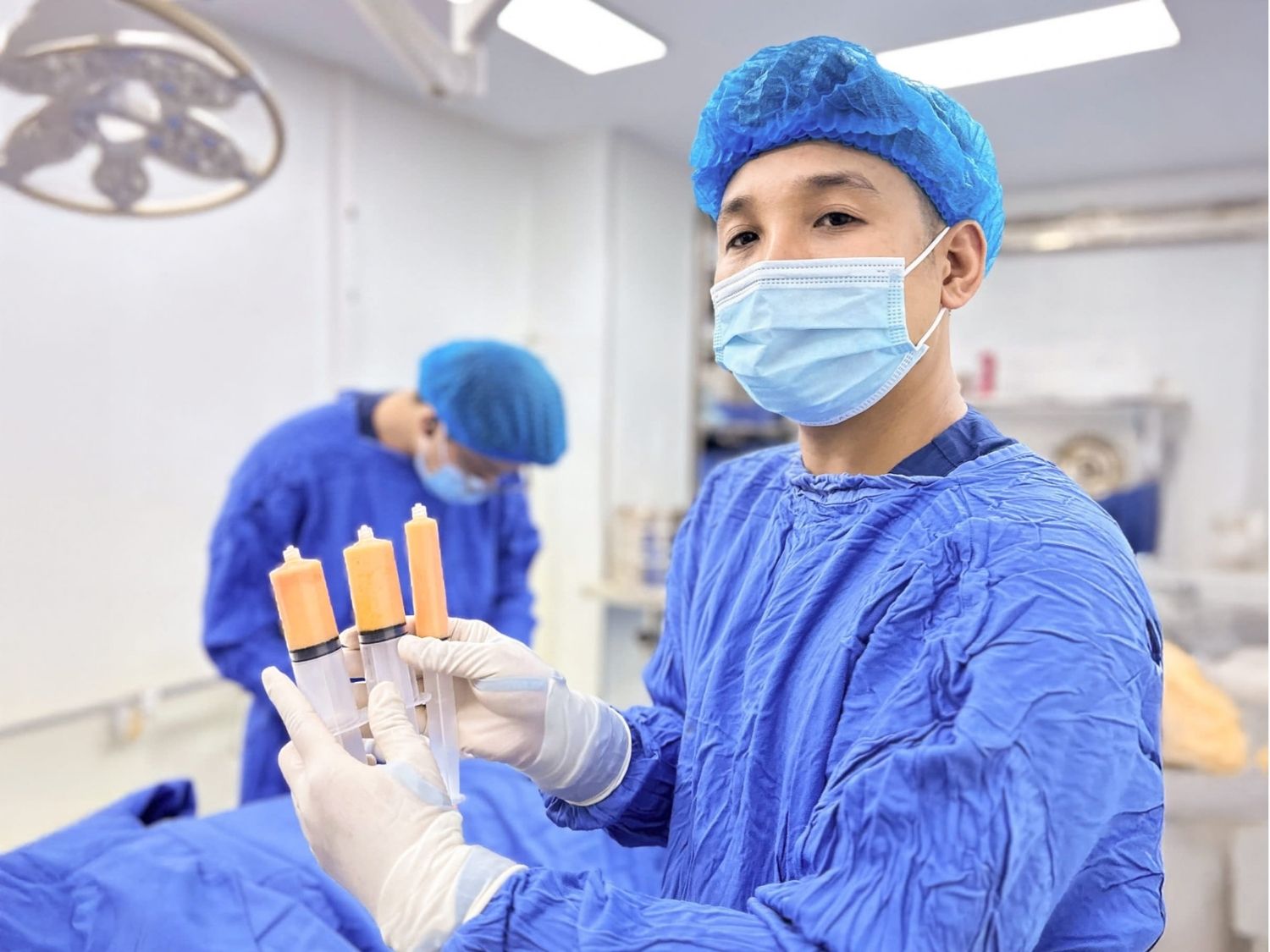
By tailoring the treatment plan to each patient’s unique facial anatomy, the surgeon aims to restore balanced facial contours rather than simply filling isolated hollow areas.
Following recovery and adherence to the postoperative care instructions provided by her surgeon, Rachel gradually noticed significant improvement in the fullness of her forehead, temples, and tear troughs. Her facial contours appeared more balanced and refreshed, while the previously hollow appearance was visibly softened, contributing to a naturally younger and healthier look.
For Rachel, the most satisfying aspect of her journey was not only the aesthetic improvement but also the overall experience at Kangnam. From consultation and treatment to postoperative care, she felt well supported by the medical team throughout every stage of the process.
Today, autologous fat grafting is one of the facial rejuvenation procedures frequently chosen by both domestic and international patients at Kangnam Aesthetic Hospital to address facial volume loss caused by aging or congenital volume deficiencies. However, treatment outcomes vary depending on each individual’s anatomy, medical condition, healing response, and the treatment plan recommended after a direct consultation with a qualified physician.
Medical Information
Privacy Notice: To protect patient confidentiality, certain identifying information has been modified. All images and information published in this article are used with the patient’s informed consent.
Medical Disclaimer: This article is intended for informational purposes only and should not replace consultation, diagnosis, or treatment by a qualified healthcare professional. Individual treatment outcomes may vary depending on each patient’s medical condition, anatomy, and biological response.