Date posted: 21-07-2026 | Last updated : 27-07-2026
Ptosis eyelid surgery may improve both vision and appearance in people whose upper eyelids droop because of ageing, excess skin, or weakness of the eyelid-lifting muscles.
Before undergoing treatment, many patients want to know how much ptosis correction costs. The following article explains the estimated price, the factors that affect it, insurance considerations, and important preparation guidelines.
Ptosis eyelid surgery currently costs approximately VND 9,000,000–26,000,000, equivalent to around USD 342–988.
The exact price depends on:
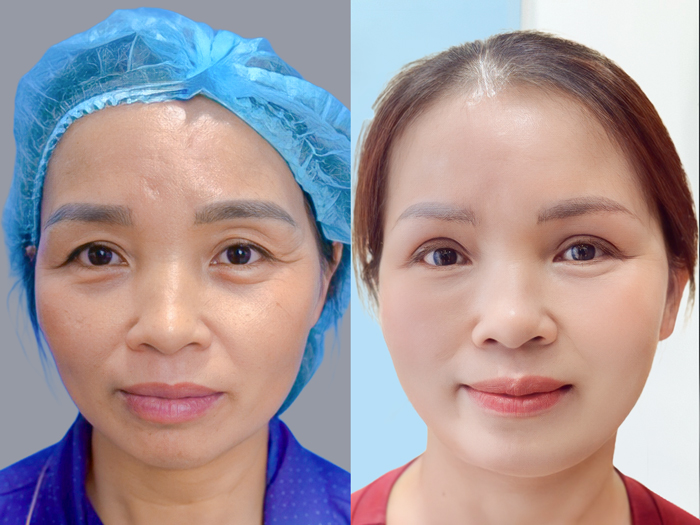
The cost of ptosis and eyelid surgery varies depending on the patient’s condition and selected technique.
| Service | Approximate cost (USD) |
|---|---|
| Korean Plasma upper or lower blepharoplasty | 342 |
| 6D upper or lower blepharoplasty | 570 |
| Perfect upper or lower blepharoplasty | 988 |
These listed services are general blepharoplasty procedures. True ptosis correction may require additional treatment of the levator muscle or another eyelid-lifting structure, so the final quotation may differ.
Patients should confirm whether the price includes:
💬 Concerned about the overall treatment cost?
👉 Review the latest Kangnam prices and available procedures in How Much Does Eyelid Surgery Cost?.
The price of ptosis correction is influenced by the severity of the condition, the treatment method, the surgeon’s expertise, the medical facility, and available promotions.
Mild eyelid drooping may require a less complex procedure, while severe ptosis may involve adjustment or shortening of the levator muscle.
More complex cases may cost more, particularly when ptosis:
A doctor should first determine whether the condition is true ptosis or simply excess upper-eyelid skin.
Different procedures have different costs, including:
An eyelid suture procedure can create a crease but generally does not correct true muscle-related ptosis.
Patients considering a newer eyelid procedure may review What Is 6D Eyelid Surgery?.
A surgeon with appropriate training and extensive experience in eyelid or oculoplastic procedures may charge a higher professional fee.
Ptosis correction requires precise evaluation of:
Accurate surgery is important for reducing the risk of overcorrection, undercorrection, asymmetry, difficulty closing the eyes, and visual discomfort.
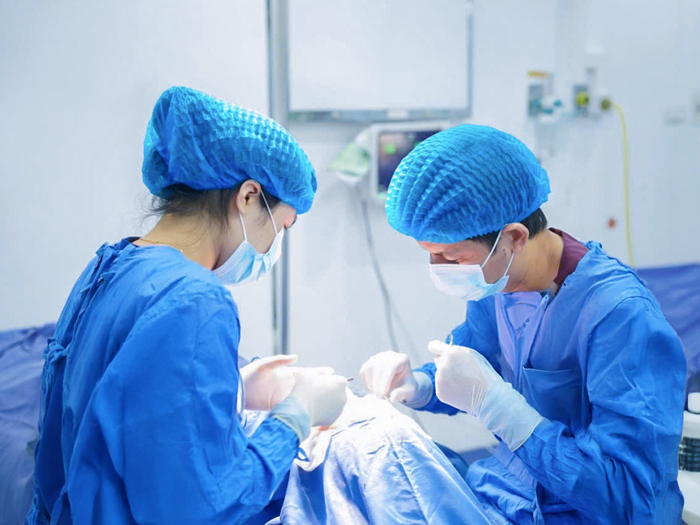
An experienced doctor can assess eyelid function and perform the procedure more precisely.
Licensed hospitals and specialist clinics may have higher prices because they invest in:
Patients should avoid unlicensed providers or beauty salons offering surgery without suitable medical facilities.
Some facilities offer discounts during special events or promotional periods.
Patients should confirm that a reduced price does not exclude important services such as examinations, anaesthesia, medication, or follow-up care.
A higher price does not automatically guarantee better surgery. However, an unusually cheap service may involve compromised medical standards or an unqualified practitioner.
Patients should select a service based on the following criteria.
The provider should be authorised to perform cosmetic or functional eyelid surgery.
The doctor should hold a valid medical licence and have appropriate training in:
Patients may review previous results, but photographs should be considered supporting information rather than a guarantee.
Images may be affected by:
The provider should explain:
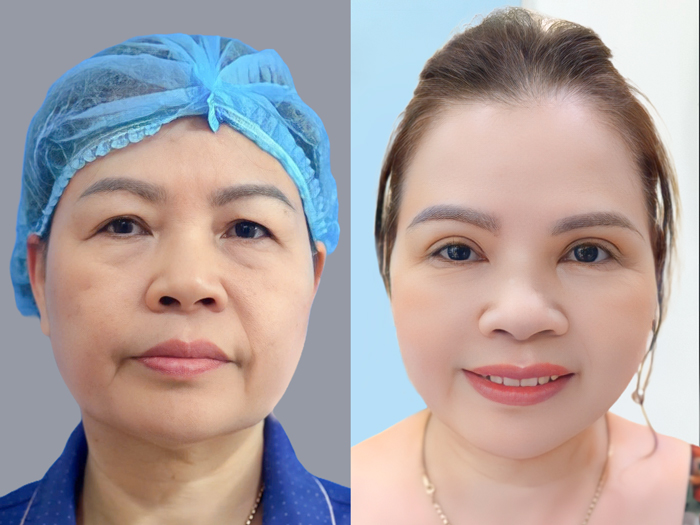
Ptosis correction may improve eyelid balance and, in suitable cases, expand the upper visual field.
Choosing an unverified low-cost provider may increase the risk of:
📍 Unsure which eyelid technology is appropriate?
👉 Learn more about the features, recovery, and expected results of 6D Eyelid Surgery.
In selected cases, ptosis surgery may be eligible for Vietnamese health-insurance coverage when it is considered medically necessary rather than cosmetic.
Possible eligibility conditions may include:
Cosmetic blepharoplasty and correction of mild eyelid drooping for appearance alone are generally not covered.
Health-insurance rules, referral requirements, reimbursement levels, and approved facilities may change. Patients should confirm current eligibility directly with:
A visual-field examination or specialist ophthalmology assessment may be required to document the functional effect of ptosis.
To support a safe procedure and a satisfactory result, patients should prepare carefully and follow the doctor’s instructions.
Patients should undergo an in-person examination to identify the cause of eyelid drooping and determine the correct procedure.
The doctor may assess:
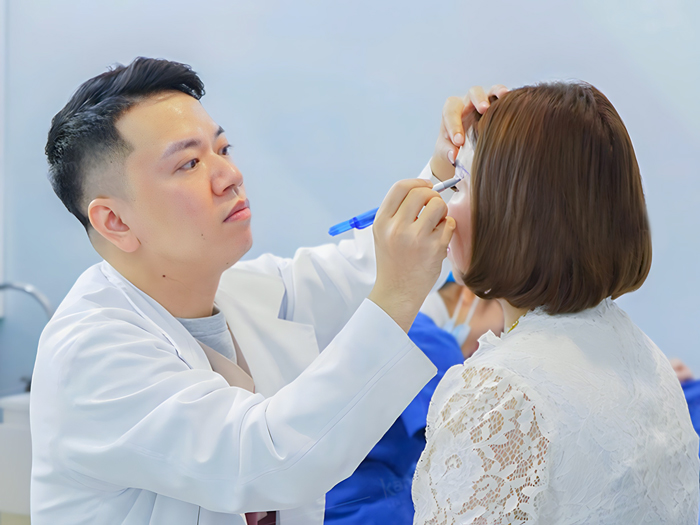
Patients should receive an examination from a qualified specialist before selecting a treatment.
Ptosis may occasionally be associated with neurological or muscular conditions. Sudden eyelid drooping, double vision, facial weakness, or unequal pupils requires prompt medical evaluation rather than routine cosmetic treatment.
Patients should tell the doctor about:
Medication should not be stopped without approval from the prescribing doctor.
Before surgery, patients should:
After surgery, patients should follow instructions regarding:
A cold compress should be wrapped in a clean cloth and applied gently without placing direct pressure on the incision.
Patients should not begin warm compresses unless advised by the doctor.
Follow-up appointments allow the doctor to assess:
Patients should seek prompt medical attention if they experience:
📌 Before making a decision, patients can also review:
👉 Is Eyelid Surgery Painful? – Information about anaesthesia, postoperative discomfort, and recovery after eyelid surgery.
Understanding how much ptosis eyelid surgery costs is an important part of treatment planning. However, patients should consider not only the price but also the cause and severity of ptosis, the surgeon’s qualifications, the medical standards of the facility, and the postoperative-care process.
A specialist examination is essential to determine whether the patient requires cosmetic blepharoplasty, functional ptosis correction, or a combination of both procedures.