Date posted: 26-07-2026 | Last updated : 27-07-2026
Many patients considering eyelid surgery wonder whether they need to stay overnight in hospital, particularly when they have limited recovery time.
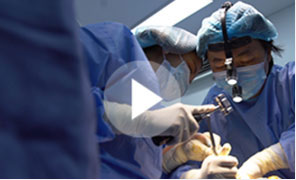
In most straightforward cases, eyelid surgery is performed as a day procedure under local anaesthesia. Patients can usually return to their accommodation or home after a short period of postoperative observation.
However, same-day discharge depends on the patient’s health, the type of procedure, the anaesthesia used, and the doctor’s assessment after surgery.
Most patients do not need to stay overnight after standard eyelid surgery.
The procedure commonly takes approximately 30–60 minutes, although the duration may be longer when:
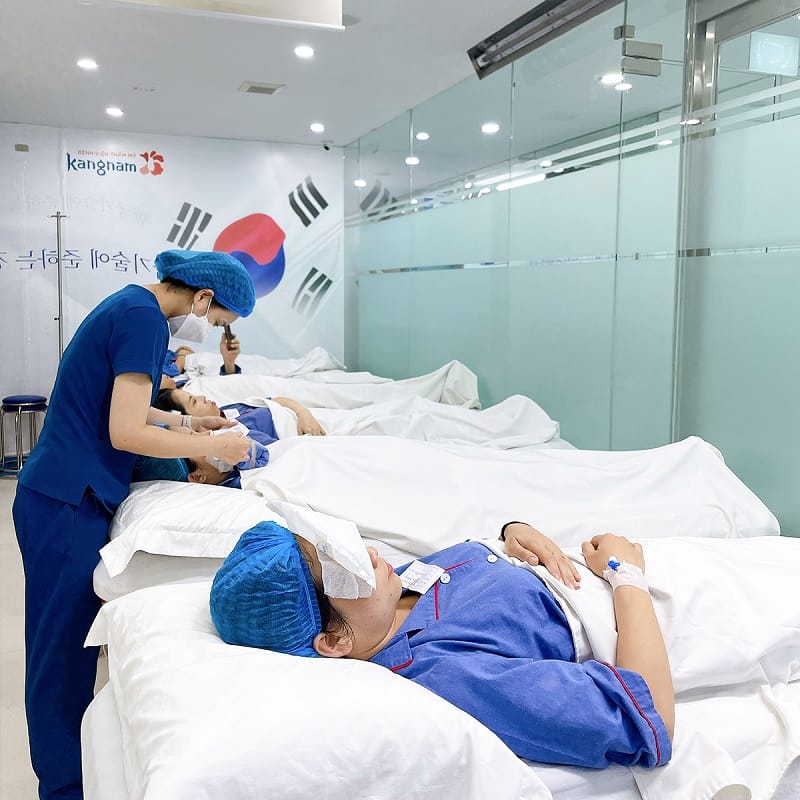
Patients usually rest in a postoperative area for a short period after eyelid surgery.
After surgery, patients may remain in the recovery area for approximately 30 minutes to several hours while the medical team checks:
If the patient is stable and the doctor has no concerns, discharge on the same day is commonly possible.
An overnight stay may be considered when:
General anaesthesia is not routinely required for standard blepharoplasty. Most uncomplicated procedures are performed using local anaesthesia, sometimes combined with light sedation.
Modern surgical devices may support controlled treatment, but they cannot guarantee minimal swelling, no bleeding, or immediate recovery for every patient.
Although most patients can leave on the same day, some may need longer monitoring at the medical facility.
Patients who bruise easily or develop noticeable swelling may be observed for longer.
The medical team may monitor for:
Having sensitive skin alone does not necessarily mean an overnight stay is required.
Additional assessment may be necessary for people with:
Patients should disclose all medical conditions, prescription medication, supplements, and allergies before treatment.
Medication should not be stopped without approval from the prescribing doctor.
Longer observation may be recommended when eyelid surgery is combined with:
These treatments may involve a longer operation, more swelling, or additional anaesthesia.
Patients who live far from the hospital or who have travelled internationally may be advised to remain nearby after surgery.
This does not always mean they must be admitted overnight. They may instead stay at a hotel or other suitable accommodation close to the hospital.
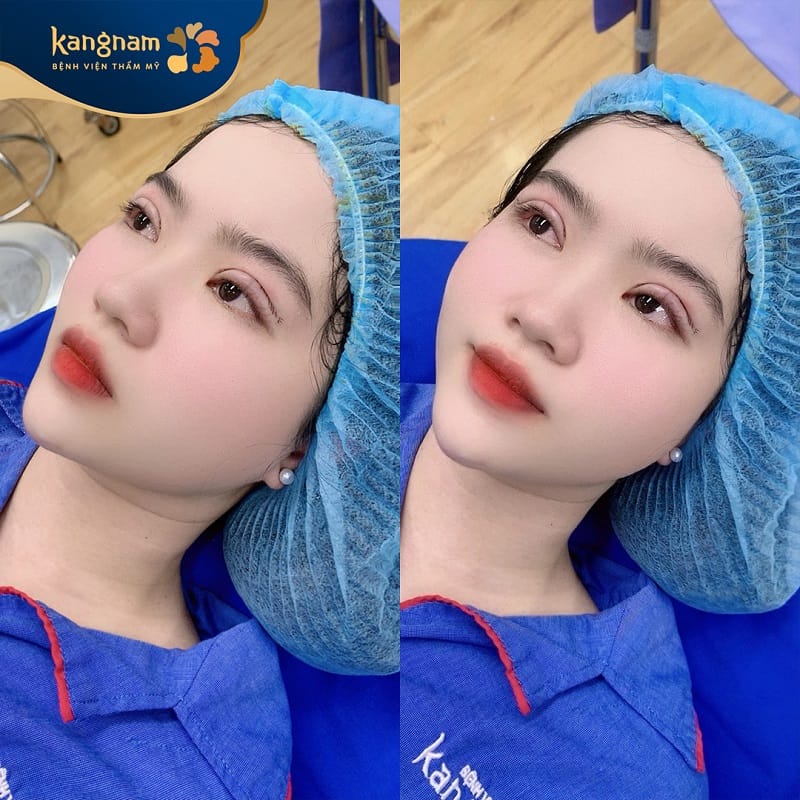
Most patients can leave after surgery, while selected cases may require longer observation.
Overseas Vietnamese patients should plan enough time for:
Patients should not travel alone immediately after receiving sedation.
Kangnam Aesthetic Hospital provides eyelid procedures that may be completed as day surgery for suitable patients.
A typical process may include the following steps.
The doctor evaluates:
The doctor then recommends an appropriate technique.
The medical team reviews the patient’s health to determine whether surgery is appropriate.
Assessment may include:
Additional ophthalmology or medical assessment may be required for patients with eye disease or significant medical conditions.
Local anaesthetic is injected into the eyelid area to control pain during the procedure.
Patients may experience:
Local anaesthesia reduces pain but does not guarantee that the patient will feel no sensation or discomfort.
Patients concerned about the experience can review Is Eyelid Surgery Painful?.
Depending on the treatment plan, the doctor may:
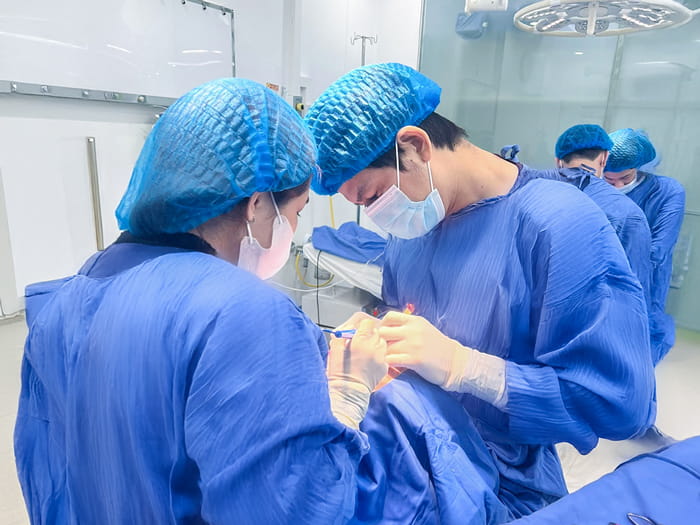
Local anaesthesia is commonly used before eyelid surgery.
The goal is to improve eyelid shape while preserving normal eye closure and function.
No surgical method can guarantee:
After treatment, patients rest in the recovery area while the medical team assesses their condition.
Cold compresses may be applied when recommended.
The patient may be discharged after the doctor confirms that:
Patients who receive sedative medication should not drive themselves home.
Before discharge, patients may receive guidance regarding:
Detailed instructions are available in Important Aftercare Instructions Following Eyelid Surgery.
Kangnam provides selected consultation and scheduling services for overseas Vietnamese and international patients.
Patients may submit photographs and discuss their concerns before arriving in Vietnam.
A preliminary consultation may cover:
Online consultation is useful for initial planning but cannot replace an in-person medical examination.
The hospital may help coordinate:
Patients should avoid planning surgery too close to their return flight because postoperative timing may need to change according to healing.
Overseas patients may receive instructions about:
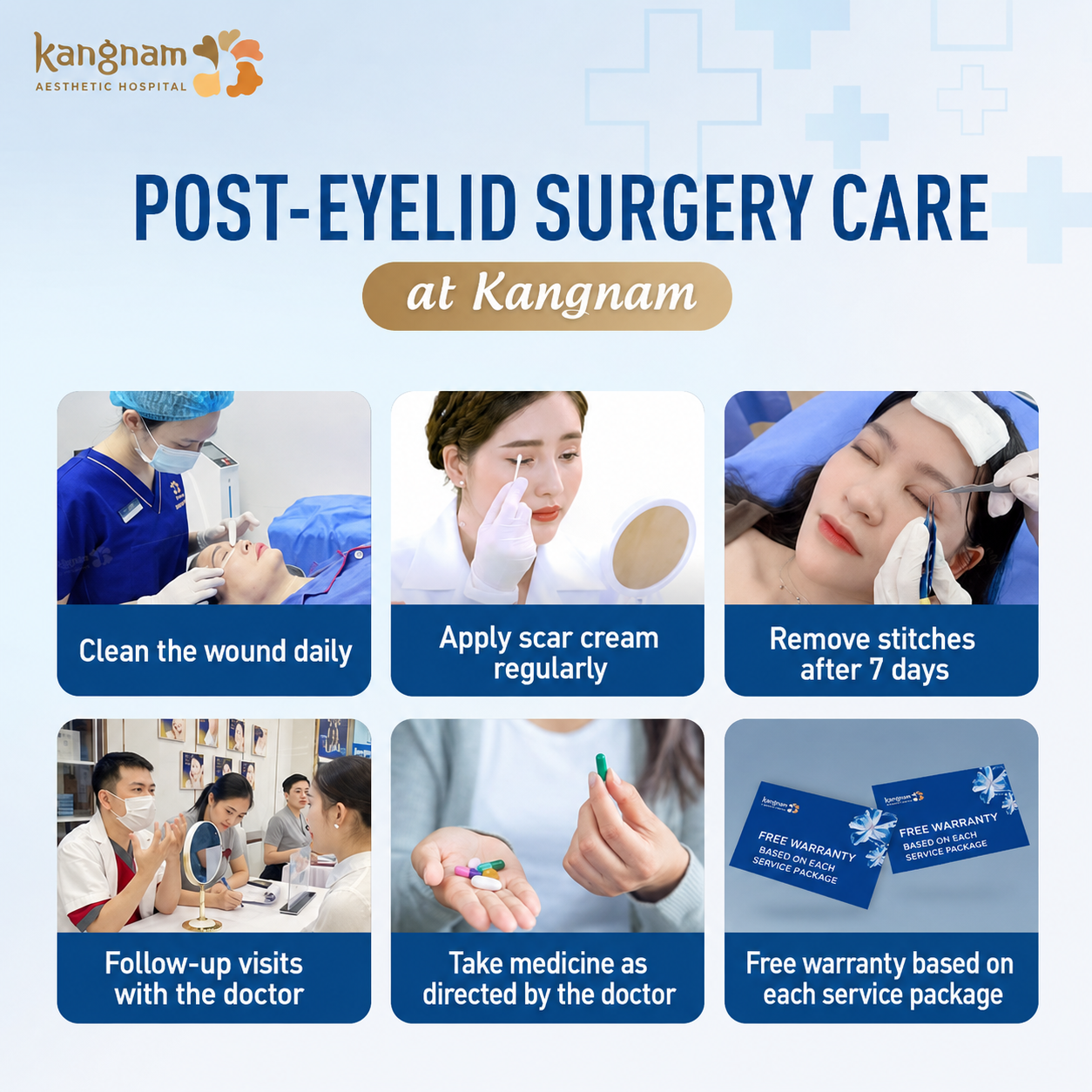
Structured postoperative care supports recovery following eyelid surgery.
Remote support may be useful after the patient returns overseas, but it does not replace in-person examination when complications are suspected.
Kangnam may provide or coordinate information relating to transportation and accommodation for selected patients.
Patients should confirm in advance:
These services may vary according to location, treatment package, and availability.
Overseas patients may benefit from remaining in Vietnam for approximately seven to ten days, particularly when external sutures need to be removed.
The appropriate stay depends on:
Patients should receive clearance before long-distance travel.
Patients should arrange the following before surgery:
They should avoid driving, drinking alcohol, or making important decisions after sedative medication.
Patients should contact the medical team promptly if they experience:
Emergency assessment is required for:
These symptoms should not be managed only through an online consultation.
Most patients undergoing standard eyelid surgery do not need to stay overnight in hospital.
The procedure is commonly performed under local anaesthesia, followed by a period of observation before same-day discharge.
Longer monitoring or an overnight stay may be recommended when general anaesthesia is used, several procedures are combined, the patient has significant medical conditions, or postoperative concerns develop.
Overseas Vietnamese patients should plan sufficient time in Vietnam for early follow-up and should confirm accommodation, transport, and remote-support services directly with the hospital before travelling.