
Date posted: 17-11-2026 | Last updated : 18-11-2026
Lower blepharoplasty for eye bags can leave a small scar, but it is usually well concealed beneath the lower eyelashes or completely hidden inside the eyelid, depending on the surgical technique. An external incision allows surgeons to remove excess skin and adjust under-eye fat, while an internal incision avoids a visible skin scar. With appropriate surgical planning and postoperative care, most patients can achieve a smoother under-eye contour with minimal visible scarring.
Lower blepharoplasty does not always leave a visible external scar.
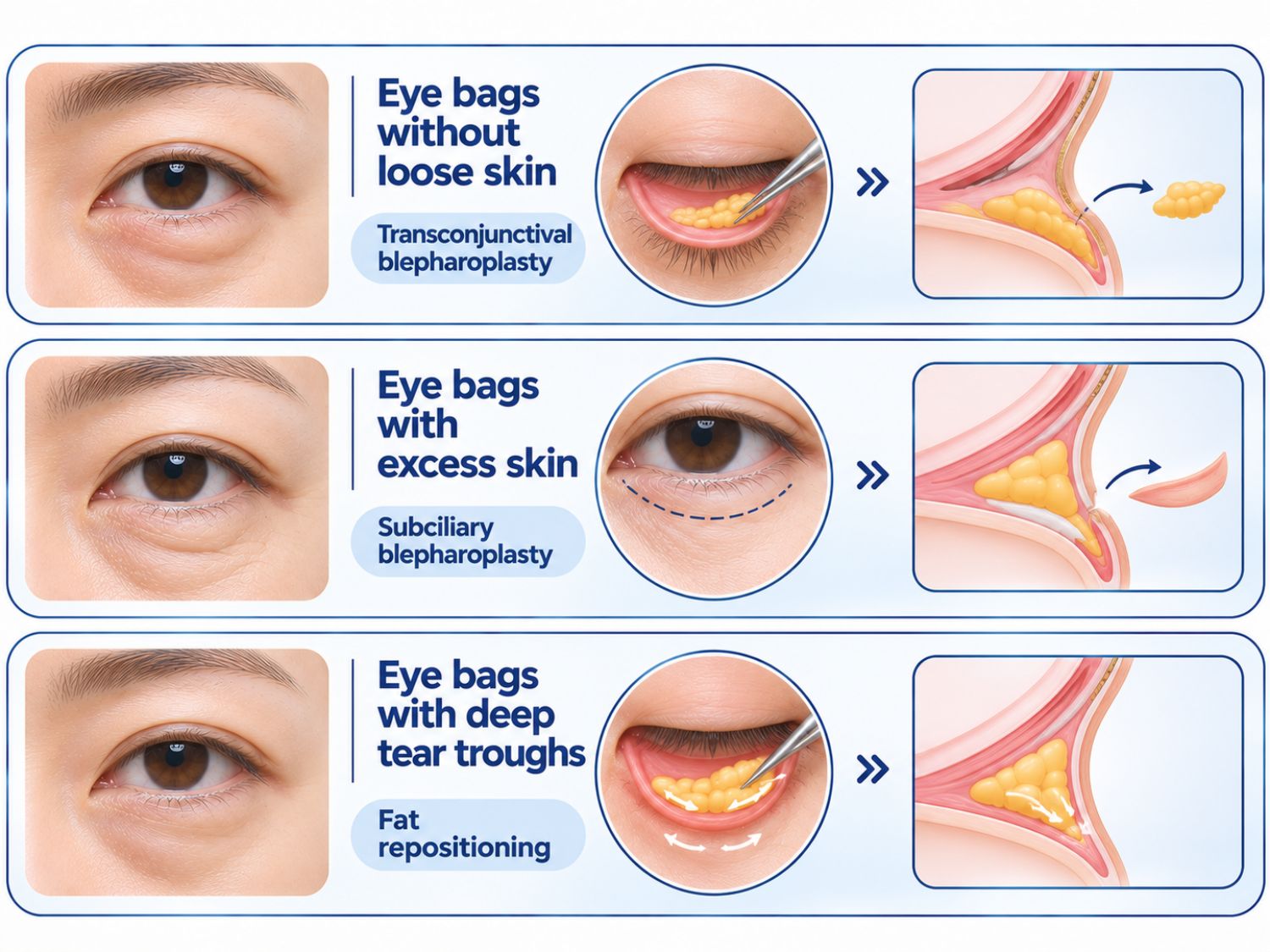
Transconjunctival surgery uses an incision inside the lower eyelid, avoiding an external skin scar.
Subciliary surgery places the incision just beneath the eyelashes, allowing removal of excess skin and adjustment of fat.
External scars generally fade over several months, although individual healing varies.
Scars after lower blepharoplasty depend primarily on whether the surgeon makes an incision beneath the eyelashes or inside the lower eyelid. External incisions create a small skin scar that generally becomes less noticeable as healing progresses, while internal incisions avoid a visible external scar.
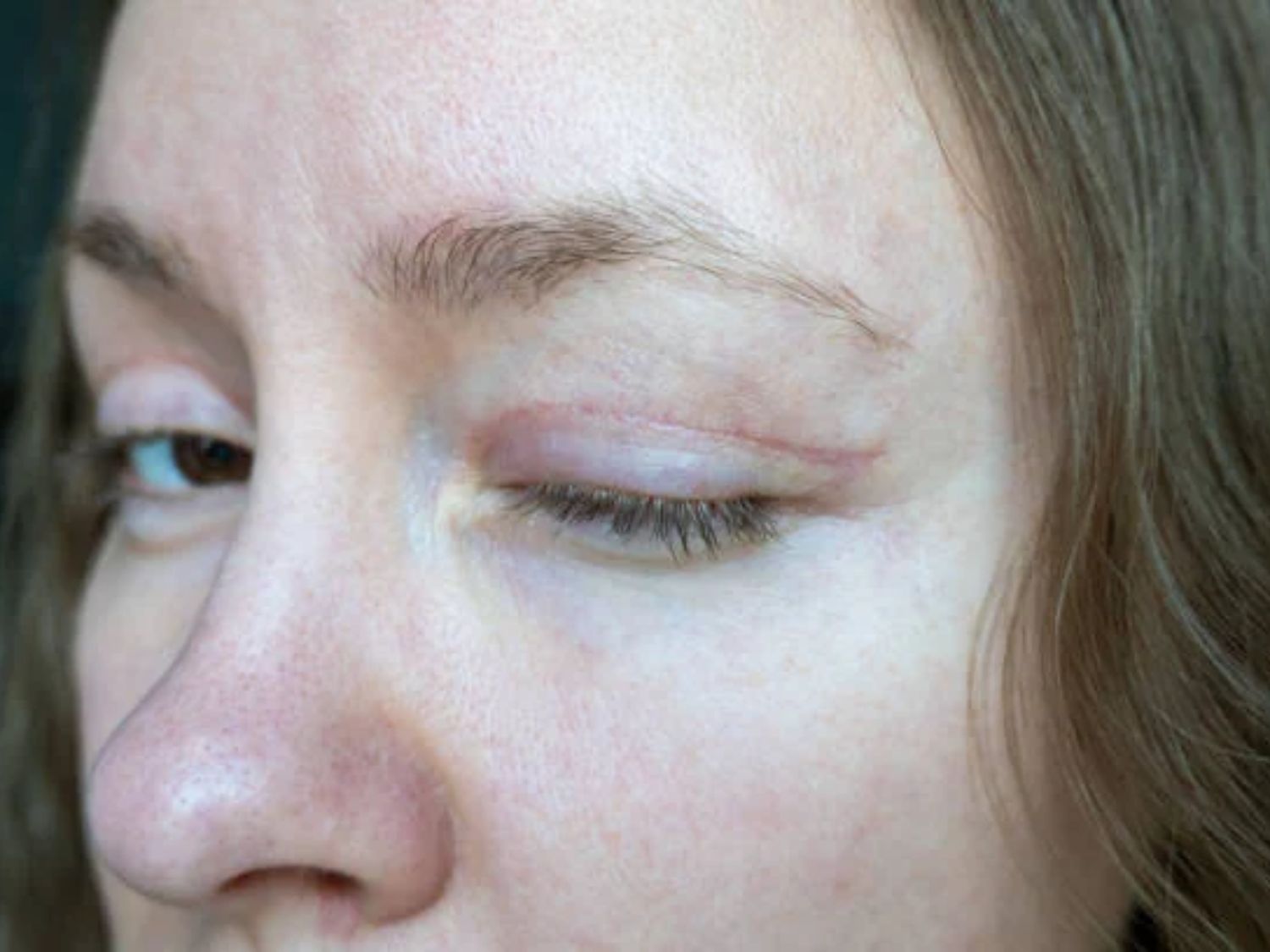
External Incision: Subciliary Lower Blepharoplasty
The surgeon makes a fine incision right beneath the lower eyelash line to directly access and adjust underlying fat, muscle, and skin. While scar formation is inevitable, careful placement close to the lashes ensures the healing mark remains discreet.
Internal Incision: Transconjunctival Lower Blepharoplasty
This technique accesses fat compartments through the inner eyelid conjunctiva, avoiding any external skin incisions. It is ideal for patients with prominent fat bags who require no skin removal, resulting in zero visible external scarring.
Comparison of Lower Blepharoplasty Incisions
| Feature | External incision | Internal incision |
| Incision location | Just below the lower eyelashes | Inside the lower eyelid |
| Visible skin scar | Possible, usually concealed near lashes | No external skin scar |
| Fat removal/repositioning | Yes | Yes |
| Excess skin removal | Yes | Not through the internal incision alone |
| Best candidates | Eye bags with loose or excess skin | Eye bags with good skin elasticity |
| Main limitation | Risk of visible scars and lower-lid retraction | Cannot directly remove excess external skin |
According to the American Society of Plastic Surgeons (ASPS), lower eyelid surgery may use either an incision beneath the lashes or an internal transconjunctival incision. The organization explains that external incisions are designed to conceal scars, while the internal approach allows fat removal or repositioning without removing skin.
The most appropriate lower blepharoplasty technique depends on whether eye bags are caused by protruding fat alone or accompanied by excess skin and weak eyelid support. Choosing the correct approach helps improve under-eye contours while avoiding unnecessary incisions or tissue removal.
External lower blepharoplasty scars generally become less noticeable over several months, with scar maturation often continuing for 6–12 months. Early redness or firmness does not necessarily indicate permanent scarring, as the incision continues to heal and remodel.

These are general estimates. Scar maturation can take longer in some individuals, particularly after complicated healing or revision surgery.
Visible scarring is more likely when incision placement, wound tension, healing conditions, or individual scar responses are unfavorable. Lower eyelid skin is thin, so precision is important not only for appearance but also for preserving normal eyelid position.
Several factors influence the final scar:
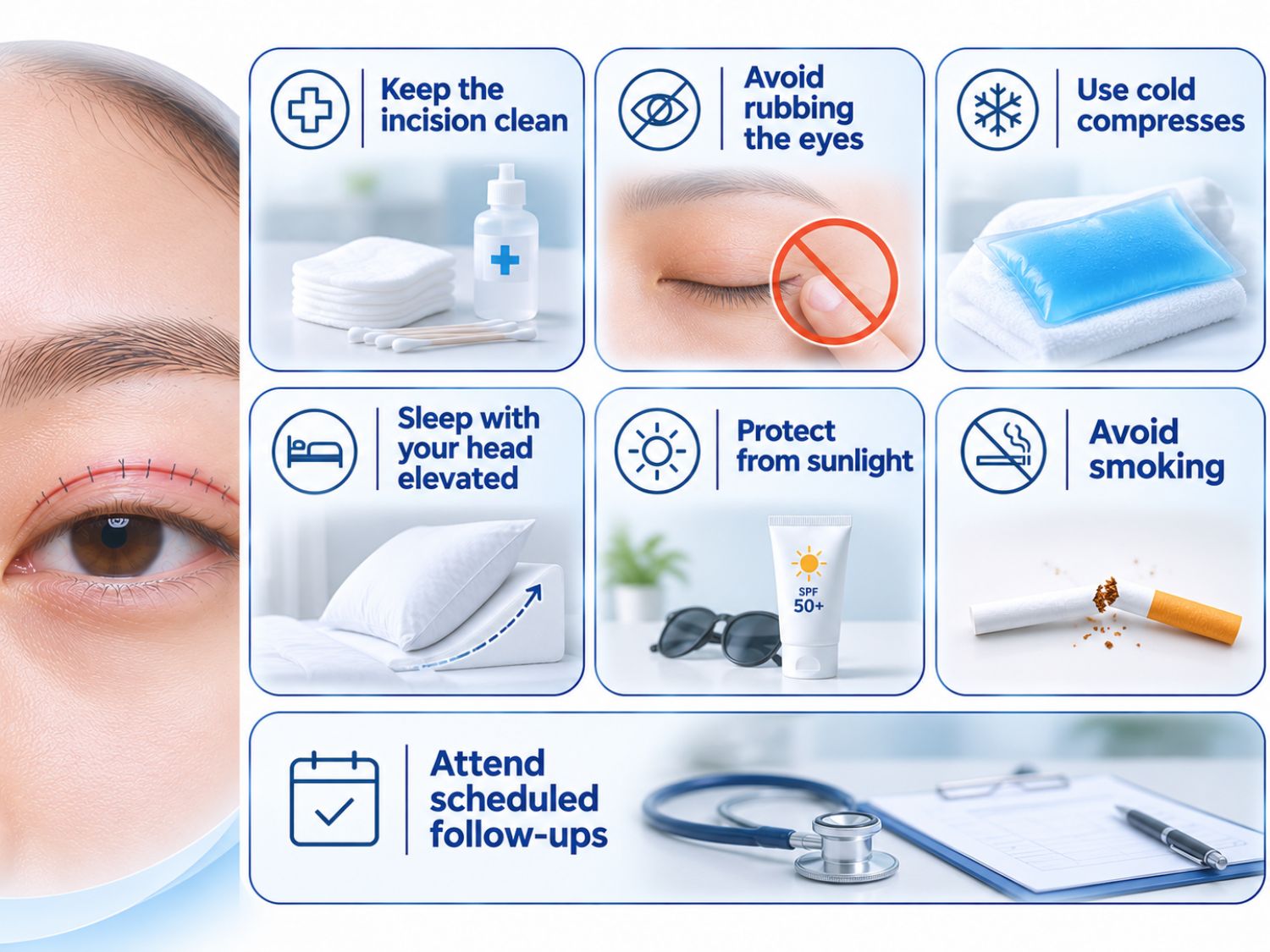
Proper postoperative care helps protect the lower eyelid incision, reduce unnecessary inflammation, and support normal scar maturation. Although good aftercare cannot guarantee an invisible scar, it can reduce avoidable complications that affect wound healing.
Should You Use Scar Cream After Lower Blepharoplasty?
Scar treatment products should only be applied after the incision has completely closed and the surgeon confirms they are suitable.
Silicone-based scar products may help selected external scars, but they must be formulated or approved for safe use near the eyes.
Avoid applying unapproved creams, acids, essential oils, or silicone products directly onto a fresh incision. These substances can cause irritation or contaminate the healing wound.
Mild redness and a fine incision line are expected during early healing, but worsening pain, abnormal discharge, persistent eyelid pulling, or changes in vision require medical assessment. Some complications involve deeper tissue damage rather than the skin scar itself.
A properly positioned external incision is usually difficult to notice after healing, even when smiling. However, scar visibility depends on skin tension, incision placement, and individual healing, so complete invisibility cannot be guaranteed.
Transconjunctival blepharoplasty does not create a visible external skin scar because the incision is made inside the lower eyelid. Internal tissues still undergo healing and may develop scar tissue, so the technique should not be described as completely scar-free.
An internal incision alone cannot directly remove excess lower eyelid skin. If significant loose skin is present, the surgeon may recommend an external incision or an additional skin-tightening procedure based on the patient’s anatomy.
Silicone scar gel should not be applied to an open incision or used near the eye without medical approval. The surgeon may recommend an eye-appropriate scar treatment only after the wound has fully closed and initial healing is satisfactory.