Date posted: 17-11-2026 | Last updated : 18-11-2026
Most patients should plan to wait approximately 7–14 days after eyelid surgery before flying home, depending on their recovery progress and flight duration. Some patients may be cleared for short flights after 7–10 days, while long-haul travelers or those with complications may need more time.
7–14 days: A practical planning window for international patients after uncomplicated eyelid surgery.
Days 5–7: Sutures may be removed and early wound healing assessed, depending on the surgical technique.
Long-haul flights: May require additional recovery time, particularly when blood-clot risk factors are present.
Postoperative care: Medication, eye protection, hydration, and scheduled follow-up remain important during travel.
The first 7–10 days after eyelid surgery are generally the most important for early wound healing, swelling reduction, and postoperative examinations. Although many patients can resume light activities during this period, the eyelids may continue to heal and change in appearance for several months.
| Recovery period | Expected condition | Travel considerations |
| Days 1–3 | Swelling, bruising, tightness, and mild discomfort are common | Prioritize rest and early monitoring |
| Days 4–7 | Swelling may begin to decrease; wounds are assessed and stitches may be removed | Attend scheduled follow-up; avoid premature departure |
| Days 7–10 | Many uncomplicated wounds show satisfactory early healing | Short flights may be considered after medical clearance |
| Days 10–14 | Swelling generally continues to improve and routine activities become easier | More flexibility for international travel if recovery is stable |
| After 2 weeks | Further reduction in swelling and gradual eyelid contour improvement | Continue aftercare; travel restrictions depend on individual findings |
The timeline is an estimate rather than a guarantee that every patient will be ready to fly on a specific date.
Kangnam’s published eyelid surgery recovery guide describes early wound healing over approximately 7–10 days, while eyelid contours may take 1–3 months to look more settled.
Cabin pressure changes do not usually damage normally healing eyelid incisions.
The main concerns after cosmetic eyelid surgery are wound condition, eye dryness, postoperative swelling, and access to medical care if complications occur.
The American Academy of Ophthalmology – Flying After Eye Surgery or With an Eye Condition (2026) explains that flying is generally safe after most operations involving the outside of the eye or eyelids. It emphasizes keeping the eye clean, preventing dryness, and attending postoperative examinations; restrictions are different for certain internal eye surgeries involving gas bubbles.
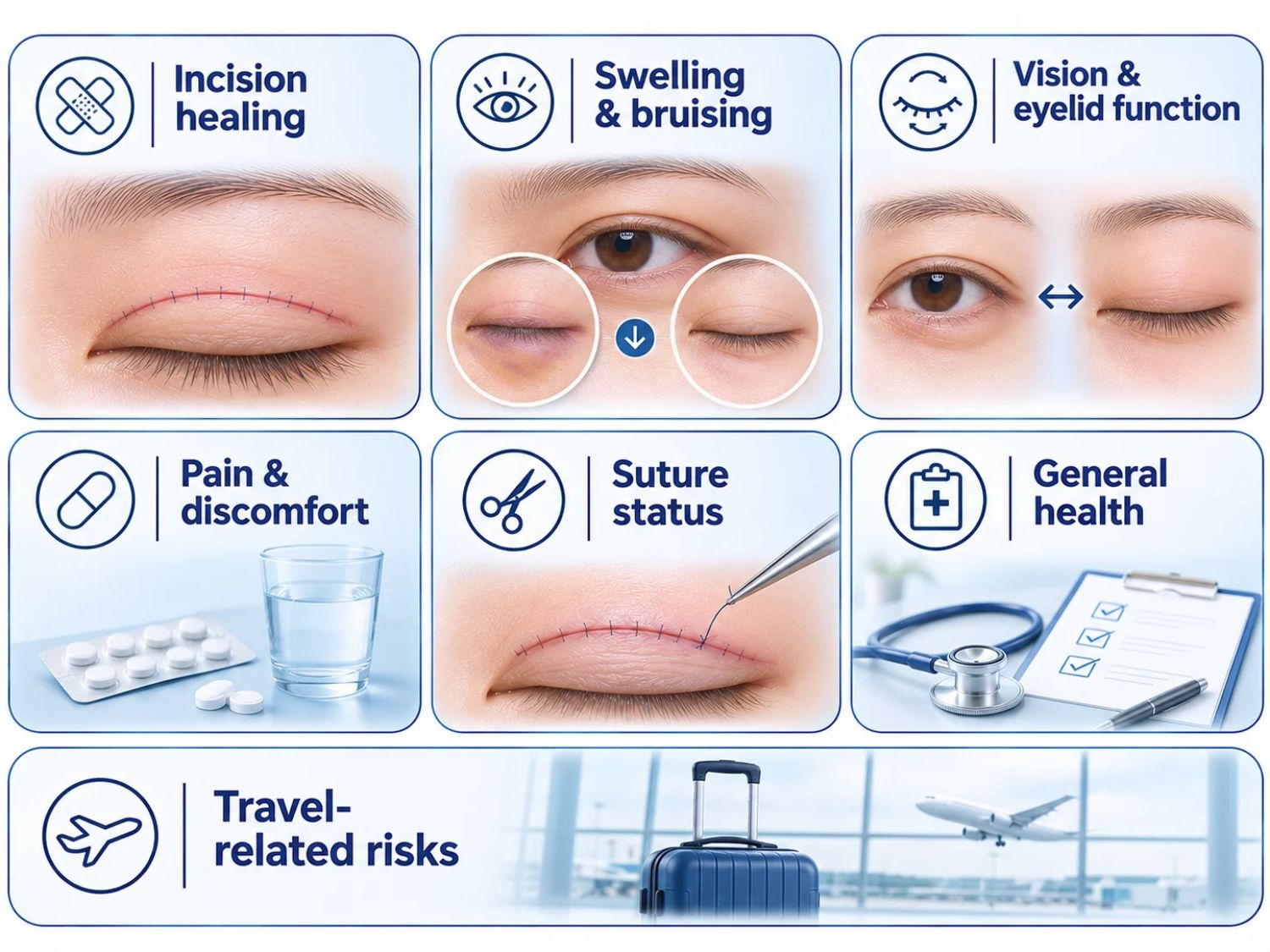
A patient should be cleared to fly only after the surgeon confirms that healing is satisfactory, vision is stable, and no complication requires immediate treatment. The decision depends on the actual examination findings rather than the number of days since surgery alone.
The surgeon should review the following:
Patients cleared to fly should protect their healing eyelids from dryness, rubbing, unnecessary pressure, and physical strain during travel. Simple precautions can improve comfort and help prevent avoidable irritation while recovering.
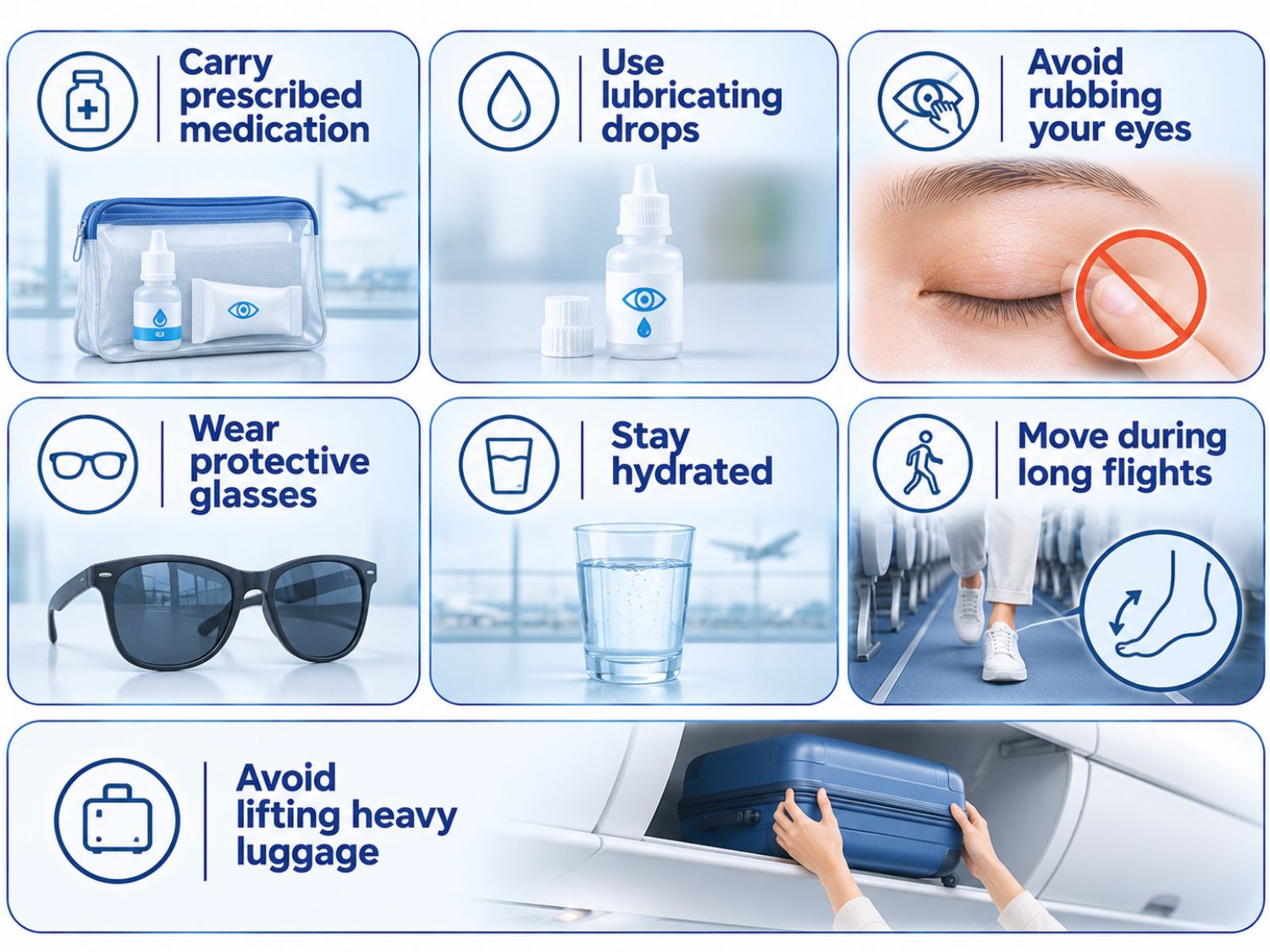
Patients should not begin aspirin, anticoagulants, or compression therapy solely to prevent travel-related blood clots without medical advice.
You should postpone your flight if your eyes have not healed as expected or you develop symptoms that could indicate a postoperative complication. Traveling with an unresolved problem can delay treatment and make emergency care more difficult to access.
Sudden vision loss, severe eye pain, chest pain, or difficulty breathing are emergencies. Do not board a flight or wait for a routine appointment if these symptoms occur.
International patients considering eyelid surgery at Kangnam should schedule sufficient time for preoperative assessment, surgery, initial recovery, suture removal when necessary, and a final examination before flying home. Kangnam’s published guidance recommends planning approximately 7–14 days in Vietnam after eyelid surgery, with the actual departure date determined by the surgeon.
| Stage | Suggested timing | Main purpose |
| Before arrival | Prior to traveling to Vietnam | Discuss medical history, desired procedure, and travel plans |
| Consultation and surgery | Day 0 or scheduled treatment date | Complete assessment and undergo the approved procedure |
| Early recovery | Days 1–3 | Rest and monitor swelling, discomfort, and incision healing |
| Follow-up | Around days 5–7, as instructed | Examine healing and remove sutures if required |
| Pre-flight assessment | Within the planned 7–14-day recovery stay | Confirm whether the patient is medically fit to travel |
| After returning home | According to the follow-up plan | Continue wound care and communicate routine recovery updates |
This schedule is an illustrative planning framework, not a fixed clinical protocol for every Kangnam patient.
Kangnam Aesthetic Hospital provides eyelid surgery consultations and postoperative guidance for international patients and overseas Vietnamese. By discussing your travel dates, surgical technique, recovery needs, and follow-up arrangements before treatment, the medical team can help develop a practical care plan that prioritizes healing and confirms your fitness to fly before departure.
Flying three days after eyelid surgery is generally earlier than the recommended planning window for international patients. Swelling and bruising may still be prominent, and important postoperative examinations may not yet have been completed, so travel should be postponed unless the surgeon specifically confirms it is appropriate.
Some patients can fly approximately seven days after uncomplicated upper eyelid surgery, particularly on shorter journeys. However, the surgeon must confirm satisfactory wound healing, review the suture status, and ensure there are no complications before giving permission.
Non-absorbable eyelid stitches are often removed during the first postoperative week, but the exact timing varies by technique. Patients should follow their surgeon’s suture-removal plan and avoid missing necessary appointments; absorbable sutures may not require removal.
A 10-hour flight may be possible once the surgeon confirms that recovery is stable, but extra caution is needed because prolonged sitting can increase blood-clot risk in susceptible patients. Allowing approximately 10–14 days or longer for recovery is a reasonable planning approach, not an automatic clearance to fly.
Mild residual swelling may persist during normal eyelid surgery recovery, but worsening swelling, redness, discharge, significant pain, or visual changes require medical evaluation. Contact your operating surgeon for routine follow-up and seek immediate local medical care if severe pain, sudden visual disturbance, or rapid swelling develops.