Date posted: 17-11-2026 | Last updated : 18-11-2026
After breast surgery, patients should generally plan to wait at least 2 weeks before flying home, while long-haul international flights may require 3–4 weeks or longer depending on the procedure and recovery. More complex operations or postoperative complications may require 4–6 weeks or additional recovery time.
Minimum recovery: Around 2 weeks is a reasonable starting point for travel planning after uncomplicated cosmetic breast surgery, but it is not automatic medical clearance.
Long-haul flights: International journeys lasting 8–15 hours may justify 3–4 weeks or longer before departure.
Major risks: Traveling too early increases concerns about blood clots, postoperative swelling, bleeding, and delayed treatment of complications.
The recommended waiting period depends on the type of breast surgery, the extent of tissue healing, and the length of the planned flight. Procedures involving larger incisions, extensive tissue adjustment, or combined surgical techniques may require longer recovery.
| Breast surgery procedure | Suggested planning window before flying | Why recovery time differs |
| Breast augmentation with implants | Approximately 2–4 weeks | The breast tissue and implant pocket need time to heal, while swelling and discomfort gradually decrease. |
| Breast lift (mastopexy) | Approximately 2–4 weeks | Skin tightening and repositioning create incisions that need monitoring for wound separation and healing problems. |
| Breast reduction | Approximately 3–6 weeks | Removal and reshaping of breast tissue can involve more extensive incisions and postoperative swelling. |
| Combined augmentation and breast lift | Approximately 4–6 weeks or longer | Two procedures increase the extent of tissue adjustment and may complicate early recovery. |
| Breast reconstruction or complex revision | Individualized; often longer | More extensive surgery, drains, additional procedures, or medical conditions may substantially delay travel. |
Important: These timeframes are practical scheduling estimates, not standardized guarantees for each operation. A surgeon may recommend an earlier or later departure after an individualized assessment.
The American Society of Plastic Surgeons (ASPS), in its November 2026 recovery guidance, reports that approximately two weeks may be a minimum before travel, with four to six weeks needed in some cases depending on the operation and distance traveled. The guidance also emphasizes remaining near the operating surgeon during early recovery so complications can be addressed promptly.
Flying too early after breast surgery can increase the risk of blood clots and make postoperative complications harder to manage. The concern is not simply cabin pressure, but the combination of recent surgery, limited movement, and reduced access to medical care.

Before approving air travel, the surgeon should confirm that healing is progressing normally and that no complication requires further treatment.
A postoperative travel assessment should include:

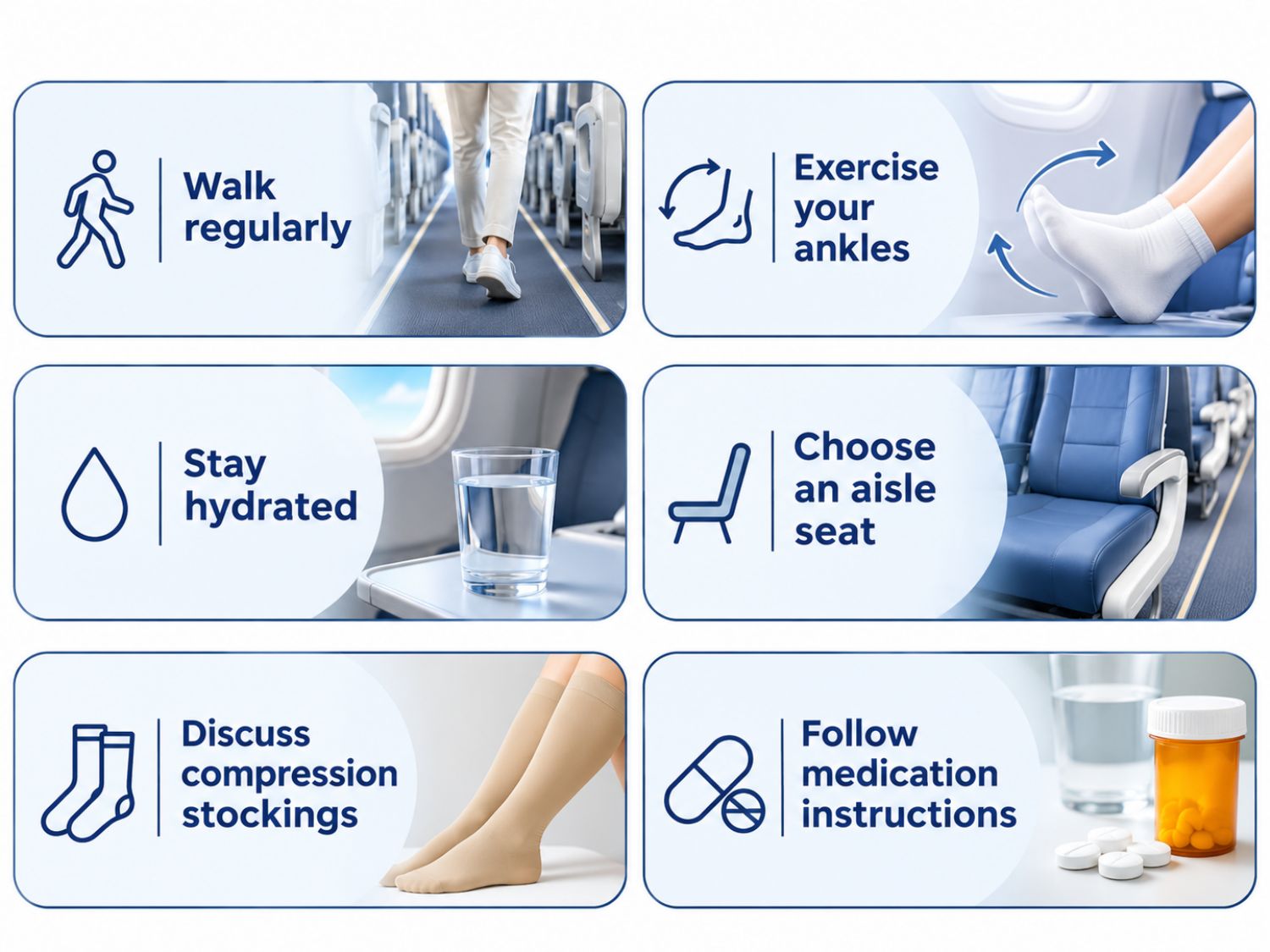
Regular movement, adequate hydration, and appropriate medical precautions can help reduce blood clot risk during long flights after breast surgery.
Patients who have received clearance to fly should follow these precautions:
International patients should arrange medical documents, postoperative care, and practical travel assistance before leaving Vietnam. Proper planning makes it easier to manage recovery after returning home.
Ask the surgical team to provide:
Arrange help with luggage, airport transfers, and overhead baggage. During early recovery, lifting heavy suitcases or reaching overhead may strain healing chest tissues.
A travel companion can be particularly helpful during the first international journey after surgery.
Identify a qualified medical professional near your home who can assess wound problems or unexpected symptoms.
Before leaving Vietnam, confirm how to contact the operating hospital, when follow-up examinations are required, and what to do if complications occur after arrival.
Patients should also review airline medical requirements and travel insurance exclusions, since some policies do not cover complications from elective cosmetic surgery.
Do not board a flight if you develop signs of infection, significant bleeding, a possible blood clot, or other unexpected postoperative complications. These symptoms require medical evaluation before travel.
Warning signs include:
If severe breathing difficulty, chest pain, or fainting occurs, seek emergency medical care immediately rather than traveling to the airport.
If postoperative symptoms develop while abroad, arrange an in-person medical examination. Remote advice should not replace emergency evaluation.
Planning Breast Surgery in Vietnam with Kangnam
At Kangnam Aesthetic Hospital, international clients considering breast augmentation can discuss their surgical options with specialist doctors and plan postoperative follow-up around their expected return journey. A consultation helps establish an appropriate treatment plan, recovery arrangements, and the medical checks needed before flying home.
Flying seven days after breast augmentation is generally earlier than the conservative travel-planning period recommended for international journeys. Even if you feel well, your surgeon should assess wound healing, mobility, and blood clot risk before approving a flight.
Normal commercial aircraft cabin pressure does not cause intact breast implants to burst, and people with healed breast implants can generally fly safely. The main concern soon after augmentation is recovery from surgery, not pressure damage to the implant itself.
Traveling with surgical drains requires specific medical approval because the drains need monitoring, cleaning, and sometimes removal. For elective international travel, it is generally preferable to complete drain management and the relevant follow-up examination before departure.
Yes, continue wearing your postoperative support bra for as long as your surgeon recommends, including during flights. A properly fitted bra can support healing tissues and improve comfort, but it must not be excessively tight or interfere with breathing.
Mild residual swelling can continue for several weeks after breast surgery and does not always indicate a complication. However, sudden one-sided swelling, worsening pain, redness, fever, or wound discharge requires prompt in-person medical assessment, while chest pain or breathing difficulty requires emergency care.