
Date posted: 17-11-2026 | Last updated : 18-11-2026
Your breast implant warranty abroad may still cover a qualifying implant rupture after you return home, but replacement benefits depend on the manufacturer, implant model, and warranty conditions. If a rupture occurs, you should first undergo a medical examination and appropriate imaging in your home country, then contact the original hospital to verify your warranty.
Lifetime implant warranty: Kangnam states that its breast implants have lifetime coverage under the manufacturer’s policy, subject to product-specific terms.
Overseas claims: Returning to another country does not necessarily cancel a warranty, but international claim procedures and eligibility must be confirmed.
Medical examination: Suspected rupture should be assessed locally with ultrasound or MRI, depending on the clinical findings.
A breast implant warranty may remain valid after you return to your home country, provided the implant and claim meet the manufacturer’s specific conditions. However, coverage in another country is not always identical to the coverage offered where the original surgery was performed.
Breast implant warranties usually involve two separate policies:

At Kangnam Aesthetic Hospital, breast implants are described as carrying a lifetime manufacturer’s warranty. The hospital’s published policy also states that its warranty card can be used across Kangnam branches in Vietnam.
Breast implant rupture may cause visible breast changes, discomfort, or no noticeable symptoms at all, especially with silicone gel implants. This means an implant can become damaged without immediately changing the breast’s appearance.
Possible warning signs include:
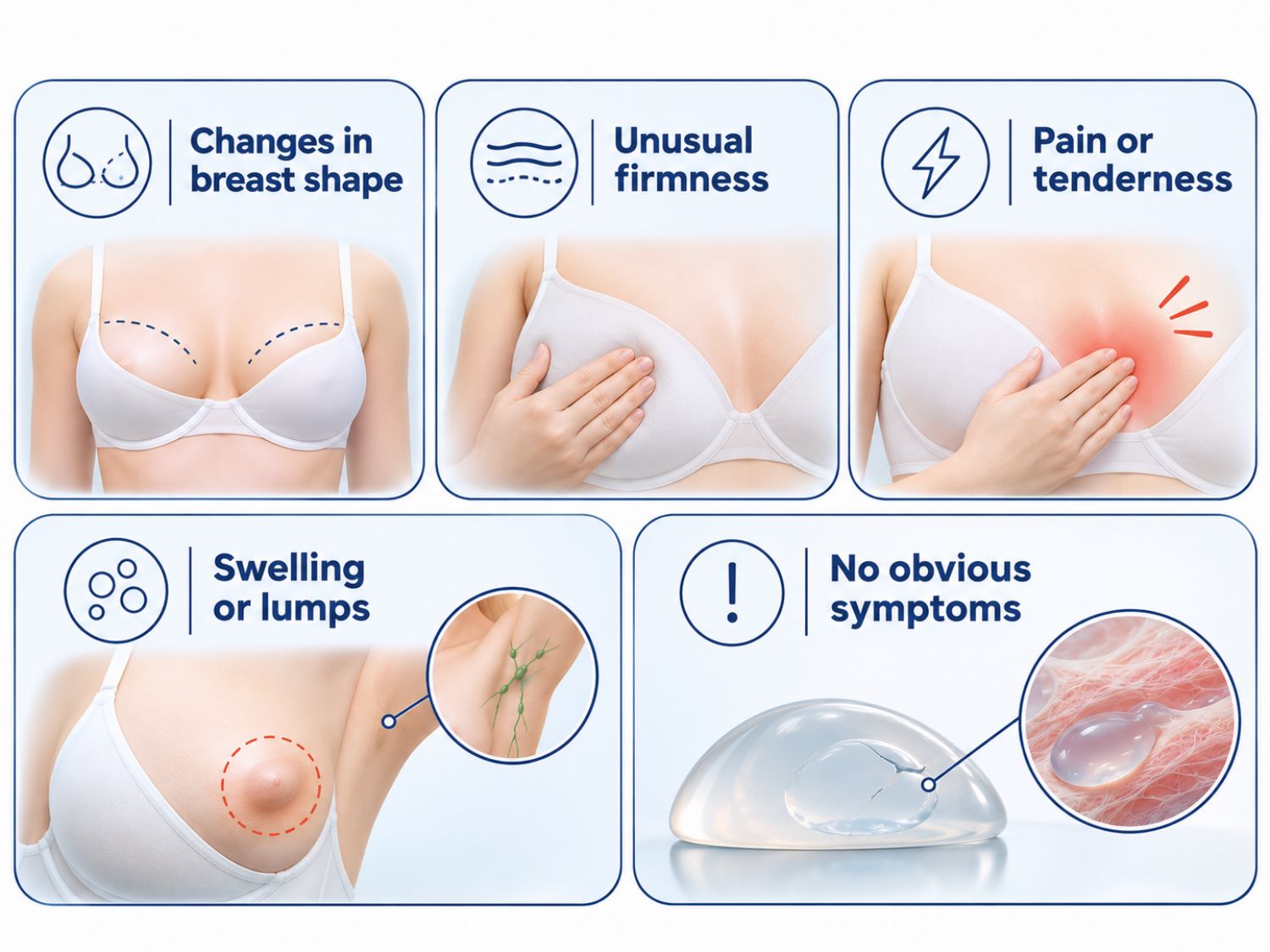
Yes. Silicone gel implant rupture can remain undetected for years because the gel may stay contained within the surrounding tissue capsule.
The American Society of Plastic Surgeons (ASPS) explains that breast implants are not lifetime devices and that regular imaging is important because some ruptures occur without symptoms. Its breast augmentation safety guidance also discusses the possibility of future replacement surgery.
If you suspect breast implant rupture after returning home, arrange a local medical examination before starting a warranty claim. The immediate priority is confirming the problem and determining whether treatment is needed.
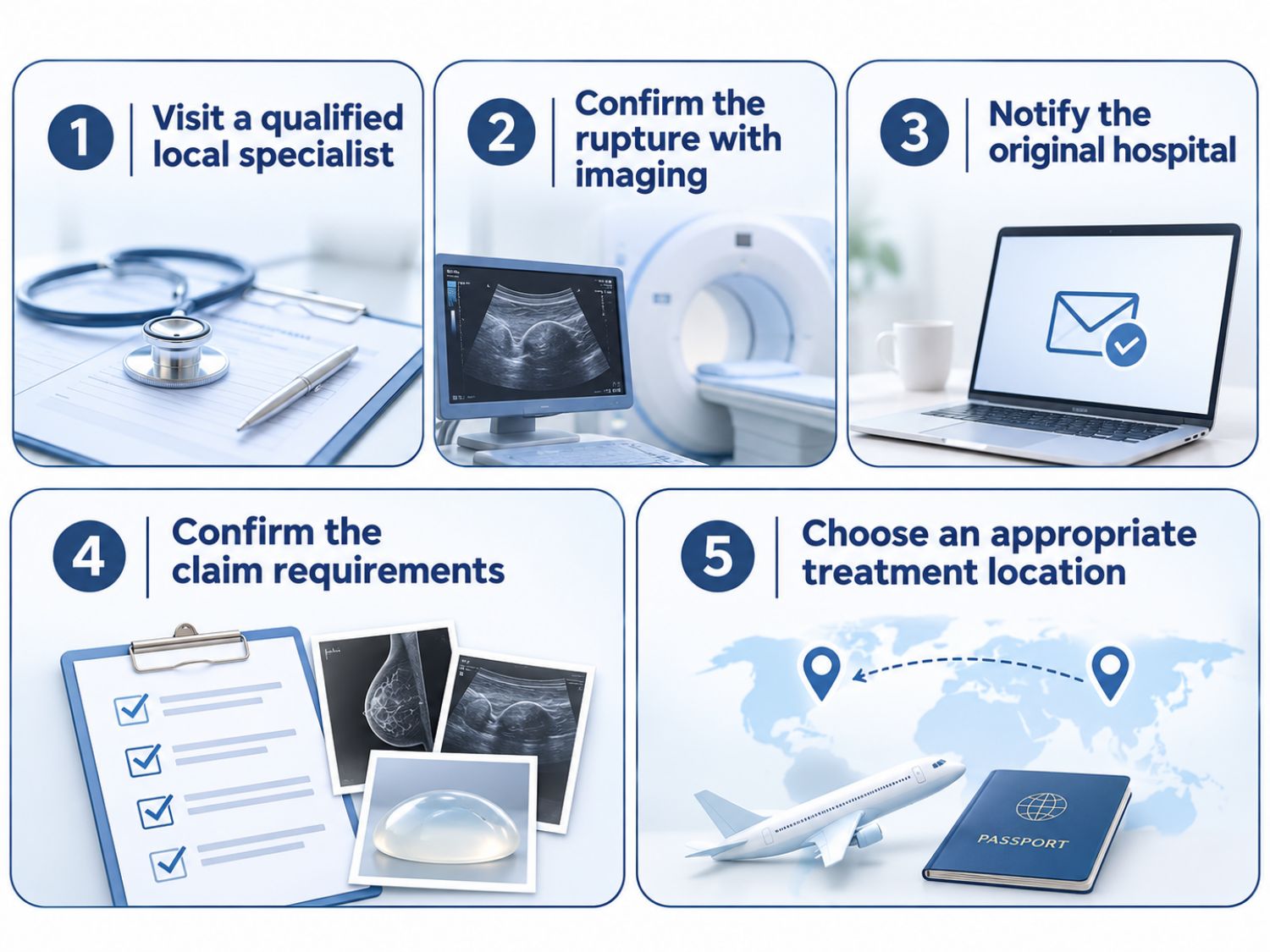
Follow these steps:
Step 1: Visit a qualified local specialist
Arrange an appointment with a plastic surgeon or an appropriate breast specialist in your home country. Explain when and where your implants were placed and describe any changes in breast appearance or sensation.
Step 2: Confirm the rupture with imaging
Your doctor may recommend ultrasound or MRI to examine the implant shell and surrounding tissues. MRI without contrast is particularly useful when silicone implant rupture is suspected or ultrasound results are inconclusive.
Step 3: Notify the original hospital
Contact Kangnam with your examination results, implant identification details, and surgical history. Ask the hospital to verify which warranty applies and how a potential manufacturer claim should be handled.
Step 4: Confirm the claim requirements
Before revision surgery, check whether the manufacturer requires photographs, imaging reports, an operative report, or examination of the removed implant. If surgery is urgent, do not delay medically necessary treatment while waiting for warranty approval.
Step 5: Choose an appropriate treatment location
Once the diagnosis is confirmed, discuss whether treatment can be performed safely in your home country or whether returning to Vietnam is a practical option.
Treatment usually involves removing the ruptured implant, with or without replacement, depending on the medical findings and your preferences. A damaged implant shell cannot be reliably repaired inside the body.
The main surgical options include:
Your implant identification information, surgical records, and warranty documents are essential for confirming eligibility and processing a claim abroad.
Keep the following records:

Some manufacturers may require the removed implant to be returned for technical examination before approving a claim.
Therefore, if revision surgery is being planned, ask the local surgeon and manufacturer about specimen handling and documentation requirements in advance. Medical care must still take priority over administrative requirements.
For international clients, keeping secure digital copies makes it easier to share documents between the original hospital and specialists abroad.
Silicone breast implants require long-term monitoring even when they feel normal and remain covered by warranty. Regular imaging can detect silent rupture before symptoms become noticeable.
For people without symptoms, commonly used FDA-supported screening recommendations are:
These intervals apply to routine surveillance of silicone implant integrity. They do not replace regular breast cancer screening or examinations recommended for other medical reasons.
A lifetime implant warranty does not mean the implant will last forever or eliminate the need for monitoring.
No. A lifetime warranty generally means that qualifying implant rupture may be covered under the manufacturer’s product replacement policy. Surgeon fees, anesthesia, hospital expenses, and additional procedures may still require separate payment.
You may still be able to obtain replacement identification details from the hospital’s surgical records or the manufacturer’s registration system. Contact the original hospital with your name, surgery date, and available documents so your eligibility can be checked.
Coverage depends on the manufacturer’s policy and the confirmed cause of damage. Some warranties exclude trauma or damage caused during subsequent procedures, so an accident-related rupture does not automatically qualify for free replacement.
Some manufacturers allow an appropriately qualified local or explanting surgeon to participate in the claim process. However, the manufacturer must confirm whether that arrangement is accepted in your country and what documentation is required.
Some manufacturer programs provide new warranty coverage for eligible replacement implants, but this is not universal. Before surgery, ask for confirmation of the replacement implant’s registration, warranty start date, and applicable conditions.