Date posted: 21-07-2026 | Last updated : 27-07-2026
After eyelid surgery, diet, daily activities, and wound care can affect recovery and the final result. One common concern among people who drink coffee every day is whether they can continue drinking it after surgery and how long they should avoid it.
This article explains when coffee may be resumed, why temporary restriction may be recommended, and what overseas Vietnamese patients should consider during recovery.
Patients are commonly advised to limit or temporarily avoid coffee during the early recovery period after eyelid surgery.
The original recommendation is to avoid coffee for approximately two to four weeks. However, the necessary restriction period varies according to:

Coffee may be temporarily restricted after eyelid surgery to support recovery.
Coffee does not automatically cause poor scars or prevent wounds from healing. However, large amounts of caffeine may worsen certain recovery-related concerns, such as sleep disturbance, temporary increases in blood pressure, anxiety, palpitations, or dehydration when fluid intake is inadequate.
Once the incision is dry, swelling has significantly decreased, and the surgeon confirms that recovery is progressing normally, patients may gradually return to their usual coffee habits.
Patients can learn more about the overall healing timeline in How Long Does It Take for Eyelid Surgery to Look Natural?.
Temporary caffeine restriction may be recommended because coffee can affect blood pressure, sleep, hydration, and medication tolerance in some patients.
Caffeine may temporarily increase blood pressure and heart rate, particularly in people who are sensitive to it or who do not drink coffee regularly.
During the early postoperative period, uncontrolled blood pressure may contribute to:
However, coffee is not considered a direct anticoagulant and does not routinely prevent normal blood clotting in healthy people.
Patients with high blood pressure should follow the instructions of both their surgeon and regular doctor.
Caffeine has a mild diuretic effect, particularly in people who are not accustomed to consuming it.
Moderate coffee intake does not usually cause clinically significant dehydration when a person drinks enough fluids throughout the day.
Nevertheless, during recovery, patients should prioritise:

Drinking coffee too early or in large amounts may worsen sleep, anxiety, or postoperative discomfort in some patients.
Hydration supports general health and wound recovery, but drinking extra water cannot prevent every complication or guarantee better scar healing.
Caffeine may interfere with sleep, especially when consumed in the afternoon or evening.
Adequate sleep is important after surgery because it supports:
Poor sleep may make discomfort and swelling feel more difficult to manage, although it does not automatically cause infection.
Coffee does not reduce the effectiveness of every antibiotic, anti-inflammatory drug, or pain reliever.
However, caffeine may interact with or worsen the side effects of certain medications by contributing to:
Some medications also contain caffeine, so combining them with coffee may lead to excessive intake.
Patients should take medication with water unless the doctor or pharmacist provides different instructions.
The appropriate time to resume coffee varies between patients.
A general recovery schedule may be as follows.
This is the period when swelling, bruising, and incision healing are most active.
Patients may be advised to avoid or significantly limit:
Avoiding caffeine may be particularly important when the patient:
If the incision has healed, swelling has decreased, and there are no complications, patients may gradually reintroduce coffee.
They may begin with:
Patients should stop and contact the medical team if coffee appears to cause palpitations, increased swelling, headache, or significant discomfort.
Many patients can return to their usual coffee intake after approximately one month, provided that recovery is stable and the surgeon has no concerns.
The final eyelid shape and scar continue to mature for several months, even after normal eating and drinking habits have resumed.
Patients can review a broader postoperative diet and activity guide in What Should You Avoid After Eyelid Surgery?.
Overseas Vietnamese patients may have established coffee habits and may also use caffeine to manage jet lag. They should plan temporary adjustments during the early recovery period.
The original advice is to avoid coffee for two to four weeks, whether it is black coffee or coffee with milk.
However, not every patient needs exactly the same restriction period.
The doctor should consider:
Postoperative medication should usually be taken with water.
Patients should avoid using coffee to swallow antibiotics, pain medication, or anti-inflammatory drugs unless a medical professional confirms that this is acceptable.
Patients who plan to return overseas soon after surgery should ask the doctor:

Fruit-based drinks and water may be suitable alternatives during the early recovery period.
Fruit juice should still be consumed in moderation because some products contain large amounts of added sugar.
When coffee is reintroduced, patients may prefer:
Bottled and canned coffee may contain high levels of sugar, caffeine, or additional stimulants, so patients should read the label carefully.
Returning home does not mean the eyelids are fully healed.
If swelling, bruising, wound irritation, or sleep disturbance continues, patients should maintain the recommended restrictions and contact the medical team when necessary.
Patients who normally use coffee to stay awake after a long flight may consider:
Herbal tea is not automatically safe with every medication. Patients should avoid unverified herbal products or supplements during early recovery unless approved by the doctor.
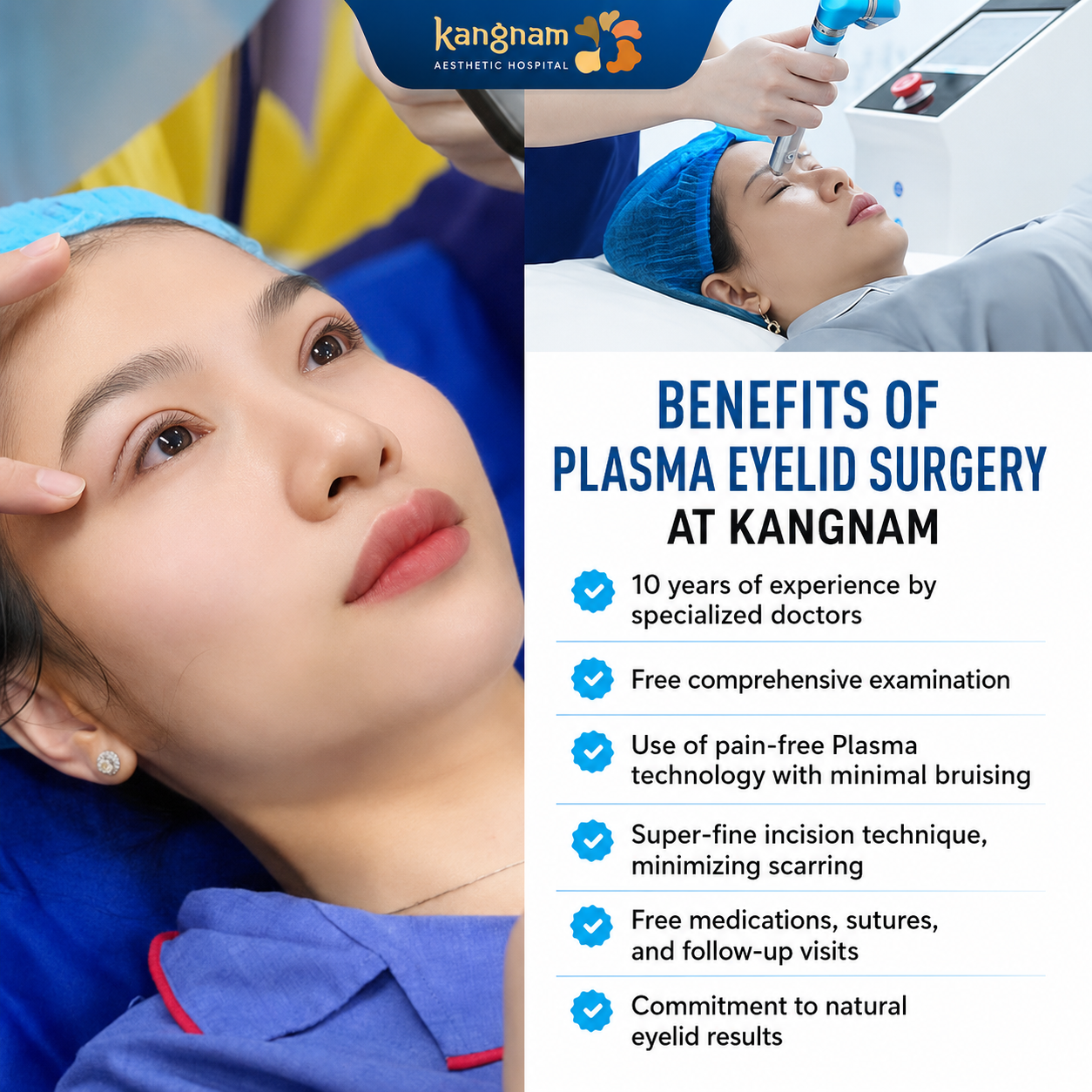
Kangnam may use selected postoperative Plasma-assisted care to support comfort and recovery following eyelid surgery.
Such treatment may support the recovery process, but it cannot guarantee the complete absence of swelling, bruising, or complications.
Patients should seek prompt medical care if they experience:
Coffee is not universally prohibited after eyelid surgery, but temporary restriction may be recommended during early healing.
Many patients are advised to avoid or limit coffee for approximately two to four weeks, particularly when they have swelling, bruising, high blood pressure, sleep problems, or medication-related concerns.
The safest time to resume coffee should be determined according to the patient’s recovery and the surgeon’s instructions rather than a fixed rule for everyone.
Patients who remain uncertain about their postoperative diet should arrange an examination or consultation with a qualified eyelid surgeon.