Date posted: 12-01-2026 | Last updated : 11-07-2026
Rhinoplasty is not painful during the procedure because local anesthesia is administered to the nasal area before surgery. After the anesthesia wears off, some patients may experience mild soreness or discomfort in the soft tissues. This sensation usually lasts for the first few days and gradually subsides as healing progresses.
I – What the First Week Really Feels Like, Day by Day
The first week after rhinoplasty mainly involves nasal congestion due to the splint, with swelling peaking on Days 2–3. Actual pain is minimal and subsides noticeably from Days 4–7. Patients can easily manage light daily activities by keeping their head elevated, applying cold compresses, and taking prescribed medications.
- Days 0–1: Tightness along the nasal bridge and congestion from the splint; sleep on your back with head elevated, take prescribed medication, and having someone assist on the first night is recommended.
- Days 2–3: Peak swelling and congestion (minimal actual pain); apply cold compresses and restrict activity to light movement around your room.
- Days 4–7: Discomfort subsides significantly, leaving mild congestion and minor annoyance from the splint; patients can independently manage basic daily tasks.

II – Effective Ways to Reduce Pain After Rhinoplasty
Following postoperative instructions, using cold compresses, maintaining proper sleeping posture, avoiding nasal trauma, and following dietary guidelines are effective ways to minimize discomfort after rhinoplasty.
- Take medications as prescribed: Use pain relievers and antibiotics exactly as directed by your surgeon to maintain stable drug levels and prevent infection.
- Apply cold compresses: Cold compresses around the nasal area during the first 48 hours after surgery help constrict blood vessels and significantly reduce swelling and discomfort. Apply gently to the cheeks and forehead around the nose, rather than directly pressing on the nasal bridge.
- Sleep on your back with head elevation: Sleeping in a supine position with your head elevated promotes better blood circulation and helps prevent fluid accumulation that can increase facial swelling.
- Avoid impact or pressure on the nose: During the early healing phase, tissues are still fragile. Extra care is needed when changing clothes or washing your face to avoid accidental contact with the nose.
- Avoid foods that may increase swelling or scarring: Certain foods such as water spinach, beef, and sticky rice are traditionally believed to increase inflammation or scar formation. Patients are advised to follow a light, balanced diet rich in vitamins to support smooth healing and reduce discomfort.
- Do not smoke: Nicotine causes blood vessel constriction, reducing oxygen delivery to healing tissues and potentially prolonging pain and recovery time.
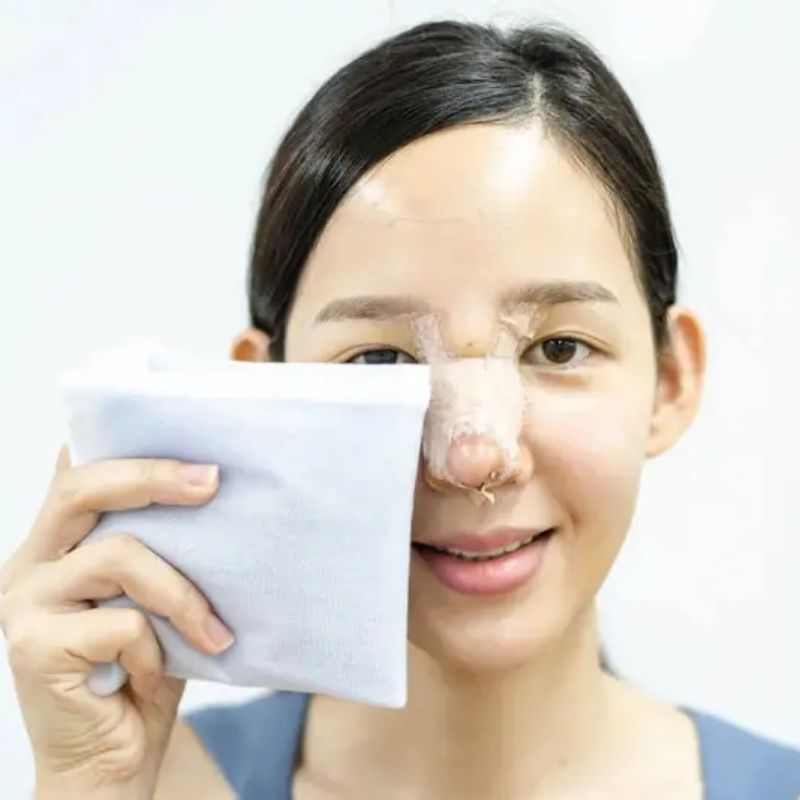
Applying a cold compress to the nose helps relieve pain
III – When Is Pain a Warning Sign?
Mild discomfort after rhinoplasty is a normal postoperative response. However, if pain is accompanied by unusual symptoms, it may indicate a potential complication. Patients should contact their surgeon immediately if any of the following signs occur:
- Sharp pain that progressively worsens, even after taking pain medication
- Severe swelling, redness, and warmth around the nose or surrounding eye area
- Unusual discharge or yellow pus from the incision, accompanied by an unpleasant odor
- Fever, fatigue, or lethargy
- Pain associated with noticeable nasal deviation or sudden shifting of the nasal bridge
IV – Safety Tips for International Patients Undergoing Rhinoplasty in Vietnam
To achieve optimal results when traveling to Vietnam for cosmetic surgery, international patients should carefully plan their stay, follow pre-travel medical consultations, and maintain postoperative follow-up after returning home.
- Stay in Vietnam long enough after surgery: Patients are advised to remain in Vietnam for at least 7–10 days so the surgeon can closely monitor recovery and safely remove sutures.
- Attend online consultations before traveling: Video consultations allow patients to discuss expectations, medical history, and receive a preliminary treatment plan before booking flights. This helps with better time management, cost estimation, and mental preparation.
- Maintain remote follow-up after returning home: After returning to their home country, patients should stay in contact with the medical team via messaging platforms and send periodic photos of their nose. Surgeons can then provide timely postoperative care advice as the nasal shape continues to stabilize.

Maintain contact with your surgeon after rhinoplasty to report any unusual signs
In Vietnam, Kangnam Aesthetic Hospital is recognized as a reputable rhinoplasty provider and is trusted by many international patients thanks to its team of surgeons with over 10 years of experience and extensive expertise in handling complex rhinoplasty cases. The hospital follows standardized surgical protocols, provides close postoperative monitoring, and offers detailed aftercare guidance, helping ensure both safety and long-term aesthetic outcomes for international patients.
VI – Frequently Asked Questions
1. How long does pain usually last after rhinoplasty?
After rhinoplasty, mild pain or tightness in the soft tissues may occur once the local anesthesia wears off. This discomfort typically lasts only for the first few days. The intensity and duration depend on the surgical technique, the type of graft material used, and individual healing response. Pain can be effectively managed with prescribed pain relievers, cold compresses, and proper postoperative care as instructed by the surgeon.
2. Can international patients receive follow-up care after returning home?
Yes. After returning to their home country, patients can continue postoperative follow-up remotely by sending photos and attending online consultations with their surgeon. This allows assessment of swelling, bruising, nasal shape, and implant stability, helping detect any unusual signs early for timely guidance and intervention.
Rhinoplasty generally does not cause significant pain, and any discomfort usually subsides within a few days. By understanding the recovery process, following postoperative care instructions, and maintaining remote follow-up, international patients can feel reassured about both safety and long-term aesthetic outcomes.