Date posted: 17-07-2026 | Last updated : 17-07-2026
Many clients are anxious to know how long it takes for the nasal tip to stop being red after rhinoplasty and whether it is a sign of an abnormality. According to rhinoplasty specialists at Kangnam Aesthetic Hospital, redness of the nasal tip is a normal recovery response after surgery, which typically subsides gradually over a few days depending on each individual’s physical constitution.
1. How Long Until the Nasal Tip Stops Being Red After Rhinoplasty?
Approximately 5 to 10 days after rhinoplasty, the redness of the nasal tip will subside, as the nasal tissues have adapted to the cartilage material. Nasal tip redness is a very common and normal occurrence after rhinoplasty surgery, particularly in clients who have thin nasal skin, a sensitive physical constitution, or those who utilized synthetic implants.
However, if the redness lasts for more than 3 weeks or is accompanied by aching pain, clients must visit a doctor for an examination, as this could be a sign of infection or a complication.
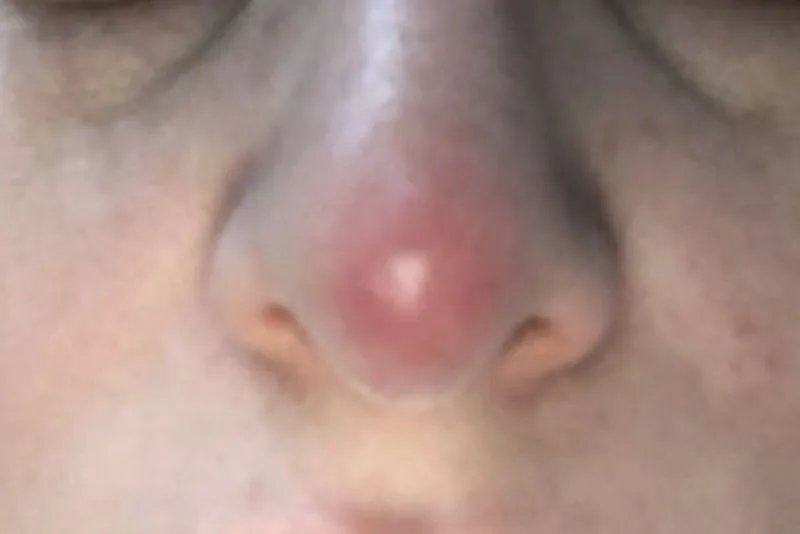
Factors Influencing the Speed at Which Nasal Tip Redness Subsides:
- Physical Constitution and Skin Pigmentation: Individuals with fair, thin skin or shallow capillaries are usually more prone to prolonged nasal tip redness compared to those with thick skin, due to skin sensitivity and easily exposed blood vessels.
- Surgical Technique: If the dissection maneuvers are done deeply or the cartilage is placed too close to the skin, the nasal tip area is easily irritated and suffers prolonged redness; conversely, a medical-standard microsurgical technique helps tissues heal quickly and even out in color sooner.
- Cartilage Material: Autologous cartilage has high biocompatibility, experiences less redness, and heals quickly, whereas synthetic cartilage easily causes prolonged redness in people with thin skin. Specifically, premium synthetic cartilage like Surgiform or Nanoform helps limit shininess, redness, or exposed cartilage, while maintaining a natural nose shape long-term.
- Post-Operative Care: Incorrect hygiene, impacts on the nasal area, sleeping on one’s side, or early sun exposure can make the nasal tip sensitive and red for longer than normal.
2. Why Is the Nasal Tip Red After Rhinoplasty?
A mild inflammatory response, thin nasal skin, environmental impacts, and reactions to the cartilage are the primary causes behind a red nasal tip following rhinoplasty surgery.
- Mild Inflammatory Response: After surgery, a mild inflammatory response naturally occurs in the body to repair damaged tissue, causing the nasal tip area to possibly look red and swollen during the first few days. This is a normal physiological phenomenon and will gradually decrease as the skin tissue stabilizes.
- Thin Nasal Skin: Individuals with thin nasal skin can easily see the redness more clearly because the capillaries sit close to the surface, especially when light shines on it. This condition will improve gradually as the skin layer regenerates and evens out in color again.
- Environmental Impacts: Sunlight, dirt, or high temperatures can make the skin of the nasal tip sensitive and prolong the redness after surgery. Therefore, it is necessary to shield it carefully and limit exposure to polluted environments during the early recovery phase.
- Reaction to the Cartilage: In some cases, the body responds mildly to the cartilage material (especially synthetic cartilage), making the nasal tip area flushed red for longer. However, if premium synthetic cartilage with excellent compatibility is used, this condition rarely occurs.
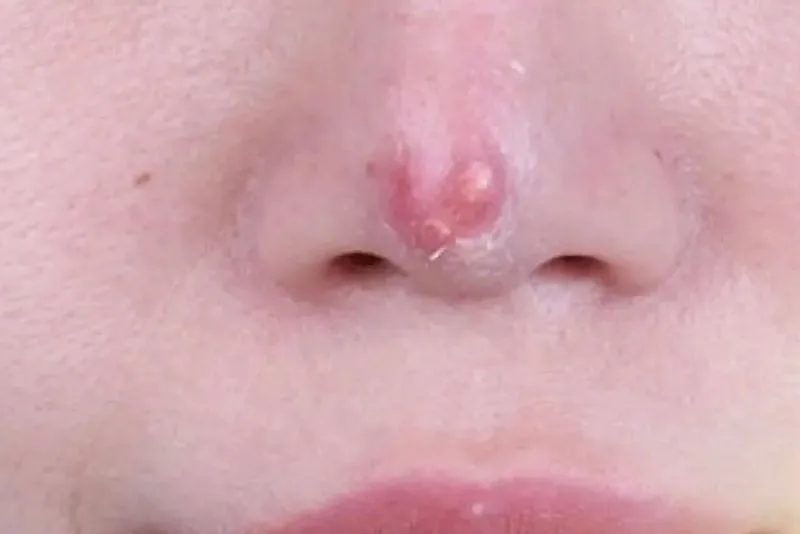
Solution at Kangnam: Combining autologous cartilage (ear or septum cartilage) to wrap the nasal tip to create a protective cushioning layer, preventing shininess/redness and enhancing natural softness.
3. How to Reduce Nasal Tip Redness After Rhinoplasty
Apply cold compresses, keep the nasal area clean and dry, protect the nasal skin, eat healthily, and get enough sleep to help the nasal area recover quickly and improve the redness of the nasal tip.
- Cold Compresses: Applying cold compresses helps constrict blood vessels, reduce swelling, soothe the nasal tip area, and limit the spreading of redness. You should use an ice pack wrapped in a soft towel, applying it for 10–15 minutes per session, spaced 2–3 hours apart, and avoid placing ice directly onto the skin. At Kangnam, clients are provided with medical compress packs with a deep cold temperature of 10–15°C, helping safely and effectively reduce inflammatory redness.
- Keep the Nose Dry and Clean: During the initial phase, it is necessary to keep the nose dry and well-ventilated, and avoid touching, massaging, or picking at scabs to prevent irritation. When washing the face, only wipe gently with a soft towel or damp cotton pad, and do not use cosmetics or facial cleansers on the operated area.
- Moisturize and Protect the Nasal Area: After suture removal (around 10 days), you can apply moisturizer to reduce dryness and redness. When going outside, you should wear a soft face mask, avoid sunlight and dirt, and use a gentle sunscreen with SPF 30+ after 3 weeks.
- Healthy Eating: You should supplement foods rich in Vitamin C, E, and zinc (salmon, green vegetables, oranges, yogurt), while avoiding seafood, beef, glutinous rice, spicy/hot items, and alcohol. Drinking enough water and taking Vitamin C according to the doctor’s instructions helps the skin become healthy and even out in color faster.
- Get Enough Sleep: You should sleep for a full 7–8 hours every day, limit staying up late, and avoid coffee or electronic devices before bedtime. Maintaining a comfortable mindset combined with gentle movement supports good blood circulation and fast recovery of the nasal skin.

4. When Is Nasal Tip Redness an Abnormal Sign?
Mild redness of the nasal tip is a normal physiological response; however, if the redness is prolonged and accompanied by swelling, pain, or skin shininess, it could be a warning sign of complications. Early recognition helps ensure timely handling, avoiding tissue damage or cartilage displacement.
- Nasal tip redness prolonged for over 3–6 weeks without decreasing.
- Redness accompanied by swelling, heat, aching pain, or fluid discharge.
- The skin of the nasal tip appears shiny, tense, thin, or cyanotic (purplish-blue).
- Redness accompanied by itching, blisters, or rashes around the nasal tip.
- The nasal tip is unevenly red, accompanied by dark stains or hyperpigmentation.
At Kangnam, 100% of clients receive post-operative care following a strict medical protocol, featuring an online tracking system designed for overseas Vietnamese, helping you experience a peaceful recovery no matter where you are.