Date posted: 14-01-2026 | Last updated : 14-01-2026
Many international clients who undergo rhinoplasty in Vietnam are concerned about the recovery process during the first days after surgery. In reality, when the procedure is performed with proper techniques and followed by standard medical aftercare, the nose recovers relatively quickly and stabilizes through clearly defined stages. Below, Kangnam shares a detailed day-by-day rhinoplasty recovery timeline to help clients feel confident and reassured when choosing a safe and effective cosmetic experience.
I. The recovery process after rhinoplasty surgery, day by day.
The recovery process after rhinoplasty typically occurs in clear stages: during the first 1–2 days, swelling is most noticeable; from days 4–7, swelling and bruising gradually subside; between days 7–10, the nose looks more natural and stitches can usually be removed; after 1–3 months, the nasal shape becomes stable; from 3–6 months, the nose fully settles into shape; and after 6–12 months, recovery is complete, with a refined nose that is well-balanced with the facial features.
Days 1–2 After Surgery
- Swelling is at its peak and may be accompanied by a feeling of tightness or mild bruising around the eyes.
- This is a normal response of the body after cosmetic surgery.
- The nose is secured with a splint, and clients should rest, apply cold compresses, and take medications exactly as prescribed by the doctor.
Days 4–7
- Swelling begins to reduce noticeably, and bruising gradually fades.
- Clients can resume light daily activities and eat more comfortably, but should continue avoiding foods that may increase the risk of scarring.
Days 7–10
- The nose has recovered about 70–80%, with a more refined and natural appearance when viewed from the front.
- The incision is completely dry, and the soft tissues gradually adapt to the nasal implant.
- This is usually the time for follow-up visits, stitch removal, and splint removal according to medical instructions.
From 1–3 Months
- Internal tissues continue to heal and closely adhere to the nasal structure.
- The nose feels softer and more natural to the touch, without stiffness or tightness.
- However, the healing process is still ongoing, so strong impacts should be avoided and proper aftercare maintained.
During 3–6 Months
- The nose becomes almost fully stable, with tissues well adapted to the new structure.
- The nasal shape is higher, slimmer, and well balanced with the face, allowing for normal daily activities without discomfort.
After 6 Months – 1 Year
- The nose reaches maximum stability, with a fixed shape that is soft, natural, and closely resembles a natural nose.
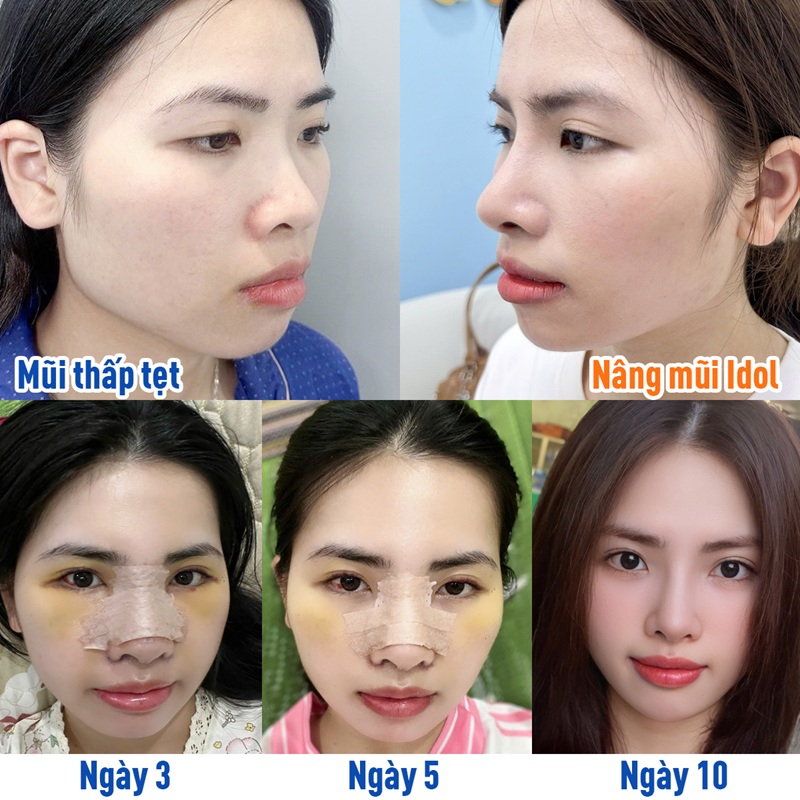
The nose recovers within a few weeks after the rhinoplasty.
II. Factors Affecting Rhinoplasty Recovery Time
The recovery time after rhinoplasty depends on several factors, including individual physiology, the surgical technique used, the surgeon’s skill and experience, and post-operative care.
- Individual physiology and healing ability: People with good physical condition and strong tissue regeneration tend to experience less swelling and bruising and recover faster. In contrast, those with sensitive skin or a tendency toward inflammation may require a longer healing period before the nose fully settles into shape.
- Rhinoplasty technique: Modern, minimally invasive techniques cause less soft tissue trauma, help reduce swelling, and significantly shorten recovery time compared to older surgical methods.
- Surgeon’s skill and experience: A highly qualified and experienced surgeon performs precise techniques with minimal unnecessary trauma, which helps reduce pain and swelling, allowing the nose to stabilize and take shape more quickly and beautifully.
- Post-operative care: Proper wound hygiene, correct medication use, appropriate diet, and following aftercare restrictions all play an important role in speeding up recovery and minimizing the risk of complications.
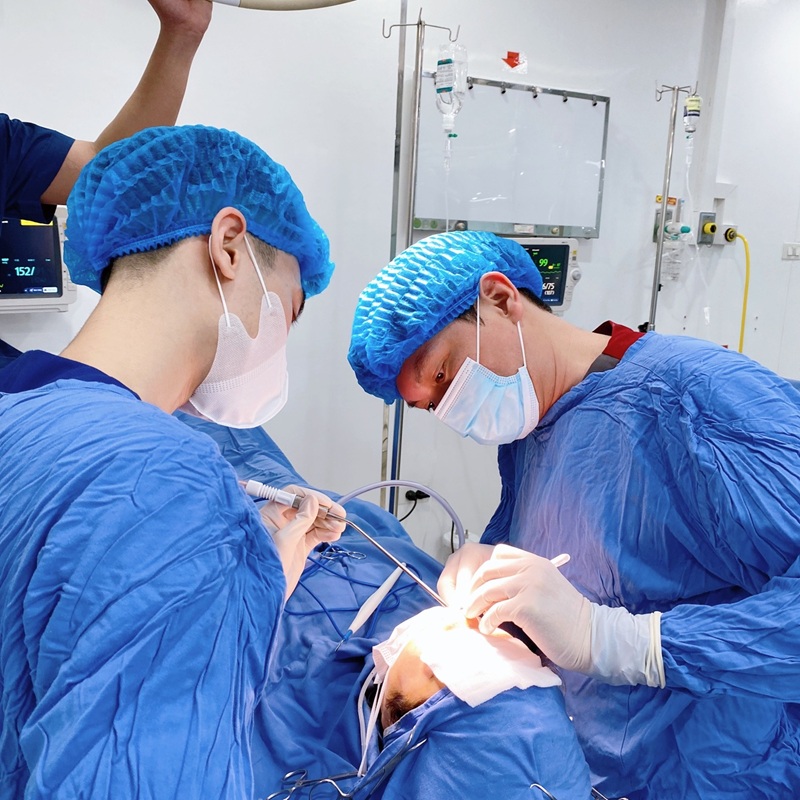
The surgeon’s skill influences the rhinoplasty procedure.
III. Important Post-Rhinoplasty Notes for International Clients
After rhinoplasty, international clients should follow a proper aftercare routine, maintain a suitable diet, arrange adequate accommodation and safe transportation, limit strenuous activities, and stay in regular contact with their surgeon.
- Clients should take medications as prescribed, clean the incision properly, and apply cold compresses according to medical instructions. Do not touch, massage, or apply cosmetics to the nasal area unless permitted by the doctor.
- It is recommended to avoid seafood, sticky rice products, chicken, alcohol, and stimulants during the early recovery period. Instead, prioritize soft, nutritious foods to support faster healing.
- International clients are advised to stay in Vietnam for at least 7–10 days after surgery for follow-up visits and recovery monitoring. When traveling or flying, avoid any strong impact to the nose.
- Refrain from high-intensity exercise, deep bending, or sleeping on your side with pressure on the nose during the initial healing phase to prevent nasal shifting.
- After returning to your home country, clients should continue communicating with their surgeon through available support channels to monitor recovery progress and promptly address any abnormalities if they occur.
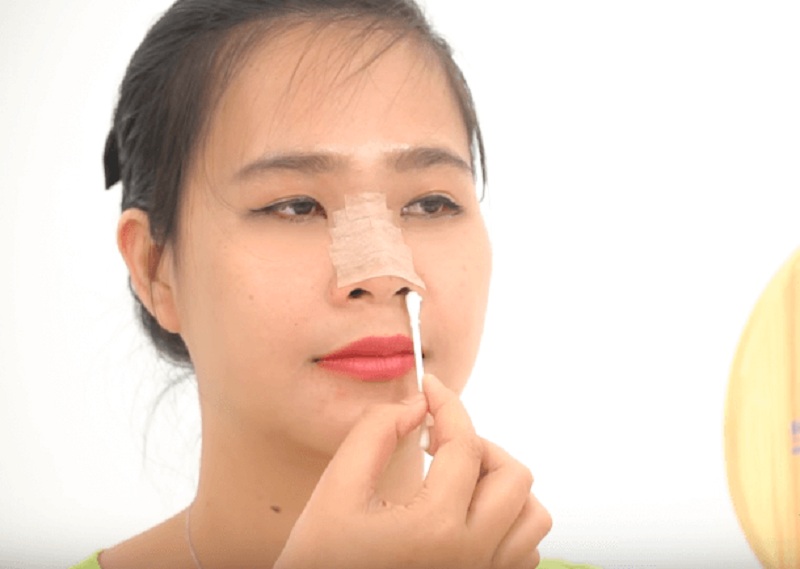
After rhinoplasty surgery, gently clean your nose.
IV. Signs of Normal and Abnormal Rhinoplasty Recovery
Mild swelling and bruising, slight discomfort, gradual stabilization of the nasal shape, and proper incision healing are signs of normal rhinoplasty recovery. In contrast, prolonged or worsening swelling, severe pain, redness, pus, discharge, fluid leakage, or nasal deviation and deformity are abnormal signs that require prompt medical evaluation and treatment.
Signs of Normal Rhinoplasty Recovery
- Mild swelling and bruising during the first few days, gradually decreasing over time.
- Mild pain or moderate tightness that improves with prescribed medication.
- The nasal shape becomes increasingly stable, more refined, and natural after 7–10 days.
- The incision is dry and heals well, with no discharge or unpleasant odor.
- No fever, and daily activities gradually return to normal.
Signs of Abnormal Rhinoplasty Recovery
- Severe swelling that persists or worsens after 7–10 days.
- Intense, sharp pain that lasts and does not improve with medication.
- Redness, warmth, pus, discharge, or foul odor from the incision area.
- Nasal deviation, deformation, or imbalance compared to the original shape.
- Fever, fatigue, and prolonged discomfort.
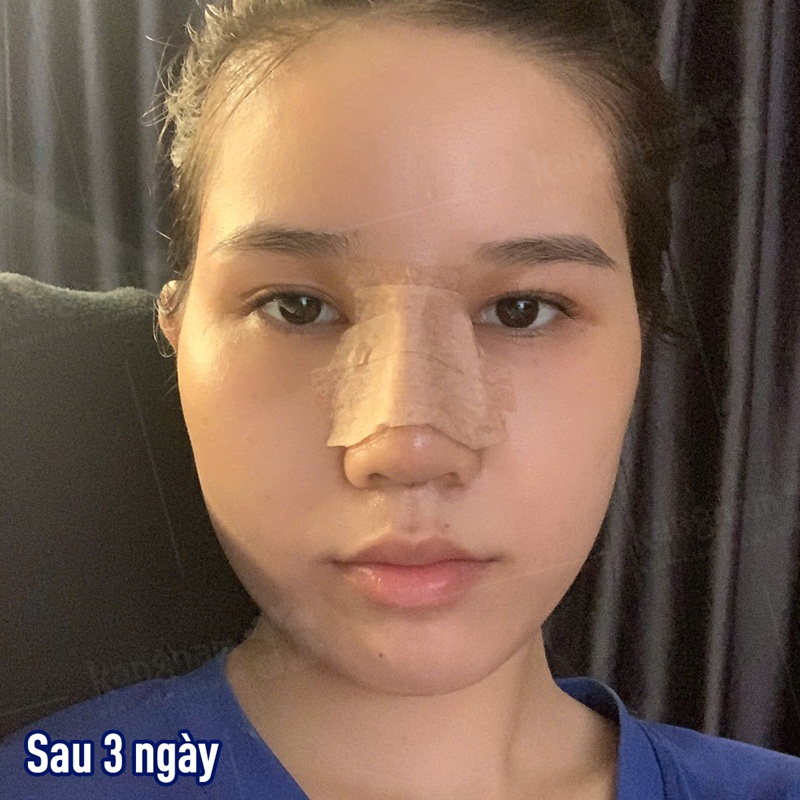
The nose gradually became less swollen and more refined.
V. Frequently Asked Questions About Rhinoplasty Recovery
1. How long does it take for swelling to completely subside?
Generally, swelling decreases noticeably after 7–10 days and almost completely resolves within about 1–3 months, depending on individual healing ability, the rhinoplasty technique used, and post-operative care.
2. What is recovery like 10 days after rhinoplasty?
After 10 days, the nose typically recovers about 70–80%. Swelling has significantly reduced, bruising has nearly disappeared, and the incision has healed. The nasal shape looks more refined, and daily activities and social interactions can resume almost normally. However, the nose is still stabilizing and requires continued proper care.
3. When does the nose start to look natural?
The nose usually begins to look natural after around 1 month and becomes noticeably softer and more harmonious after 3–6 months, once the tissues have stabilized and the final shape is fully formed.
4. When are stitches removed after rhinoplasty?
Stitch removal typically takes place about 5–7 days after surgery, depending on individual healing and wound recovery. Removing stitches at the appropriate time as advised by the doctor helps the incision heal faster, reduces the risk of infection, and supports a more stable and refined nasal shape.
5. Is it normal for the nose to still be swollen after 10 days?
Mild swelling after 10 days is generally considered normal, especially for individuals with slower healing. However, if swelling does not decrease, pain worsens, or there are signs such as redness, pus, or discharge, a follow-up visit is necessary for prompt evaluation and treatment.
At Kangnam Aesthetic Hospital, international clients receive consultations, surgery, and recovery monitoring under standardized medical protocols, supported by an experienced team of doctors and advanced, minimally invasive rhinoplasty technologies. Clients are given detailed aftercare guidance and continuous support before, during, and after surgery, ensuring a safe, smooth recovery and a natural, well-balanced nasal outcome.