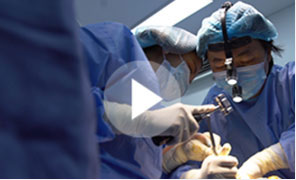
Date posted: 21-07-2026 | Last updated : 27-07-2026
Excess eyelid skin removal is a cosmetic procedure commonly considered by people experiencing age-related eyelid sagging. The following article explains what the procedure involves, who may be suitable, its benefits, the treatment process, and why many overseas Vietnamese patients choose to undergo eyelid surgery in Vietnam.
Excess eyelid skin removal is a surgical procedure designed to reduce loose, wrinkled, or sagging skin from the upper or lower eyelids.
Depending on the patient’s condition, the surgeon may also remove or reposition selected fat and create or refine the eyelid crease.
The procedure may help:
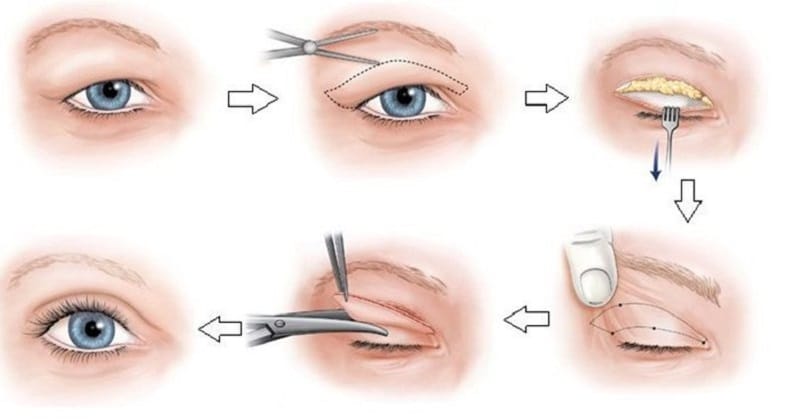
Eyelid surgery may remove loose skin and improve the contour of the upper or lower eyelids.
Excess eyelid skin removal may be suitable for:
The doctor should distinguish between excess eyelid skin and true ptosis. Ptosis involves weakness or dysfunction of the eyelid-lifting mechanism and may require a different surgical technique.
Patients can review current treatment prices in How Much Does Eyelid Surgery Cost?.
Many overseas Vietnamese patients choose to undergo eyelid surgery in Vietnam because of the comparatively reasonable cost, improved medical expertise, modern technology, and services designed to support international patients.
Vietnam’s aesthetic sector has adopted various techniques and devices from countries with established cosmetic-surgery industries, including South Korea and the United States.
Licensed aesthetic hospitals may provide:
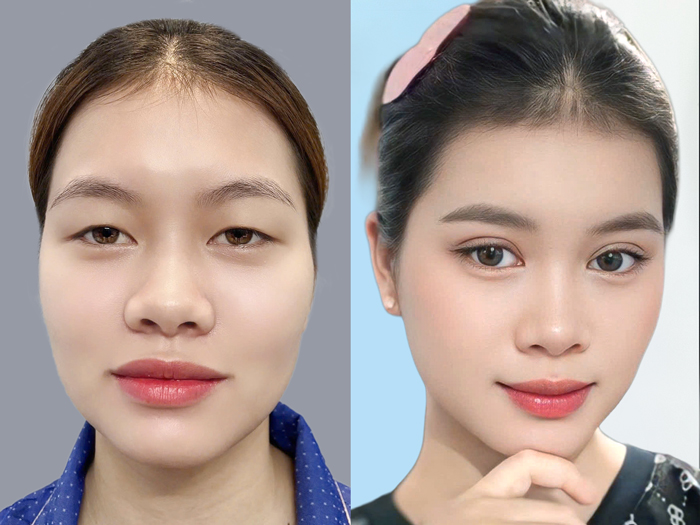
naturally beautiful eyelids
Technology alone does not determine the result. The surgeon’s assessment, technique, and understanding of eyelid anatomy remain essential.
Eyelid surgery in Vietnam may cost less than comparable private cosmetic treatment in countries such as:
However, patients should compare the complete package rather than only the listed surgical fee.
The total cost may include:
Doctors at licensed aesthetic hospitals may have specialist training in plastic surgery, ophthalmology, or eyelid aesthetics.
Patients should independently verify:
Overseas Vietnamese patients may receive support before and during their trip, including:
Patients interested in a more advanced eyelid technique may review What Is 6D Eyelid Surgery?.
Kangnam Aesthetic Hospital offers several eyelid-surgery techniques, including Korean Plasma, 6D, and Perfect blepharoplasty.
The hospital states that its services combine experienced doctors, fine aesthetic sutures, modern surgical technology, and postoperative support.
Kangnam states that its eyelid procedures are performed by doctors with extensive experience in eye aesthetics.
An appropriate surgeon should evaluate:
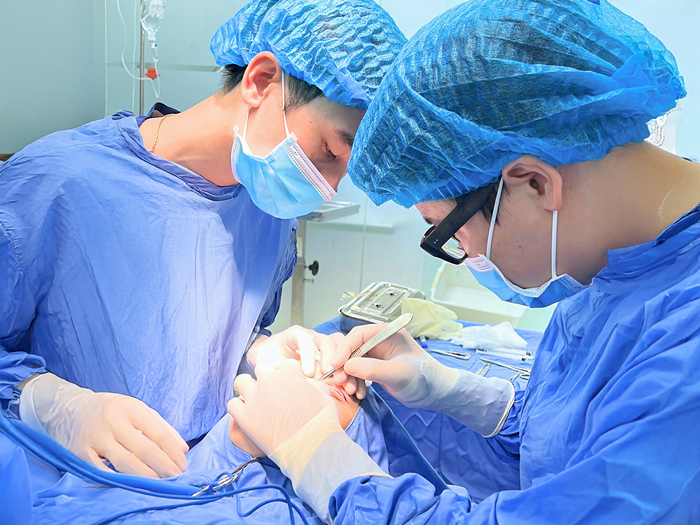
An experienced doctor can assess excess eyelid skin and recommend a suitable treatment plan.
Careful surgical planning may reduce unnecessary tissue trauma and support a more natural result.
Kangnam provides techniques such as:
Selected procedures may use a Plasma-assisted surgical device to support precise tissue cutting and bleeding control.
The original content states that the device completely seals blood vessels and prevents bleeding. In practice, Plasma-assisted technology may support haemostasis, but no surgical device can guarantee that no bleeding, bruising, or swelling will occur.
Fine sutures may be used to close the incision and create a smoother eyelid crease.
The original content mentions 0.01mm sutures. Patients should confirm the exact suture material and technique directly with the hospital.
Fine sutures may reduce visible stitch marks and wound tension, but no surgery can guarantee a completely invisible scar.
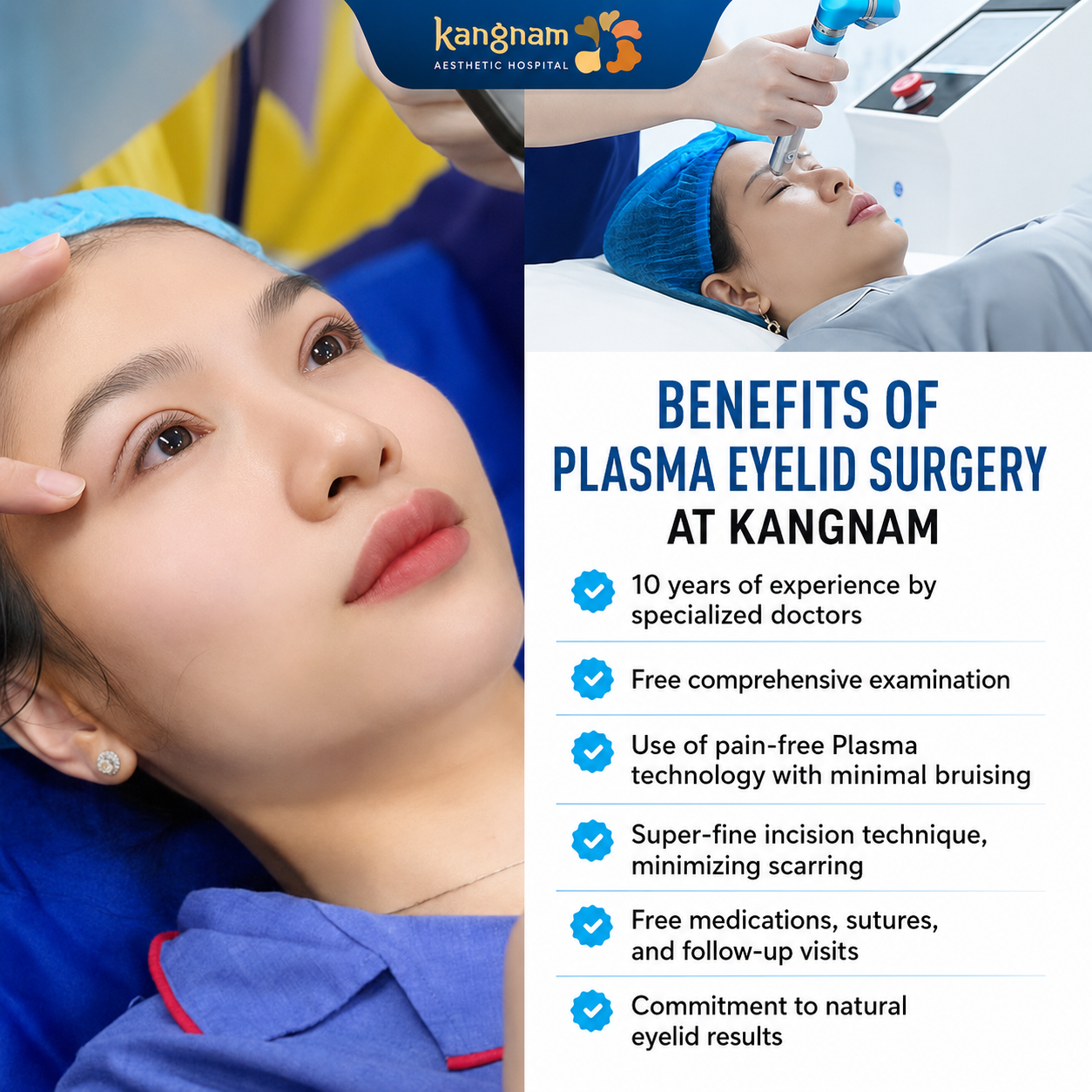
Plasma-assisted instruments and fine sutures may support precise eyelid surgery.
The final appearance of the scar depends on:
Excess eyelid skin removal commonly takes approximately 40–60 minutes, depending on the treatment extent.
The procedure is often performed under local anaesthesia, allowing the patient to remain awake.
Patients should not feel significant pain while the anaesthetic is effective, although they may experience pressure, pulling, or mild discomfort.
Kangnam states that selected eyelid procedures may include a warranty or follow-up policy lasting up to ten years.
Patients should request written clarification regarding:
A long warranty period does not replace the need for careful surgeon selection and appropriate postoperative care.
Kangnam follows a structured treatment process designed to support safety, precision, and recovery.
The doctor performs an in-person examination and evaluates:
The doctor then recommends an individualised treatment plan.
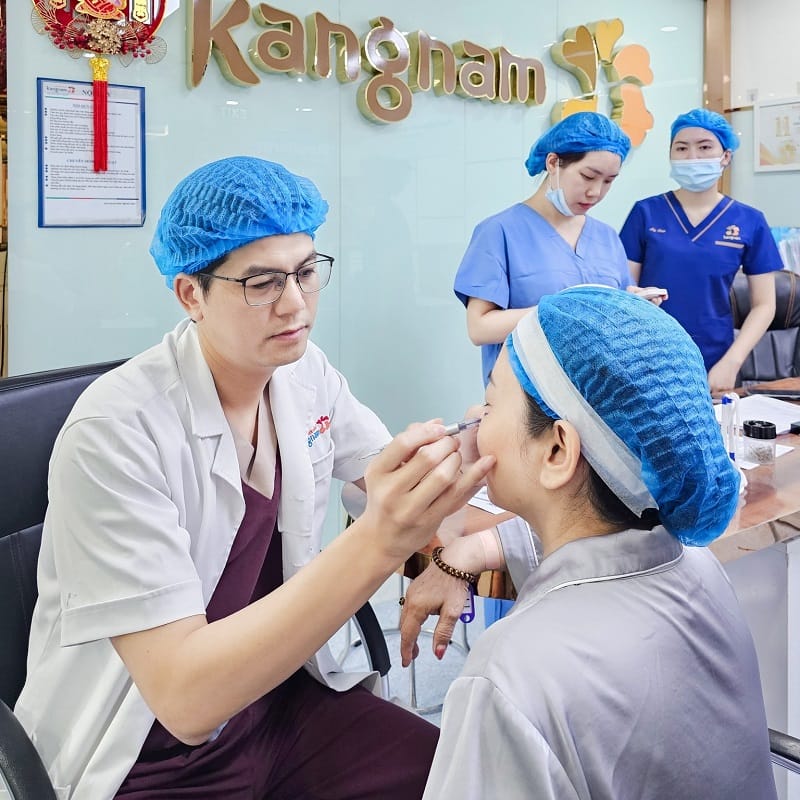
The doctor examines the eyelids and discusses the most suitable surgical technique.
The surgeon marks the planned eyelid crease and the amount of skin to be removed.
The design should consider:
Excessive skin removal may cause tightness, difficulty closing the eyes, or an unnatural result.
The eye area is cleaned and disinfected.
Local anaesthesia is then administered to control pain during the procedure.
The medical team should confirm allergies, medication, and relevant medical history before treatment.
The surgeon creates an incision along the planned line and removes a conservative amount of loose skin.
When clinically appropriate, the doctor may also:
The incision is then closed with aesthetic sutures.
Some treatment packages may include postoperative cold Plasma therapy to soothe the area and support swelling reduction.
Cold Plasma or similar treatment may support comfort, but it cannot guarantee faster healing or prevent all swelling and bruising.
After surgery, patients may rest briefly before discharge.
They receive instructions regarding:
A cold compress may be recommended to help control early swelling.
Cold packs should be wrapped in a clean cloth and applied gently without direct pressure on the incision.
Patients should seek prompt medical care if they experience:
To make the treatment process more convenient, overseas Vietnamese patients should prepare medical information, arrange appointments in advance, and allow sufficient recovery time in Vietnam.
Patients may send photographs for a preliminary online review.
Useful images may include:
Photographs help with preliminary planning but cannot replace an in-person examination.
Patients should contact the hospital before travelling to:

Overseas patients may receive an online consultation before travelling to Vietnam.
Patients should consider remaining in Vietnam for at least seven to ten days.
This may allow time for:
The final eyelid shape takes longer to settle, often several weeks to months.
Patients should bring information regarding:
Those with glaucoma, thyroid eye disease, severe dry eyes, diabetes, cardiovascular disease, or bleeding disorders may require additional assessment.
The original content states that Kangnam may assist overseas Vietnamese patients with:
The availability and cost of these services should be confirmed directly. Patients should not assume that flights, transportation, or accommodation are included in the surgical fee.
Excess eyelid skin removal may improve sagging eyelids, create a clearer eyelid crease, and, in selected cases, improve the upper visual field.
Vietnam may be an attractive destination for overseas Vietnamese patients because of accessible treatment costs, modern aesthetic services, and online consultation support.
However, patients should carefully verify the medical facility, surgeon’s qualifications, surgical plan, total treatment cost, and postoperative-care arrangements before making a decision.
Those who want an individual assessment may contact Kangnam through hotline 1900 6466 or register for an online consultation.