Date posted: 05-10-2026 | Last updated : 05-10-2026
Cosmetic surgery in Vietnam can be safe when performed at a licensed medical facility by a surgeon with appropriate expertise, with strict protocols for surgery, anesthesia and resuscitation, infection control, and postoperative care.
Cosmetic surgery is still a medical intervention, and no procedure can completely eliminate the risk of complications.
A licensed facility, an appropriately qualified surgeon, and authorization to perform the specific procedure are important factors in managing surgical risks.
Patients should not assess safety based solely on price, before-and-after photos, or social media advertising.
Before surgery, patients should undergo a health assessment and fully disclose any medical conditions, medications they are taking, and previous surgeries.
International patients and overseas Vietnamese should research the medical facility, postoperative care plan, required length of stay, and what to do if complications occur.
If any unusual symptoms develop after surgery, patients should contact the medical facility or their doctor promptly rather than attempting to treat the problem at home.
1. What Makes Cosmetic Surgery in Vietnam Safe?
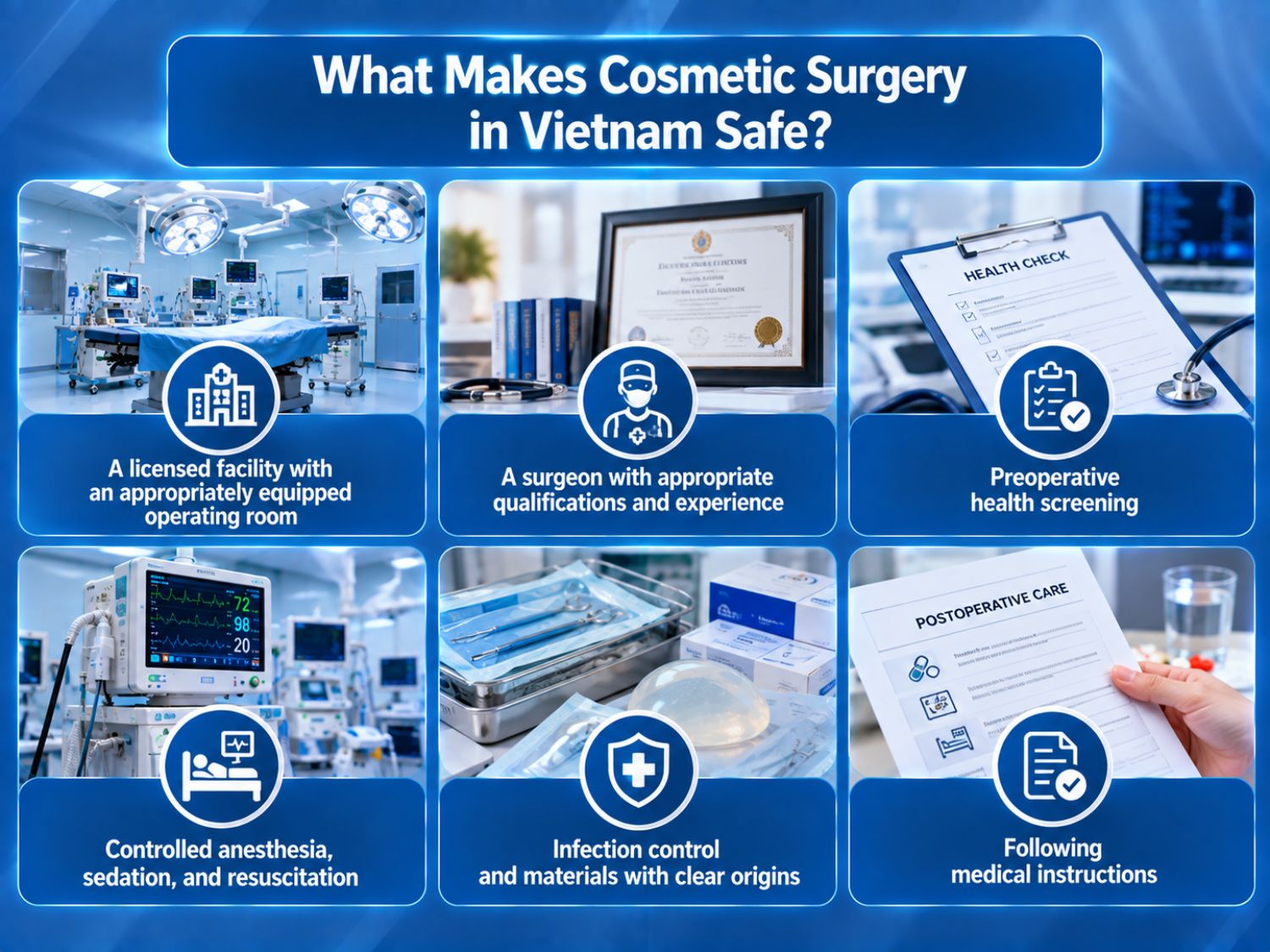
Cosmetic surgery in Vietnam can be safe when it is performed at a licensed facility by an appropriately qualified surgeon, with proper health screening, anesthesia and resuscitation, infection-control protocols, and postoperative monitoring. Safety depends primarily on the quality of the facility and the medical process, rather than simply on the name or price of the procedure.
- A licensed facility with an appropriately equipped operating room: The operating room, recovery area, monitoring systems, and emergency equipment should meet appropriate requirements so that unexpected situations can be managed promptly.
- A surgeon with appropriate qualifications and experience: The surgeon should properly assess the patient’s anatomy, recommend an appropriate surgical approach, and personally perform the procedure within their authorized scope of practice. Surgical expertise can affect procedural accuracy, the extent of tissue trauma, and the likelihood of requiring revision surgery later.
- Preoperative health screening: Patients should be assessed for underlying medical conditions, current medications, and undergo any necessary preoperative tests.
- Controlled anesthesia, sedation, and resuscitation: For procedures requiring general anesthesia or sedation, the patient’s breathing, blood pressure, heart rate, and other necessary vital signs should be monitored throughout the procedure and recovery period.
- Infection control and materials with clear origins: Proper sterile protocols, instrument reprocessing, and the use of materials with clear and traceable origins help reduce the risk of infection and material-related complications.
- Following medical instructions: Providing accurate information about medical conditions and medications, and following preoperative and postoperative instructions, are also important parts of surgical safety.
According to the Vietnamese Ministry of Health, medical examination and treatment must be carried out at healthcare facilities that meet regulatory requirements and operate within their licensed scope of professional practice. Therefore, when considering cosmetic surgery, patients should verify the facility’s legal status, authorized scope of practice, and the person responsible for professional medical activities before undergoing any procedure.
2. What Are the Possible Risks of Cosmetic Surgery in Vietnam?
Cosmetic surgery may cause common postoperative effects such as swelling, pain, bruising, or fluid accumulation. There is also a risk of complications such as infection, bleeding, abnormal scarring, tissue injury, or nerve injury.
- Bleeding, hematoma, or fluid accumulation: These may occur during or after surgery.
- Infection: The risk may increase if sterile procedures or postoperative wound care are inadequate.
- Anesthesia or local anesthesia complications: These may include adverse drug reactions or changes in blood pressure, breathing, or cardiovascular function.
- Scarring and abnormal wound healing: Depending on the individual and the type of surgery, patients may experience noticeable scarring or delayed wound healing.
- Unsatisfactory results: These may include asymmetry, an outcome that does not meet expectations, or the need for revision surgery.
- Procedure-specific complications: Depending on the procedure, these may include capsular contracture after breast augmentation, implant-related problems after rhinoplasty, or contour irregularities afte liposuction.
3. How Can You Check Whether a Cosmetic Surgery Facility in Vietnam Is Licensed?
You should check the facility’s operating license and its authorized scope of practice before undergoing surgery. A facility having an operating license does not necessarily mean it is authorized to perform every type of cosmetic surgery.
- Check official health authority websites: Look for lists of licensed medical facilities on the websites of the Ministry of Health or the local Department of Health where the facility operates.
- Verify the operating license: Check the facility’s name, address, person responsible for professional practice, and authorized scope of medical services.
- Check the authorized scope of procedures: Confirm that the facility is permitted to perform the procedure you are considering, such as breast augmentation, liposuction, maxillofacial surgery, or rhinoplasty.
- Verify the surgeon: The surgeon directly performing the procedure should hold a valid medical practice license and have an appropriate scope of practice.
- Request documentation from the facility: If the information cannot be found online, you can ask the hospital or facility to provide its license and the surgeon’s professional information before paying a deposit.
The American Society of Plastic Surgeons (ASPS) recommends that patients choose a board-certified plastic surgeon with appropriate qualifications and undergo surgery at an accredited or licensed facility. ASPS also emphasizes that surgical facilities should meet appropriate standards for equipment, qualified personnel, operating room safety, and emergency response capabilities.
American Society of Plastic Surgeons
4. What Should International Patients Consider When Traveling to Vietnam for Cosmetic Surgery?
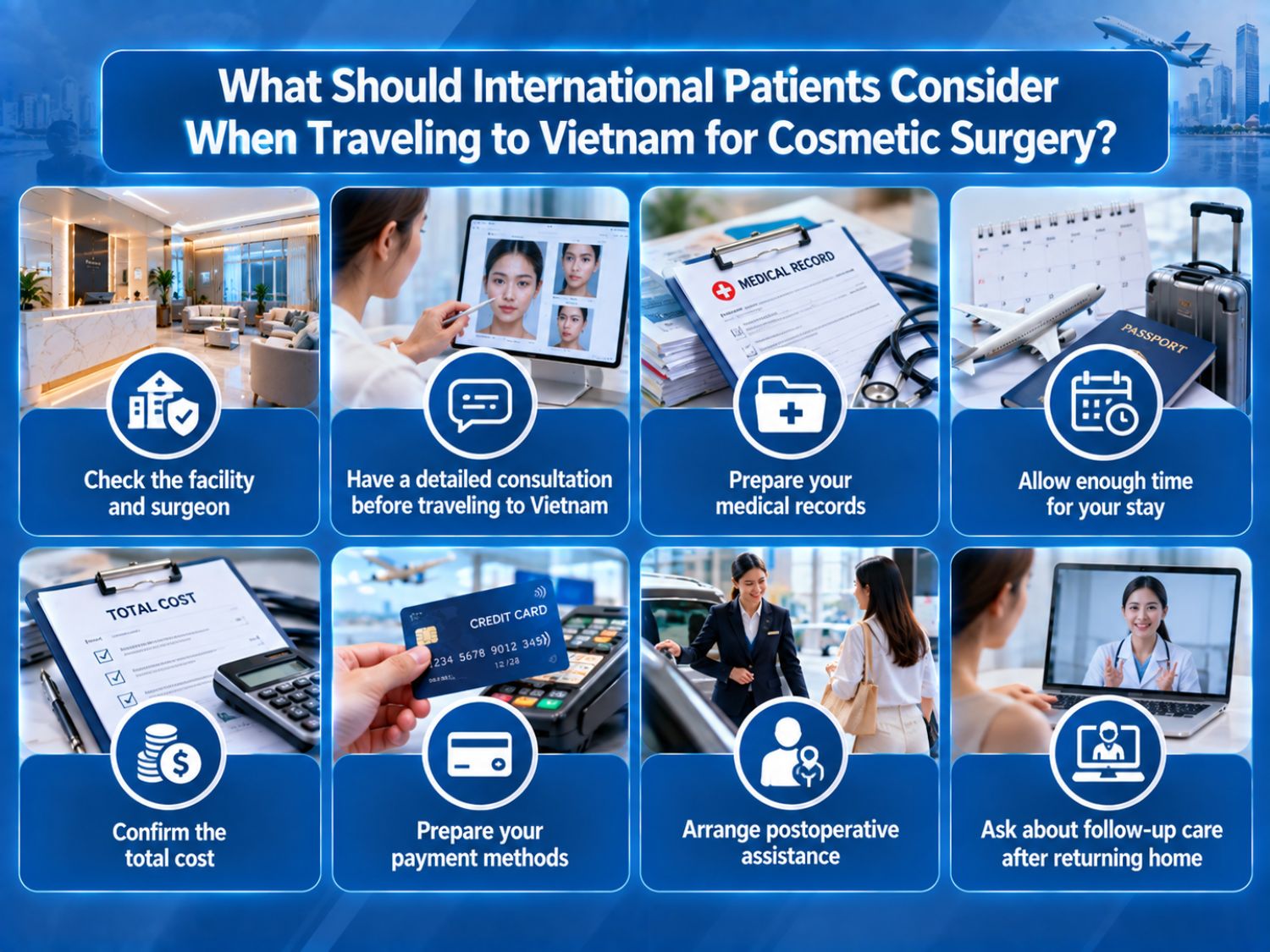
International patients traveling to Vietnam for cosmetic surgery should carefully plan everything from choosing the facility and surgeon to the length of stay, payment arrangements, and postoperative follow-up.
- Check the facility and surgeon: Confirm that the facility is licensed and that the surgeon holds an appropriate medical practice license and has relevant experience with the procedure.
- Have a detailed consultation before traveling to Vietnam: Discuss the surgical method, materials, potential risks, expected recovery time, and circumstances that may require changes to the treatment plan.
- Prepare your medical records: Bring information about underlying medical conditions, allergies, current medications, and recent test results if available.
- Allow enough time for your stay: Avoid booking your return flight too soon after surgery. Allow sufficient time for follow-up appointments, dressing changes, suture removal, and monitoring for possible complications.
- Confirm the total cost: Ask whether the quoted price includes surgery, anesthesia, materials, preoperative tests, medications, hospital stay, and follow-up visits.
- Prepare your payment methods: Check your international cards, transaction limits, foreign currency conversion fees, and the hospital’s deposit policy.
- Arrange postoperative assistance: This is particularly important for major procedures such as breast augmentation, liposuction, jaw surgery, or multiple procedures performed at the same time.
- Ask about follow-up care after returning home: Make sure you have a way to contact your surgeon, options for remote follow-up, and clear instructions on what to do if you develop unusual swelling or pain, infection, or bleeding.
5. Should You Choose Low-Cost Cosmetic Surgery in Vietnam?
A lower price does not necessarily mean the procedure is unsafe, but an unusually low price should be carefully investigated before making a decision. Patients should consider the total cost, the surgeon performing the procedure, the facility’s standards, the materials used, and exactly what is included in the quotation.
Before paying a deposit, ask:
- Does the price include preoperative consultation and testing?
- Who will directly perform the surgery?
- At which medical facility will the surgery be performed?
- Will general anesthesia or local anesthesia be used?
- Are anesthesia and postoperative monitoring costs included?
- Are the implants or other materials clearly identified and traceable?
- Will there be additional costs if further care or treatment for complications is required?
6. What Are the Advantages of Having Cosmetic Surgery at Kangnam Cosmetic Hospital?
Kangnam Cosmetic Hospital is one of the facilities in Vietnam offering a wide range of cosmetic surgery services, supported by a team of specialized doctors, surgical technologies, and postoperative care protocols. These are also important factors for international patients and overseas Vietnamese to consider when choosing a cosmetic surgery provider.
- Wide range of services: Kangnam offers various types of cosmetic surgery, including rhinoplasty, eyelid surgery, breast augmentation, liposuction, and maxillofacial surgery, allowing patients to explore multiple treatment options within the same healthcare system.
- Specialized medical team: Surgical procedures are performed by doctors with expertise appropriate to each service category, allowing patients to be examined and provided with an individualized surgical plan rather than applying the same technique to every case.
- Surgical support technologies: The hospital uses technologies such as 3D facial design, preoperative simulation, and specialized supporting equipment depending on the specific procedure.
- Focus on postoperative care: Patients receive postoperative monitoring and care instructions, along with scheduled follow-up appointments so doctors can assess their recovery.
- Suitable for international patients and overseas Vietnamese: Patients living abroad can arrange consultations in advance to discuss surgical options, costs, and the required length of stay, making it easier to plan their trip to Vietnam.

7. Frequently Asked Questions About Cosmetic Surgery in Vietnam
Is Cosmetic Surgery in Vietnam Good?
The quality of cosmetic surgery depends on the individual facility, surgeon, surgical technique, and treatment protocols. Cosmetic surgery in Vietnam as a whole should not be judged solely on the basis of a few successful cases or complications.
Can Foreigners Undergo Cosmetic Surgery in Vietnam?
International patients can seek and use medical services in Vietnam, but they should choose an appropriate medical facility, provide complete and accurate health information, and plan sufficient time for their stay and postoperative follow-up.
Should I Have Cosmetic Surgery in Vietnam Because It Is More Affordable?
Cost can be an important consideration, but it should not be the only deciding factor. The surgeon’s expertise, facility standards, surgical technique, materials used, and availability of postoperative care should be prioritized.
Top 5 Leading Aesthetic Plastic Surgeons in Vietnam
Top 3 most reputable plastic surgery clinics in Vietnam