Date posted: 06-10-2026 | Last updated : 06-10-2026
Complications following cosmetic surgery abroad may include infection, bleeding, fluid accumulation, wound-healing problems, blood clots, anesthesia-related complications, and unsatisfactory aesthetic results. If a complication occurs while the patient is still in Vietnam, they should contact the surgeon and facility immediately for assessment and treatment. If a complication develops after returning home, the patient should seek care from an appropriate healthcare facility locally while also contacting the surgeon in Vietnam to coordinate follow-up care.
Cosmetic surgery abroad can still involve complications such as infection, bleeding, fluid accumulation, delayed wound healing, anesthesia-related complications, or blood clots.
When a complication occurs, the first priority is medical assessment and treatment based on the severity of the condition.
Geographical distance can make it more difficult for patients to return to the original surgeon for follow-up, revisit the original facility, or obtain timely treatment. It may also result in additional costs if further treatment or revision surgery is required.
Before undergoing cosmetic surgery abroad, patients should clarify how long they need to stay, when follow-up appointments will take place, who will be responsible for their care if a complication occurs, and how postoperative support will be provided.
1. What complications can occur after cosmetic surgery abroad?
Cosmetic surgery is still a form of surgical intervention and therefore carries certain risks, whether it is performed domestically or abroad. The specific risks depend on the type of surgery, the patient’s health condition, the type of anesthesia, the surgical technique, and postoperative care.
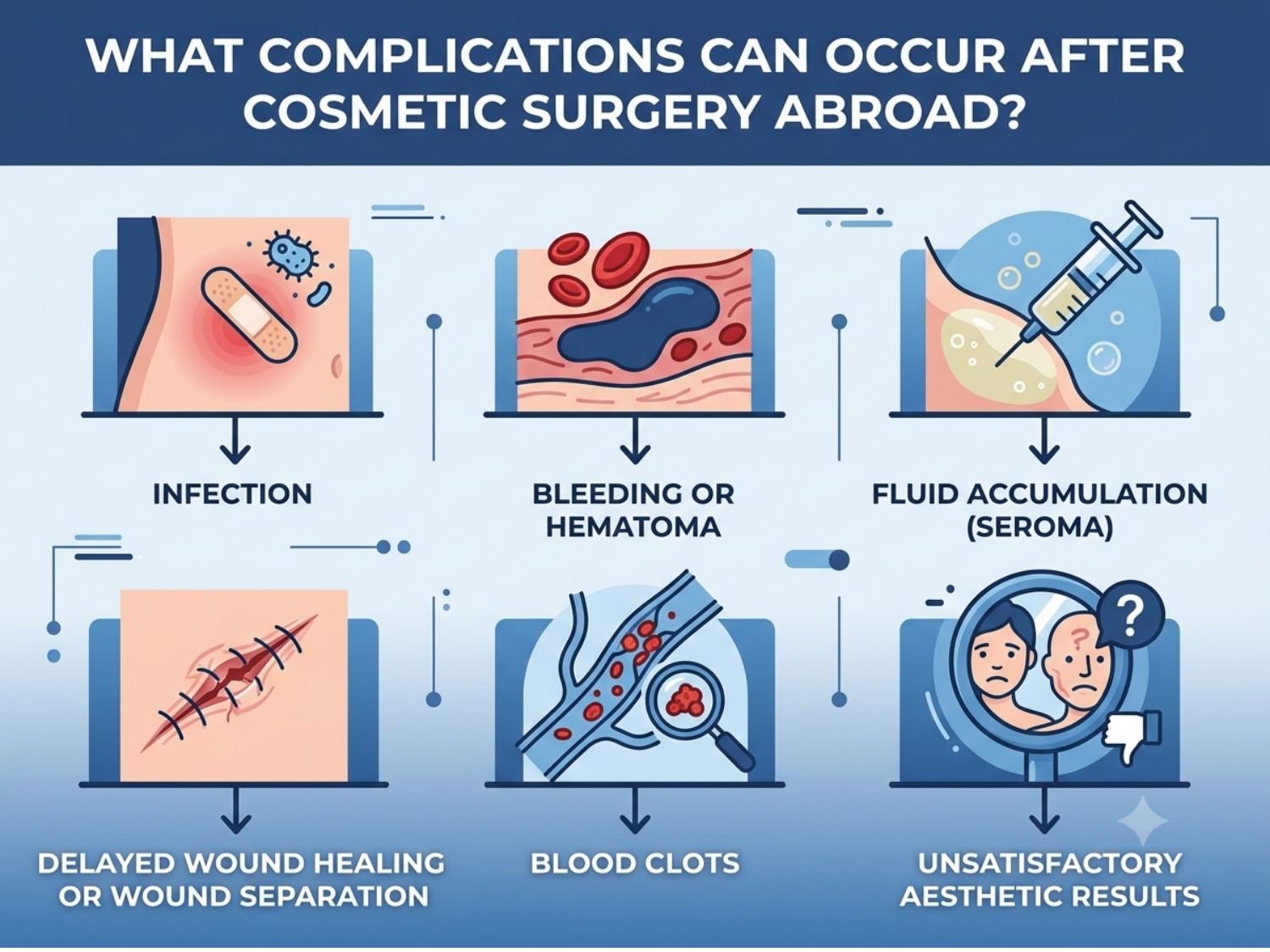
Some complications that may occur during the postoperative period include:
- Infection: The surgical area may become swollen, red, warm, increasingly painful, or produce unusual discharge, sometimes accompanied by fever. These symptoms should be evaluated by a doctor rather than treated with medication without medical advice.
- Bleeding or hematoma: Rapid swelling, severe pain, spreading bruising, or unusual bloody discharge after surgery may require prompt medical assessment.
- Fluid accumulation (seroma): Fluid may accumulate beneath the skin after certain procedures, causing swelling or a feeling of tightness around the treated area. It should be monitored and managed according to medical advice.
- Delayed wound healing or wound separation: Healing may take longer than expected or the surgical wound may open, particularly in the presence of infection or other factors that interfere with recovery.
- Blood clots: Surgery combined with long-distance travel after the procedure may introduce additional risk factors for deep vein thrombosis (DVT) and pulmonary embolism.
- Unsatisfactory aesthetic results: Patients may experience asymmetry, abnormal scarring, contour irregularities, or results that do not meet their expectations and require professional assessment before any revision is considered.
The Vietnamese Ministry of Health also identifies surgical safety and patient safety as important aspects of medical care, emphasizing the prevention and management of adverse events during treatment.
Ministry of Health: Implementation of Guidelines on Patient Safety and Surgical Safety
2. What should international patients do if they develop complications after surgery in Vietnam?
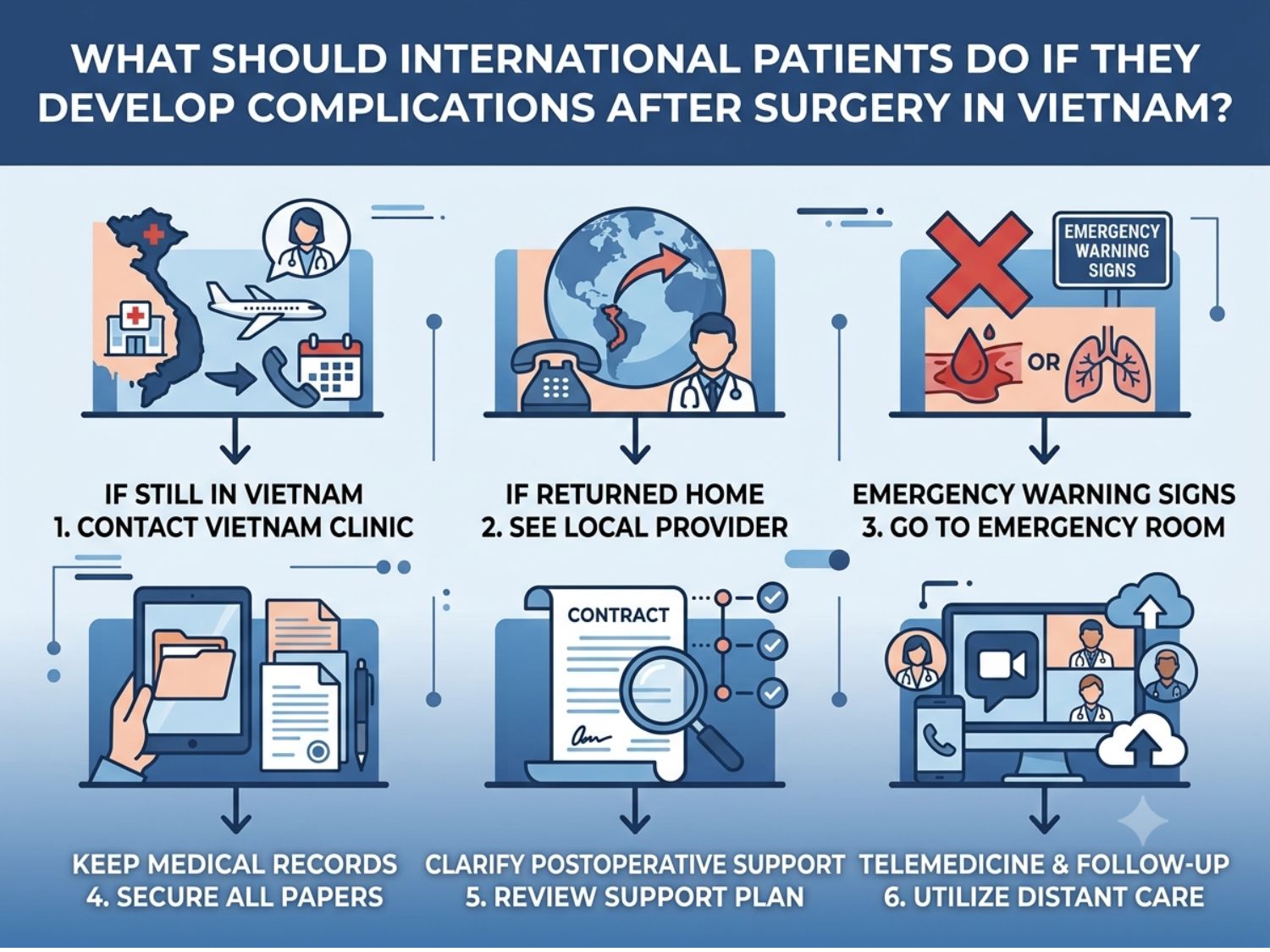
If an international patient develops a complication after undergoing cosmetic surgery in Vietnam, they should immediately contact the hospital or surgeon who performed the procedure and seek medical care at the nearest appropriate facility if the symptoms are serious.
- If the patient is still in Vietnam: They should return to the hospital where the surgery was performed whenever possible so the surgical team can assess, treat, and monitor the condition directly.
- If the patient has already returned home: They should provide the surgeon in Vietnam with details of their symptoms, surgery date, medical records, and current medications, while also seeking assessment from an appropriate local healthcare facility when necessary.
- Emergency warning signs: Difficulty breathing, chest pain, fainting, heavy bleeding, high fever, rapidly increasing pain, pus or significant discharge from the surgical wound, or skin turning purple or black require urgent medical attention.
- Keep medical records: Patients should retain discharge documents, prescriptions, surgical records, implant information, and before-and-after photographs so that healthcare professionals in their home country can better understand the treatment history.
- Clarify postoperative support: Before leaving Vietnam, patients should confirm how to contact the surgeon, whether remote follow-up is available, and what support is provided if further treatment or revision surgery becomes necessary.
The NHS advises people considering cosmetic surgery abroad to understand the arrangements for postoperative care, follow-up, and management of complications, including who will provide care after the patient returns home.
NHS: Cosmetic surgery abroad
3. What should patients do if they suspect a complication after cosmetic surgery?
Patients should seek medical assessment when unusual symptoms develop and bring their complete surgical records with them. At the same time, they should contact the original surgical facility to report the situation rather than attempting to manage a potentially serious complication on their own or relying solely on remote monitoring.
Patients should:
- Seek medical attention when warning signs appear: This is particularly important if there is difficulty breathing, chest pain, significant bleeding, fever, rapidly increasing pain, unusual swelling or redness, or symptoms that are getting worse.
- Bring surgical records: These should include the procedure performed, date of surgery, surgeon and facility information, prescriptions, examination results, and postoperative care instructions.
- Provide information about implants or other medical materials: If the patient has received breast implants, nasal implants, threads, fillers, or other implanted materials, they should retain the product name, manufacturer, and relevant documentation.
- Keep photographs of the recovery process: Before-and-after photographs and images showing changes over time may help doctors assess the treated area.
- Contact the original surgical facility: Patients should report their current symptoms and provide medical records and examination results so that the original medical team can coordinate further care when appropriate.
4. What should patients ask before undergoing cosmetic surgery abroad?
Before undergoing cosmetic surgery abroad, patients should verify the surgeon and facility and clarify the potential risks, required length of stay, follow-up schedule, complication-management plan, and any additional costs that may arise if further treatment or revision surgery is required.
Patients should ask:
- Who will perform the surgery directly? Patients should know the surgeon’s name, qualifications, and relevant experience and should ideally receive a consultation with the surgeon before the procedure.
- Where will the surgery take place? Confirm the surgical facility and ask about anesthesia, emergency care, and relevant safety arrangements.
- How long should I remain in the country after surgery? Patients should not book their return flight solely according to a travel itinerary. The timing should be based on the surgeon’s postoperative assessment.
- What is the follow-up schedule? Ask when the first postoperative examination will take place and whether subsequent follow-ups require returning to the country where the surgery was performed.
- Who will manage complications? Patients should clarify whether the facility will provide treatment, what support is available, and whether they would need to return to the country for revision or further treatment.
- What happens if a complication develops after I return home? This is particularly important for international patients and should be discussed before surgery rather than after a problem occurs.
- Will I receive complete medical records? Patients should retain surgical records, prescriptions, examination results, postoperative instructions, and information about any implants or medical materials used.

5. Frequently Asked Questions
Can overseas Vietnamese patients receive follow-up support after returning home?
Yes. Depending on the hospital’s policies and the patient’s recovery, overseas Vietnamese patients may receive remote follow-up support after returning home. However, remote consultations do not replace an in-person examination when unusual or potentially serious symptoms occur.
If a complication develops after returning to the US or Australia, does the patient have to fly back to Vietnam?
Not necessarily. The appropriate course of action depends on the type and severity of the complication and whether it can be safely managed by a healthcare provider in the patient’s home country. If direct intervention or revision surgery is required, the surgeon in Vietnam can discuss the appropriate options based on the individual case.
How long should international patients stay in Vietnam after cosmetic surgery?
There is no single timeframe that applies to every procedure. The recommended stay depends on the type of surgery, the extent of intervention, the patient’s recovery, and the surgeon’s follow-up schedule. Minor procedures may require less time, while major procedures such as breast augmentation, liposuction, facelift surgery, or maxillofacial surgery generally require a longer period for monitoring and follow-up.
Top 5 Leading Aesthetic Plastic Surgeons in Vietnam
Top 3 most reputable plastic surgery clinics in Vietnam