Date posted: 21-07-2026 | Last updated : 29-07-2026
Double-eyelid suture surgery is a minimally invasive aesthetic procedure used to create a clearer, younger-looking, and natural eyelid crease.
However, not every patient achieves the expected result. Uneven creases, drooping eyelids, irritation, or an eyelid shape that does not suit the face may lead some patients to consider suture removal.
So, how much does double-eyelid suture removal cost, is it painful, and what should patients know before undergoing the procedure?
The current cost of double-eyelid suture removal generally ranges from equivalent to approximately USD 152–380.
The final price may vary depending on:
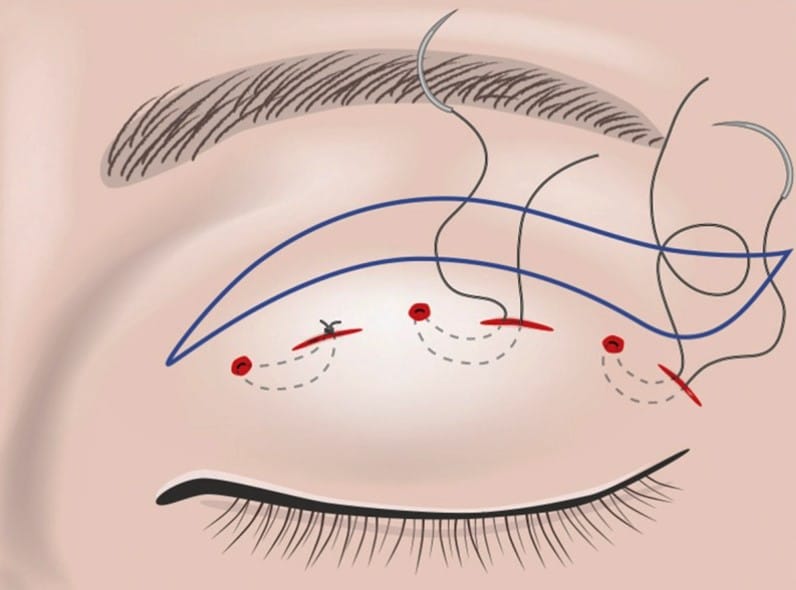
The cost of double-eyelid suture removal varies according to the complexity of the case.
When suture removal is combined with a new eyelid procedure, the total cost may range from approximately about USD 380–798.
The following table provides reference prices for several eyelid aesthetic services.
| Service | Approximate Cost in USD |
|---|---|
| Korean multipoint double-eyelid suturing | 274 |
| Double-eyelid suture removal | 152–380 |
| Korean Plasma eyelid surgery | 274 |
| 6D eyelid surgery | 456 |
| Perfect upper or lower eyelid surgery | 790 |
The prices above are for reference only. Patients should request a written quotation after an in-person examination.
The final quotation should clarify whether it includes:
The cost of double-eyelid suture removal is not fixed. It depends on the doctor’s expertise, the complexity of the existing crease, and the services included.
Suture removal requires careful knowledge of eyelid anatomy.
The doctor may need to identify:
Doctors experienced in eyelid revision may charge more because complex cases require more time and precision.
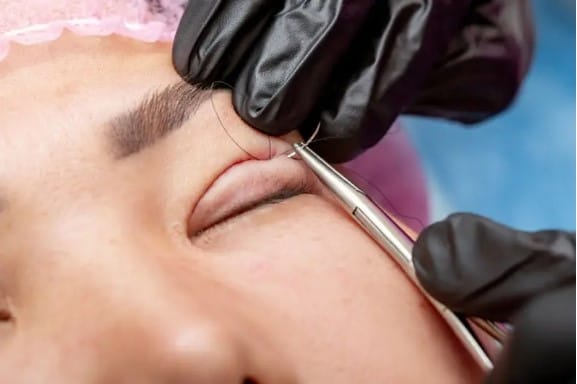
The method and complexity of suture removal may affect the final price.
A higher price does not automatically guarantee a better result. Patients should also review the doctor’s qualifications, previous revision cases, and the facility’s licence.
Removal may be relatively straightforward when the sutures are recent and easy to locate.
The procedure may be more complex when:
Complex cases may require a longer procedure or a small incision to locate and remove the suture material.
Licensed hospitals and medical facilities may have higher fees because they invest in:
No medical facility can guarantee an absolutely sterile environment or zero infection risk, but appropriate protocols can reduce avoidable risks.
The quoted cost may include or exclude:
Patients should confirm what is included before agreeing to the procedure.
Not everyone who has undergone double-eyelid suture surgery needs to have the sutures removed.
Removal may be considered in the following situations.
One crease may be higher, lower, deeper, or less defined than the other.
Some asymmetry is normal during early recovery because swelling may differ between the eyes. Patients should not judge the final result too soon.
If the crease remains significantly uneven after healing, the doctor may recommend:
Suture removal may be necessary when the patient develops:
These symptoms should be assessed promptly.
Over time, the crease may loosen, become uneven, or partially disappear.
However, removal is not automatically required when a crease fades. If the suture is not causing symptoms, the doctor may recommend leaving it in place or creating a new crease using another method.
Some patients request removal because:
Patients should understand that removing the sutures does not always restore the eyelids exactly to their original appearance.
Scar tissue or residual crease attachments may remain.
A loosened suture may lead to:
The original content states that removal is always the best way to manage a loosened crease. In practice, treatment depends on the symptoms and eyelid condition.
The doctor may recommend removal, replacement, revision, or observation.
Patients should never attempt to cut or remove buried eyelid sutures at home.
Double-eyelid suture removal is usually performed under local anaesthesia.
Most patients experience manageable discomfort rather than severe pain.
The local anaesthetic injection may cause:
Once the area is numb, the patient may feel pulling or pressure as the doctor locates and removes the sutures.
The amount of discomfort depends on:
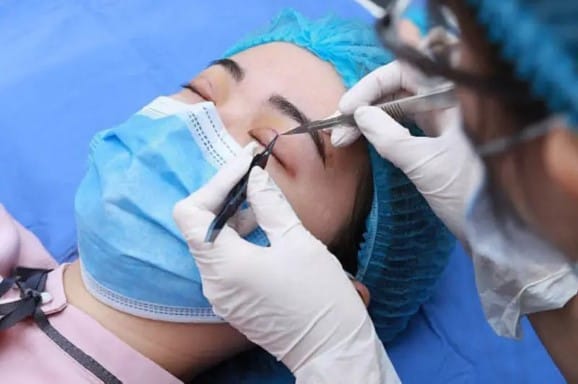
Double-eyelid suture removal is usually performed with local anaesthesia to control discomfort.
The procedure should not be described as completely painless.
Patients may experience:
These symptoms commonly improve over several days.
Cold compresses may be recommended during the first 24–48 hours, but patients should avoid pressing directly on the eyelids.
When the sutures can be removed through the original puncture sites, visible scarring may be minimal.
However, a small incision may be required when the suture is difficult to locate or surrounded by scar tissue.
Scar risk may increase with:
It is not accurate to guarantee that suture removal will never leave a scar.
The thin eyelid skin generally heals favourably, but the final appearance varies between patients.
After the procedure, patients should temporarily avoid:
Patients can review makeup precautions in When Can You Wear Makeup After Double-Eyelid Suture Surgery?.
Patients should choose a licensed medical provider, undergo an eyelid assessment, and follow postoperative instructions carefully.
Patients should prioritise:
Incorrect removal may damage the eyelid tissues, worsen asymmetry, or cause infection.
Double-eyelid sutures are often buried under the skin and may be attached to deeper eyelid tissues.
Trying to cut or pull them at home may cause:
Professional assessment is required even when a suture appears visible.
The doctor should examine:
The doctor may recommend:
A new eyelid procedure should not always be performed immediately after suture removal.
The eyelids may need time to:
The appropriate interval depends on the reason for removal and the condition of the tissues.
After suture removal, patients may be advised to:
Vitamin C from a balanced diet supports normal tissue health, but high-dose supplements are not necessary for every patient.
Drinking excessive amounts of water does not make wounds heal faster. Patients should maintain normal hydration unless advised otherwise.
Detailed incision-care guidance is available in How to Clean Your Eyes After Eyelid Surgery.
Patients should contact a doctor promptly if they develop:
Sudden visual changes, severe eye pain, or rapidly increasing pressure around the eye require urgent medical evaluation.
Is Double-Eyelid Suture Surgery Painful?
When Can You Wear Makeup After Double-Eyelid Suture Surgery?