Date posted: 21-07-2026 | Last updated : 27-07-2026
Swelling after eyelid surgery is a normal response and generally decreases over time. However, the degree and duration of swelling depend on individual healing, the surgeon’s technique, the extent of surgery, and postoperative care.
To help the eyelids recover smoothly, patients should use appropriate swelling-control methods, maintain a balanced diet, and monitor for warning signs. The following guide explains how to reduce swelling after eyelid surgery safely.
Swelling is expected during the first several days after eyelid surgery.
For many patients, swelling begins to decrease after approximately five to seven days and becomes much less noticeable within seven to ten days. In some cases, visible swelling may continue for up to two weeks.
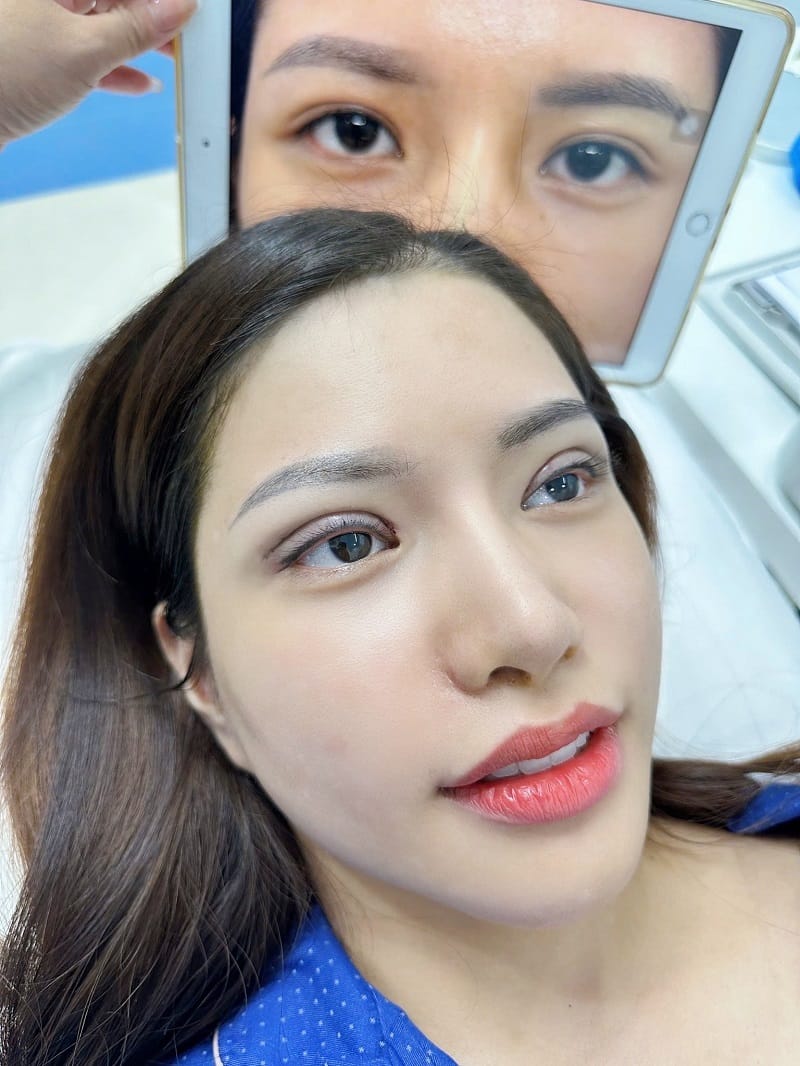
Swelling and bruising are common during early recovery after eyelid surgery.
The recovery timeline varies according to:
A typical swelling timeline may include:
Swelling and bruising are usually most noticeable during the first 48 hours.
The eyelids may feel:
Swelling commonly begins to decrease, while bruising gradually fades.
This is also a common period for suture removal, although the exact timing depends on the surgical technique and incision condition.
Most obvious swelling may have resolved, allowing the eyelid crease to become clearer.
Some residual puffiness or asymmetry may still be present.
The eyelids continue to settle and appear more stable.
Patients may feel comfortable returning to work or social activities, depending on their recovery and occupation.
Significant swelling has usually resolved.
However, the eyelid crease may still feel firm, look slightly high, or appear less natural than the final result. Scar maturation and tissue settling may continue for several months.
Patients can review the complete healing timeline in How Long Does It Take for Eyelid Surgery to Look Natural?.
Patients may reduce swelling by using cold compresses during early recovery, sleeping with the head elevated, caring for the incision correctly, taking prescribed medication, and avoiding strenuous activity.
A cold compress may help control swelling and bruising during the first 24–48 hours.
To apply it safely:
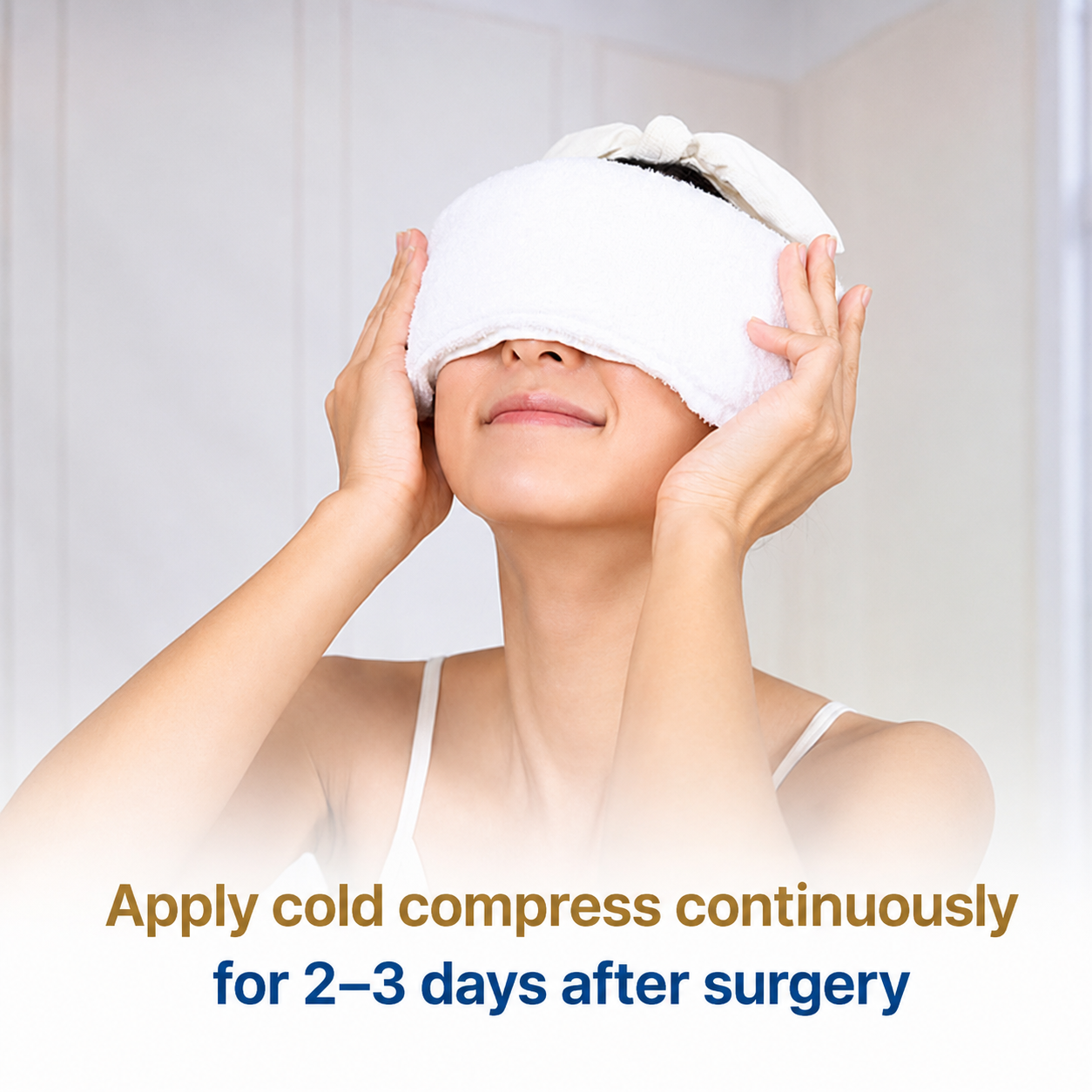
Cold compresses may help reduce swelling during the first stage of recovery.
Patients should not:
The frequency should follow the surgeon’s instructions rather than a fixed schedule for every patient.
Sleeping with the head above the level of the chest may help reduce fluid accumulation around the eyelids.
Patients may use:
Avoid sleeping face-down or placing pressure on the operated eyelids.
Some surgeons recommend warm compresses after the first few days to support comfort and help bruising fade.
However, patients should not automatically switch to warm compresses on day three.
Heat may increase swelling or bleeding if applied too early. It should only be used when the treating doctor confirms that the incision is stable.
When approved, the compress should be comfortably warm rather than hot.
Use sterile saline, clean gauze, or cotton swabs only when instructed by the medical team.
Patients should:
Detailed instructions are available in How to Clean Your Eyes After Eyelid Surgery.
The doctor may prescribe:
Patients should not take antibiotics automatically unless prescribed. Medication should be used at the correct dose and for the recommended duration.
Do not independently stop, increase, or replace medication.
When outdoors, clean sunglasses may help protect the eyes from:
The glasses should not press against the incision.
Screen use does not directly damage the surgical wound. However, prolonged use of phones, televisions, and computers may cause dryness, reduced blinking, fatigue, and eye strain.
Patients should take regular breaks if using screens becomes uncomfortable.
Do not:
Eye makeup and contact lenses may require pulling on the eyelids and may introduce bacteria or irritants.
A balanced diet supports general wound healing and recovery.
Patients should focus on adequate protein, vitamins, minerals, healthy fats, fibre, and fluids.
Protein supports tissue repair and immune function.
Suitable sources may include:
Vitamin C supports normal collagen production and tissue repair.
Sources include:
Zinc and iron contribute to immune function and normal healing.
Food sources include:
Patients should not take high-dose zinc or iron supplements unless a healthcare professional recommends them.
Fibre supports digestion, particularly when pain medication causes constipation.
Useful foods include:
Healthy fats may come from:

Patients should maintain a varied and balanced diet during recovery.
Turmeric may be used as a normal cooking ingredient. Fresh turmeric paste or unapproved herbal products should not be applied directly to the surgical incision.
Excessive salt may contribute to fluid retention and make swelling more noticeable.
Patients may limit:
Large amounts of sweets, fried foods, and highly processed meals may not support overall recovery.
They do not directly cause eyelid complications, but a balanced diet is generally preferable.
Alcohol may:
Patients should avoid alcohol for the period recommended by the doctor.
Moderate caffeine does not automatically delay healing or cause poor scars.
However, large amounts may contribute to:
Patients can review detailed guidance in Can You Drink Coffee After Eyelid Surgery?.
There is insufficient evidence that these foods routinely cause infection, pus, swelling, or raised eyelid scars in healthy patients.
Patients generally do not need to avoid them unless:
Patients should prioritise nutritional adequacy rather than unnecessarily removing multiple protein-rich foods from their diet.
Normal swelling should gradually improve.
Patients should contact the medical team if swelling, pain, redness, or visual symptoms become worse rather than better.
Swelling may require assessment when:
Possible signs include:
Persistent or heavy bleeding requires prompt medical assessment.
Patients should not press forcefully on the eye unless instructed by a healthcare professional.
Seek medical review if the patient develops:
Some asymmetry during early recovery is normal because swelling may differ between the two sides. The final result should not be assessed after only several days.
Temporary dryness, irritation, or blurred vision caused by swelling or ointment may occur.
However, urgent assessment is required for:
Extra folds or an uneven crease may appear temporarily because of swelling.
Patients should not massage, press, or attempt to reshape the eyelid without the surgeon’s approval.

Persistent swelling, discharge, or worsening bruising should be assessed by a doctor.
Kangnam Aesthetic Hospital provides postoperative instructions intended to help control swelling and support wound healing.
Services for selected patients may include:
Kangnam states that nurses are available to provide care guidance and answer postoperative questions. Patients should confirm the actual support hours and communication channels included in their treatment package.
Selected patients may receive cold Plasma treatment as part of postoperative care.
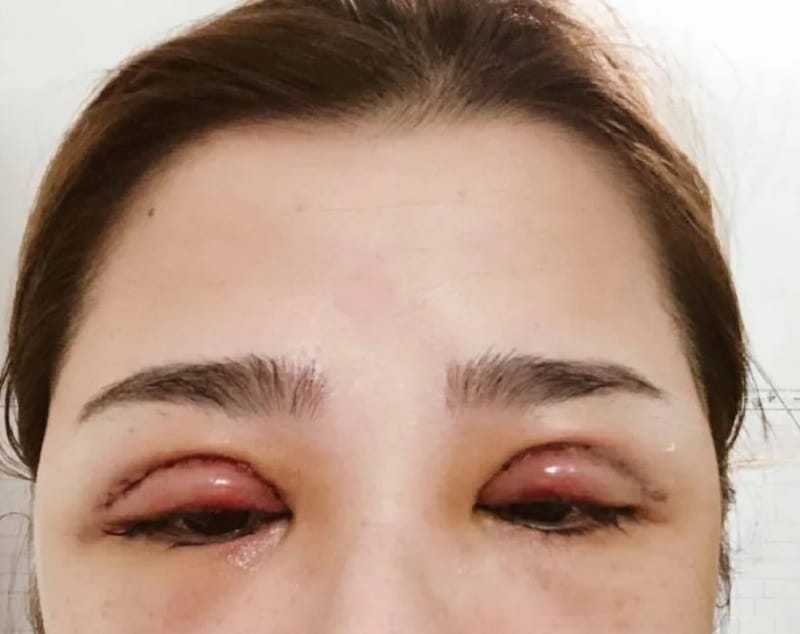
Kangnam may use cold Plasma treatment to support comfort and swelling management following eyelid surgery.
This treatment may support recovery but cannot guarantee rapid healing or prevent every complication.
Remote follow-up is useful for routine monitoring, but patients with severe pain, visual changes, bleeding, fever, or rapidly increasing swelling should seek immediate in-person medical care.
Swelling after eyelid surgery is common and usually begins improving within five to seven days. Most visible swelling may resolve within seven to ten days, although mild puffiness and tissue firmness can last longer.
Cold compresses, head elevation, gentle wound care, prescribed medication, balanced nutrition, and avoidance of strenuous activity may support recovery.
Warm compresses, scar products, makeup, and contact lenses should only be used at the appropriate stage and with the surgeon’s approval.
Patients should monitor the eyelids closely and seek medical assessment if swelling worsens, discharge develops, bleeding continues, the eyes cannot close properly, or vision changes occur.
How Long Does It Take for Eyelid Surgery to Look Natural?