Date posted: 21-07-2026 | Last updated : 27-07-2026
Autologous cartilage rhinoplasty uses tissue taken from the patient’s own body to reshape and support the nose. Because the graft comes from the patient, it generally has good biological compatibility and avoids some of the risks associated with synthetic implants.
The technique may create a natural-looking result and provide long-term structural support. However, it still involves surgery, a donor site, and possible complications such as infection, cartilage warping, absorption, asymmetry, or the need for revision.
At Kangnam Aesthetic Hospital, autologous cartilage rhinoplasty is planned according to the patient’s nasal anatomy, available donor tissue, health condition, and aesthetic goals.
Autologous cartilage rhinoplasty is a surgical procedure that uses cartilage harvested from the patient’s own body to reshape or support the nose.
The graft may be placed in the:
Common donor materials include:
Temporal fascia is connective tissue rather than cartilage. It may be used to cover implants, soften visible edges, or camouflage contour irregularities.
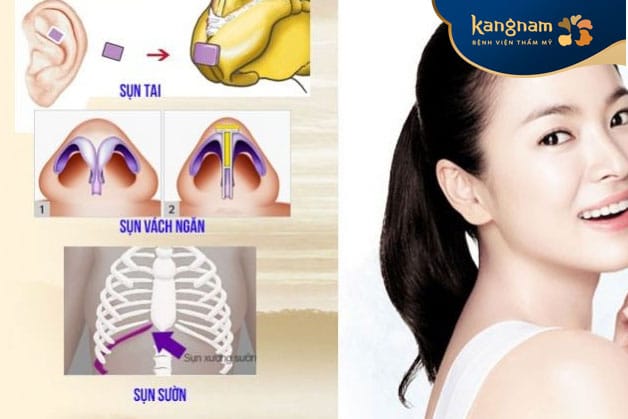
Autologous cartilage rhinoplasty uses graft material harvested from the patient’s own body.
The procedure may modify:
Because autologous tissue is biologically compatible, it generally carries a low risk of true allergic reaction. However, it does not eliminate the possibility of inflammation, infection, absorption, distortion, or other surgical complications.
Two commonly used approaches are a combination of autologous cartilage and synthetic implant material, or reconstruction using autologous tissue alone.
In this approach, the surgeon combines tissue from the patient with a medical-grade implant.
A common treatment plan may use:
This combination may be used to improve concerns such as:
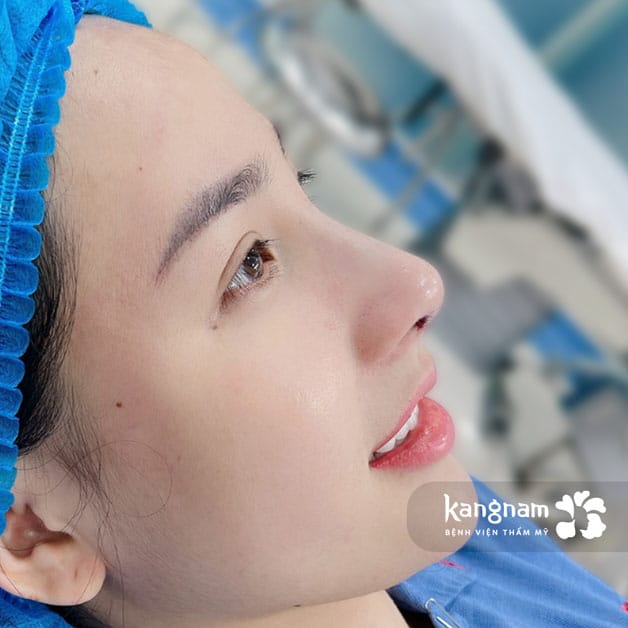
Autologous cartilage may be combined with an implant to support different parts of the nose.
The exact materials vary according to the anatomy and treatment goal.
Synthetic implants may provide predictable bridge height and avoid the need to harvest a large amount of cartilage. However, possible risks include:
A fully autologous rhinoplasty uses the patient’s own cartilage to reconstruct the bridge, tip, and supporting framework.
Rib cartilage is commonly considered when a large quantity of strong graft material is required.
This approach may be recommended for:
Using only autologous tissue avoids leaving a permanent synthetic implant in the nose. However, it does not guarantee a complication-free or permanent result.
The most appropriate graft depends on the amount of support required, the patient’s anatomy, previous surgery, and donor-site availability.
Ear cartilage is flexible and naturally curved.
It is commonly used for:
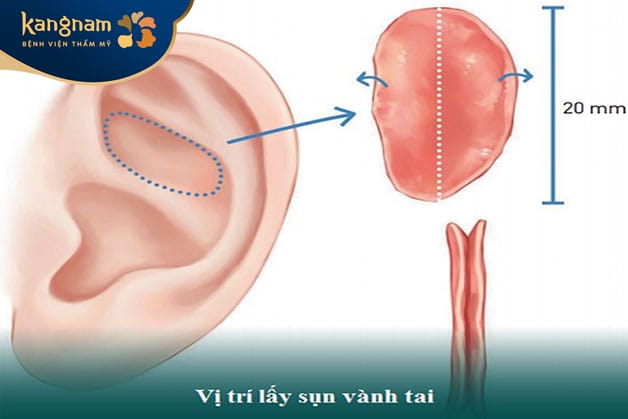
Ear cartilage is frequently used to refine or protect the nasal tip.
Because ear cartilage is relatively soft and limited in volume, it is generally not the first choice for constructing a high or strongly supported nasal bridge.
Harvesting usually leaves a scar behind the ear or within an ear fold. Temporary soreness, swelling, asymmetry, or contour change at the donor site may occur.
Rib cartilage provides a larger quantity of strong graft material.
It may be used for:
Advantages include strength and availability.
Possible limitations include:
Temporal fascia is a thin connective-tissue layer harvested from the temple area.
It may be used to:
Temporal fascia does not normally provide the firm structural support required to build the nasal bridge by itself.
Septal cartilage is located inside the nose between the two nasal passages.
It is commonly used for:
Septal cartilage is harvested from inside the nose and may support the tip and columella.
The surgeon must preserve enough septal cartilage to maintain nasal support. Excessive removal may contribute to septal weakness, perforation, or nasal deformity.
Autologous cartilage can be an effective option for suitable patients because it has good biological compatibility and may provide natural-looking structural support.
Potential benefits include:
However, statements that autologous cartilage cannot be rejected, irritated, or associated with complications are too absolute.
Possible risks include:
The cartilage may survive for many years, but some grafts change in shape or volume over time.
The result depends on:
A typical autologous rib cartilage rhinoplasty process may include the following steps.
The surgeon discusses the patient’s concerns and evaluates:
The doctor then recommends whether ear, septal, rib cartilage, an implant, or a combination is appropriate.
Before surgery, patients may undergo:
Patients must disclose smoking, nicotine use, anticoagulants, supplements, and previous reactions to anaesthesia.
The surgeon marks the intended:
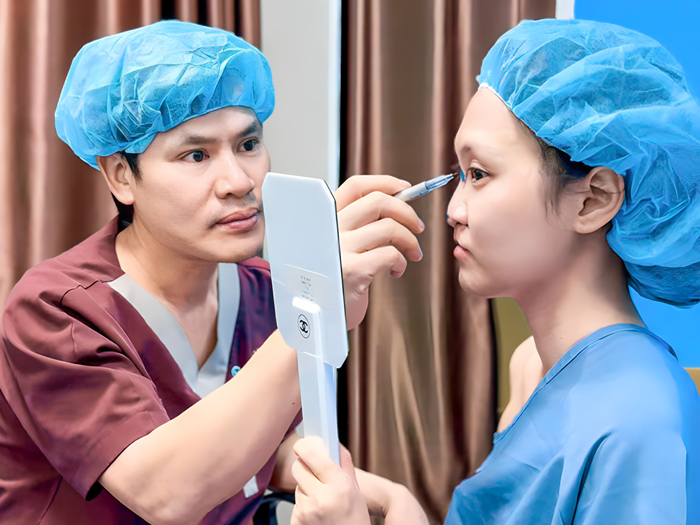
The surgeon measures and designs the proposed nasal shape before surgery.
Computer imaging may assist communication but cannot guarantee an identical postoperative result.
Rib cartilage rhinoplasty is commonly performed under general anaesthesia because both the nose and chest donor site are treated.
Anaesthesia helps prevent pain during surgery but carries risks such as:
Anaesthesia should be administered and monitored by qualified medical personnel.
The surgeon makes an incision over the selected rib area and removes a suitable section of cartilage.
The graft is then shaped according to the nasal design.
The surgeon should minimise donor-site injury while obtaining enough material for reconstruction.
The shaped cartilage may be used to:
Rib cartilage may be shaped and fixed to support the bridge and nasal tip.
Careful carving and fixation are important because rib cartilage may warp after surgery.
A nasal splint may be applied to protect the nose and support early healing.
The chest incision is also closed and dressed.
Patients should not remove or adjust either dressing without medical instructions.
Autologous cartilage may create a softer and more natural texture than some synthetic materials.
The surgeon can shape it to support the patient’s existing anatomy rather than creating an excessively rigid appearance.
Because the tissue comes from the patient, true allergic reactions are uncommon.
This may be beneficial in patients who:
Autologous cartilage may remain in the body for many years and provide durable support.
However, longevity is not guaranteed because the graft may:
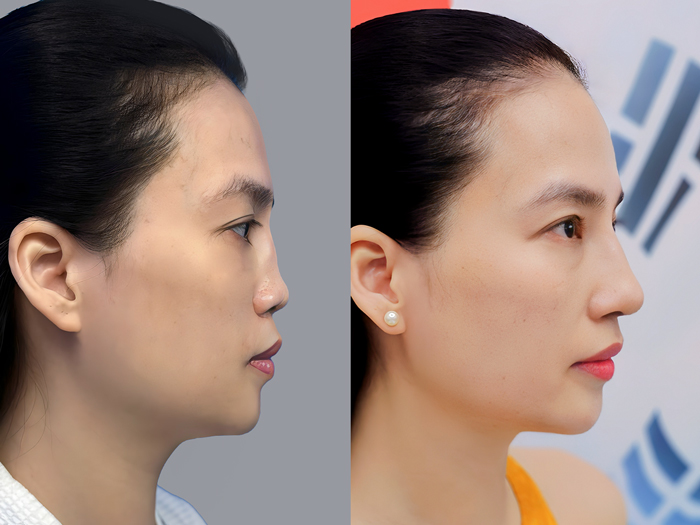
Autologous cartilage may provide durable support but does not eliminate the possibility of future revision.
Ear and septal cartilage may not provide enough volume for major bridge augmentation or reconstruction.
Rib cartilage provides more material but requires an additional surgical site.
Autologous cartilage must be carefully carved and fixed.
Rib cartilage can be more difficult to shape and may change contour after surgery.
Harvesting and preparing cartilage generally lengthens the procedure compared with placing a prefabricated implant alone.
Patients may experience:
| Comparison | Autologous Cartilage | Synthetic Implant |
|---|---|---|
| Source | Harvested from the patient, commonly from the septum, ear, or rib. Temporal fascia may also be used as a covering material. | Manufactured from medical-grade materials such as silicone or porous polymers. |
| Compatibility | Low risk of true allergic reaction and generally good biological compatibility. | Many medical implants are well tolerated, but they remain foreign materials. |
| Structural use | Can reconstruct and support the bridge, tip, septum, and columella. | Commonly used to increase bridge height in suitable patients. |
| Aesthetic quality | May provide a softer, more natural texture and is useful for complex reconstruction. | Provides a predictable shape and can reduce operating time. |
| Main advantages | Useful in revision surgery, avoids a permanent synthetic implant, and can be integrated into the nasal framework. | No donor-site surgery, readily available, and easy to shape or select by size. |
| Main limitations | Requires graft harvesting, may absorb or warp, and may result in donor-site pain or scarring. | May become displaced, infected, visible, exposed, or cause pressure on thin skin. |
| Surgical time | Usually longer because graft harvesting and carving are required. | Often shorter when only a standard implant is placed. |
| Revision risk | Revision may be needed for warping, absorption, asymmetry, or contour irregularities. | Revision may be needed for infection, displacement, extrusion, or an unnatural contour. |
The term “implant rejection” is often used informally. True immune rejection is uncommon with medical-grade nasal implants, but inflammation, infection, extrusion, and intolerance can occur.
Kangnam offers consultation, surgical planning, and postoperative support for overseas Vietnamese patients.
The following potential benefits should be confirmed for each patient and treatment package.
Kangnam states that its rhinoplasty procedures are performed by doctors experienced in nasal surgery.
Careful technique and structured aftercare may support recovery, but no technology can guarantee unusually rapid healing.
Initial recovery commonly requires:
Overseas patients should avoid planning surgery immediately before their return flight.
Using the patient’s own cartilage reduces the risk of true allergy to the graft.
However, it does not guarantee “no complications.”
Autologous cartilage rhinoplasty still carries risks involving:
The surgeon may design the nose according to:
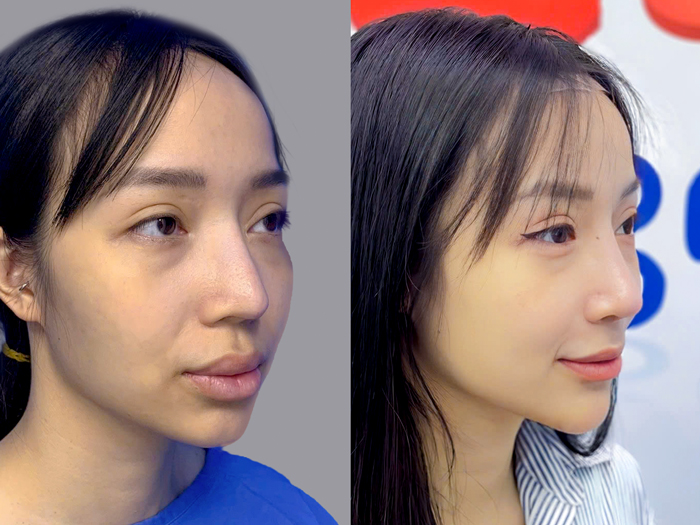
A personalised graft design may create a softer and more balanced nasal appearance.
The result should not be described as mathematically perfect or guaranteed to meet a universal “golden ratio.”
Kangnam states that its medical team includes doctors experienced in plastic and aesthetic surgery.
Patients should still independently confirm:
The qualifications and current roles of individual doctors may change, so patients should verify this information directly before booking.
Depending on the package, Kangnam may offer:
These services should not be assumed to be automatically free or included.
Patients should request written confirmation of:
Online follow-up cannot replace urgent in-person medical care if complications develop after the patient returns overseas.
Autologous rib cartilage rhinoplasty at Kangnam is quoted at approximately equivalent to about USD 3,002–3,723.
| Estimated Cost | Approximate USD |
| Lower estimated price | 3,002 |
| Higher estimated price | 3,723 |
The final cost depends on:
Patients should request a written quotation confirming whether it includes:
Patients should follow the surgeon’s individual instructions after surgery.
General recommendations may include:
Patients should seek prompt medical assessment for:
Sudden visual changes, severe breathing difficulty, chest pain, or uncontrolled bleeding require emergency care.
S-Line Rhinoplasty: Benefits, Procedure, Recovery, and Aftercare