



- Choose the right months for Hanoi or Ho Chi Minh City based on the weather.
- Plan around Tet and public holidays so doctors, operating rooms and flights are confirmed.
- Allow enough time to recover — and organise your trip step by step before you book flights.
Short answer
The best time to visit Vietnam for surgery is generally during months with favourable weather, a suitable treatment schedule and enough recovery time before returning home. Patients travelling to Hanoi may prefer September–November or March–April, while Ho Chi Minh City is generally more convenient from December to April due to lower rainfall.
- Hanoi and Northern Vietnam: consider September–November or March–April to avoid excessively hot weather.
- Ho Chi Minh City and Southern Vietnam: December–April generally has less rainfall, making travel, examinations and follow-up appointments more convenient.
- Recovery time: allow enough time to stay in Vietnam after surgery and avoid booking your return flight too early.
- Treatment schedule: book appointments in advance, especially if your trip coincides with Lunar New Year (Tet) or other public holidays.
1. What determines the best time to visit Vietnam for treatment?
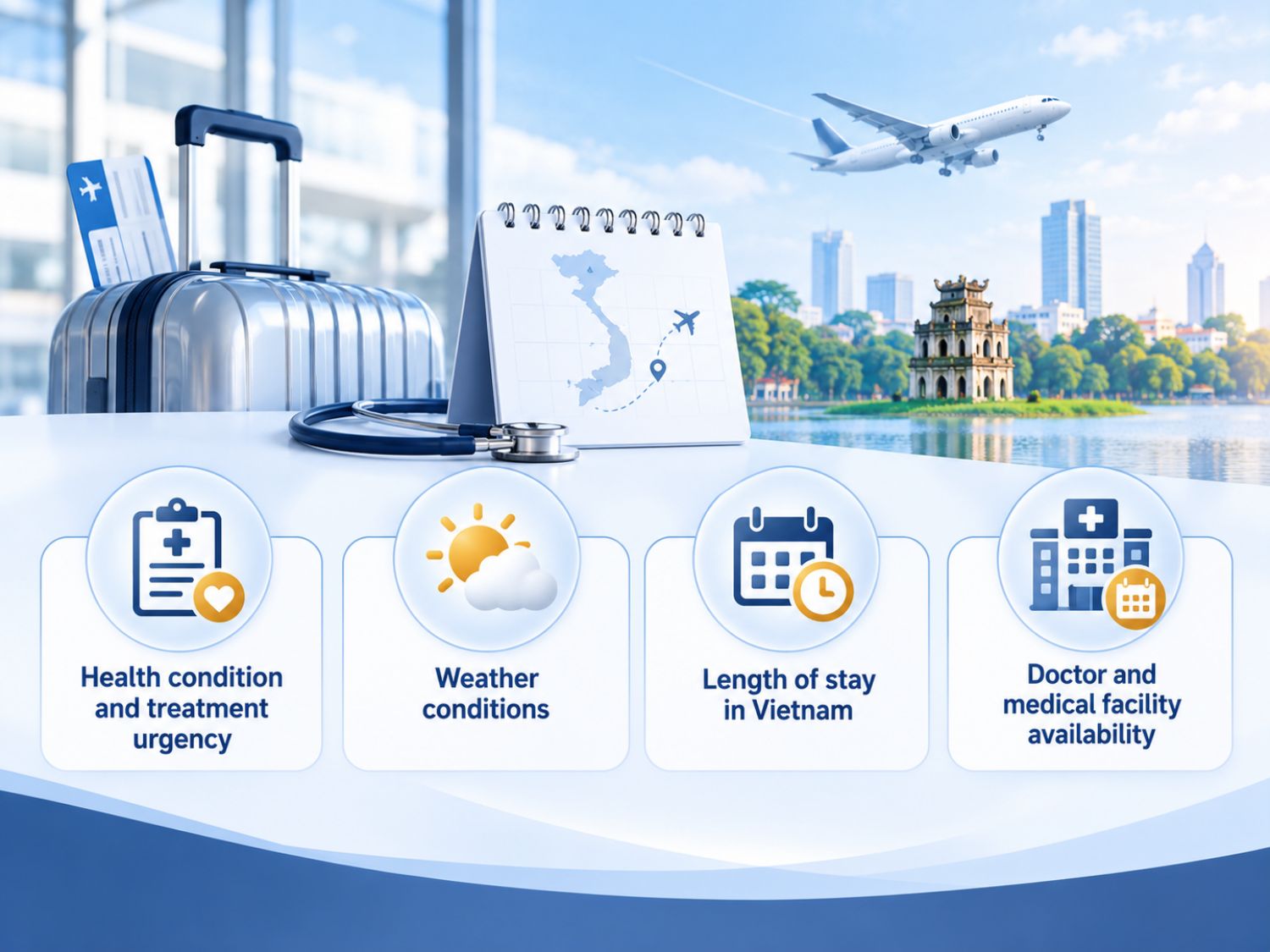
The most suitable time depends not only on the weather but also on your health condition, type of surgery, length of stay and the doctor's availability. Consider all of these before booking your flights:
- Health condition and urgency: elective cosmetic procedures can be scheduled in advance, but medical conditions needing prompt treatment should be handled as your doctor instructs — not delayed until the weather improves.
- Weather conditions: weather mainly affects transport and comfort during recovery or while wearing compression garments. It does not determine surgical outcomes or wound-healing ability.
- Length of stay in Vietnam: allow enough time for the whole process — examinations, surgery, rest and follow-up appointments before returning home. Major surgery generally needs a longer stay.
- Doctor and facility availability: check the doctor's schedule, operating-room availability and pre-operative test results before booking flights. Prioritise a period when you can rest and recover fully without feeling rushed.
2. Should you have surgery in Vietnam in summer or the rainy season?
You can still have surgery or medical treatment in Vietnam during the summer or rainy season, provided you are medically fit, the facility meets professional standards and an appropriate post-operative care plan is in place. There is no basis for claiming that all surgery performed in hot or rainy weather is more dangerous than in cooler months. Each season does, however, have some considerations.
Having surgery in summer
Summer in many parts of Vietnam is hot and humid, which can make outdoor travel tiring. After surgery you may notice some inconveniences:
- Excessive sweating: may cause discomfort when wearing post-operative support garments, compression garments or compression bandages.
- Hot weather: may make resting or travelling outdoors less comfortable.
- Hydration needs: keep up an adequate fluid intake as your doctor instructs.
- Sun exposure: may affect pigmentation in healing skin, particularly after certain dermatological procedures.
If you have surgery in summer, prioritise air-conditioned accommodation, limit outdoor activities and follow your wound-hygiene instructions.
Having surgery in the rainy season
Heavy rainfall does not directly cause surgical failure, but it may affect your travel arrangements. Be prepared for:
- Flight changes: flights may be delayed or rescheduled due to the weather.
- Flooding and traffic: roads to the hospital may be flooded or congested.
- Extra travel time: you may need more time to reach examinations or follow-up appointments.
- Nearby accommodation: choosing a hotel close to the medical facility helps reduce travel time.

If you are travelling to Central Vietnam during the stormy season, check the weather forecast before departure.
3. Should you travel for surgery during Tet or long public holidays?
You can still travel to Vietnam during Tet or other public holidays, but book appointments in advance and confirm the working schedules of doctors and hospitals. Some services, surgical schedules and support arrangements may be adjusted during holiday periods.
Lunar New Year (Tet) usually falls in January or February, depending on the year. Travel demand rises during this period as many people return home to visit their families. If you plan surgery around this time, check:
- Doctor's availability: whether your designated doctor will be working during your planned visit.
- Operating-room schedule: the availability of surgical facilities and post-operative care.
- Flights: book early and choose fares that allow date changes when necessary.
- Accommodation: room availability, prices and support services.
- Follow-up appointments: that post-operative examinations can be completed on your doctor's recommended schedule.
- Caregiver arrangements: family members or support staff to help you when needed.
4. How long should you stay in Vietnam for different treatments?
Your length of stay should be decided by the treatment method, the extent of the procedure and follow-up requirements — the same schedule should not be applied to every patient. Major surgery generally needs a longer monitoring period than minimally invasive procedures.
For cosmetic surgery
Procedures such as breast augmentation, liposuction, rhinoplasty or facial bone contouring may need post-operative monitoring and follow-up appointments before you return home. Your doctor needs to assess:
- Wounds and comfort: the degree of swelling, pain and the condition of surgical wounds.
- Mobility: your ability to walk, manage daily activities and care for yourself.
- Unusual symptoms: any signs of complications.
- Wound care schedule: dressing changes, wound care or suture removal, if needed.
- Fitness to travel: whether you are fit for a long-distance journey.
Do not assume that resting for just a few days is enough before flying home after every type of surgery.
For minimally invasive cosmetic procedures
Cosmetic injections, certain laser treatments or skincare treatments may have shorter recovery periods than surgery. Still ask your doctor about the monitoring period needed, possible post-procedure reactions and activities to restrict. If treatment needs multiple sessions, your schedule should also allow for the intervals between appointments.
For medical examinations and disease treatment
Specialist consultations, laboratory tests, endoscopic examinations and medical treatments take different amounts of time depending on their purpose and the results. If abnormalities needing a biopsy, additional intervention or further treatment are found, your return travel may need to be adjusted. For conditions needing prompt attention, do not wait for favourable weather — seek examination and treatment as your doctor directs.
5. How soon after surgery can you fly home?
When you can fly depends on the type of procedure, your recovery progress, the flight duration and your treating doctor's assessment. Flying too soon may increase the risk of complications, particularly when you must stay seated for several hours.
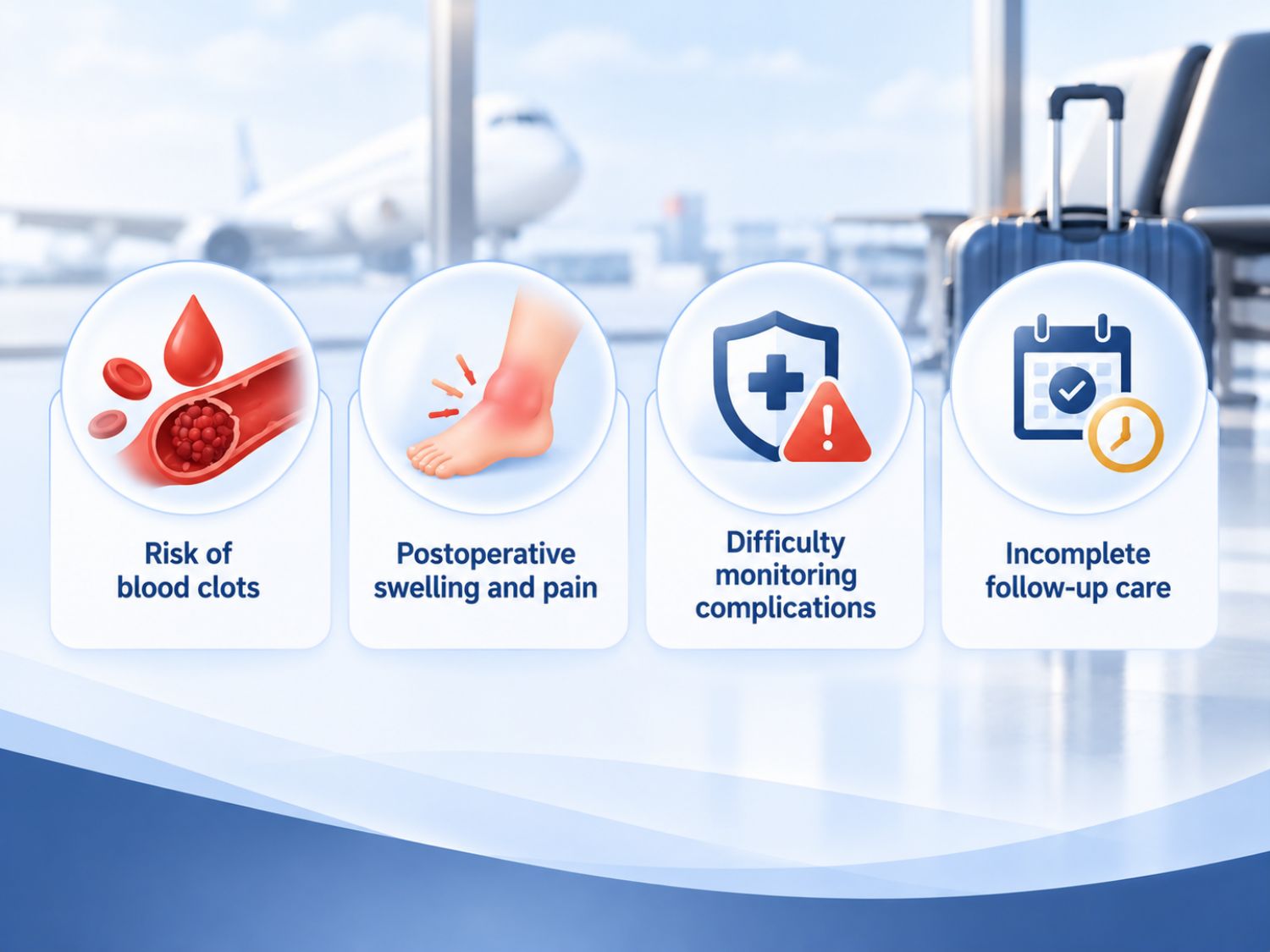
Important reasons for caution:
- Risk of blood clots: both surgery and prolonged sitting on a flight can increase the risk of blood clot formation.
- Post-operative swelling and pain: you may feel more discomfort when sitting for long periods.
- Difficulty managing complications: if problems occur during a flight, access to specialised medical treatment may be limited.
- Incomplete follow-up care: some complications develop in the first few days after surgery and need a direct examination by a doctor.
6. How to plan your trip to Vietnam for surgery or treatment
Prepare a travel plan in advance: choose a facility, arrange an online consultation, confirm examination appointments, decide your length of stay and organise post-operative care. Early preparation helps minimise unexpected changes.
Choose your treatment and medical facility
Identify the procedure you want and select a suitable facility. For cosmetic surgery, verify the hospital's operating licence, the procedures it is authorised to perform and the doctor's qualifications — not every facility within the same healthcare system is authorised to perform all types of surgery.
Book an online consultation from abroad
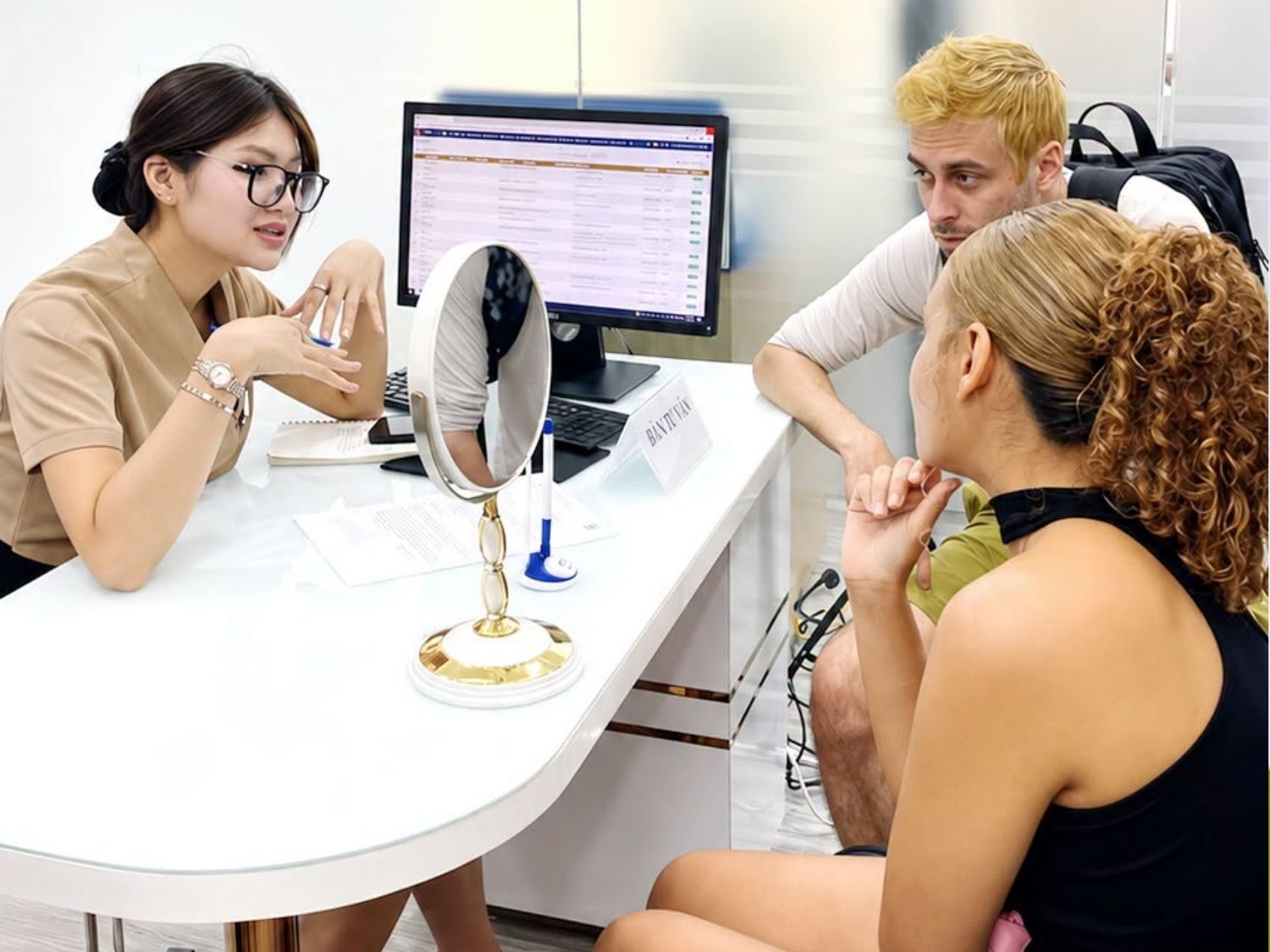
Contact the facility through its official channels to discuss your needs in advance. Prepare your full name, age and country of residence; the service or condition you want advice on; photos of your current condition if requested; your medical history and previous surgeries; and your expected arrival date and available length of stay. An online consultation is only a preliminary assessment and does not replace an in-person examination before surgery.
Confirm the proposed examination and treatment schedule
After the consultation, ask for confirmation of the in-person examination date, the responsible doctor or specialty, where the procedure will be performed, any required medical tests, the proposed surgery or treatment schedule, and the follow-up and recovery schedule.
Check the weather, flights and accommodation
Check the forecast for your destination city, choose suitable flights and prioritise accommodation near the facility. If your trip falls in the stormy season or a public holiday, prepare a backup plan in case your flights change. For major surgery, avoid booking return flights too close to the surgery date.
Prepare a care plan for after you return home
Agree in advance with your facility on follow-up arrangements and how to get in touch if problems arise after you return. If direct medical care or treatment for complications is needed, have a plan for accessing healthcare in your country of residence.

Dr. Harvey Nguyen
Medical Director, Kangnam Aesthetic Hospital (Ho Chi Minh City) · Specialist Level I in General Surgery, Hanoi Medical University · Licensed Plastic & Aesthetic Surgeon.
Member of VSAPS and ASAPS · trained in the USA, South Korea and Japan · reviewed this page on 12/11/2026. View full profile →
7. Frequently asked questions
Does having surgery in Vietnam in summer slow down wound healing?
Hot weather may make you sweat more and feel more uncomfortable when caring for surgical wounds. However, wound healing depends largely on your overall health, the type of surgery, surgical technique and post-operative care, rather than outdoor temperature alone.
Can I combine a holiday in Vietnam with cosmetic surgery on the same trip?
You can combine sightseeing with your trip before surgery if your health and schedule allow. After surgery, prioritise rest and avoid strenuous activities, swimming or excessive walking until your doctor gives permission.
Can my surgery date be changed if my flight is delayed by a storm?
Contact the medical facility as soon as your flight schedule changes so your appointment can be adjusted. Whether the surgery date can be changed depends on the doctor's availability, the operating-room schedule and your health at the time of the procedure.
- American Society of Plastic Surgeons (ASPS) — Planning a Summer Trip: What You Need to Know About Medical Tourism (2024). plasticsurgery.org
- Kangnam Aesthetic Hospital — how long to stay in Vietnam after plastic surgery. kangnamaesthetichospital.com
- Kangnam Aesthetic Hospital system data — facilities and licences (Hanoi 194/BYT-GPHĐ · HCMC 287/BYT-GPHĐ). benhvienthammykangnam.com.vn
The months above are general travel suggestions; weather and holiday dates vary from year to year, and recovery varies from person to person. Your surgery date, length of stay and fly-home date should be confirmed by your doctor after an in-person examination. This page is general information and does not replace a consultation.
More on planning your trip
Part of the international patient guide →