Date posted: 21-07-2026 | Last updated : 28-07-2026
Ear cartilage rhinoplasty is a method that uses autologous cartilage to reconstruct the nose and provide long-lasting aesthetic results. This technique is already familiar to many beauty enthusiasts. However, many people still do not fully understand how ear cartilage rhinoplasty works.
Ear cartilage rhinoplasty is a method that combines autologous cartilage taken from the ear with a synthetic implant to improve the shape of the nasal bridge and tip. After surgery, the procedure can improve concerns such as a flat nose, a wide nose, or an uneven nasal bridge, creating a softer nasal shape.
During surgery, a certain amount of cartilage is harvested from the outer ear without changing the overall shape of the ear. The cartilage is then carefully trimmed and placed at the nasal tip to help create a higher nose with narrower alar wings.
A synthetic implant is inserted into the nasal bridge to create a more stable structure and reduce the risk of redness, implant displacement, or implant exposure. As a result, patients may achieve a higher and straighter nose that still appears soft and natural.
Ear cartilage may also be combined with other autologous materials in certain cases. Patients can learn more about these options in Autologous Cartilage Rhinoplasty.
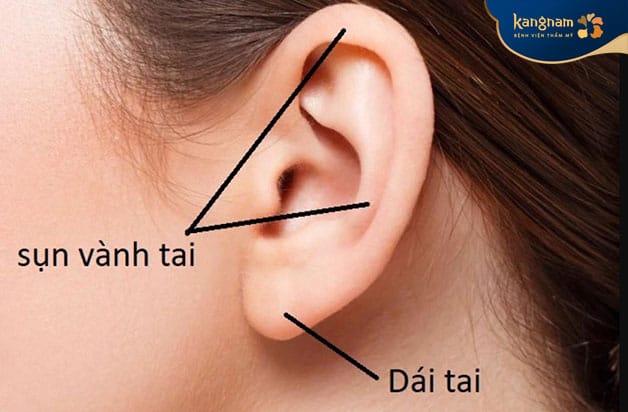
Cartilage taken from the ear is used to cover the nasal tip.
Ms Cara Nguyen, a 33-year-old overseas Vietnamese patient living in France, sent the following question to Kangnam Aesthetic Hospital:
“Hello doctor, I have a wide and low nose and I am considering ear cartilage rhinoplasty. However, I am not sure whether my age is suitable for this procedure. Could you please explain who is suitable for ear cartilage rhinoplasty?”
Dr Louis Truong, a rhinoplasty and plastic surgery doctor at Kangnam Aesthetic Hospital, explained that this procedure may be suitable for people with concerns such as a wide and low nose, an upturned nose, an unbalanced nose, a deviated septum, and other nasal imperfections.
After ear cartilage rhinoplasty, these concerns may be improved, creating a new nasal appearance that is more harmonious with the face.
People with the following concerns may consider ear cartilage rhinoplasty:
Patients with complex nasal deformities or a history of several previous procedures may need a stronger graft material. In these cases, the doctor may recommend rib cartilage rhinoplasty instead of ear cartilage.

People with an upturned, wide, coarse, or unbalanced nose may consider this procedure.
According to Dr Louis Truong, a rhinoplasty and plastic surgery doctor at Kangnam Aesthetic Hospital, ear cartilage rhinoplasty is considered an aesthetic solution with a high level of compatibility, stated to be up to 95%.
Therefore, it may help reduce the risk of postoperative complications and create a more natural and harmonious nasal shape.
Cartilage taken from the outer ear has a structure similar to the cartilage at the nasal tip and is naturally flexible. When grafted into the nose, it generally has good compatibility with the body and a low risk of allergic reaction.
Therefore, using ear cartilage to cover the nasal tip may help shape a soft, refined, and natural-looking nose without creating an overly rigid appearance.
Over time, the ear cartilage helps support the nasal tip, reducing the risk of damage to the tip skin, redness, or an overly visible and rigid nasal bridge.
However, no rhinoplasty method can completely eliminate surgical risks. Patients should understand the warning signs and possible corrective options described in Signs of Failed Rhinoplasty.

Ear cartilage rhinoplasty is considered safe when performed appropriately and is not expected to negatively affect overall health.
At Kangnam Aesthetic Hospital, depending on the shape and condition of the nose, the doctor may recommend Korean cartilage-covered rhinoplasty, S-Line rhinoplasty, or 4D structural rhinoplasty.
This is a basic rhinoplasty technique suitable for people with minor nasal imperfections and thin skin at the nasal tip that requires additional protection.
A high-quality Korean synthetic implant is used for approximately two-thirds of the nasal bridge to improve its height. The nasal tip is covered and supported with autologous cartilage to reduce the risk of redness.
Doctors may recommend S-Line rhinoplasty for people with a low, flat, wide, short, or deviated nose.
With this method, a synthetic implant is used for approximately two-thirds of the nasal bridge to improve its height and maintain the S-Line shape. Ear cartilage is used to cushion the nasal tip, helping create a more refined and elegant nasal bridge.
Further information about the characteristics and procedure is available in S-Line Rhinoplasty.
The 4D structural rhinoplasty method comprehensively corrects the nasal tip, columella, and bridge. It may be suitable for noses that are severely crooked, deviated, or deformed due to an accident.
After being harvested, the ear cartilage is carefully shaped and grafted into the nasal tip to increase tip projection, reduce its width, and support the columella.
The nasal bridge is raised using a high-quality biocompatible material designed to provide elasticity and long-term stability.

The nose may appear higher, more refined, and more harmonious with the facial features after rhinoplasty at Kangnam.
Each stage of rhinoplasty at Kangnam is performed in a controlled environment and according to procedures established by the Ministry of Health. The procedure includes the following steps:
The doctor performs an initial screening and examines the nasal structure before recommending a suitable method.
Based on the patient’s needs, the doctor creates an improvement plan that is appropriate for the overall facial structure.
Patients are also informed about preparation requirements and activities or substances that should be avoided before surgery.
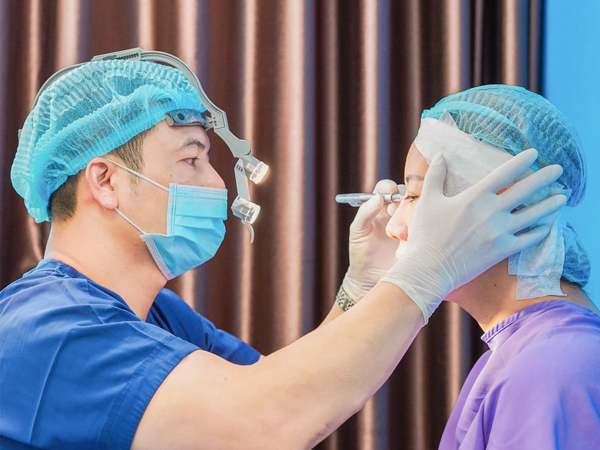
The doctor examines the nose and recommends a method suitable for the patient’s condition.
Before surgery, local anaesthetic is injected into the nose and ear areas to block pain signals temporarily.
This helps reduce pain and discomfort during the procedure. The nasal area is also disinfected to reduce the risk of infection at the incision site.
Patients concerned about discomfort during the procedure can review Is Rhinoplasty Painful?.
After approximately ten minutes, when the anaesthetic has taken effect, the doctor begins the operation, dissects the tissues, and prepares the cartilage according to the surgical plan.
The cartilage material is inserted into the nose to cover the nasal tip and help prevent the bridge implant from slipping or becoming exposed.
Depending on the patient’s condition, the doctor may also use an artificial membrane to support and connect the graft materials, helping complete the surgical result.
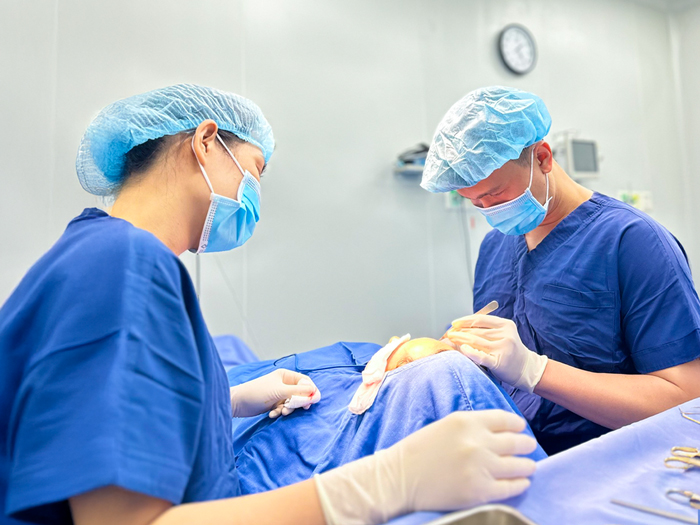
Specialist doctors perform the rhinoplasty procedure.
After the grafting process is completed, the doctor carefully closes the incision and disinfects the area again to remove any remaining fluid or blood.
The nose is secured with a splint and bandaged carefully to reduce the risk of deviation or distortion.
After being monitored at the hospital for approximately one to two hours, the patient may return home.
The doctor provides instructions on wound cleaning, postoperative restrictions, and the follow-up schedule. Patients should remember and follow these instructions carefully.
More detailed guidance is available in Rhinoplasty Aftercare Instructions.

The doctor secures the nose with a splint and provides detailed aftercare instructions.
Ear cartilage rhinoplasty is not expected to negatively affect overall health when performed appropriately and is considered a modern aesthetic technique.
Only a limited amount of cartilage is taken, so the shape of the outer ear is generally preserved.
However, patients should choose a reputable medical facility with doctors who have appropriate qualifications and extensive experience.
Patients should also disclose their medical history, medications, allergies, previous rhinoplasty procedures, and any existing breathing problems before surgery.
Regarding this concern, Dr Louis Truong, a rhinoplasty and plastic surgery doctor at Kangnam Aesthetic Hospital, explained:
“After rhinoplasty using ear cartilage, the cartilage does not completely shrink. However, because it is natural tissue, a small portion may be absorbed by the body.”
Ear cartilage is similar to rib cartilage in that only a small degree of absorption may occur.
The aesthetic result may be maintained for approximately 20 years. The nasal tip may remain significantly improved, retain its shape, and appear increasingly natural over time.
The exact duration varies according to the graft, surgical technique, healing response, ageing process, and postoperative care. Patients can learn more in How Long Do Rhinoplasty Results Last?.
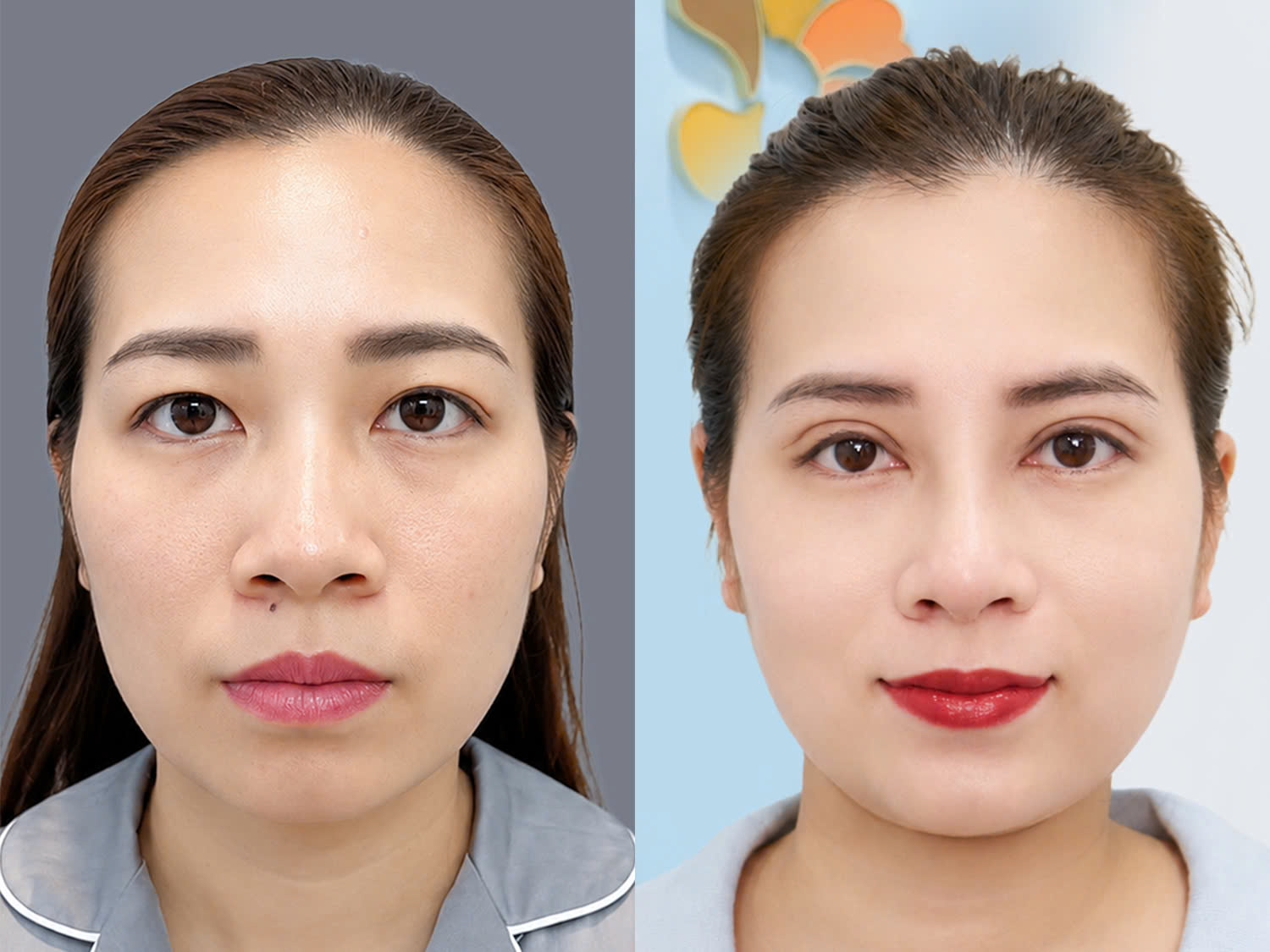
A patient with a dorsal hump achieved a more refined and natural-looking nose after rhinoplasty at Kangnam.
Implant displacement is less likely to occur after ear cartilage rhinoplasty when the following conditions are met:
Ear cartilage rhinoplasty techniques have improved significantly and may provide long-lasting results.
The procedure combines synthetic and autologous cartilage to help maintain nasal stability.
Therefore, postoperative contraction may be reduced, along with the risk of implant displacement, implant exposure, or redness at the nasal tip.
Ear cartilage rhinoplasty has introduced a new option in modern nasal aesthetic surgery. This procedure may improve a range of nasal imperfections and provide long-lasting aesthetic results.
However, to reduce the risk of complications, patients should choose a reputable medical facility, an experienced doctor, and follow postoperative care instructions carefully.
Autologous Cartilage Rhinoplasty: Techniques, Benefits, Risks, and Cost
Is Rib Cartilage Rhinoplasty Permanent?
S-Line Rhinoplasty: Benefits, Procedure, Recovery, and Aftercare