Vietnam is increasingly attracting international patients seeking reliable rhinoplasty providers thanks to reasonable costs and significant improvements in medical quality. Rhinoplasty in Vietnam is now considered a safe and effective option for overseas clients who wish to combine aesthetic enhancement with travel.
I – Top 3 Reputable and High-Quality Rhinoplasty Centers in Vietnam
Kangnam Aesthetic Hospital, Central Military Hospital 108, and Hanoi Medical University Hospital are among the most reputable and safe destinations for rhinoplasty in Vietnam.
1. Kangnam Aesthetic Hospital
Kangnam Aesthetic Hospital is widely recognized as one of the leading and most specialized rhinoplasty centers in Vietnam. It operates under a fully licensed aesthetic hospital model approved by the Ministry of Health.
With more than 15 years of development, Kangnam performs over 20,000 rhinoplasty procedures annually, becoming a trusted destination for domestic clients, overseas Vietnamese, and international patients alike.

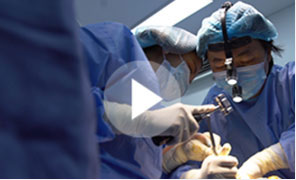
Kangnam is a preferred rhinoplasty destination among international patients
Below are the core strengths that reinforce Kangnam’s leading position in nasal aesthetics:
- Comprehensive service offerings: Kangnam provides all-inclusive solutions for various nasal conditions, including Idol Structural Rhinoplasty, 6D Surgiform Rhinoplasty, rib cartilage rhinoplasty, revision and complication correction, as well as correction of hump noses, wide noses, and deviated noses.
- Personalized nose design: By applying AI Face Design technology, patients can visualize and preview their new nasal shape in advance, ensuring optimal harmony with individual facial features before surgery.
- Surgeons with over 10 years of experience: Kangnam’s specialists each have more than a decade of clinical experience, regularly undergo advanced training in South Korea, and are members of international aesthetic surgery associations.
- Medical-standard operating rooms: The hospital features one-way sterile operating rooms equipped with advanced medical devices and modern endoscopic technology, helping minimize invasiveness, reduce pain, and shorten recovery time.
- Trusted by a large patient base: Beyond serving celebrities and public figures, Kangnam is the preferred choice of thousands of patients each month thanks to transparent procedures and a reputable outcome warranty policy.
- Exclusive privileges for international patients: Kangnam offers tailored service packages for overseas Vietnamese and international clients, including complimentary airport transfers, priority appointments with department heads, in-hospital recovery support, and 24/7 online consultation.
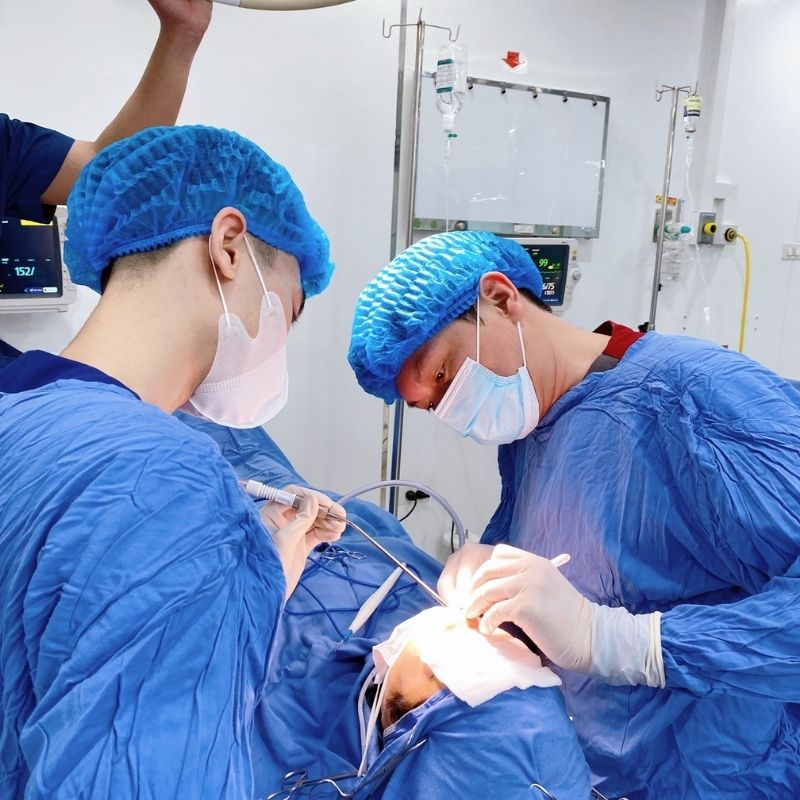
Rhinoplasty is performed under a safe protocol in a fully sterile operating room
Addresses of Kangnam Aesthetic Hospital:
- 190 Truong Chinh Street, Kim Lien Ward, Hanoi
- 666 Cach Mang Thang 8 Street, Tan Son Nhat Ward, Ho Chi Minh City
- 218 Nguyen Trai Street, Cho Quan Ward, Ho Chi Minh City
II – Criteria for Choosing a Reputable Rhinoplasty Center in Vietnam
Proper licensing, qualified specialists, sterile operating rooms, a comprehensive range of rhinoplasty services, transparent procedures, and international-standard patient care are key criteria when selecting a reputable rhinoplasty facility in Vietnam.
- Proper licensing: The facility must be officially licensed by the Ministry of Health or the Department of Health, ensuring it meets legal and technical requirements for surgical procedures and protects patient rights in case of any complications.
- Qualified specialist surgeons: The operating surgeon must hold valid professional certifications in plastic and aesthetic surgery. A highly qualified surgeon has in-depth knowledge of nasal anatomy and can design a natural, safe nasal shape tailored to each individual.
- Sterile operating rooms: All surgeries should be performed in one-way sterile operating rooms to minimize infection risks. Anesthesia or local sedation must be administered by dedicated anesthesiologists, with full monitoring equipment to continuously track vital signs.
- Comprehensive service offerings: A reputable center should be capable of performing complex techniques such as rib cartilage structural rhinoplasty or revision surgery for failed or complicated cases. This reflects both the surgeon’s expertise and the availability of advanced medical equipment.
- Transparent procedures: The facility should provide attentive nursing care and scheduled follow-up visits to monitor recovery progress. A well-structured post-operative protocol ensures patient peace of mind and timely management of normal post-surgical responses.
- International-oriented services: Centers that frequently serve international patients and overseas Vietnamese typically maintain professional service workflows and meet high aesthetic standards expected by global clients.

Choose a rhinoplasty provider that offers dedicated services and policies for international patients
III – Common Rhinoplasty Techniques in Vietnam
In Vietnam, rhinoplasty techniques have become increasingly diverse, including structural rhinoplasty, rib cartilage rhinoplasty, cartilage-covered rhinoplasty, and revision rhinoplasty.
- Structural rhinoplasty: This technique involves comprehensive reconstruction of the nasal structure, combining synthetic implants to enhance the nasal bridge with autologous cartilage (ear cartilage or septal cartilage) to build the nasal support and shape the nasal tip. It allows for complete nasal reshaping and is suitable for patients with multiple nasal imperfections such as short noses, upturned noses, or bulky nasal tips.
- Rib cartilage rhinoplasty: In this procedure, the surgeon uses the patient’s own rib cartilage to reconstruct the nasal framework and bridge, replacing synthetic materials. As an autologous material, rib cartilage offers near-perfect biocompatibility and long-term stability.
- Cartilage-covered rhinoplasty: This technique uses a synthetic implant to elevate the nasal bridge, while a layer of autologous cartilage (commonly ear cartilage) is placed over the nasal tip to protect the skin. It helps achieve a naturally high nasal profile while reducing the risk of complications such as redness or implant visibility.
- Revision rhinoplasty: This specialized procedure is designed for patients who have experienced complications such as deviation, implant exposure, infection, or unsatisfactory results from previous surgeries. The surgeon removes old implants, treats scar tissue, and reconstructs a new nasal shape that is both harmonious and safe for the patient.
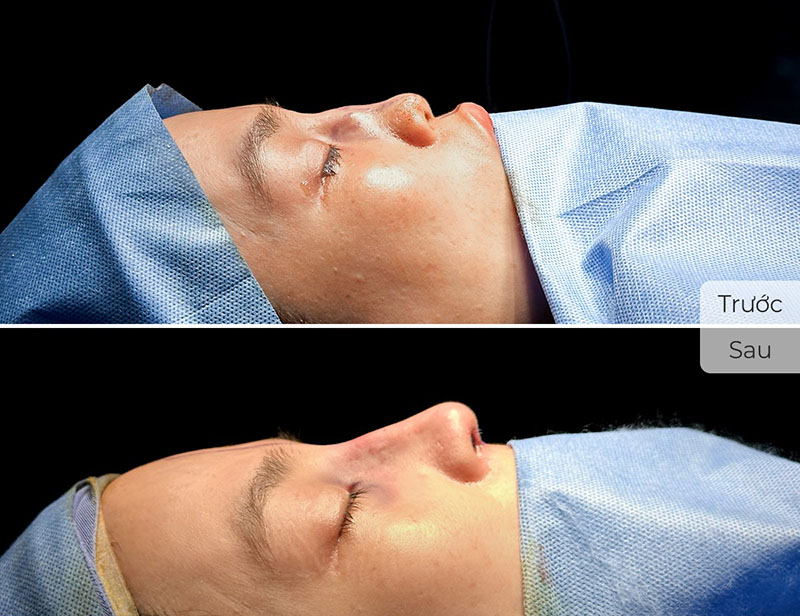
Kangnam successfully performs revision rhinoplasty for severe nasal deformities
From structural rhinoplasty to the most complex revision cases, Kangnam’s surgeons have handled over 5,000 revision patients worldwide. Whatever your nasal history, there’s a solution here.
IV – Why Do International Patients Choose Rhinoplasty in Vietnam?
An increasing number of international patients are choosing Vietnam for rhinoplasty due to the rapid development of aesthetic medical facilities, well-trained surgeons, reasonable costs, and the opportunity to combine beauty treatments with travel.
- Well-developed specialty hospitals: Aesthetic hospitals in Vietnam are heavily invested in, featuring sterile operating rooms and advanced medical technologies. Many facilities hold reputable certifications, ensuring surgical procedures are safe, professional, and comparable to those in developed countries.
- Well-trained surgeons: Vietnamese plastic surgeons regularly undergo advanced training in leading aesthetic countries such as South Korea and the United States, and possess extensive hands-on experience from thousands of surgical cases. Their precision and adaptability allow them to handle a wide range of nasal cases, from primary rhinoplasty to complex revision surgeries.
- Cost-effective without compromising quality: The cost of rhinoplasty in Vietnam is typically 50%–70% lower than in countries such as the United States, Australia, or South Korea, while maintaining comparable material quality and aesthetic outcomes. This enables international patients to receive premium services while significantly reducing expenses.
- Combining beauty treatments with travel: Vietnam offers numerous scenic destinations and affordable living costs, allowing patients to enjoy a relaxing recovery period while waiting for suture removal and complete healing.
Kangnam’s all-inclusive package covers surgery, recovery, airport transfer, and remote follow-up:
V – The Number of Rhinoplasty Procedures in Vietnam
According to statistics, the number of international patients and overseas Vietnamese traveling to Vietnam for rhinoplasty has grown significantly, accounting for approximately 20%–30% of total patients at major aesthetic hospitals. It is estimated that thousands of rhinoplasty procedures are performed each year for this group.
This trend reinforces Vietnam’s position as an emerging regional “rhinoplasty hub,” driven by the combination of advanced surgical techniques and cost-effective pricing.

The number of overseas Vietnamese traveling to Vietnam for rhinoplasty is steadily increasing
VI – Who Is Suitable for Rhinoplasty in Vietnam?
Below are the groups most suitable for undergoing rhinoplasty in Vietnam:
- Individuals with congenital nasal imperfections such as a low or flat nasal bridge, wide nostrils, or a short, upturned nasal tip
- Those who wish to achieve a nasal shape aligned with facial harmony and aesthetic balance
- Individuals with nasal deformities caused by accidents or severe trauma
- Patients who have experienced failed surgeries or complications such as deviation, redness, implant exposure, or contracture
- International patients seeking high-quality aesthetic services at reasonable costs
- Men and women aged 18 and above
VII – Frequently Asked Questions
1. Should I choose a hospital or a clinic for rhinoplasty?
When considering rhinoplasty, it is recommended to choose a reputable aesthetic hospital rather than a small clinic. Hospitals are equipped with sterile operating rooms, comprehensive anesthesia and resuscitation systems, and the capability to manage complications. Clinics are generally more suitable for minor, minimally invasive procedures.
2. Can I have an online consultation before traveling to Vietnam for rhinoplasty?
Yes. Many aesthetic hospitals in Vietnam, such as Kangnam, offer online consultations with surgeons before patients travel to Vietnam. Through images, videos, and medical records, surgeons can assess nasal anatomy, recommend appropriate techniques, estimate costs, and outline the expected recovery timeline.
3. How long should I stay in Vietnam after rhinoplasty?
After rhinoplasty, patients are advised to stay in Vietnam for approximately 7–10 days for initial recovery and follow-up visits. During this period, the surgeon will monitor incision healing, swelling, and nasal stability, and promptly address any abnormalities if they arise.
Vietnam has become a preferred destination for international patients seeking rhinoplasty thanks to reasonable costs, highly skilled surgeons, and increasingly advanced technology. However, to ensure safety and achieve natural, long-lasting results, patients should prioritize licensed, reputable facilities with proven experience in treating international clients.
Ready to start your transfomation at Vietnam’s #1 rhinoplasty destination for international patients? Your free consultation is one click away!