Date posted: 31-12-2025 | Last updated : 25-05-2026
Proper post-rhinoplasty care plays a crucial role in ensuring a smooth recovery and achieving long-lasting aesthetic results. For international patients, understanding and following the recommended aftercare guidelines helps make the recovery period in Vietnam safer, more comfortable, and more convenient.
I – Benefits of Proper Post-Rhinoplasty Care
Proper post-operative care after rhinoplasty helps accelerate recovery, stabilize the nasal shape, prevent complications, minimize scarring, and maintain long-term aesthetic results.
- Faster recovery: Appropriate aftercare helps reduce swelling and bruising, supports quicker tissue healing, and allows patients to return to daily activities and work sooner.
- Stable, harmonious nasal shape: Following proper cleaning and nasal splinting instructions helps secure the implanted cartilage, minimizes displacement, and ensures a natural-looking, well-balanced nose shape as expected.
- Prevention of complications: Cleaning the incision with sterile saline solution helps reduce the risk of infection, ensuring safety and minimizing potential post-operative risks.
- Reduced risk of visible scarring: Maintaining a suitable diet and using prescribed medications as directed promote faster wound healing, allowing scars to fade gradually without affecting facial aesthetics.
- Long-lasting aesthetic results: Proper nasal care from the early stages helps stabilize the nasal structure, enhance the durability of the implant or graft, and preserve a beautiful nose shape over time.

Proper care helps the nose heal faster
II – Post-Rhinoplasty Cleaning & Care Guidelines
After leaving the operating room, proper at-home care plays a vital role in achieving a refined and long-lasting nasal result. At Kangnam Aesthetic Hospital, strict post-operative care standards are applied to ensure patients achieve the best possible outcomes.
- Clean the incision as instructed: Use a cotton swab soaked in sterile saline solution (NaCl 0.9%) to gently clean around the incision site and nostrils 2–3 times per day. After cleaning, apply a thin layer of antibiotic ointment as prescribed by Kangnam doctors.
- Do not remove the nasal splint on your own: Premature splint removal may cause nasal deviation or prolonged swelling due to insufficient fixation. Patients should wait until their follow-up appointment, where the doctor will remove the splint safely.
- Avoid strong physical impact: Absolutely avoid actions such as nose picking, forceful nose blowing, wearing heavy glasses, or any direct impact to the nose. Even minor pressure may shift the implanted cartilage or cause bleeding.
- Keep the nasal area dry: When showering, gently cleanse the face with a damp towel and avoid direct contact with water on the splint and open wound. If the bandage becomes wet, use clean gauze to dry it immediately.
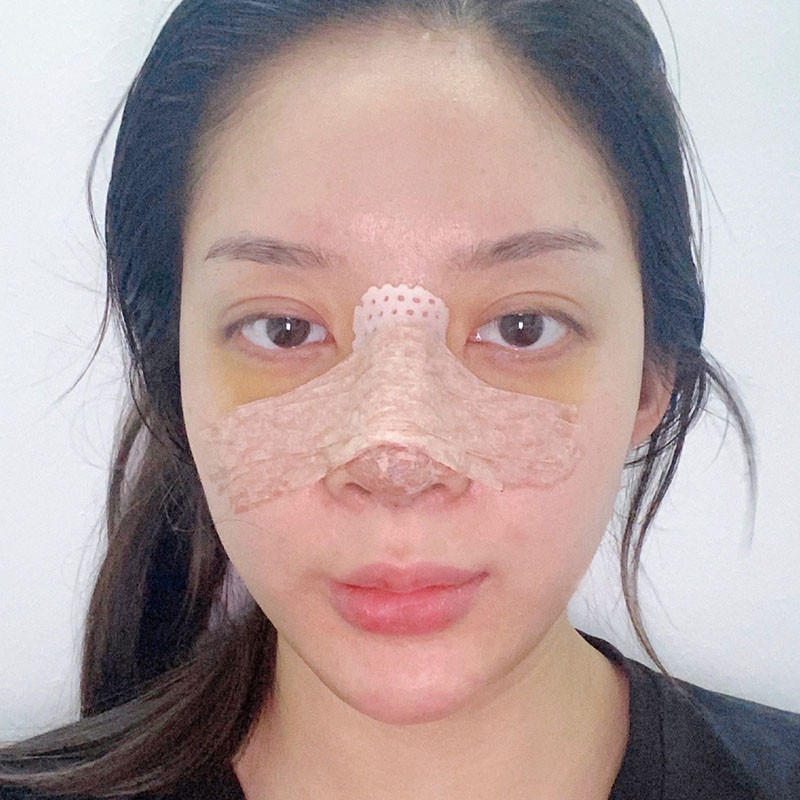
Maintain the nasal splint for the full duration as instructed
Expert advice from Kangnam: In addition to external care, patients should take medications exactly as prescribed and attend all scheduled follow-up visits so the doctor can monitor the recovery progress of the nasal structure.
III – Post-Rhinoplasty Care by Recovery Stages
Proper care during each “golden recovery period” helps shorten healing time and ensures the most optimal aesthetic results.
Days 1–3
- Allow yourself ample time to rest
- Use 2–3 pillows to keep the head elevated above the chest to help reduce swelling
- Apply specialized cold compress packs around the nasal area
- Absolutely avoid touching the nose or engaging in any strenuous activities
Days 4–7
- Continue cleaning the incision with sterile saline solution to keep the area hygienic
- Take antibiotics and pain relief medications exactly as prescribed
- Return to the hospital for a follow-up visit so the doctor can assess the stability of the nasal cartilage
- Maintain a relaxed mindset and keep the sutured area clean

Clients 7 days after rhinoplasty
Days 7–14
- Sutures are typically removed at the hospital after 5–7 days, as scheduled by the doctor
- Bruising gradually fades to a light yellow color and disappears; the nose becomes slimmer and more defined
- Patients may return to work, particularly those with light, office-based jobs
- Sports, jogging, and strenuous physical activities are strictly prohibited
Weeks 2–4
- Daily activities can be resumed almost normally, while continuing to protect the nasal area
- Contact sports or activities with a high risk of nasal impact should still be avoided
The stage-by-stage care guidelines above follow a predictable recovery arc visualized here from Week 1 through your final settled result.
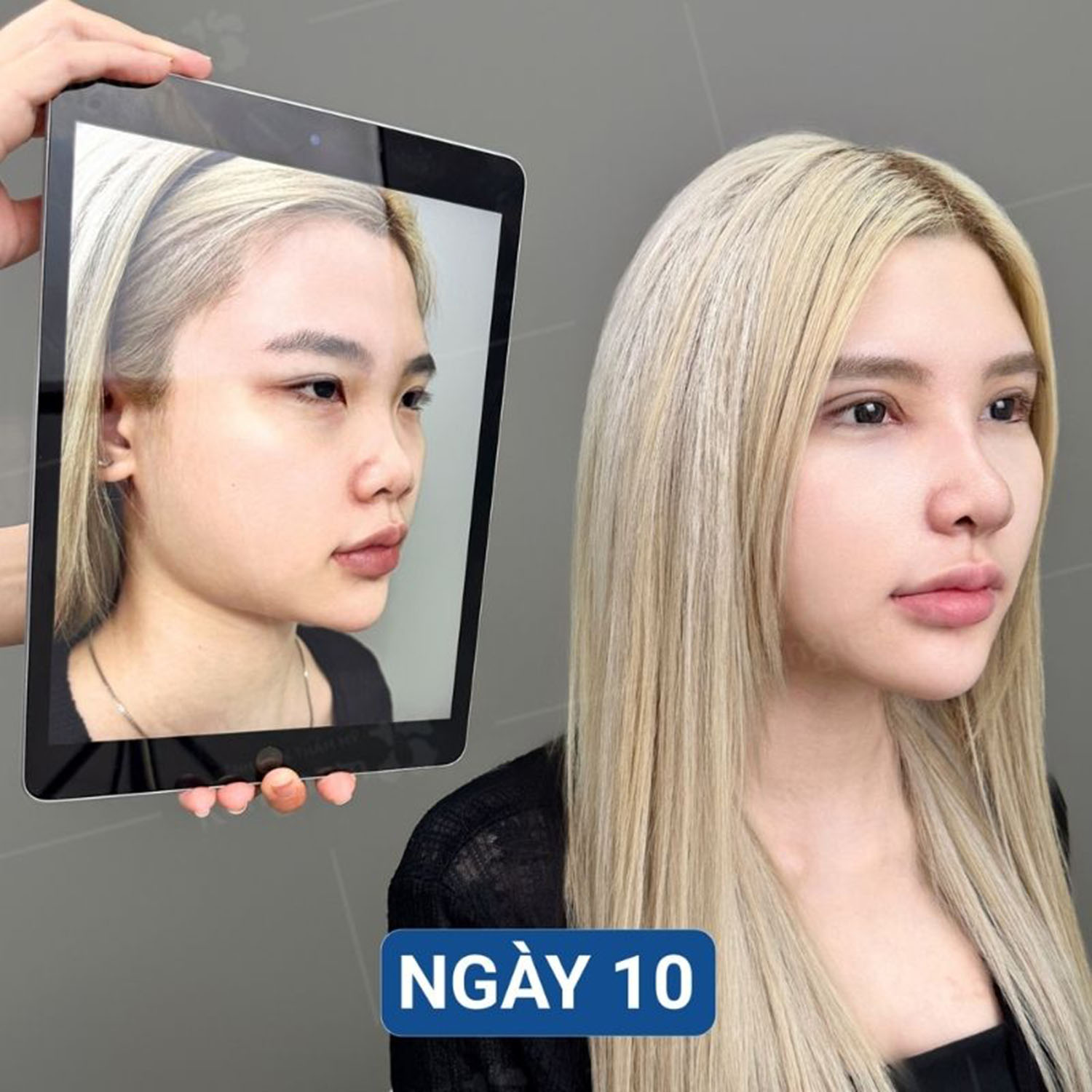
The nasal shape becomes stable and well-defined
At Kangnam Aesthetic Hospital, remote aftercare support is available for international patients. The medical team is ready to assist via video call whenever needed, and all questions at each recovery stage are answered directly by nurses and doctors 24/7 through the Hotline.
IV – Post-Rhinoplasty Dietary Guidelines for International Patients
Maintaining proper hydration, avoiding alcohol, limiting foods that may trigger inflammation, and following a healthy diet are essential nutritional considerations after rhinoplasty.
- Stay well hydrated: Drink at least 2 liters of water per day (including plain water, fruit juices, or soups) to support metabolism and help reduce swelling more quickly.
- Avoid stimulants and alcohol: Alcoholic beverages can thin the blood and negatively interact with antibiotics, increasing the risk of bleeding or prolonged swelling.
- Avoid inflammatory foods: To ensure a smooth incision and even skin tone during healing, patients should temporarily avoid foods such as beef, water spinach, glutinous rice dishes, seafood, and overly spicy or hot foods.
- Prioritize a healthy diet: Increase the intake of green vegetables, vitamin C–rich fruits (such as oranges, grapefruit, and strawberries), and healthy protein sources like lean pork or tofu to support tissue regeneration in the nasal area.
- Choose soft foods during the first week: Opt for porridge, soup, or finely chopped foods to minimize excessive jaw movement and avoid unnecessary pressure on the nasal structure.
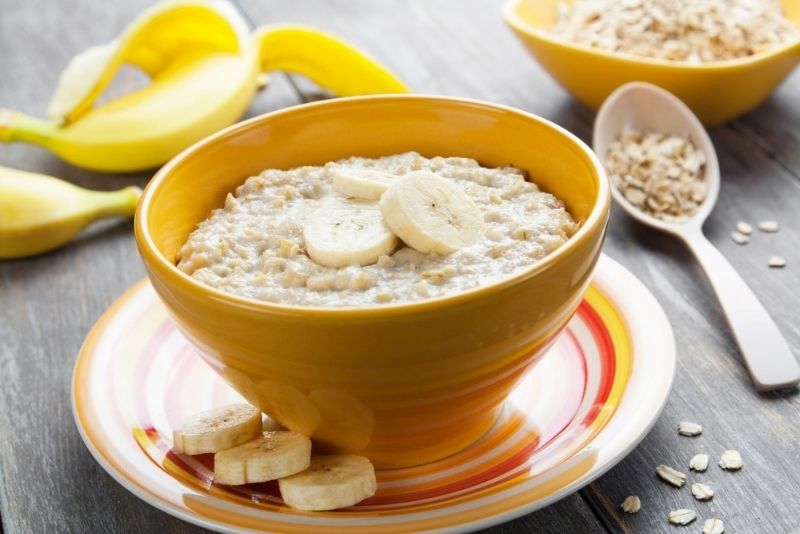
Choose soft foods during the first week
V – When Can You Return to Work After Rhinoplasty?
Approximately 5–7 days after rhinoplasty, patients may return to light work, as this is the stage when soft tissues begin to heal, inflammatory responses gradually subside, and the nasal structure becomes relatively stable. However, patients should continue to avoid heavy labor, strong physical impact, or prolonged bending of the head to optimize the recovery process.
Kangnam’s minimally invasive rhinoplasty is specifically structured around the schedules of international patients.
VI – Abnormal Signs After Rhinoplasty That Require Immediate Medical Attention
Abnormal post-rhinoplasty signs are rare when the procedure is performed at a reputable medical facility. However, if any of the following symptoms are observed, prompt medical evaluation is strongly recommended for timely intervention:
- Body temperature exceeding 38°C with no signs of improvement
- Sharp, persistent pain or severe headaches
- Unusual swelling of the nose and eye area that does not subside after 3–5 days
- Continuous fresh bleeding or purulent discharge from the incision site
- Nasal structure deformity or loosening/displacement of the nasal splint
- Skin at the nasal tip or nasal bridge turning dark red or purplish-black
- A sensation of nasal obstruction or difficulty breathing through the nose
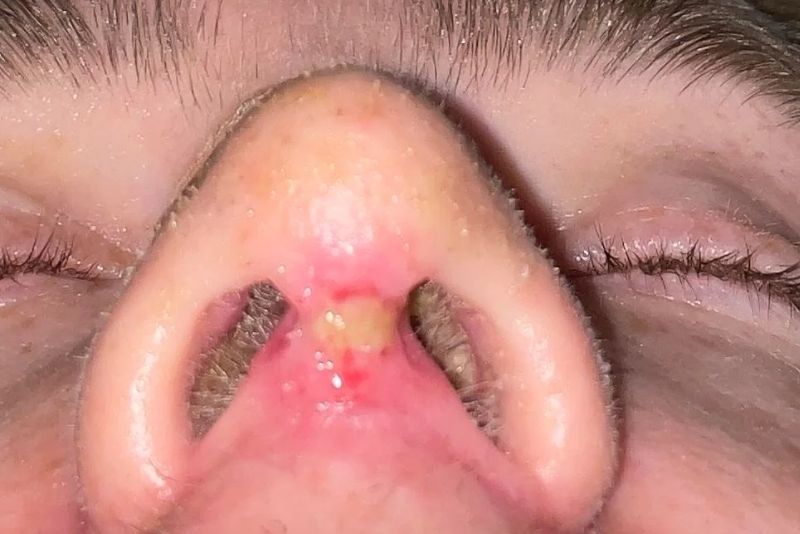
Abnormal signs requiring follow-up after rhinoplasty
If you are experiencing any of the abnormal signs described above following a previous rhinoplasty, do not delay seeking assessment. Kangnam’s revision specialists are available for consultation and have successfully treated over 5,000 complex cases from patients worldwide.
VII – Frequently Asked Questions About Post-Rhinoplasty Care
1. Can I take care of my nose on my own after returning to my home country?
Yes. Patients can continue caring for their nose independently after returning home, provided they strictly follow the doctor’s instructions. After the initial recovery phase, the nasal tissues gradually stabilize, so gentle cleansing, taking medications as prescribed, and avoiding impact will help ensure safe healing. However, patients are advised to stay in contact with their doctor to promptly detect and address any unusual signs.
2. How long does it take for the nose to look natural?
After surgery, swelling typically reduces significantly within the first 1–2 weeks, and the nose appears more natural after about one month. At this stage, the soft tissues have stabilized, swelling has subsided, and the implant or graft has adapted to the nasal structure. However, complete softness and full refinement may take approximately 3–6 months.
3. Is a follow-up visit required before flying?
Yes. Patients are encouraged to attend a follow-up appointment before flying, as scheduled by the doctor, to assess healing progress, incision condition, and the stability of the nasal shape, ensuring safety for long-distance travel.
Kangnam Aesthetic Hospital is a trusted rhinoplasty destination in Vietnam, chosen by thousands of international patients each year. Kangnam provides a structured post-operative care program and continuous support for international clients, ensuring a safe and stable recovery process.
International patients seeking safe rhinoplasty with fast recovery in Vietnam may contact Kangnam for a one-on-one consultation with a specialized surgeon.