Date posted: 31-12-2025 | Last updated : 25-05-2026
How many days after rhinoplasty are stitches removed? This is a common question especially among international clients who have a short stay in Vietnam. The stitch-removal timing plays a key role in safety, the healing process, and the final nose shape after surgery. Removing stitches too early or too late can both affect the aesthetic outcome.
Stitches are typically removed about 5–7 days after rhinoplasty, once the incision is stable, swelling / bruising has reduced, and the wound has begun to heal. However, the timing may be earlier or later depending on each person’s healing response, to ensure safety and to minimize the risk of infection, poor scarring, or damage to the incision.
What factors affect the stitch-removal timeline after rhinoplasty?
The stitch-removal timing depends on the rhinoplasty technique, the location and length of the incision, the patient’s healing tendency, and post-op care.
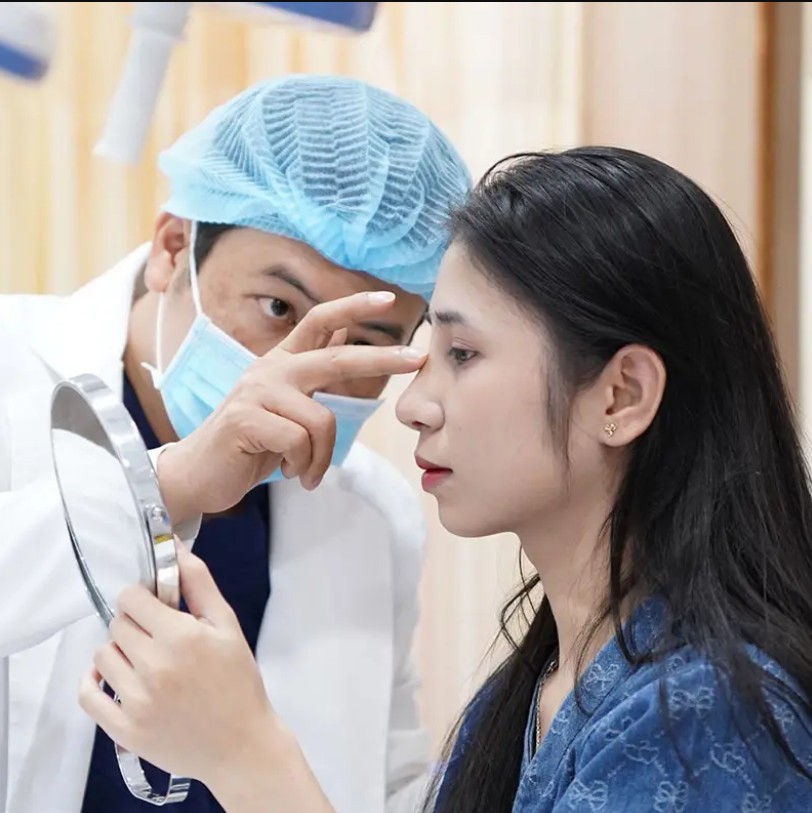
Depending on individual healing, the timing for removing stitches after a nose surgery may vary.
Stitch removal after rhinoplasty is a simple procedure performed at a medical facility. It does not require anesthesia and usually takes about 5–10 minutes. Patients may feel a mild pinching or tingling sensation, but when performed skillfully by a doctor, the process is almost painless and very safe.
Step 1: Incision assessment
The doctor schedules a follow-up visit about 5–10 days after surgery, depending on the rhinoplasty technique and the patient’s healing condition. During this visit, the doctor checks the wound-healing progress, the stability of the stitches, and the level of swelling or bruising to ensure the nose is stable enough for safe stitch removal.
Step 2: Preparation of instruments
The medical team prepares fully sterilized stitch-removal instruments. This ensures a clean, safe environment and helps prevent infection throughout the procedure.
Step 3: Stitch removal
The doctor uses specialized forceps and scissors to carefully remove each stitch. The process is performed gently, without placing pressure on the healing nasal tissues. Patients usually feel only slight numbness or a mild pinching sensation, with little to no pain.
Step 4: Post-removal care
After the stitches are removed, the incision is thoroughly cleaned and covered with protective dressing if necessary. The doctor may apply anti-inflammatory medication or healing ointment to support tissue recovery. Patients are also given home-care instructions, including avoiding impact and maintaining proper hygiene, to ensure optimal healing of the nose.
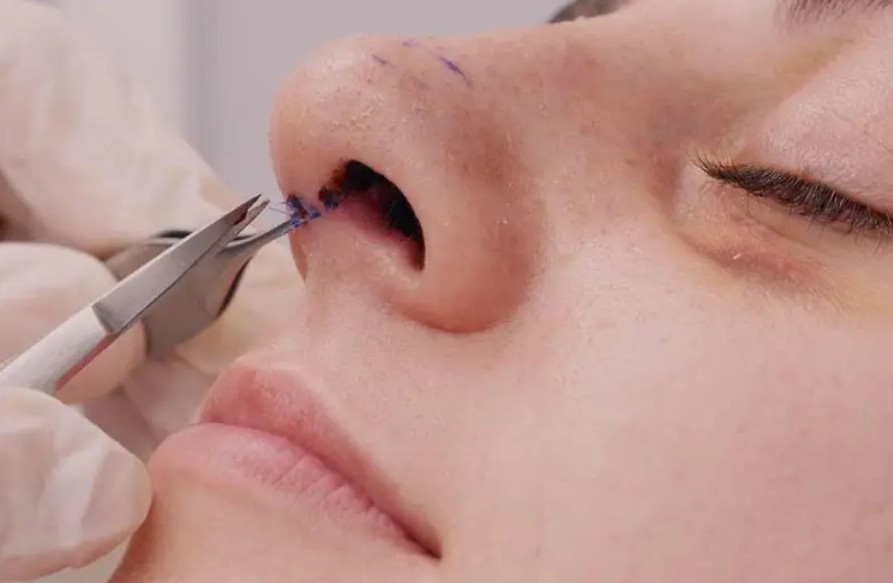
The doctor personally removes the stitches, ensuring safety and preventing complications.
After stitches are removed, the nose is not fully healed yet—it is still in the recovery phase and will gradually stabilize. Swelling usually continues to go down, the incision becomes more secure, and the nose begins to take shape. However, for complete healing and the most natural-looking result, it typically takes about 3–6 months.
Detailed recovery stages after stitch removal:
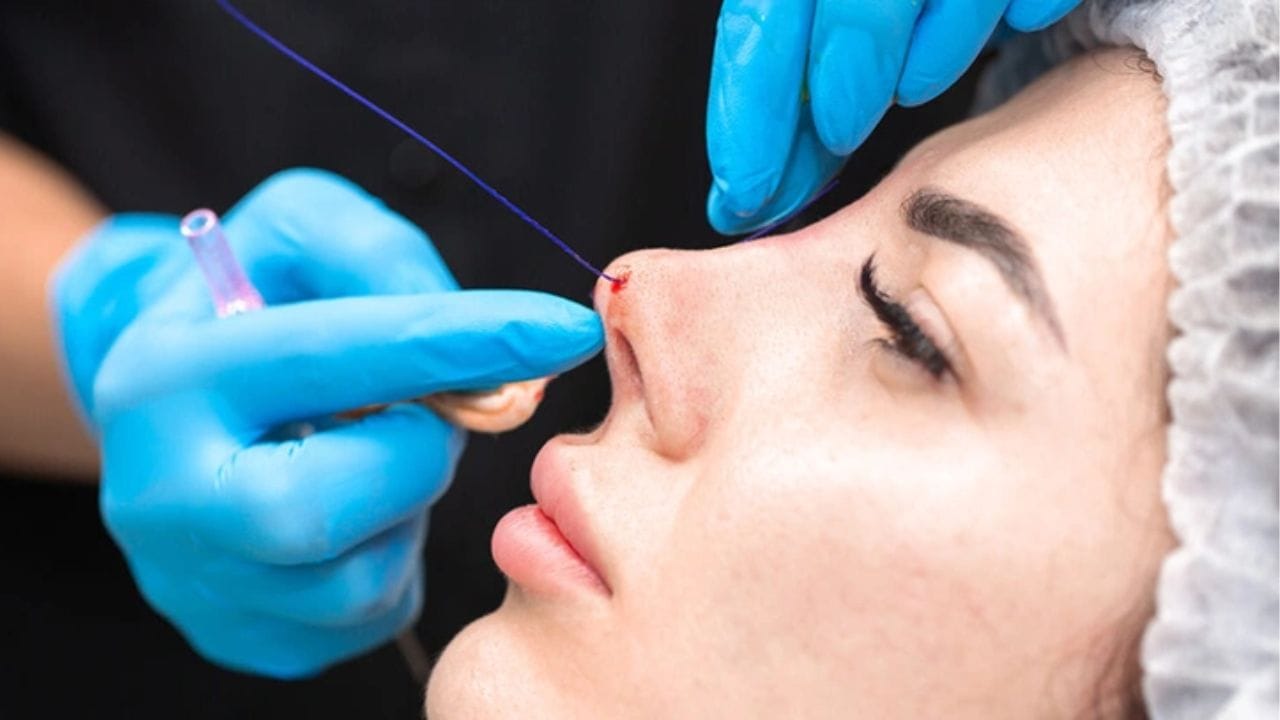
The nose needs time to fully heal and settle into its final shape.
After rhinoplasty stitch removal, you should rest, avoid strenuous activity, clean the nose gently, apply anti-scar cream, avoid foods that may worsen scarring, and attend regular follow-up visits to support faster healing, reduce swelling, and achieve a natural-looking result.
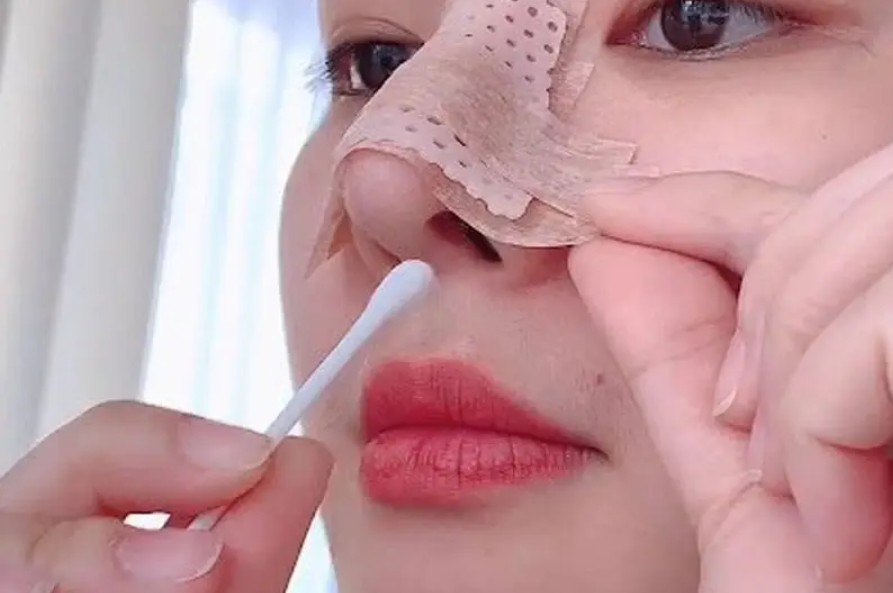
Keep the nose area clean and avoid touching or pressing it.
Post-op care, medications, follow-up visits, and stitch removal, all included in Kangnam’s all-inclusive rhinoplasty package.

The safest timeframe for stitch removal is usually 5–10 days, depending on the rhinoplasty technique, individual healing response, and recovery speed. Simple rhinoplasty often allows stitch removal after 5–7 days, while structural rhinoplasty or procedures using rib cartilage typically require 7–10 days.
If your stay in Vietnam is limited to 5 days, stitch removal may be possible in simple rhinoplasty cases where the incision is small and initial healing has begun. However, for more complex procedures or slower-healing patients, doctors usually recommend waiting at least 7 days to ensure safety and to reduce the risk of swelling, infection, or incision damage.
Staying in Vietnam for just 5–7 days? Over 38 countries’ worth of international patients have made it work. Tell us your travel dates, our surgeons will build a schedule around your timeline, not the other way around.

Stitch removal is generally not painful. You may feel mild numbness or a slight pinching sensation. When performed by an experienced doctor, discomfort is minimal and the procedure takes only a few minutes.
Yes. Follow-up visits are still necessary after stitch removal so the doctor can monitor wound healing and address any signs of swelling, redness, discharge, or other abnormalities. You will also receive further care instructions to help the nose stabilize and achieve a natural shape.
For maximum safety and optimal results, stitch removal should ideally be performed at Kangnam Aesthetic Hospital or its official branches. The medical team there is familiar with your surgical case, uses gentle techniques, and ensures proper wound healing while maintaining a natural, well-shaped nose.
Delayed stitch removal may affect recovery by prolonging swelling, making stitches harder to remove, and slightly increasing the risk of minor scarring, which can slow down the shaping process. However, a delay of just a few days usually does not significantly impact overall safety or results.
The timing of stitch removal after rhinoplasty should always be determined by a doctor to ensure safety and stable results. Proper care after stitch removal helps the nose heal faster and achieve a natural, refined shape.
International patients can contact Kangnam Aesthetic Hospital for detailed consultation on rhinoplasty procedures, post-operative care guidance, and support in planning a suitable schedule during their stay in Vietnam.
Ready to plan your rhinoplasty trip to Vietnam? Get a free personalized quote with our top trained-surgeons!