Date posted: 20-10-2026 | Last updated : 20-10-2026
After cosmetic surgery, international patients and overseas Vietnamese should plan to stay in Vietnam for approximately 1–4 weeks, depending on the procedure, recovery progress, and follow-up schedule. For major surgeries such as breast augmentation, liposuction, or abdominoplasty, a longer stay may be necessary. Patients should only book their return flights after being examined by their surgeon and receiving confirmation that their health condition is suitable for travel.
Estimated length of stay: Approximately 1–4 weeks, depending on the procedure (Eyelid surgery: 7–14 days; Rhinoplasty: 10–14 days; Breast augmentation/Liposuction/Abdominoplasty: 2–4+ weeks).
Conditions for safe air travel: Fly only after being examined and cleared by your surgeon; never attempt to fly too soon after surgery if your wounds have not stabilized.
Risks of flying too early: Increased risk of venous thrombosis, worsening swelling and pain, infection, and disruption of follow-up care.
Each cosmetic procedure involves a different level of invasiveness and recovery time. The table below helps patients estimate how long they should stay in Vietnam but does not replace their surgeon’s recommendations regarding when they can safely fly.
| Cosmetic Procedure | Recommended Length of Stay | Precautions Before Returning Home |
| Eyelid surgery | 7–14 days | Check the surgical wound, swelling, and suture removal schedule, if applicable |
| Rhinoplasty | 10–14 days or longer | Attend follow-up appointments, assess the condition of the nose, and have splints or sutures removed as instructed |
| Facelift | 2–3 weeks | Monitor swelling, bruising, surgical wounds, and recovery progress |
| Breast augmentation | 2–4 weeks | Check surgical wounds, pain levels, and the risk of complications before flying |
| Liposuction | 2–4 weeks or longer | Assess swelling, treated areas, and the risk of thrombosis |
| Abdominoplasty | 3–4 weeks or longer | Monitor surgical wounds, drains if present, mobility, and the risk of thrombosis |
| Multiple combined procedures | As assessed by the surgeon | Recovery may take longer than for individual procedures |
Note: The timeframes above are suggested for planning your stay and are not established safe-to-fly timelines for each procedure. Patients who experience complications or require additional care may need to stay longer.
For patients with limited time off work, the choice of surgical procedure should be based on medical examination results and the time available for recovery, rather than trying to schedule surgery too close to the departure date.
Flying too soon after surgery can make wound monitoring more difficult and increase certain health risks, especially on long-haul flights. Patients should have their fitness to travel assessed before returning home.
Important concerns include:
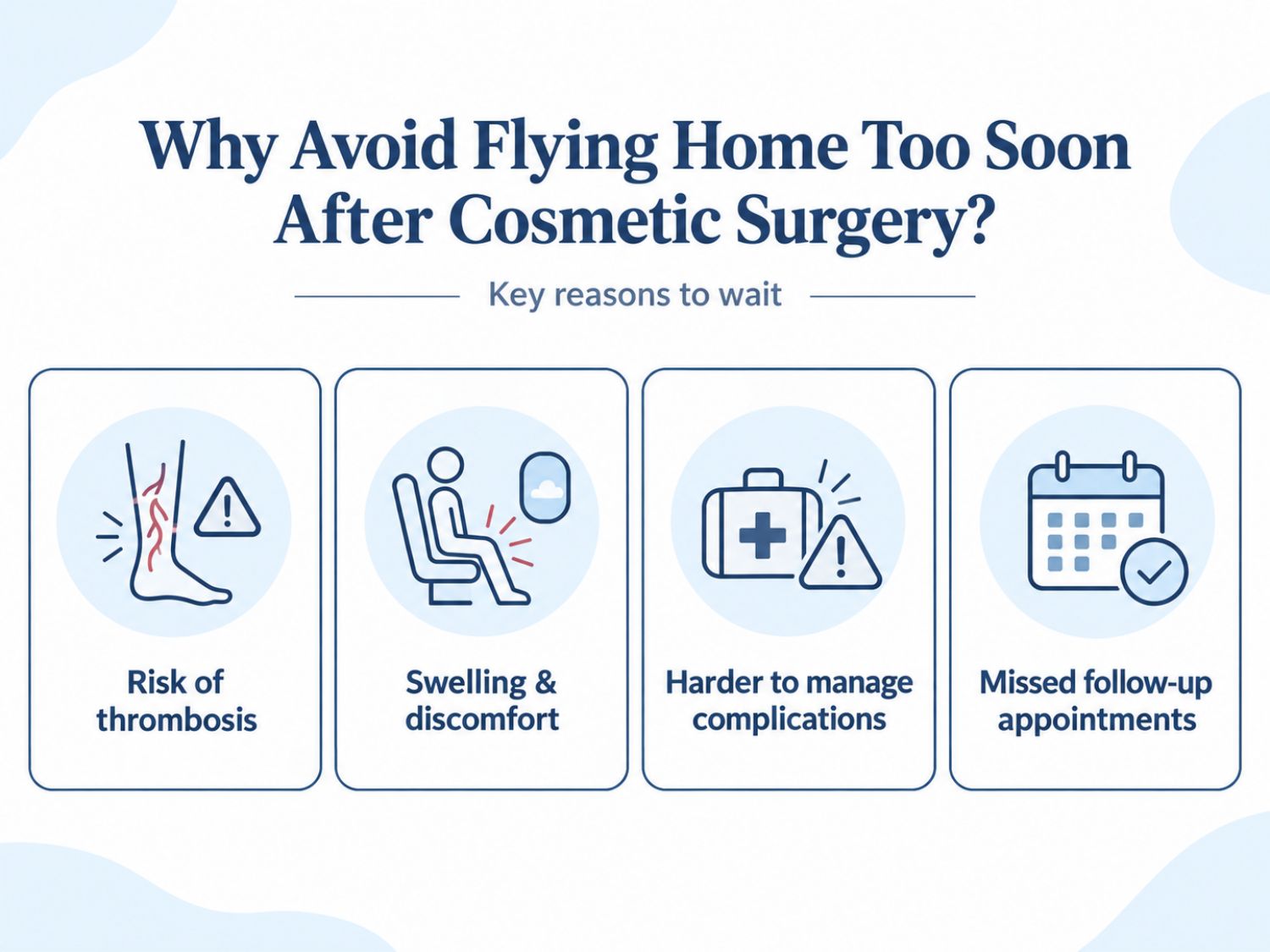
Therefore, patients should prioritize completing essential follow-up appointments and arranging medical care in their country of residence before flying.
The appropriate time to fly depends not only on the number of days since surgery but also on your actual recovery progress. The surgeon must consider each patient’s overall health, surgical wounds, mobility, and risk of complications.
Important factors include:
In particular, patients with a history of thrombosis, blood clotting disorders, cardiovascular disease, or prolonged surgery should discuss their travel plans carefully with their surgeon before booking flights.
International patients and overseas Vietnamese should plan their surgery approximately 2–4 weeks before traveling to Vietnam and allow sufficient time for medical examinations, recovery, and follow-up appointments. Planning early helps minimize flight changes and avoids the pressure of returning home before recovery is complete.
A suggested schedule may include:
Patients undergoing surgery at Kangnam Aesthetic Hospital should provide their expected arrival date in Vietnam and return flight date in advance to receive guidance on arranging a suitable consultation schedule. The actual surgery date will still depend on medical examination results and the hospital’s availability.
Even after receiving medical clearance to fly, patients should remain appropriately active, stay hydrated, avoid carrying heavy luggage, and watch for unusual symptoms. In particular, patients who have undergone major surgery or need to take long-haul flights should receive individualized advice on reducing the risk of thrombosis.
Important precautions include:
According to the American Society of Plastic Surgeons (ASPS) – Briefing Paper: Cosmetic Surgery Tourism, combining surgery with long-distance travel may increase the risk of thrombosis, pulmonary embolism, swelling, and infection. The document provides reference minimum waiting periods of 5–7 days after certain body procedures and 7–10 days after facial surgery, but reaching these timeframes does not mean that every patient is medically fit to fly.
If your health has not stabilized or unusual symptoms appear, you should postpone your flight and contact your surgeon for an examination. You should not force yourself to travel simply because you have already booked a ticket or your leave from work has ended.
Situations that require consultation with your surgeon before flying include:

If you experience sudden shortness of breath, chest pain, fainting, or swelling and pain in one leg, seek emergency medical attention.
If an extended stay is necessary, contact your airline to learn about its ticket change policy and prepare a medical certificate if required. You should also arrange suitable accommodation and someone to assist with your care during the additional recovery period.
International patients may plan to stay for approximately 2–4 weeks to recover and attend follow-up appointments after breast augmentation. The actual time when they can fly depends on their recovery progress and the surgeon’s assessment, especially for long-haul flights.
After 7 days, some patients may have recovered relatively well, but this does not automatically mean they are fit to fly. The surgeon must assess the extent of liposuction, mobility, wound condition, and risk of thrombosis before approving air travel.
Patients should plan to stay for approximately 10–14 days or longer for recovery monitoring and follow-up appointments after rhinoplasty. The actual duration may vary depending on the surgical technique, swelling, and wound healing.
You should avoid physically demanding tourist activities immediately after surgery. Patients should prioritize rest and avoid swimming, strenuous exercise, and activities that could affect surgical wounds until their surgeon gives permission.