Date posted: 22-07-2026 | Last updated : 28-07-2026
Kangnam Aesthetic Hospital is a leading choice for many overseas Vietnamese patients seeking revision rhinoplasty, thanks to its medically standardized aesthetic procedures and appropriate treatment methods. Each patient undergoes a thorough examination and receives a personalized revision plan to reconstruct a natural-looking nasal shape and maintain long-lasting results.
Kangnam Aesthetic Hospital has received and successfully treated thousands of failed rhinoplasty cases of varying severity. Complex conditions such as nasal deviation, implant exposure, redness and shiny skin, and infection are promptly treated and thoroughly corrected by the surgeons. Many patients who previously experienced multiple unsuccessful rhinoplasty procedures at other facilities have still achieved significant improvement at Kangnam, demonstrating the hospital’s leading expertise and reputation in revision rhinoplasty.

A deformed nose is fully reconstructed.
Kangnam’s strength lies in its team of highly qualified surgeons with extensive experience in reconstructive surgery and the treatment of complex nasal cases. Most surgeons at Kangnam are members of the medical team featured in Transformation Journey, a reality program about aesthetic surgery specializing in the reconstruction and correction of congenital nasal deformities and severely damaged noses caused by trauma or long-term complications.
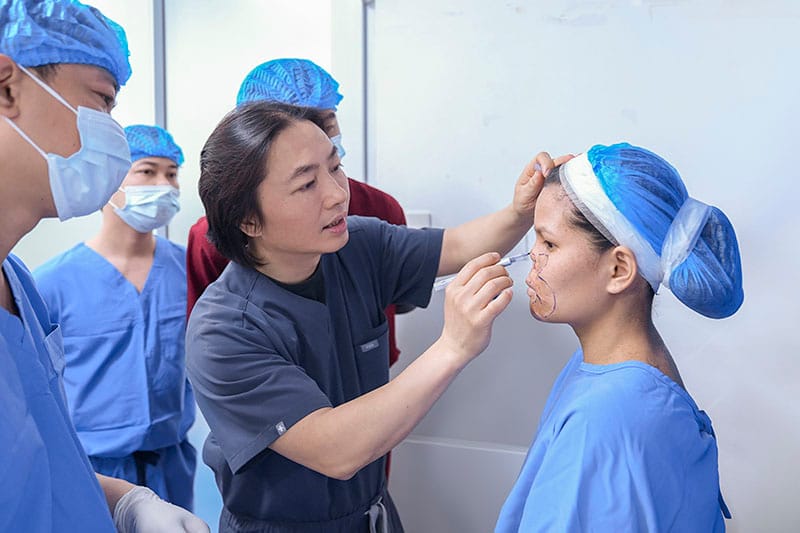
Highly qualified surgeons specializing in the correction of complex nasal conditions.
The hospital applies a 360-degree nasal reconstruction technique, combining autologous cartilage with premium biocompatible implants such as Nanoform and Surgiform to improve compatibility, minimize complications, and ensure long-lasting nasal results.
In particular, overseas Vietnamese patients who choose Kangnam receive exclusive benefits such as:
As a result, many overseas Vietnamese patients choose Kangnam to correct failed rhinoplasty results and restore a naturally attractive nasal shape.
At Kangnam Aesthetic Hospital, every revision rhinoplasty procedure is based on a specialized treatment plan that combines modern technology with the surgeon’s expertise to deliver long-lasting aesthetic results.

Meticulous postoperative care and consultation.
Overseas Vietnamese patients undergoing revision rhinoplasty at Kangnam receive a transparent and clearly defined long-term warranty policy. The warranty period ranges from 10 years to a lifetime, depending on the implant material and treatment method. Throughout this period, patients’ aesthetic rights are protected, allowing them to feel confident about their results.
The surgeon examines the current condition of the nose, identifies the severity of the problem, such as deviation, implant exposure, redness and shiny skin, or infection, and assesses the patient’s overall facial features to determine an appropriate treatment approach.
Based on the examination results, the surgeon develops an individualized reconstruction plan for each patient and uses AI Face Design technology to simulate the new nasal shape with high accuracy.
Low-quality synthetic implants, inflamed tissue, and scar tissue are thoroughly removed. Internal damage is also treated to create a stable foundation for reconstructing the new nose.
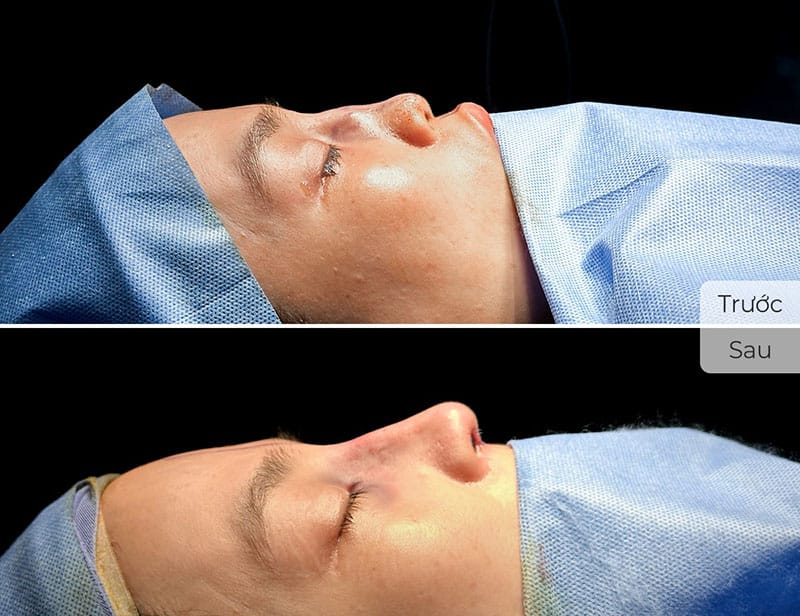
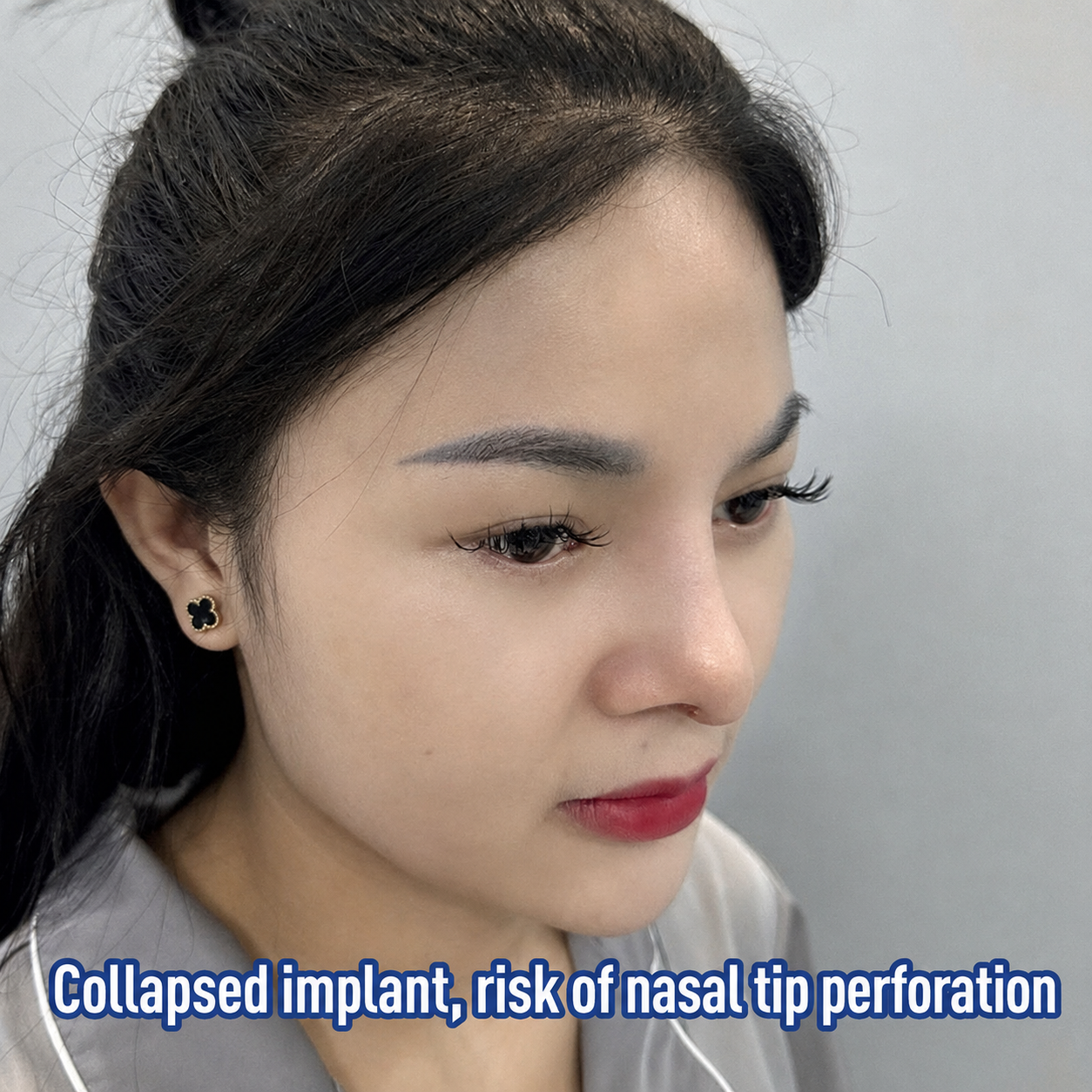
A severe failed rhinoplasty case reconstructed at Kangnam.
The surgeon uses autologous cartilage, including ear, septal, or rib cartilage, together with premium officially imported biocompatible implants to build a stable columella, cover the nasal tip, and create a balanced nasal bridge that harmonizes with the face.
After surgery, patients are closely monitored, provided with scientific care instructions, and prescribed medications to reduce swelling and inflammation and shorten the recovery period. Kangnam also provides a clearly defined warranty policy to give patients confidence in their results.
Below is the price list for nasal aesthetic services at Kangnam Aesthetic Hospital:
| Service | Estimated Cost (USD) |
|---|---|
| Korean Rhinoplasty | 1,077 |
| Idol Structural Rhinoplasty | 1,385 |
| Idol Structural Rhinoplasty – Nanoform | 1,692 |
| Idol Structural Rhinoplasty – Surgiform | 2,308 |
| Painless 6D Rhinoplasty – Surgiform | 2,731 |
| Rib Cartilage Rhinoplasty – Nanoform | 3,038 |
| Rib Cartilage Rhinoplasty – Surgiform | 3,577 |
| 100% Rib Cartilage Rhinoplasty | 3,769 |
| Alar Reduction (Alar Rolling/Excision) | 269 |
| Nasal Tip Reshaping/Reduction | 462 |
| Dorsal Hump Reduction and Ultrasonic Bone Correction | 577 |
| Nasal Implant Removal | 269 |
| Isolated Nasal Dermal Grafting | 1,000 |
| Deviated Nasal Septum Surgery | 577 |
| Alar Cartilage Grafting | 577 |
| Nasal Base Cartilage Grafting | 1,154 |
Note: Overseas Vietnamese patients who book an online appointment can receive discounts of up to 20% on revision rhinoplasty services. The program is applied flexibly, helping overseas Vietnamese patients save money when returning to Vietnam for aesthetic procedures.
Ms. Hoa, a 31-year-old overseas Vietnamese patient from Australia, said: “My nose became crooked after my previous rhinoplasty, and the deviation was very noticeable from the front. After undergoing revision rhinoplasty at Kangnam, my nose became balanced, symmetrical, and very natural-looking. I recovered in just over ten days, and there was no visible scarring.”
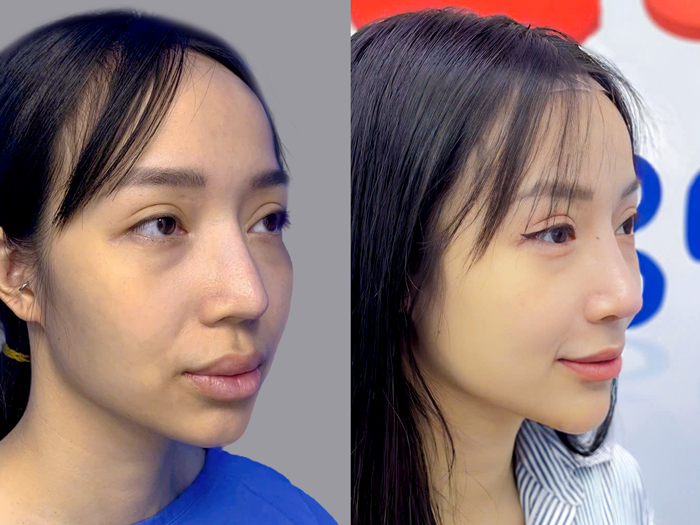
Ms. Hoa, 31 years old, an overseas Vietnamese patient from Australia.
Lan Anh, a 25-year-old overseas Vietnamese patient from the United States, shared: “I previously had rhinoplasty elsewhere, but the implant became exposed. A friend recommended that I have it corrected at Kangnam, and I am very satisfied with the result. The surgeon was attentive and caring and revised my nose exactly as I wanted. It has now been three years, and I have not experienced any unusual problems.”
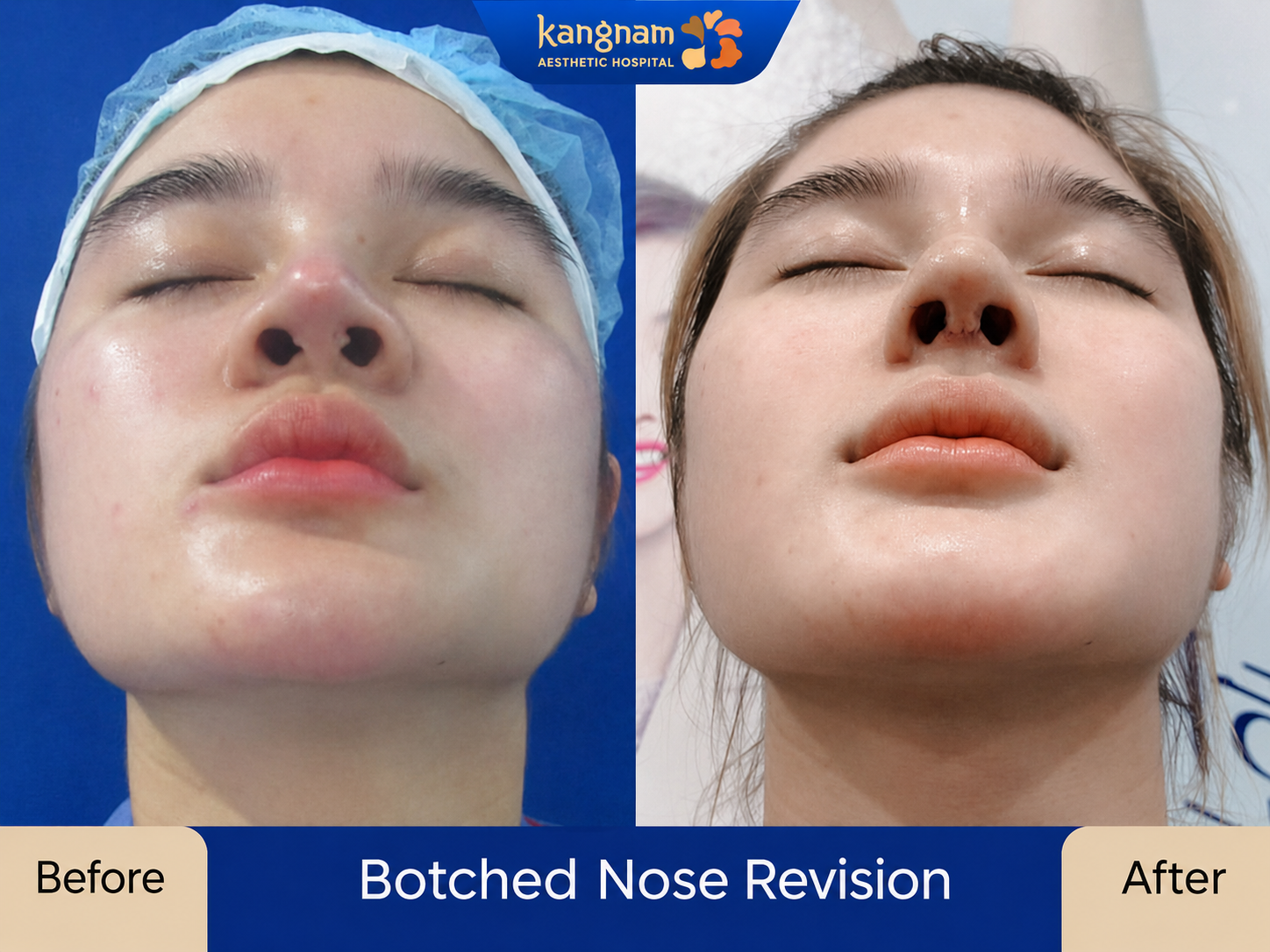
Lan Anh, 25 years old, an overseas Vietnamese patient from the United States.
Mr. Hai, a 32-year-old overseas Vietnamese patient from Australia, said: “I had a congenital nasal deformity and felt very self-conscious about it. I happened to learn about Kangnam through the Transformation Journey program and decided to return to Vietnam for revision rhinoplasty. The surgeons at Kangnam provided a very thorough consultation, the surgical process was comfortable, and I recovered quite quickly. After only seven days, the suture line had healed, and I did not have to follow too many restrictions.”
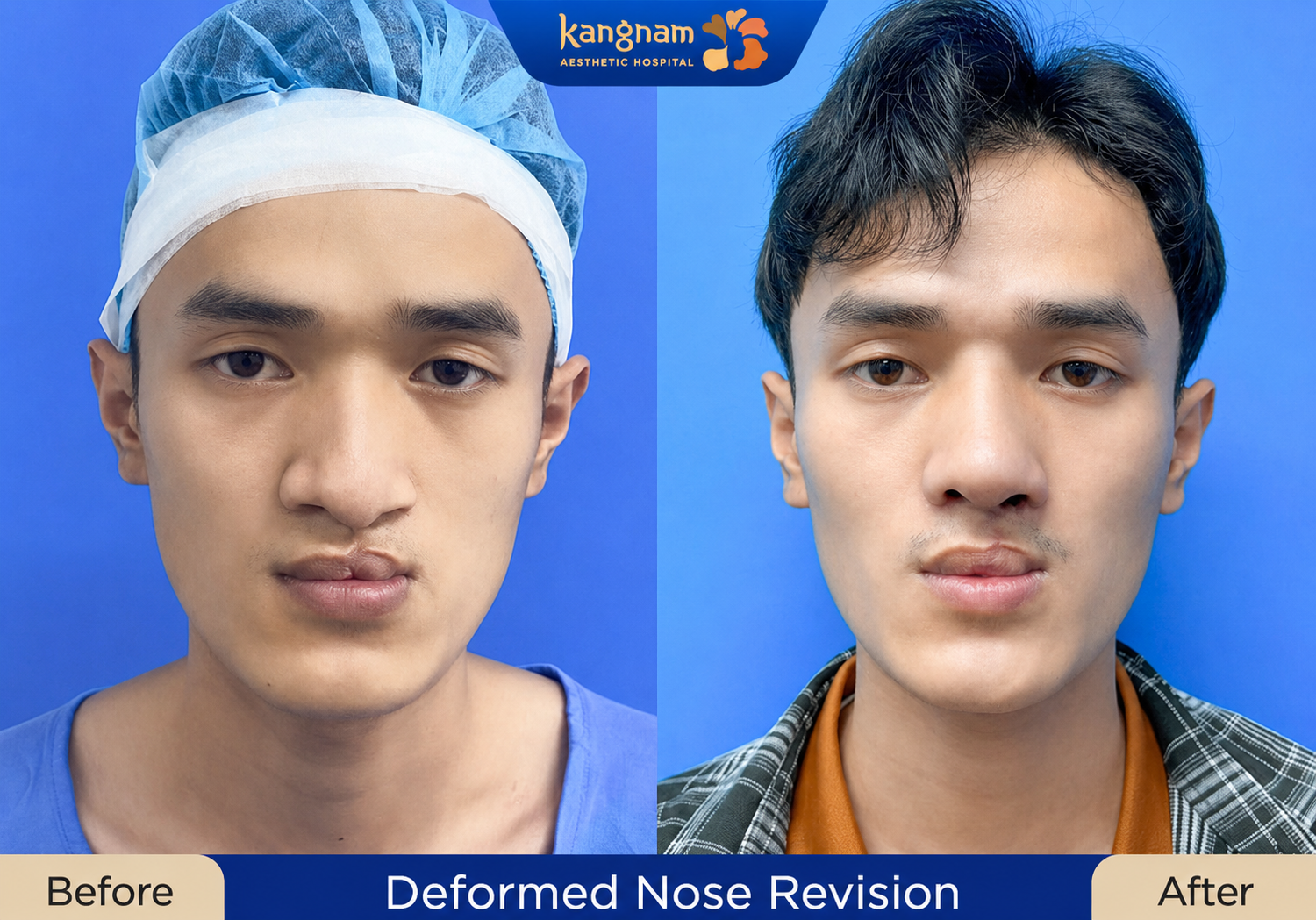
Mr. Hai, 32 years old, an overseas Vietnamese patient from Australia.
Revision rhinoplasty is not painful because local anesthesia or general anesthesia is used. Patients feel almost no pain during surgery. After surgery, mild swelling and bruising are normal bodily responses and will gradually subside within 5–7 days.
Recovery usually takes approximately 1–2 weeks. Particularly when patients follow the surgeon’s care instructions correctly, the results will become stable and natural-looking, with almost no visible scarring.
The splint is removed approximately 7–10 days after revision rhinoplasty, depending on the degree of swelling and each patient’s recovery. The splint helps stabilize the nasal shape, reduce swelling, and protect the nasal structure during the initial recovery period. By the time the splint is removed, the nose is generally stable enough to maintain its shape, ensuring a natural and safe result.
If a rhinoplasty has failed, the ideal time for revision is generally between six months and one year after the previous procedure. This period allows the nose to stabilize, the tissues to recover fully, and fibrous tissue to form, creating favorable conditions for the surgeon to remove the previous material and reconstruct the nose.
Revision rhinoplasty at Kangnam does not leave visible scars because ultra-fine microsurgical sutures are used to minimize tissue damage and support recovery twice as fast. During recovery, mild swelling or bruising may occur but will gradually subside within a few days. When patients follow the surgeon’s instructions correctly, the skin tissue heals quickly, and the nose maintains a natural shape with almost no visible signs of surgery.
Overseas Vietnamese patients undergoing revision rhinoplasty at Kangnam receive a transparent and clearly defined long-term warranty ranging from 10 years to a lifetime. During this period, patients can contact the surgeon online for consultations, care instructions, and remote monitoring of their results. Therefore, even after returning abroad, patients can remain confident about their nasal shape, aesthetic results, and warranty benefits.
Schedule an online consultation with a Kangnam surgeon today to have your nasal condition assessed, receive a personalized treatment plan, and experience safe revision rhinoplasty services with a fast recovery.