Date posted: 18-11-2026 | Last updated : 18-11-2026
An initial review of previous surgery records and photos can often be arranged before flying to Vietnam, allowing the medical team to assess visible concerns, review surgical history, and discuss possible revision options. However, photographs and medical documents cannot fully reveal internal scar tissue, implant problems, or overall surgical fitness. A final diagnosis, treatment plan, and decision to operate require an in-person medical examination.
Online assessment helps review previous surgery results before travelling.
Medical records and clear photos support preliminary surgical planning.
Physical examinations remain necessary before approving surgery.
Early consultation helps international patients plan costs and travel.
1. Which Previous Surgery Records Should You Send Before Flying?
Patients should provide previous operative reports, implant details, medical images, and complication records whenever available. These documents help the reviewing surgeon understand which structures were changed during the first operation and what may require further examination.
The most useful records include:
- Original operative report: Describes the surgical technique, anatomical areas treated, and procedures performed. This helps the surgeon identify previously altered tissues.
- Implant or graft information: Includes implant brands, models, sizes, and surgical materials when applicable. These details are particularly useful for breast and nasal revision.
- Medical imaging reports: Ultrasound, CT, MRI, or other scans may help identify structural abnormalities or implant-related concerns.
- Postoperative records: Discharge summaries, prescriptions, and follow-up reports provide information about healing and complications.
- Current medical history: Include relevant health conditions, medications, allergies, and previous anesthesia reactions that could influence surgical planning.

2. How Should You Take Photos for an Online Revision Surgery Assessment?
Photos for an online revision surgery consultation should be clear, unedited, and taken from several consistent angles. Proper photographs help the surgeon observe visible asymmetry, scars, and changes in appearance without distortion caused by lighting or camera position.
Recommended photo guidelines include:
- Use natural lighting: Take photographs in a well-lit room without beauty filters, skin smoothing, or artificial enhancements.
- Capture multiple angles: Front, side, and three-quarter views may be useful depending on the operated area. Follow the surgeon’s instructions for additional views.
- Keep a neutral position: Avoid exaggerated facial expressions or body positioning that changes the appearance of the treated area.
- Include earlier photographs: Images taken before the original surgery and during recovery help show how the result has changed.
- Show visible concerns clearly: Photograph relevant scars, uneven contours, or other visible changes without altering the images.
3. What Cannot Be Confirmed During an Online Revision Surgery Consultation?
An online revision surgery consultation cannot reliably confirm internal tissue damage, complete surgical eligibility, or the final corrective technique. These decisions often require physical examination, diagnostic tests, and assessment of the patient’s overall health.
Important limitations include:
- Scar tissue and skin quality: Photographs cannot accurately show tissue thickness, elasticity, or how firmly scars are attached to deeper structures.
- Implant or cartilage problems: A displaced implant, weakened cartilage, or suspected rupture may require examination or imaging to confirm.
- Functional abnormalities: Breathing obstruction, eyelid muscle weakness, or breast tenderness often require hands-on assessment.
- Anesthesia suitability: Medical history provides useful information, but necessary preoperative examinations and tests must still be completed.
- Final surgical feasibility: The surgeon may need to adjust the proposed approach after assessing the actual condition of the tissues.
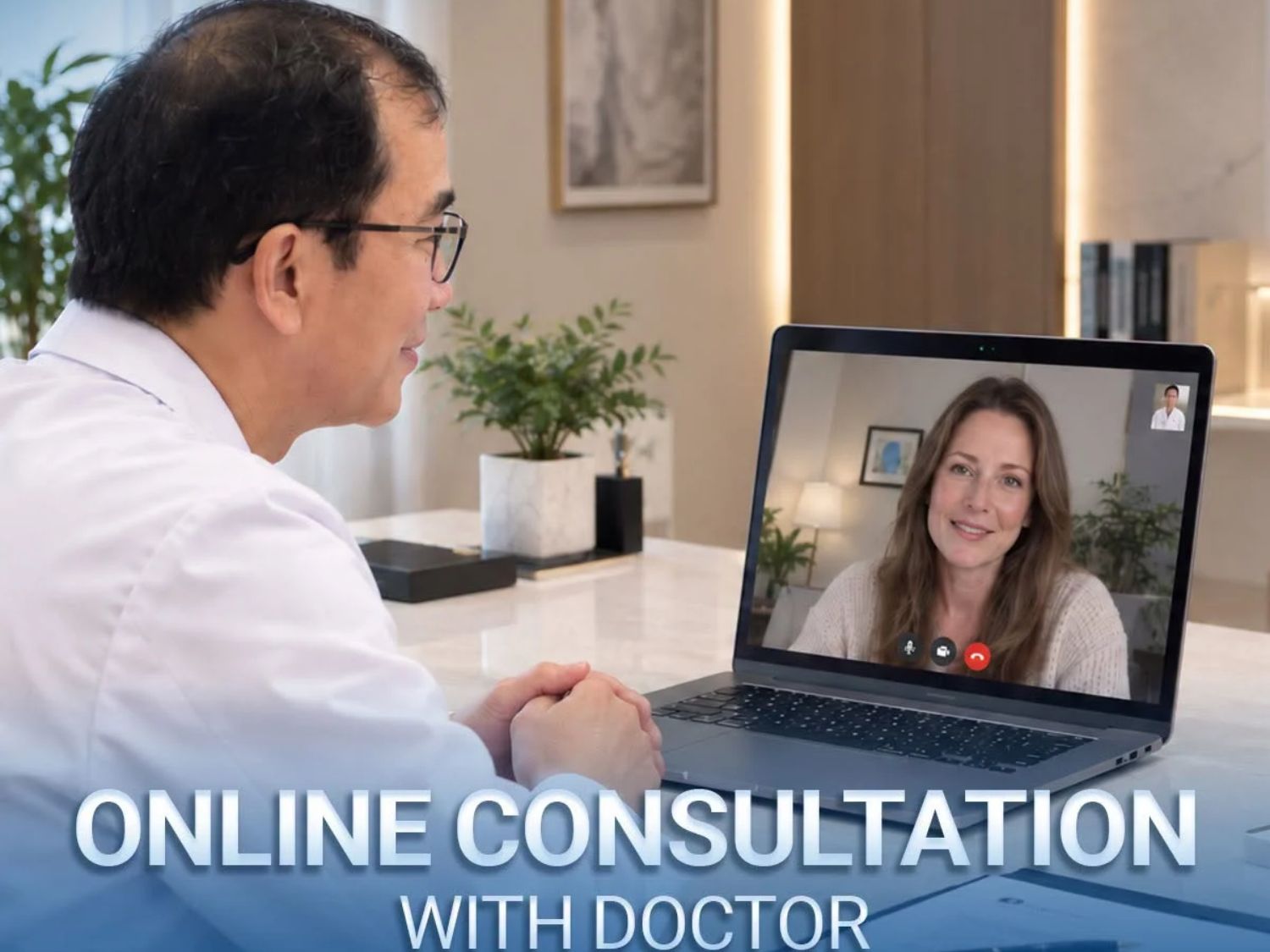
The American Society of Plastic Surgeons (ASPS) explains that virtual consultations allow surgeons to review photographs, discuss treatment options, and communicate with patients who live far away. However, its June 2023 article emphasizes that telehealth does not replace an in-person examination and that the surgeon may need to adjust the proposed plan after seeing the patient directly.
4. Can You Have an Online Revision Consultation Without Your Original Surgery Records?
Yes, an initial consultation may still be possible even if your previous operative reports or implant documents are unavailable. However, missing records can make it more difficult to identify the materials used, understand previous surgical changes, and select an appropriate corrective method.
Patients can provide alternative information, including:
- A personal surgery timeline: Record the date, country, clinic, and type of procedure, together with changes noticed during recovery.
- Previous photographs: Images taken before and after the original surgery help document changes in appearance.
- Available medical documents: Discharge letters, prescription records, implant cards, and imaging reports may provide useful details.
- Current symptoms: Explain any pain, numbness, breathing difficulty, firmness, asymmetry, or changes that have developed over time.
If implant details are unknown, the surgeon may recommend additional imaging or request information from the original medical provider.
For complex revisions, incomplete records can also affect the initial cost estimate because the required reconstruction may only become clear after further examination.
5. How Does Kangnam’s Pre-Flight Online Consultation Process Work?
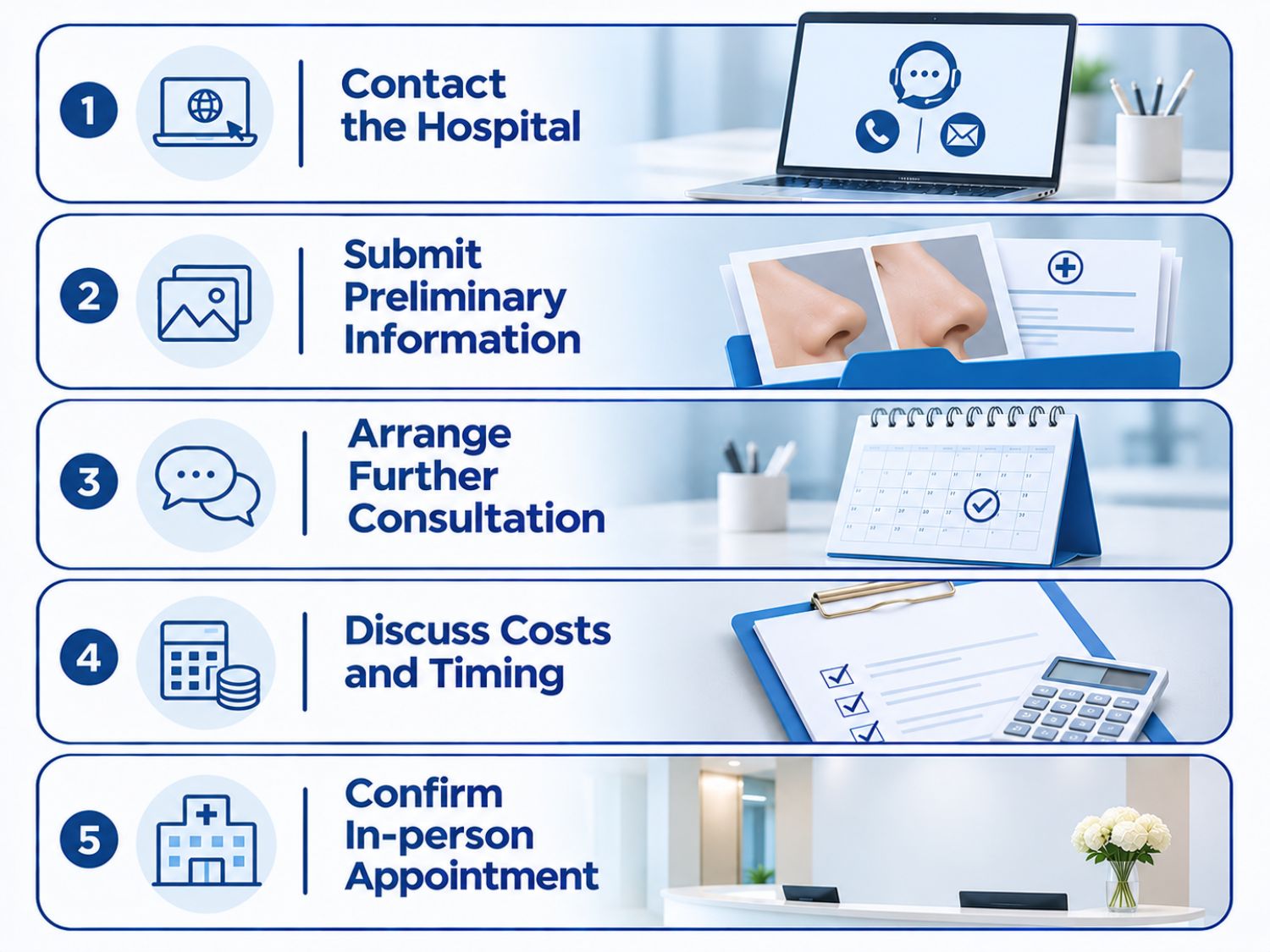
Kangnam Aesthetic Hospital allows international patients to arrange an initial online cosmetic surgery consultation before travelling to Vietnam. Its published process includes submitting photographs and health information, discussing possible treatment approaches, and scheduling an in-person appointment when appropriate.
The process generally involves five steps:
- Contact the hospital: Register through Kangnam’s official website or verified communication channels and explain that you are considering revision surgery.
- Submit preliminary information: Provide current photographs, relevant surgical history, and any available medical records requested by the team.
- Arrange further consultation if needed: The consultation team may discuss preliminary options, while a doctor consultation can be requested and scheduled according to availability.
- Discuss estimated costs and timing: Ask about possible corrective methods, required examinations, anticipated expenses, and recovery arrangements.
- Confirm an in-person appointment: The final surgical decision is made after the doctor examines the patient and completes the necessary medical assessment.
For patients considering revision surgery in Vietnam, Kangnam Aesthetic Hospital provides pre-flight online consultation support, information about revision rhinoplasty, and remote postoperative follow-up. Contact Kangnam to request a preliminary review of your surgical history and discuss an appropriate consultation plan before booking your trip.
6. What Should You Confirm Before Booking Your Flight to Vietnam?
Before booking a flight for revision surgery in Vietnam, patients should confirm the purpose of the visit, expected medical examinations, provisional treatment costs, and recovery arrangements. This helps reduce unnecessary travel expenses while allowing flexibility if the surgical plan changes.
Important questions to clarify include:
- Who will review your case? Confirm whether the initial response comes from a consultation coordinator or a qualified surgeon and whether a separate doctor appointment is needed.
- What can be decided before arrival? Ask which conclusions are preliminary and what must be confirmed through physical examination or diagnostic testing.
- What costs should you expect? Request a provisional quotation covering consultation, investigations, surgery, anesthesia, and postoperative care.
- How long should you stay? Allow time for examination, potential surgery, recovery, and follow-up rather than assuming treatment can take place immediately.
- How will your personal records be protected? Use the facility’s verified contact channels, ask about secure submission, and clarify access to sensitive photographs and medical documents.
7. Frequently Asked Questions About Reviewing Surgery Records Before Flying
Can a surgeon review CT or MRI files before I travel?
Yes, existing CT or MRI reports and images may be useful for preliminary assessment if the medical team can access and interpret the files. However, the surgeon may still request new imaging when previous scans are outdated or do not answer the current clinical question.
Can I send photos if my original surgery was performed many years ago?
Yes, photographs and surgical records can still be useful even when the original procedure took place several years earlier. The surgeon will focus on your present anatomy, current symptoms, and whether the available history helps explain the problem.
Is the online medical record review free at Kangnam?
Kangnam’s published information describes free initial online consultation registration through its official channels. Patients requesting a detailed physician review or a separately arranged medical consultation should confirm whether additional fees apply before submitting their records.
Can I schedule revision surgery immediately after arriving in Vietnam?
A proposed surgical date may be discussed before travel, but it is not a guarantee that surgery can proceed immediately. The surgeon must first complete the necessary examination and tests, confirm that the tissues and overall health are suitable, and obtain informed consent.