Date posted: 18-11-2026 | Last updated : 18-11-2026
The recommended revision surgery waiting time is usually several months to around one year after the original procedure, depending on the surgical area, tissue healing, and severity of complications. Elective revision rhinoplasty is often considered around 12 months, while breast and eyelid revisions may be assessed after approximately 6 months or longer. However, infections, exposed implants, or complications affecting normal function may require earlier medical intervention.
Revision timing depends on the procedure and tissue recovery.
Nose revision often requires around 12 months of healing.
Breast and eyelid revisions are commonly considered after 6 months or longer.
Serious complications require prompt assessment rather than routine waiting.
The waiting period before revision plastic surgery varies by procedure because the nose, breasts, and eyelids heal at different rates. The timeframes below are general planning estimates for elective correction, not fixed medical requirements.
| Revision procedure | Common waiting period | Why waiting matters | Earlier medical intervention |
| Revision rhinoplasty | Around 12 months; sometimes longer | Nasal swelling and scar tissue continue changing | Infection, implant exposure, threatened skin, serious breathing problems |
| Breast revision surgery | Often 6–12 months | Implants and surrounding breast tissue need time to settle | Infection, expanding bleeding, exposed implants, or other significant complications |
| Revision eyelid surgery | Often 6–12 months; selected minor corrections may be considered sooner | Eyelid swelling, scars, and crease position must stabilize | Eye exposure, worsening vision, or significant eyelid malfunction |
These waiting periods apply mainly to cosmetic corrections when no urgent complication is present. A patient with a stable but uneven nose may benefit from waiting, while someone with an infected implant requires medical treatment regardless of how recently the first operation occurred.
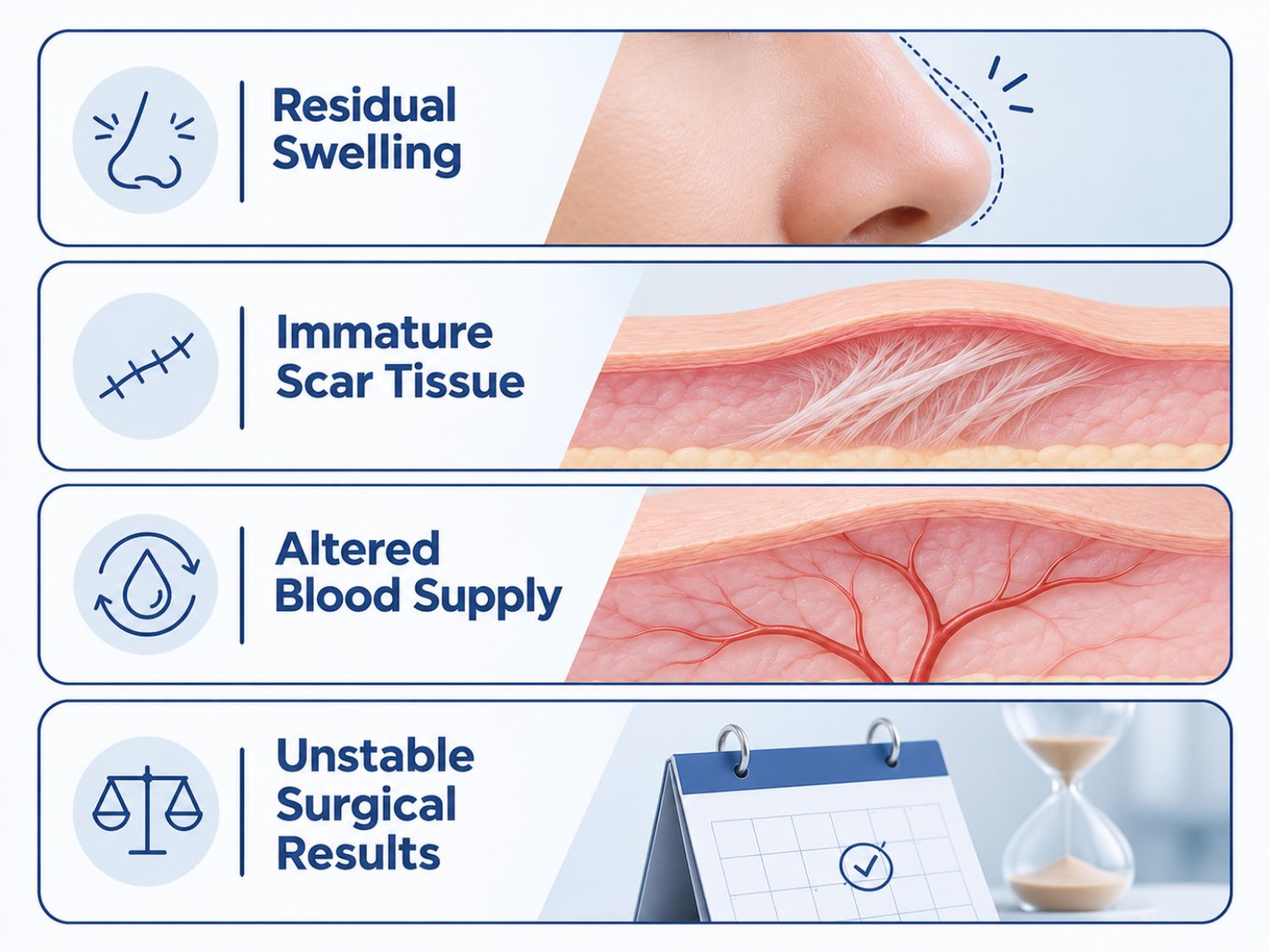
Revision surgery performed before sufficient healing may increase tissue damage, scarring, and the likelihood of an unpredictable result. Swelling and internal scar formation can temporarily change the appearance of the operated area, making it difficult to identify which problems truly require correction.
Four factors explain why surgeons often recommend waiting:
Elective revision rhinoplasty is commonly planned around 12 months after the original nose surgery, although some patients require longer healing periods. This allows swelling to decrease, scars to soften, and the nasal framework to approach a more stable position.
Waiting is particularly important when the nasal tip remains swollen or the previous operation involved extensive cartilage work.
Surgeons typically assess three factors:
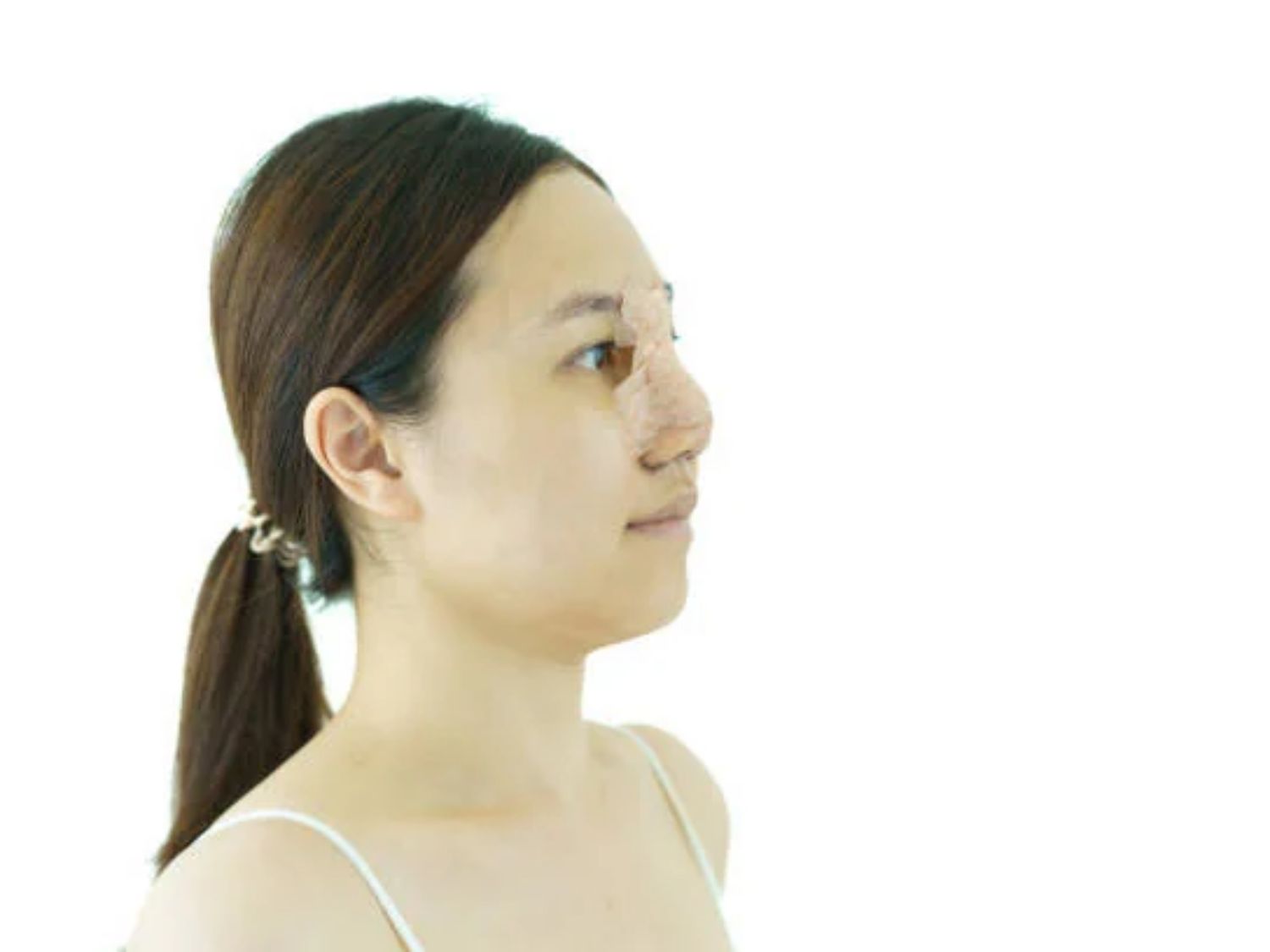
According to the American Society of Plastic Surgeons (ASPS), initial rhinoplasty swelling usually decreases within several weeks, but the nasal contour may continue refining for up to one year. This explains why early dissatisfaction does not always represent the final result and why elective revision should be planned around the patient’s healing progress.
Elective breast revision surgery is often considered after approximately 6–12 months, when postoperative swelling has decreased and the implants and surrounding tissues have had time to settle. However, the appropriate timeline depends on whether the problem concerns breast appearance, implant position, or a medical complication.
Different situations require different decisions:

Revision eyelid surgery is commonly considered after about 6 months or longer, with some complex cases requiring 12 months or more for scar tissue to soften and eyelid position to stabilize. Selected limited corrections may be considered earlier, but functional eye problems require a separate assessment.
The timing depends on the underlying eyelid problem:

Serious postoperative complications should be assessed immediately rather than waiting 6–12 months for elective revision surgery. Early medical treatment may prevent further tissue damage, although definitive cosmetic reconstruction may still need to be delayed.
Important warning signs include:
A surgeon determines readiness for revision surgery by evaluating tissue healing, the stability of the previous result, overall health, and whether the expected benefits justify another operation. Reaching a particular month after surgery does not automatically mean the patient is ready.
The assessment generally includes:
The surgeon may recommend additional follow-up, appropriate scar management, medical treatment, or postponing reconstruction until the tissues become more stable.
Waiting should be an active treatment decision, not simply an absence of care. Patients should understand what changes are being monitored and which symptoms would require an earlier appointment.
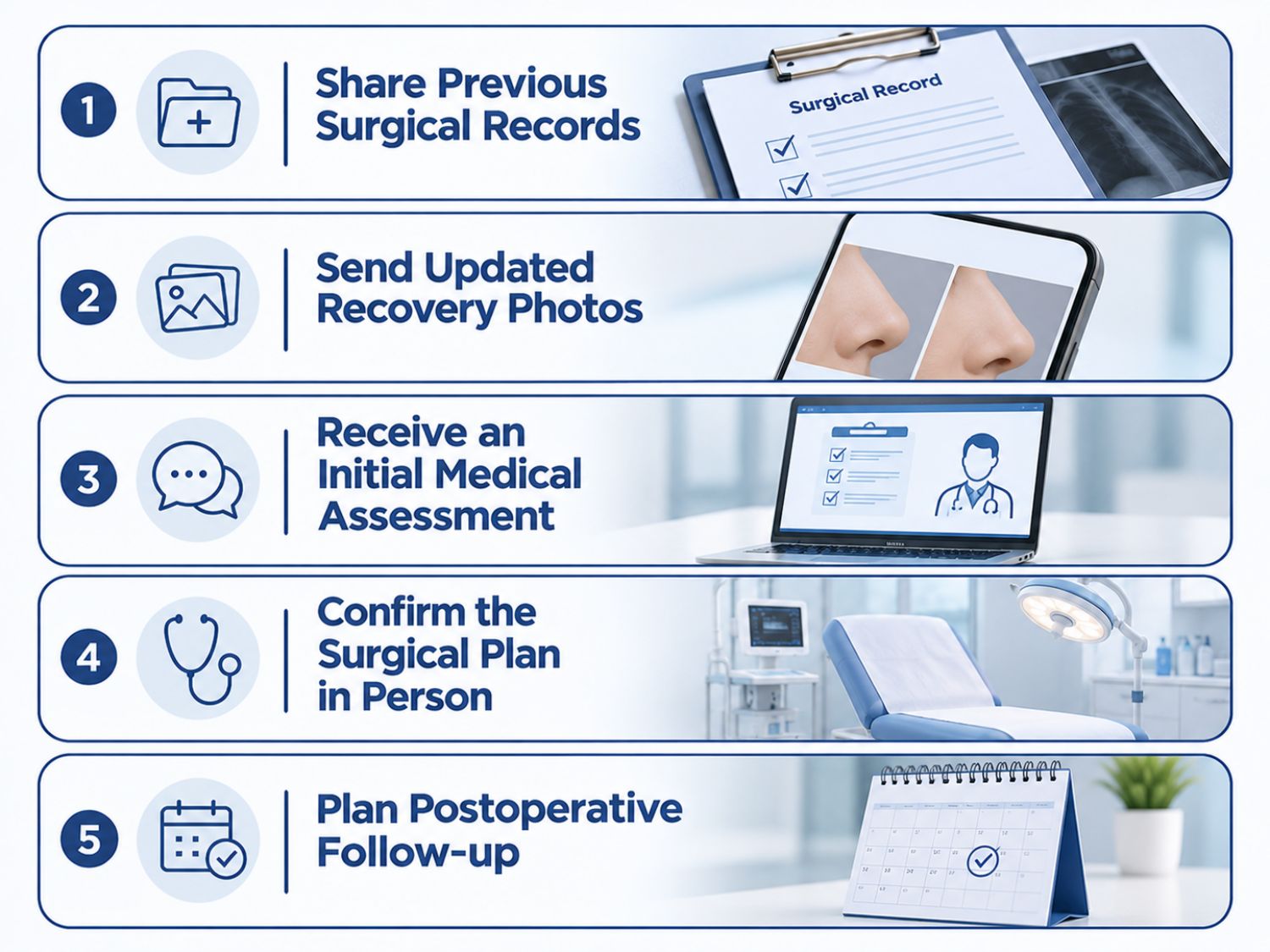
International patients can begin the consultation process before completing the expected waiting period, but surgery should only be scheduled once a qualified surgeon confirms medical readiness. Early assessment can help patients plan treatment without rushing the healing process.
A practical approach includes:
Kangnam Aesthetic Hospital offers published services for revision rhinoplasty, breast revision, and corrective eyelid procedures. Its revision rhinoplasty information describes individualized structural reconstruction, including the use of autologous cartilage when appropriate, while its international aftercare programme supports recovery monitoring after patients return home. Contact Kangnam for an individual revision assessment to discuss the safest timing and treatment options for your condition.
Yes, you can arrange a consultation at any stage of recovery, especially if you are concerned about an unexpected change. The surgeon can evaluate your progress and recommend when another examination or surgery may be appropriate.
A purely cosmetic revision is generally not recommended after only two months because swelling and scar tissue are still changing. However, persistent breathing problems, infection, or threatened skin require earlier medical evaluation.
Possibly, because repeated operations can leave more scar tissue, reduce available healthy tissue, and complicate reconstruction. The surgeon must assess whether additional healing or a staged treatment plan would be safer.
Yes, revision surgery may be possible even many years after the initial operation if your health and tissue condition are suitable. The decision depends on the current anatomy, the reason for correction, and the expected benefits and risks.