Date posted: 18-11-2026 | Last updated : 18-11-2026
Emily Carter (38, Manchester, United Kingdom): I had a botched eyelid surgery in Turkey eight months ago. One eyelid now looks higher than the other, and my eyes sometimes feel dry. I’ve also heard about people having failed nose jobs or breast implants corrected in Vietnam. Can botched nose, breast, or eyelid surgery abroad really be fixed in Vietnam? How do I know whether another operation would be safe.
Doctor’s Answer:
Botched nose, breast, or eyelid surgery performed abroad can often be improved through revision plastic surgery in Vietnam, depending on the condition of the tissues, the severity of the complication, and the patient’s overall health. Corrective surgery may restore appearance, improve function, or address problems caused by an earlier procedure, but some patients need medical treatment or additional healing time before another operation.
Revision surgery in Vietnam can improve failed nose, breast, or eyelid procedures.
Treatment options depend on tissue damage, complications, and overall health.
Surgery timing varies with healing progress and the severity of complications.
Specialist assessment is essential to ensure safety and realistic results.
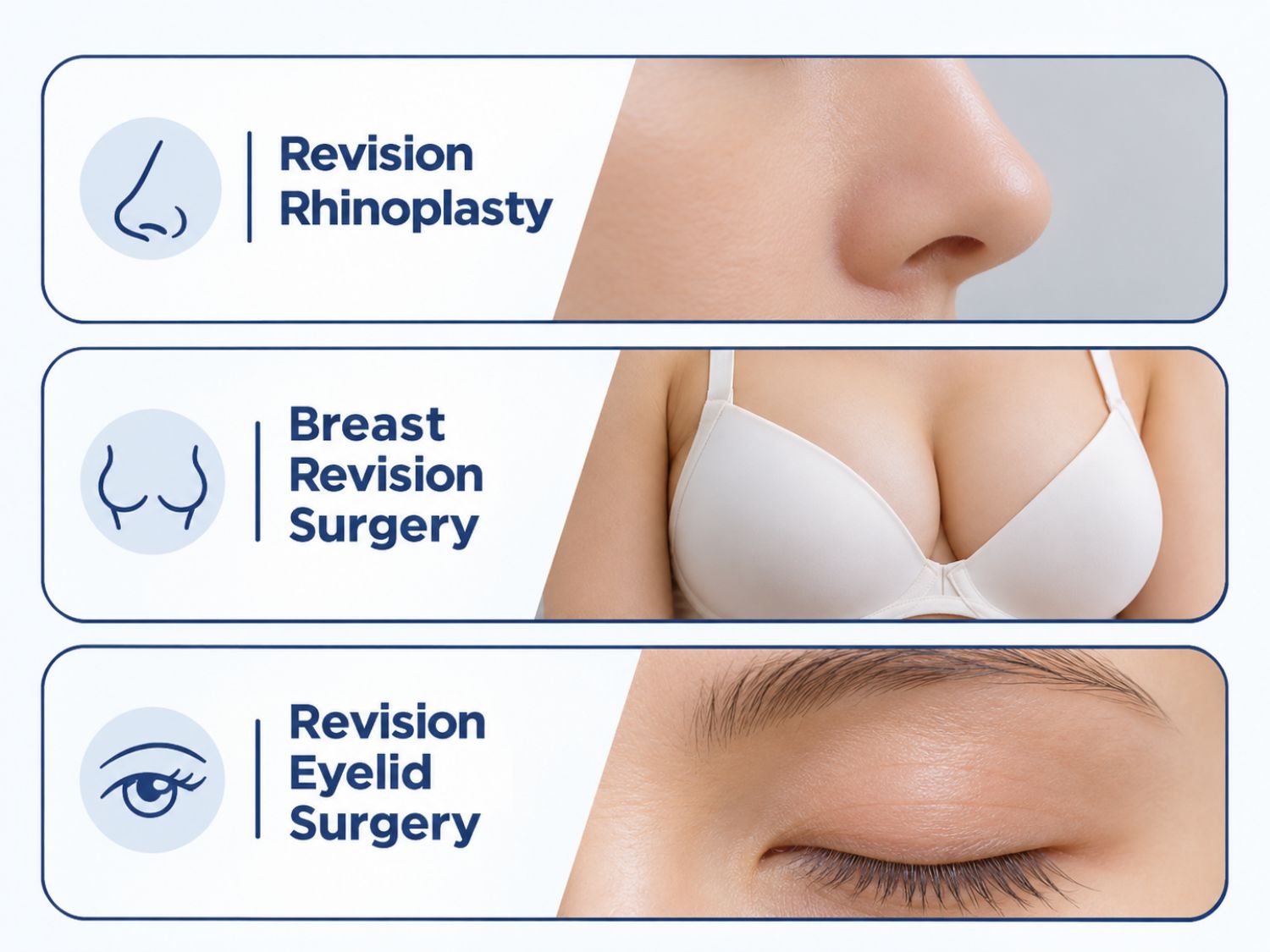
A botched nose job may be corrected with revision rhinoplasty, which aims to improve nasal shape, rebuild weakened support, or restore breathing after previous surgery.
Common corrective approaches include:

When a previous operation has removed too much cartilage, the nose may no longer have enough internal support to maintain its shape.
The surgeon may use cartilage from the nasal septum, ear, or rib to strengthen the structure. This approach can be helpful in complex cases, although grafting introduces additional surgical considerations, including healing at the donor site and possible changes in graft shape.
The American Society of Plastic Surgeons (ASPS) explains that revision rhinoplasty is particularly challenging because scar tissue and missing cartilage can limit reconstruction. Its February 2019 article also describes the use of cartilage grafts from the ear or rib and emphasizes that complete correction cannot be guaranteed.
For patients considering treatment in Vietnam, the decision should prioritize nasal function, tissue health, and realistic improvements rather than simply recreating a photograph of an ideal nose.
Failed breast augmentation can often be improved through breast revision surgery, including implant replacement, implant removal, or correction of the surrounding breast tissue. The surgeon first determines whether the problem originates from the implant, the scar tissue around it, or the patient’s natural breast anatomy.
Several situations may require different treatment approaches.

Revision eyelid surgery may improve uneven eyelids, poorly positioned creases, excess scarring, or changes in eyelid function after a previous operation. However, the surgeon must preserve adequate eyelid movement and eye protection rather than focusing exclusively on symmetry.
Common problems include:
The safest time for revision surgery depends on healing, tissue stability, and the presence of complications rather than a fixed waiting period. Operating too early can damage recovering tissue or make it difficult to judge the final outcome of the first procedure.
Typical considerations include:
Severe or worsening symptoms after cosmetic surgery require prompt medical assessment, even if revision surgery is already being planned. Some postoperative complications can damage tissue or threaten general health if treatment is delayed.
Seek emergency care for:
Other warning signs requiring urgent in-person assessment include fever with increasing wound pain, spreading redness, foul-smelling discharge, or exposed implants.
If these symptoms develop while you are still in the UK, US, Australia, or another country, seek appropriate medical care locally before arranging international travel.
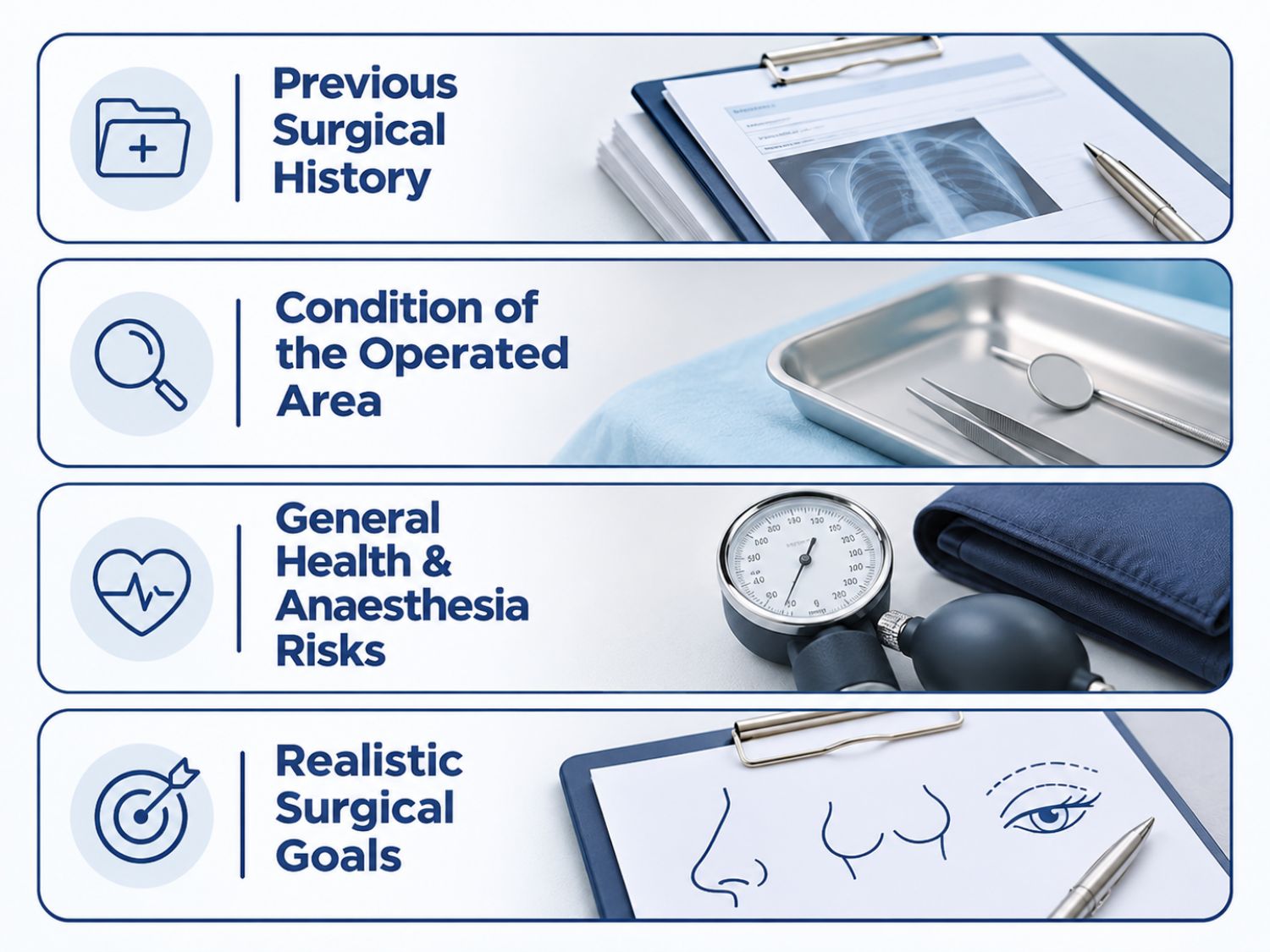
A qualified surgeon determines whether revision surgery is appropriate by examining the current anatomy, identifying the cause of the previous problem, and assessing the risks of another operation. Photographs may help with initial screening, but an accurate treatment plan requires a medical examination.
The assessment should address four areas.
Revision surgery can offer meaningful improvement, but it usually carries greater technical challenges than the original procedure and cannot guarantee complete correction. Scarred tissue, limited blood supply, or missing natural structures may restrict what a surgeon can safely achieve.
Important limitations include:
Sometimes, but only for carefully selected problems.
Minor contour concerns may be monitored or treated without another operation, depending on the anatomical findings. However, treatments such as fillers cannot reliably rebuild a collapsed nasal airway, repair a damaged eyelid-lifting muscle, or resolve a ruptured breast implant.
Injectable fillers also carry serious risks, particularly around the nose and eyes, and should not be used to conceal a suspected surgical complication without specialist assessment.
International patients should arrange a preliminary medical review before travelling and leave enough time in Vietnam for examination, treatment, and postoperative follow-up. The required stay varies considerably with the procedure and complexity of the revision.
A practical plan includes:
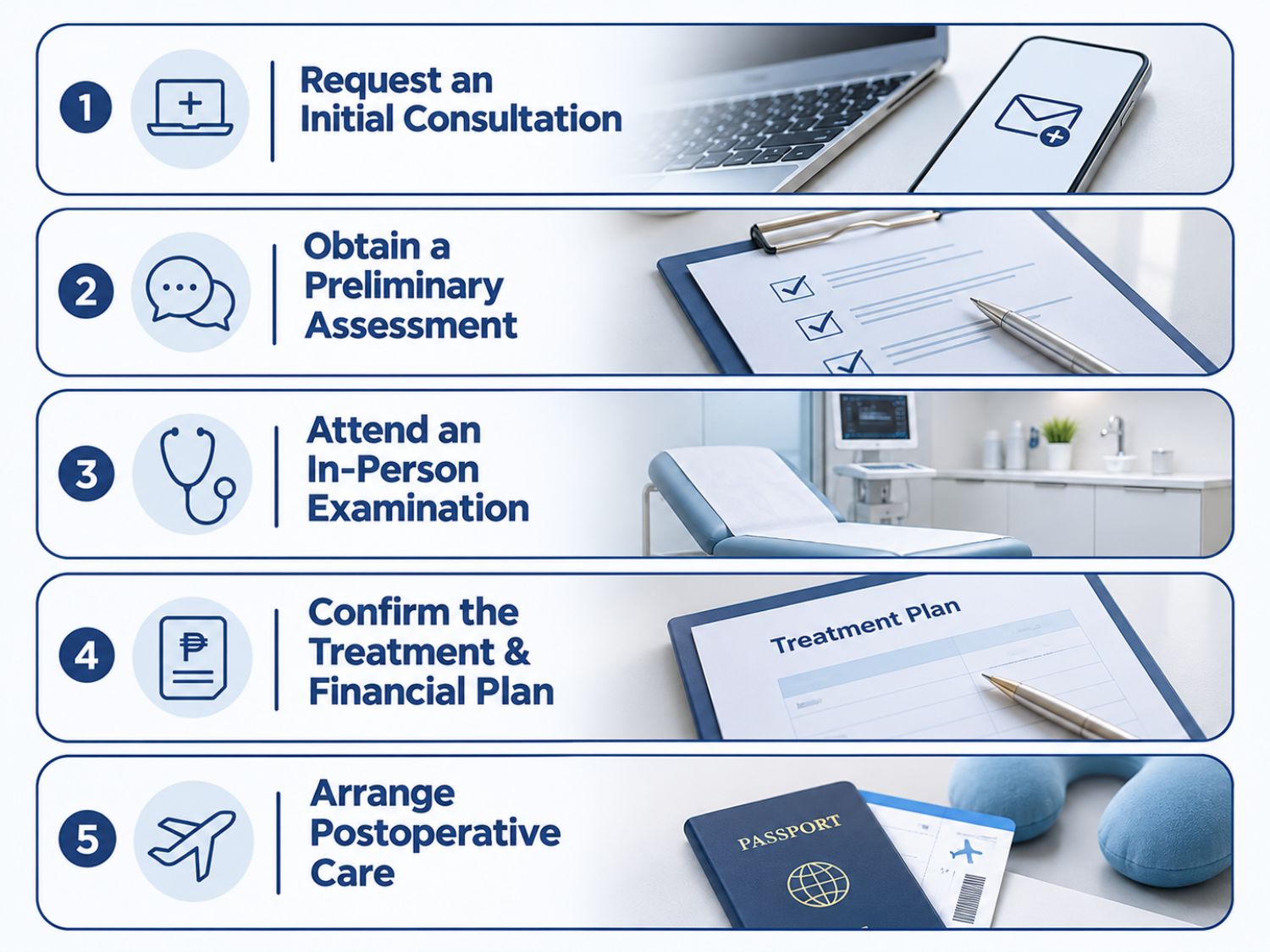
Routine postoperative monitoring may continue through online consultations, recovery photographs, and communication with the treating medical team.
However, remote follow-up cannot replace hands-on examination or emergency treatment. Patients should identify an appropriate local healthcare provider before travelling and ensure that both medical teams can access relevant records when needed.
For international patients seeking corrective cosmetic surgery, Kangnam Aesthetic Hospital offers published services covering revision rhinoplasty, breast revision, and eyelid surgery assessment. Contact Kangnam to request an individual surgical assessment and discuss whether your previous procedure can be safely corrected.
Yes, breast implant removal without replacement is an option for some patients. A breast lift or other reshaping procedure may be recommended if removing the implants leaves significant loose skin or changes in breast contour.
Revision rhinoplasty may create additional scars, especially when an external incision or cartilage graft is necessary. The location and visibility of these scars depend on the technique used, the patient’s skin, and individual healing.
Yes, surgery may worsen dryness if it changes eyelid closure or exposes more of the eye surface. A specialist should examine tear production and eyelid function before recommending another procedure.