


- Arrange stitch removal and check-ups with a doctor in your home country.
- Collect the right medical records before you leave Vietnam.
- Know when to seek care immediately instead of waiting for a follow-up appointment.
Short answer
Yes — international patients and overseas Vietnamese can have sutures removed, incisions checked and follow-up examinations done in their home country, if a local doctor or medical facility agrees to accept them. Before departure, obtain your surgical records, suture details, removal schedule and post-operative instructions, and stay in contact with your doctor in Vietnam for ongoing monitoring and coordinated care.
- Removal at home: possible if a local facility agrees to accept you and assess your incision — contact your GP, a surgical clinic or a wound care centre in advance.
- Suture type: absorbable sutures generally don't need removal; non-absorbable sutures must be removed by qualified medical staff on an appropriate schedule.
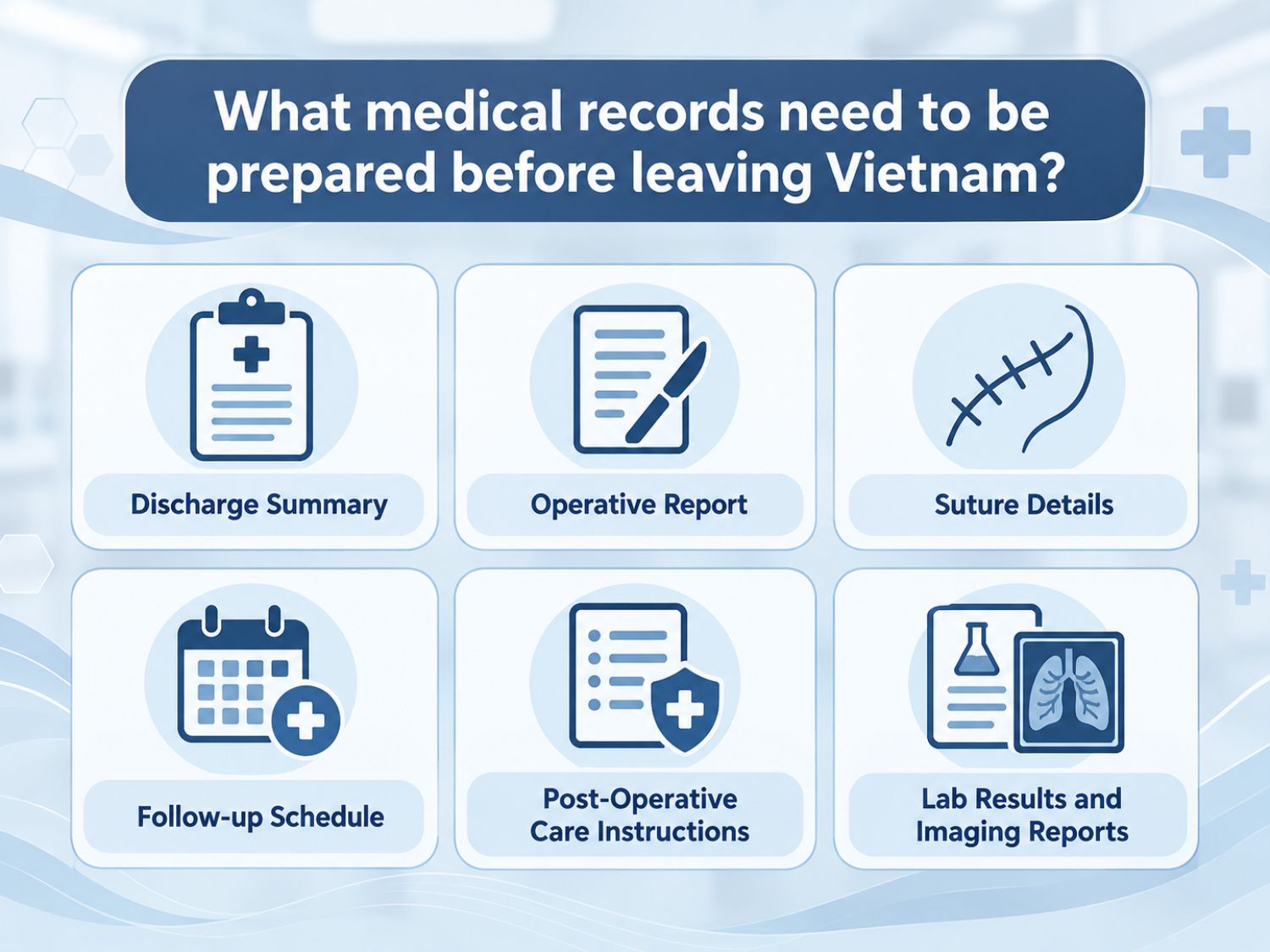
- Records to prepare: discharge summary, operative report, suture details, follow-up schedule and care instructions.
- Online follow-ups: help your doctor in Vietnam monitor progress, but cannot replace an in-person evaluation if abnormal signs appear.
1. Medical records to prepare before leaving Vietnam
Medical records help doctors in your home country understand the procedure you had, your condition at discharge and any issues that need monitoring. They also give both teams a shared reference if abnormal symptoms appear after you return. Before departure, ask your surgical facility for:
- Discharge summary: the type of surgery, surgery date, health status at discharge, current medications and home care instructions.
- Operative report: the surgical technique, treated areas, intraoperative course and specific points for post-operative monitoring.
- Suture details: whether sutures are absorbable or non-absorbable, where they are, and when they should be checked or removed.
- Follow-up schedule: milestones for incision checks, dressing changes, suture removal and recovery assessments.
- Post-operative care instructions: wound hygiene, medication use, activity restrictions and warning signs that need medical attention.
- Lab results and imaging reports: relevant test and diagnostic results related to the surgery, if available or requested by your doctor.
2. Can doctors in Vietnam continue follow-up remotely?
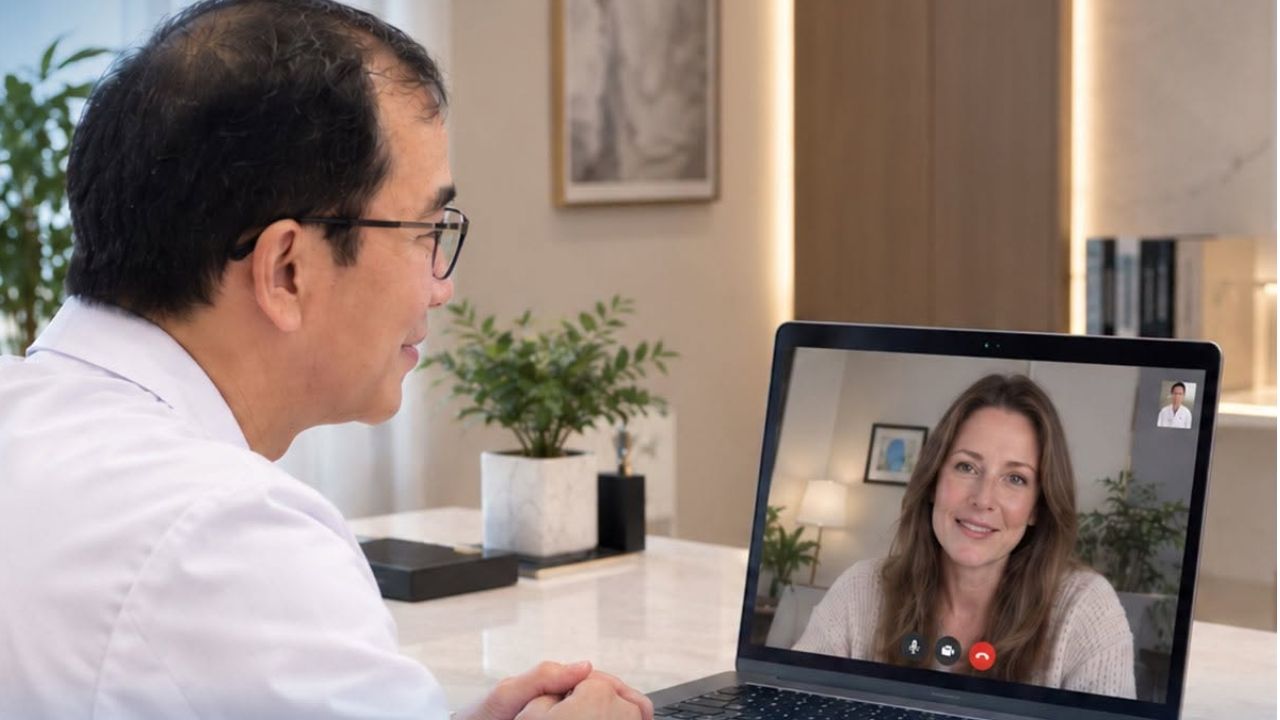
Yes. Remote monitoring can continue if the surgical facility has suitable communication channels and your condition can be assessed through photos or online consultations. This is a practical option for international patients and overseas Vietnamese who can't easily return to Vietnam after surgery. For a complete, useful remote consultation, prepare:
- Photos: clear, well-lit images of the surgical site taken from suitable angles.
- Timing and changes: when each photo was taken and any changes in the wound since your last update.
- Symptoms: a description of current symptoms such as pain, swelling, redness, itching or fluid drainage.
- Medications: a list of what you are taking and any dose changes a doctor has recommended.
- Local findings: notes or results from local doctors, if you have already had an in-person visit.
3. When to contact a doctor immediately
Don't wait for your next suture removal or online follow-up appointment if abnormal signs appear at the surgical site. Symptoms that need an immediate, in-person evaluation include:
- Pain: progressive, severe or unusual pain compared with previous days.
- Inflammation: increasing redness, warmth or swelling around the surgical area.
- Discharge or bleeding: abnormal or foul-smelling fluid, or continuous bleeding from the incision.
- Wound problems: wound separation, dehiscence or failure to heal as expected.
- Fever: fever or abnormal fatigue together with symptoms at the wound.
Seek emergency care immediately
If severe symptoms occur — such as shortness of breath, chest pain, fainting, or sudden swelling and pain in a leg — seek emergency medical help in your home country right away.
4. Planning post-operative care at home before you leave
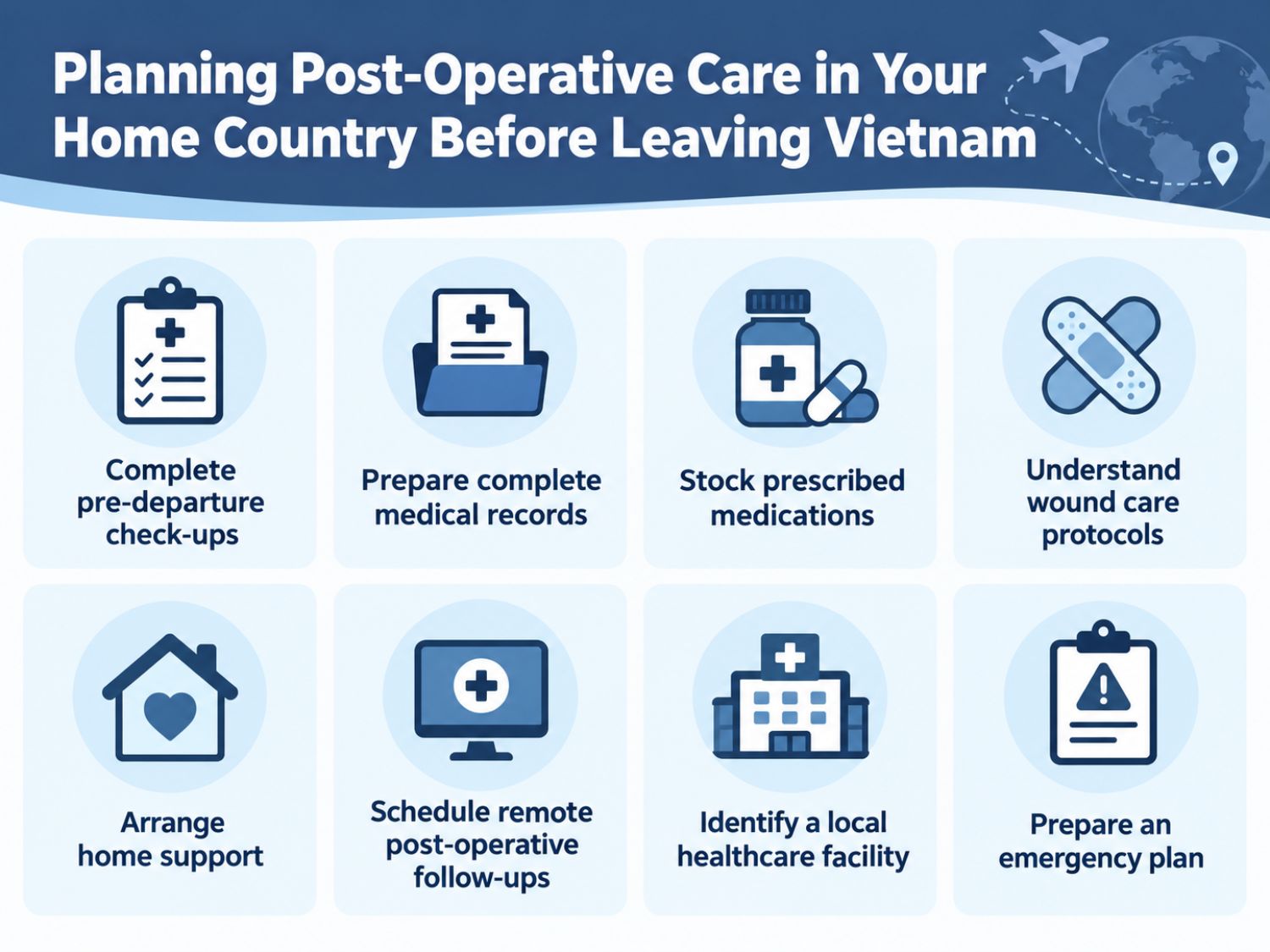
Before leaving Vietnam, prepare a care plan for your return home: medical records, prescribed medications, wound care instructions, follow-up schedules and ways to contact your doctor. Identifying a local healthcare facility in advance also means you can be seen promptly if abnormal symptoms arise. Things to prepare:
- Complete pre-departure check-ups: let your doctor assess your recovery, inspect the incision and confirm you are fit to travel.
- Prepare complete medical records: discharge papers, surgical summaries, necessary test results, prescriptions and implant information (if applicable).
- Stock prescribed medications: take enough for the recovery phase and understand the doses, schedule and any drugs to avoid.
- Understand wound care: get clear instructions on cleaning, dressing changes, monitoring swelling and pain, and activity restrictions for your procedure.
- Arrange help at home: ask family or friends to help for the first few days, especially after major surgery or if your mobility is limited.
- Schedule remote follow-ups: agree on when to send photos, hold video calls and update your doctor in Vietnam on your recovery.
- Identify a local healthcare facility: prioritise hospitals or clinics with relevant specialties for check-ups, dressing changes, suture removal or managing complications.
- Prepare an emergency plan: save local emergency numbers and know the warning signs that need immediate attention, such as fever, worsening pain, bleeding or signs of wound infection.
5. Post-operative support for international patients at Kangnam
Kangnam Aesthetic Hospital emphasises consultation and post-operative care guidance for international patients, so they can actively monitor their recovery after returning home. Depending on the procedure and your health, doctors advise on home care, medication, follow-up schedules and how to get in touch when you need support. Options you can discuss with Kangnam include:
- Pre-departure monitoring: doctors evaluate the incision, assess your recovery and advise on safe timing for air travel.
- Home care instructions: detailed guidance on wound hygiene, dressing changes, diet, rest and physical activity restrictions after surgery.
- Medication consultation: prescribed doses, schedules and key points to consider when continuing treatment in your home country.
- Medical records preparation: help obtaining discharge papers, surgical reports, prescriptions and other documents for future follow-up care.
- Remote recovery updates: how to send photos, report symptoms and contact the post-operative care department after you return home.
- Guidance on abnormal signs: which conditions need immediate local medical evaluation rather than waiting for a reply or returning to Vietnam.
- Follow-up consultation: agreeing on suitable evaluation milestones and when an in-person check-up is necessary.


Dr. Harvey Nguyen
Medical Director, Kangnam Aesthetic Hospital (Ho Chi Minh City) · Specialist Level I in General Surgery, Hanoi Medical University · Licensed Plastic & Aesthetic Surgeon.
Member of VSAPS and ASAPS · trained in the USA, South Korea and Japan · reviewed this page on 12/11/2026. View full profile →
6. Frequently asked questions
Can I ask my General Practitioner (GP) or family doctor to remove my sutures after surgery in Vietnam?
Yes, provided your GP has the appropriate clinical scope and agrees to accept you. Contact them in advance, forward your surgical records and confirm the appointment, rather than assuming every GP performs this procedure.
If absorbable sutures were used, do I still need to visit a clinic for suture removal?
Generally, absorbable sutures do not need to be removed. However, you must still follow your wound evaluation schedule. If suture ends protrude, cause discomfort, or the wound shows abnormal signs, see a doctor for proper assessment and management.
Do I need to bring my medical records home in English?
Yes — it's recommended to have your documents in English or the language used by healthcare providers where you live. Essential documents include the discharge summary, operative report, suture details, prescriptions and post-operative care instructions.
- US Centers for Disease Control and Prevention (CDC) — Medical Tourism: Travel to Another Country for Medical Care. cdc.gov
- Kangnam Aesthetic Hospital — aftercare and remote monitoring protocol for international patients. kangnamaesthetichospital.com
- Kangnam Aesthetic Hospital system data — facilities and licences (Hanoi 194/BYT-GPHĐ · HCMC 287/BYT-GPHĐ). benhvienthammykangnam.com.vn
Suture removal timing and follow-up needs vary with the procedure, suture type and how your wound heals; a local doctor must assess you in person before removing sutures. This page is general information and does not replace a consultation.
More on recovery and travelling home
Part of the international patient guide →