


- Recognise warning signs of infection, hematoma and blood clots after flying home.
- Tell normal recovery symptoms apart from signs that need medical care or an emergency.
- Know what to do and what to bring when you see a local doctor back home.
Short answer
Signs to watch for when flying home after cosmetic surgery include fever, a red or warm incision, worsening pain, abnormal discharge, bleeding, swelling and pain in one leg, shortness of breath or chest pain. These may be related to infection, hematoma, deep vein thrombosis (DVT) or pulmonary embolism (PE). Sudden shortness of breath, chest pain, coughing up blood and fainting need immediate emergency care. Tell the doctor treating you about your surgical history and flight duration so they can assess and advise you properly.
- Infection: fever, a red and warm incision, worsening pain, or cloudy or foul-smelling discharge mean you should contact a doctor.
- Bleeding and hematoma: a rapidly swelling surgical area, tightness or fullness, spreading bruising or continuous bleeding need medical evaluation.
- Blood clots (DVT / PE): swelling, pain, warmth or redness in one leg after a long flight needs urgent examination; sudden shortness of breath, chest pain, coughing up blood or fainting needs emergency care.
- Proactive care at home: keep your medical records, stay in contact with your surgeon and see a local healthcare facility as soon as you notice anything abnormal.
1. Signs of infection after cosmetic surgery
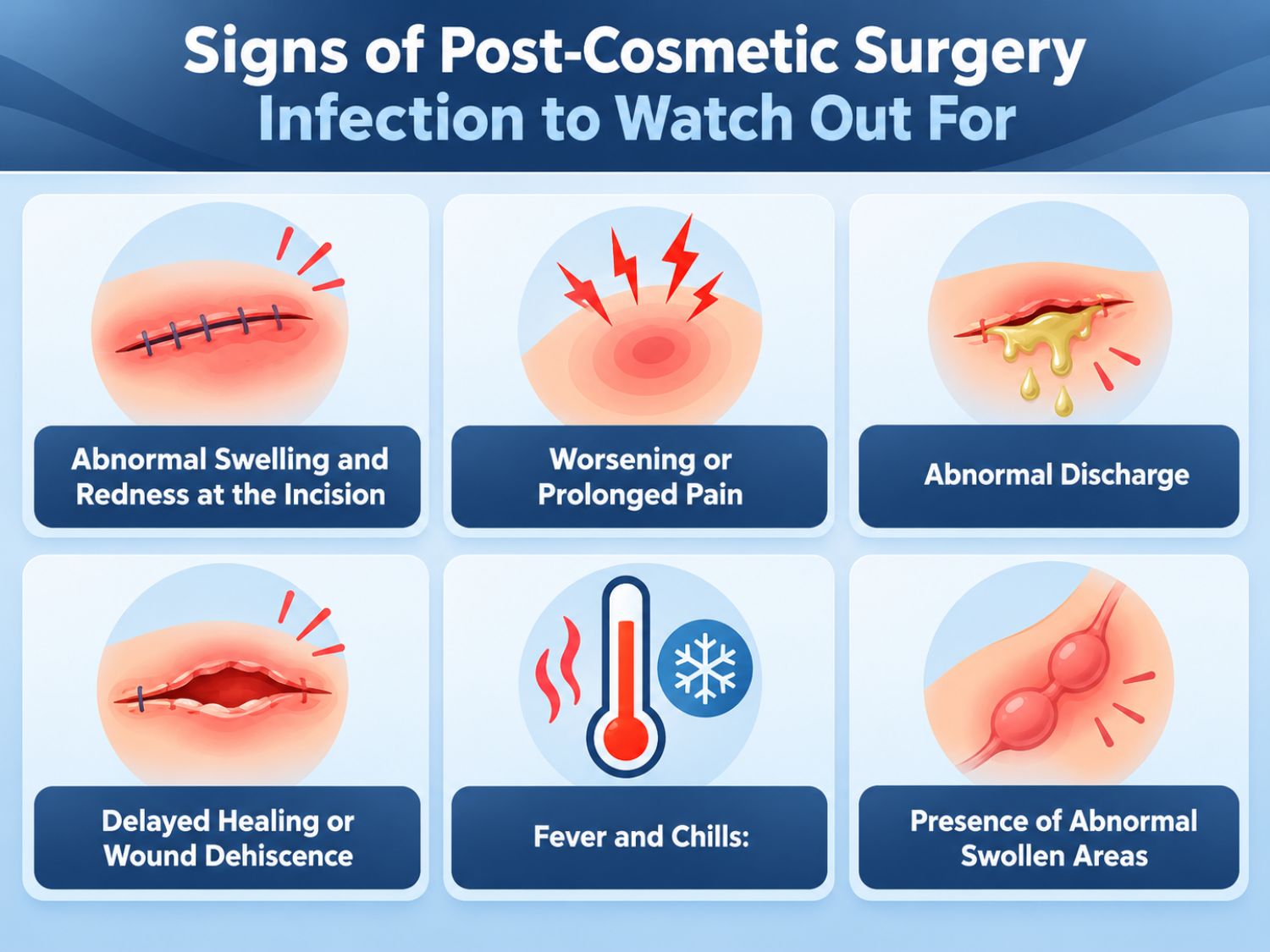
Infection after cosmetic surgery can show as increasing redness and swelling at the incision, severe pain, local warmth, abnormal discharge or a foul odour. You may also have fever, chills and fatigue. Recognising these signs early helps detect complications and get timely treatment. Signs to monitor:
- Abnormal swelling and redness at the incision: the skin around the wound becomes increasingly red, warm and swollen, spreading rather than gradually settling as expected.
- Worsening or prolonged pain: pain that becomes more severe, doesn't ease despite prescribed medication, or returns after initially improving.
- Abnormal discharge: cloudy, yellow or green drainage, pus or a foul odour from the wound, which can indicate a local bacterial infection.
- Delayed healing or wound dehiscence: suture lines separating, discoloured surrounding tissue, or a wound that fails to improve over time.
- Fever and chills: a temperature of 38°C (100.4°F) or higher, shivering, fatigue or unusual lethargy.
- Abnormal swollen areas: fluid collection or an abscess around the surgical site, causing tension and tenderness to the touch.
2. Rapid swelling, spreading bruising or bleeding: possible hematoma
A hematoma is a collection of blood in the tissues after surgery, which can cause swelling, tightness and pain at the treated site. How severe the symptoms are depends on the surgical location, the scope of the procedure and the volume of blood collected. Watch for:
- Sudden swelling: a surgical area that quickly becomes swollen, rigid or noticeably bulging.
- Asymmetry: one side of the treated area becomes significantly larger than the other.
- Spreading bruising: bruising that spreads rapidly, with unusual changes in skin colour.
- Increasing pain: a noticeable rise in pain that doesn't ease when you take medication as prescribed.
- Heavy bleeding: blood soaking through gauze dressings, or persistent, continuous bleeding from the incision.
Heavy bleeding or signs of blood loss
If you have heavy bleeding, a rapidly swelling or tight surgical area, or feel lightheaded, look pale, are extremely weak or faint, get emergency medical help immediately — these may indicate significant blood loss or a serious complication that needs urgent treatment.

3. Other abnormal signs at the surgical site
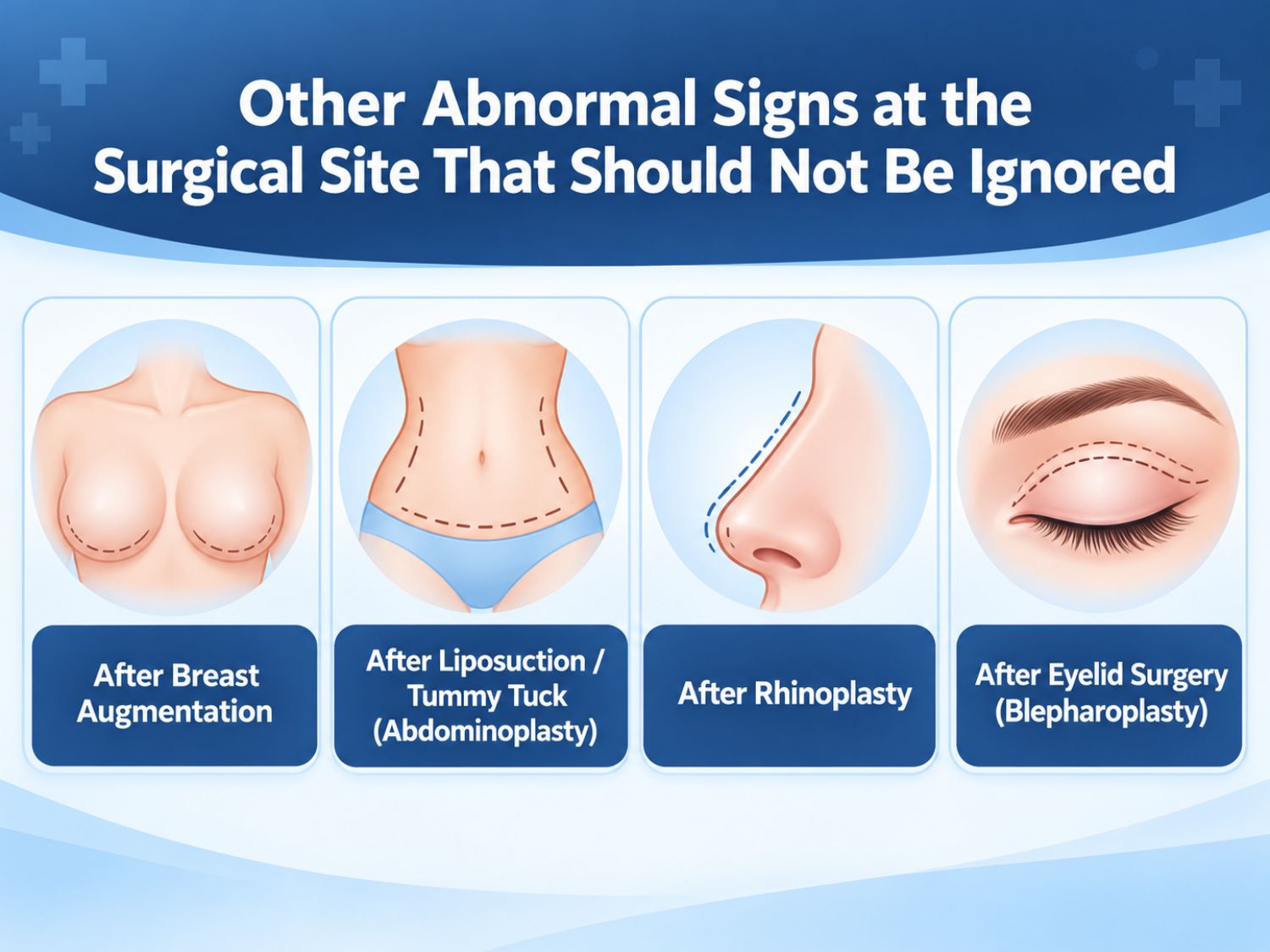
Besides infection, bleeding and thrombosis, monitor local changes at the surgical area. Each procedure has its own recovery profile and complication risks, so compare your symptoms with your surgeon's post-operative instructions:
- After breast augmentation: sudden rapid swelling, tightness or a marked increase in pain in one breast; abnormal changes in shape between the two sides; fluid discharge from the incision or signs of infection. If this comes with shortness of breath, chest pain or lightheadedness, emergency care is required.
- After liposuction or tummy tuck (abdominoplasty): rapidly increasing swelling and tightness in the abdomen or treated areas, severe pain, abnormal skin discolouration, or heavy bleeding or discharge from incisions. Shortness of breath, chest pain or fainting after surgery need urgent emergency care.
- After rhinoplasty: a nose that becomes red, swollen, increasingly painful, has abnormal discharge or shows distinct skin discolouration needs medical evaluation. If there are signs of skin necrosis or changes in vision, don't delay seeking an examination.
- After eyelid surgery (blepharoplasty): severe eye pain, rapidly increasing swelling, blurred vision or sudden loss of vision need emergency evaluation, as they may signal a condition affecting the eyes and vision.
4. Normal recovery symptoms vs signs that need medical care
Not every post-operative symptom means a complication. Swelling, bruising, dull aching and fatigue are expected while you recover. After a long-haul flight you may also feel lethargic, stiff or have slight ankle swelling from sitting for a long time.
Symptoms that may occur during normal recovery
- Swelling and bruising: around the surgical area, gradually subsiding over time.
- Dull aching or tightness: within the levels described in your doctor's guidance.
- General fatigue: after surgery and air travel.
- Mild ankle swelling on both sides: after sitting for a long time, which settles with light movement and changes of position.
Signs that require medical evaluation
- Pain: progressively worsening or severe pain, or pain that doesn't improve with the prescribed treatment.
- Surgical area: rapid swelling, rigidity or expanding bruising.
- Infection signs: fever, chills, a red and warm incision, pus-like discharge or an unusual odour.
- One leg: swelling, pain, warmth or discolouration in one leg only.
- Breathing and circulation: shortness of breath, chest pain, coughing up blood, lightheadedness or fainting.
Possible blood clot after a long flight
Sudden shortness of breath, chest pain, coughing up blood or fainting may be signs of a pulmonary embolism and need immediate emergency medical attention. Swelling, pain, warmth or redness in one leg after a long flight is a warning sign of deep vein thrombosis and needs urgent medical examination.
5. What to do if you notice complications after returning home
Once you've left Vietnam, it may be difficult to schedule in-person follow-up visits with your operating surgeon. That's why complete documentation and an open line of communication after surgery matter, particularly if abnormal symptoms appear.
Provide your complete surgical history
When you consult a local doctor, give them:
- Your procedure: the date of surgery and the exact name of the procedure performed.
- Surgical details: where you had surgery and details of any implanted materials, if applicable.
- Your travel: departure date, flight duration and return date.
- Your health: current medication, allergy history and relevant pre-existing conditions.
- Your symptoms: when they started and how they have progressed to date.
Prepare your post-operative records
Keep your discharge papers, prescriptions, test and lab results, care instructions, implant details and sequential photographs of your surgical wound over time. If you are treated at a local medical facility, ask for copies of examination records, diagnostic results and prescriptions to forward to your operating surgeon for coordinated follow-up when needed.

Dr. Harvey Nguyen
Medical Director, Kangnam Aesthetic Hospital (Ho Chi Minh City) · Specialist Level I in General Surgery, Hanoi Medical University · Licensed Plastic & Aesthetic Surgeon.
Member of VSAPS and ASAPS · trained in the USA, South Korea and Japan · reviewed this page on 12/11/2026. View full profile →
6. Frequently asked questions
How long after cosmetic surgery is it safe to fly home?
A safe timeframe to fly home is typically 7–14 days for short-haul flights and 10–21 days or longer for long-haul flights. The exact timing depends on the type of surgery, the scope of the procedure and your individual recovery progress.
Does long-distance flying after surgery increase the risk of thrombosis?
Yes. Long-distance flying after cosmetic surgery can increase the risk of deep vein thrombosis (DVT) and pulmonary embolism (PE), particularly in the first weeks after surgery. This is because the body is actively healing, while sitting still for long periods on a flight slows blood circulation in the leg veins.
After returning home, can I see a local doctor to have my incision checked?
Yes. You can visit a local doctor or healthcare facility where you live to check the incision, assess for signs of infection and manage any issues. Bring your surgical records, prescriptions and care instructions so the local doctor has the full medical context. If you have emergency symptoms, go to the nearest hospital immediately.
- American Society of Plastic Surgeons (ASPS) — Briefing Paper: Cosmetic Surgery Tourism. plasticsurgery.org
- Kangnam Aesthetic Hospital — aftercare and remote monitoring protocol for international patients. kangnamaesthetichospital.com
- Kangnam Aesthetic Hospital system data — facilities and licences (Hanoi 194/BYT-GPHĐ · HCMC 287/BYT-GPHĐ). benhvienthammykangnam.com.vn
The warning signs above are a general guide, not a diagnosis. Recovery varies from person to person; any worrying symptom should be assessed by a doctor in person, and emergency symptoms need immediate care. This page is general information and does not replace a consultation.
More on recovery and travelling home
Part of the international patient guide →