Date posted: 21-07-2026 | Last updated : 28-07-2026
After rhinoplasty, the nose will usually be swollen during the first few days. This often causes people to confuse normal postoperative symptoms with signs that the nose is not compatible with the implanted material.
The following article explains this condition more clearly so that patients can recognise abnormal signs and seek timely treatment when necessary.
Ms Camellia Nguyen, a 32-year-old overseas Vietnamese patient living in Germany, sent the following question to Kangnam:
“Hello doctor, I am considering rhinoplasty and have researched several popular methods. While reading online forums, I often see people discussing implant incompatibility after rhinoplasty. Could you explain what it means when the nose is not compatible with the implant?”
Dr Harvey Nguyen, a rhinoplasty and plastic surgery doctor at Kangnam Aesthetic Hospital, explained that implant incompatibility may occur when the body reacts to the implanted material.
Most synthetic nasal implants currently used are not expected to cause irritation. However, in a small number of cases, a prolonged reaction may occur, affecting the aesthetic result and potentially causing serious complications.
In severe cases, nasal tissue necrosis may develop and can be difficult to treat.

An incompatible implant material may cause irritation or an inflammatory reaction.
Patients who want to understand other possible postoperative problems can review Signs of Failed Rhinoplasty.
Signs of implant incompatibility may become more noticeable after approximately ten days following rhinoplasty.
After rhinoplasty, the implanted material and surrounding tissues need time to adapt, so swelling is a normal postoperative sign.
Mild swelling may remain for approximately ten days before gradually decreasing.
However, if the nose remains significantly swollen after one month, becomes larger, or shows no sign of improvement, this may indicate an abnormal reaction to the implanted material.
In addition to swelling, patients may notice:
Swelling alone does not always confirm implant incompatibility, but prolonged or worsening swelling should be examined by a doctor.
More information about the normal recovery timeline is available in How Long Does Rhinoplasty Take to Heal?.
Another warning sign is infection.
The nose may feel:
If these symptoms occur, the condition may have become serious and should be assessed by a doctor immediately.
Without timely treatment, the infection may negatively affect both health and the appearance of the nose.
Rhinoplasty performed by an inexperienced or unqualified practitioner may result in incorrect implant placement.
Poor implant quality may also cause the material to become unstable, crooked, or displaced.
Over time, this may affect appearance and may also place pressure on the nasal-tip skin, potentially causing skin breakdown or perforation.
Patients should not ignore these changes and should seek medical examination promptly.
The skin at the nasal tip is naturally thin.
When a hard or low-quality implant places excessive pressure on this area, the skin may gradually become thinner and may eventually break down.
This sign is usually visible and indicates a serious condition in which the implant may become exposed outside the nose.
Blood accumulation, bruising, and yellow pus-like discharge may indicate that the nose is experiencing an abnormal reaction or infection.
Other symptoms may include:
Foul-smelling yellow discharge may suggest a significant bacterial infection.

Persistent swelling and pain are among the most noticeable warning signs.
Some patients experience an abnormal reaction after rhinoplasty, while others recover without any noticeable problems.
Possible causes include the following factors.
Even when the same implant and surgical method are used, some patients achieve the expected result while others may need to have the implant removed due to irritation or inflammation.
This difference may be related to individual tissue response.
People whose tissues heal well may face fewer complications than those with more sensitive skin or a history of inflammatory reactions.
Before surgery, patients should undergo a medical examination and discuss any previous allergies, implant reactions, skin conditions, or autoimmune diseases with the doctor.
However, no test can accurately predict every possible reaction to a nasal implant.
Even leading specialists cannot guarantee with certainty that a patient will never develop an abnormal response.
The choice of nasal implant is important and can affect the postoperative result.
High-quality materials are often more expensive, but patients should not choose an unverified implant simply because it is cheaper.
The original content arranges several synthetic materials according to their stated compatibility:
Silicone is flexible and may help shape the nasal bridge.
However, the original content states that its attachment to the nasal tissues is limited and that the result may last up to ten years.
The actual duration varies according to implant quality, surgical technique, tissue condition, and complications.
Surgiform is described as having greater compatibility, structural stability, and longer durability than standard silicone.
Softxil is described as the most highly rated of the three materials and may be considered for people with sensitive tissue.
The original content states that it may last approximately 35 years, but implant duration cannot be guaranteed for every patient.
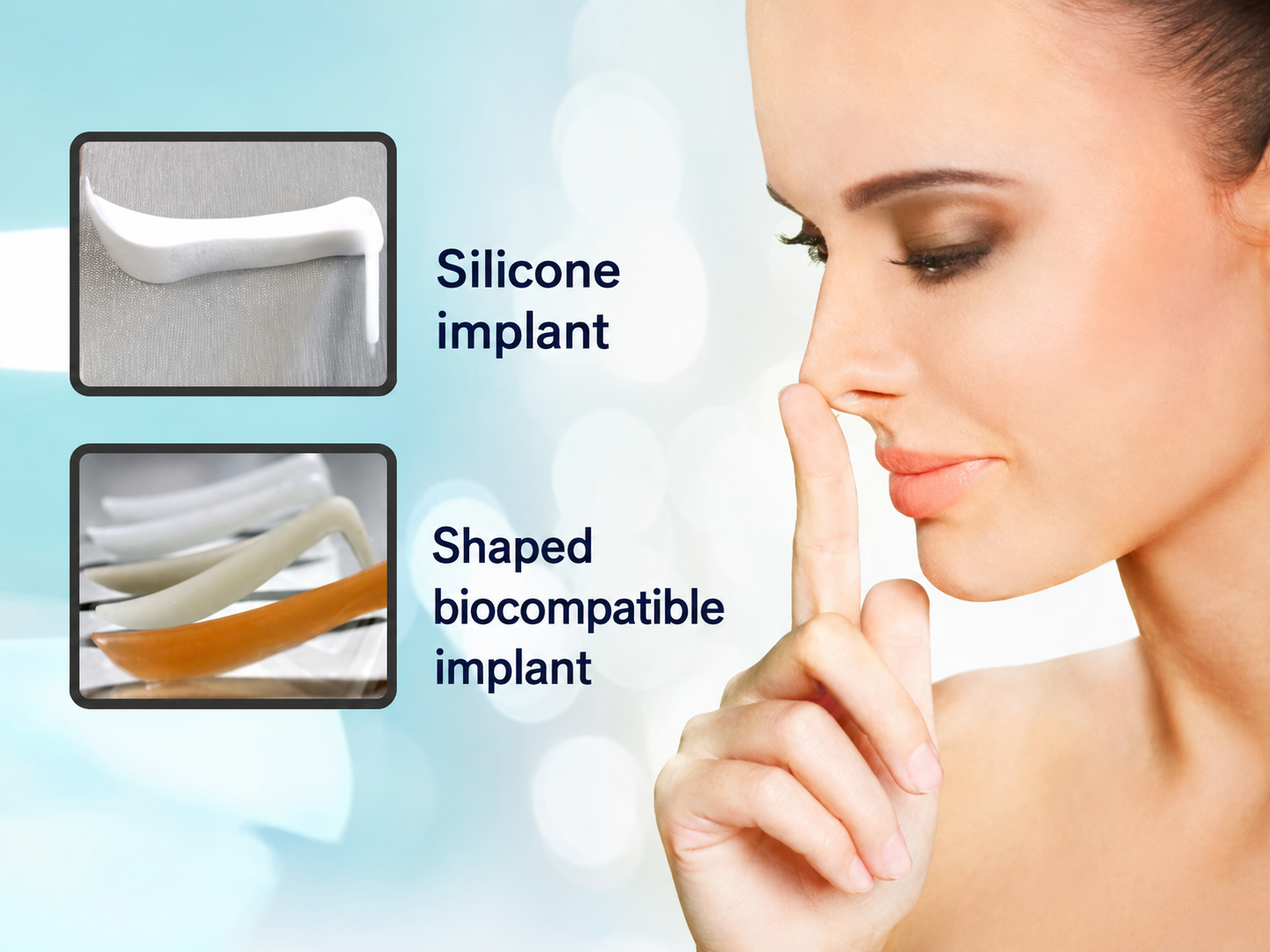
Biocompatible implant materials are used by many aesthetic facilities because of their compatibility with surrounding tissue.
Patients considering alternatives to synthetic implants can review Autologous Cartilage Rhinoplasty.
Surgical technique affects nasal shape and the way the implant sits within the tissues.
Doctors who have not received appropriate training or who lack experience may damage internal tissues or create an unsuitable implant pocket.
This may increase the risk of:
Patients should research carefully and choose a qualified doctor with experience in rhinoplasty.
Home care after rhinoplasty also affects the final result.
Improper care may contribute to:
Patients should therefore follow the doctor’s postoperative instructions carefully.
Detailed guidance is available in Rhinoplasty Aftercare Instructions.
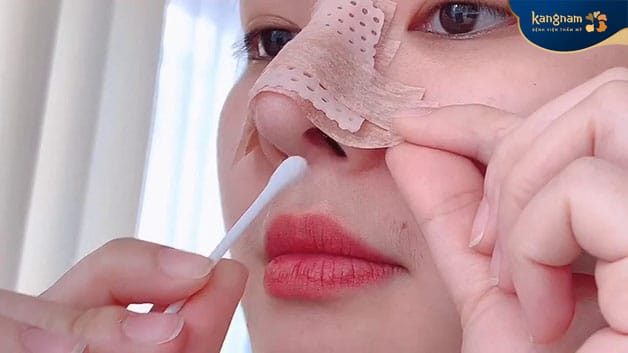
Careful postoperative care supports a smoother recovery and a more stable nasal shape.
According to Dr Harvey Nguyen, patients should seek medical assessment immediately when they notice signs that the nose may not be compatible with the implant.
The doctor may recommend a minor surgical procedure to remove the nasal implant.
For mild irritation or a limited inflammatory reaction, the doctor may prescribe medication, including antibiotics when infection is suspected or confirmed.
The doctor may also recommend replacing the synthetic implant with autologous cartilage to create a more natural nasal shape.
For more serious reactions that have continued for a long time, complications should be treated promptly to reduce the risk of further damage.
Any infection or significant inflammation should be treated thoroughly before a new implant or cartilage graft is placed.
Patients should not take antibiotics, massage the nose, or attempt to remove the implant without medical supervision.
Not every rhinoplasty produces the expected result.
A doctor may recommend implant removal in the following situations:
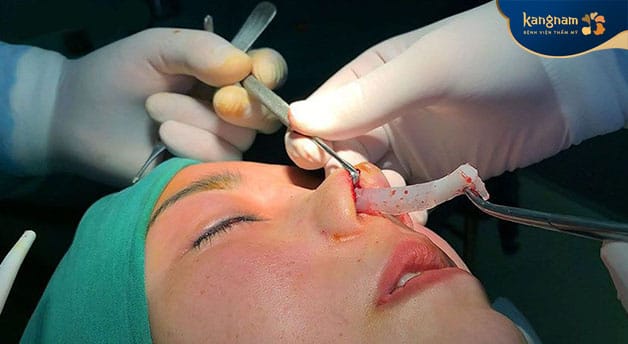
An infected nasal implant may need to be removed.
The timing and method of removal depend on:
Treating complications after they occur can be complex and may negatively affect both health and appearance.
Therefore, reducing risk from the beginning is important.
As demand for rhinoplasty increases, many unlicensed and low-quality aesthetic centres have appeared.
At some facilities, surgery may be performed by people without appropriate medical qualifications, increasing the risk of complications.
Patients should choose a licensed hospital or aesthetic medical facility that:
A reputable facility should clearly explain the source and type of implant used.
In addition to safety, many patients want a natural-looking nose that suits their face.
An experienced doctor can assess:
When an unexpected problem occurs, an experienced doctor may also be better prepared to provide an appropriate treatment plan.

Kangnam has a team of doctors experienced in aesthetic surgery.
Patients should listen carefully to the doctor’s home-care instructions because postoperative habits may affect the final result.
Cold compresses may be recommended during the first few days to reduce swelling.
Ice should be wrapped in a clean compress bag or cloth and should not be pressed directly onto the nose.
Patients may also be advised to:
Patients should not assume that postoperative care alone can prevent every complication, but appropriate care can reduce avoidable risks.
Many types of nasal implants are available, and patients may not know which material is most suitable for their tissues.
The doctor should explain:
Patients may prioritise materials with appropriate medical certification and good compatibility.
People with a history of sensitive tissue or previous implant problems should inform the doctor.
Autologous cartilage taken from the patient’s body may be considered to reduce dependence on synthetic material. Patients can learn more about ear cartilage rhinoplasty and rib cartilage rhinoplasty.
Many people want to know where they should undergo rhinoplasty to reduce the risk of implant-related reactions.
For patients seeking a licensed aesthetic hospital, Kangnam Aesthetic Hospital may be considered as one option.
After ten years of development, Kangnam has been selected by thousands of domestic and international patients for rhinoplasty.
The hospital states that it meets the following criteria:
Overseas Vietnamese patients may receive:
Patients should confirm the availability, cost, and conditions of these services directly with the hospital before booking.
Many people still confuse normal postoperative symptoms with signs that the nose is not compatible with the implant.
Therefore, if any unusual symptoms occur, patients should seek medical examination promptly so that the cause can be identified and treated before more serious complications develop.