Date posted: 21-07-2026 | Last updated : 25-07-2026
What should you avoid after a collagen thread lift to achieve good results and maintain a youthful appearance for as long as possible? Below are the key dietary and aftercare recommendations patients should follow after undergoing a collagen thread lift.
After a collagen thread lift, patients are often advised to avoid chicken and water spinach to reduce the risk of raised scarring. Beef, seafood, and glutinous rice dishes may also be restricted to minimise skin irritation or changes in pigmentation.
Specific foods to avoid may include:

After a thread lift, patients should avoid foods that may cause irritation or interfere with skin healing.

Avoid alcohol, smoking, and other stimulants after a thread lift.
However, strong scientific evidence does not show that all patients must routinely avoid beef, chicken, seafood, glutinous rice, or water spinach after a thread lift. Dietary restrictions should be personalised according to allergies, previous reactions, medical history, and the doctor’s instructions.
Instead, patients should eat soft, easily digestible foods that are rich in vitamins, minerals, and protein, including:
A balanced diet supports general health and tissue recovery.
More detailed aftercare recommendations can be found in What to Avoid After a Collagen Thread Lift.
Patients are generally advised to avoid directly washing the treated area during the first 24–48 hours after a collagen thread lift.
Direct washing, rubbing, or pressing may place unnecessary pressure on the thread insertion points, potentially causing irritation, introducing bacteria, or affecting the position of the threads.

Avoid washing the face immediately after a collagen thread lift.
During this period, patients may gently clean the skin using sterile saline solution and a clean cotton pad or gauze, following the doctor’s instructions.
Patients should avoid:
Once the skin has become more stable, patients may gradually resume gentle face washing with a mild cleanser. The exact timing varies between individuals, but some patients may be advised to wait approximately three to five days before returning to their usual cleansing routine.
The face should be patted dry gently rather than rubbed.
Similar to washing the face, patients should avoid applying makeup immediately after a collagen thread lift.
Cosmetic products may contain ingredients that irritate the skin, clog the insertion points, or introduce bacteria into areas that are still healing.

Women should avoid applying makeup during the early recovery period after a thread lift.
Patients are generally advised to keep the skin clean and free from makeup for at least the first few days. Depending on the condition of the insertion points and the doctor’s instructions, avoiding makeup for approximately one week may be recommended.
When makeup is resumed, patients should:
Patients should receive approval from their doctor before applying makeup directly over any insertion point that has not fully closed.
Many Vietnamese patients living abroad choose Kangnam for thread-lifting procedures because of its treatment technology, medical team, and patient-support services.
Kangnam follows a medically standardised thread-lifting process combined with minimally invasive techniques designed to reduce swelling, bruising, and discomfort after treatment.
A structured procedure may help patients return to their normal routines sooner while achieving a natural-looking rejuvenating effect.
Compliance with medical hygiene standards, appropriate patient assessment, and a structured aftercare process can also help reduce the risk of complications.
Thread-lifting procedures at Kangnam are performed by dermatologists and practitioners experienced in non-surgical facial rejuvenation.
Before treatment, the doctor assesses:
The treatment plan is selected to create a natural result that remains balanced with the patient’s facial features.
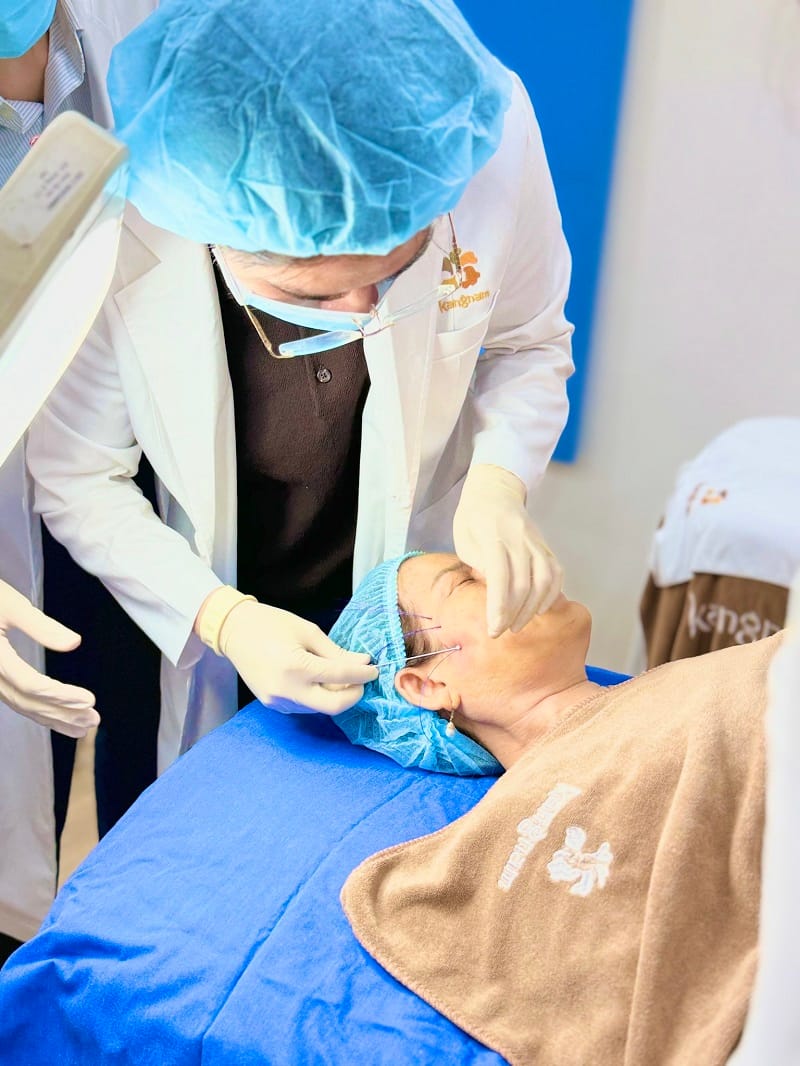
The facial thread-lifting procedure follows medical standards and is performed by experienced dermatologists.
The result of a thread lift depends significantly on the practitioner’s understanding of facial anatomy and correct thread placement. Further information about the treatment is available in Collagen Thread Lift: Procedure, Benefits, and Recovery.
One reason overseas Vietnamese patients choose Kangnam is the availability of online consultation and follow-up support.
After undergoing a thread lift, patients may contact the medical team to:
Online monitoring may be helpful, but it cannot replace an in-person examination when complications are suspected.
Kangnam has performed thread-lifting procedures for Vietnamese patients living in several countries. Before-and-after images may demonstrate improvements achieved in individual cases.
Some patients have shared positive experiences after receiving treatment at Kangnam.
Ms Lan, an overseas Vietnamese patient living in the United States:
“I am very satisfied with the result. My skin looks naturally firmer and smoother, and the recovery was relatively quick. Being able to receive online advice and follow-up from the doctor also made me feel reassured while living abroad.”
Ms Huong, a Vietnamese student living in Japan:
“The result exceeded my expectations. The procedure was professional, and the costs were explained clearly. I trust Kangnam and would recommend it to my friends.”
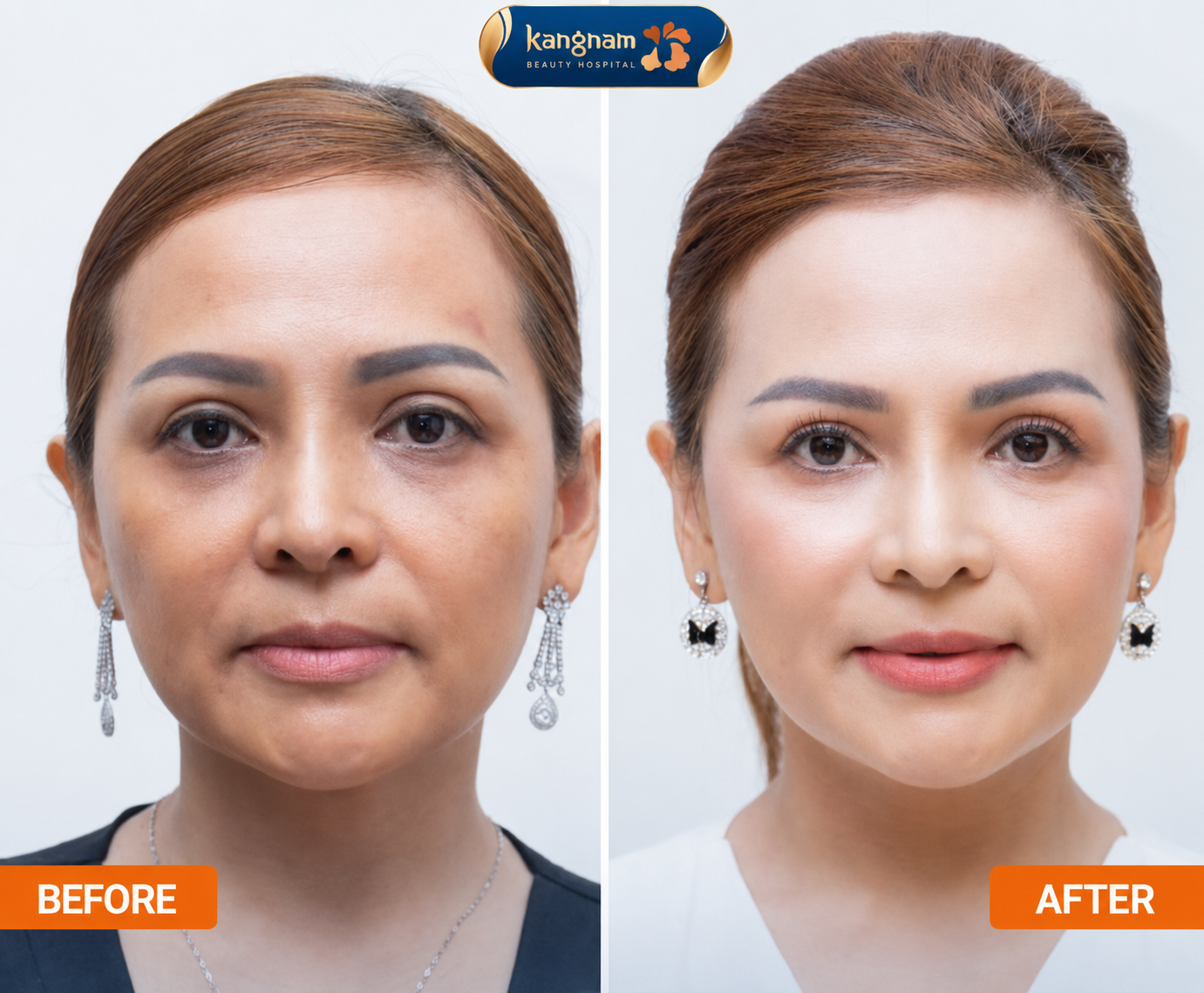
The facial skin appears firmer and smoother, with improvements in sagging and signs of ageing.
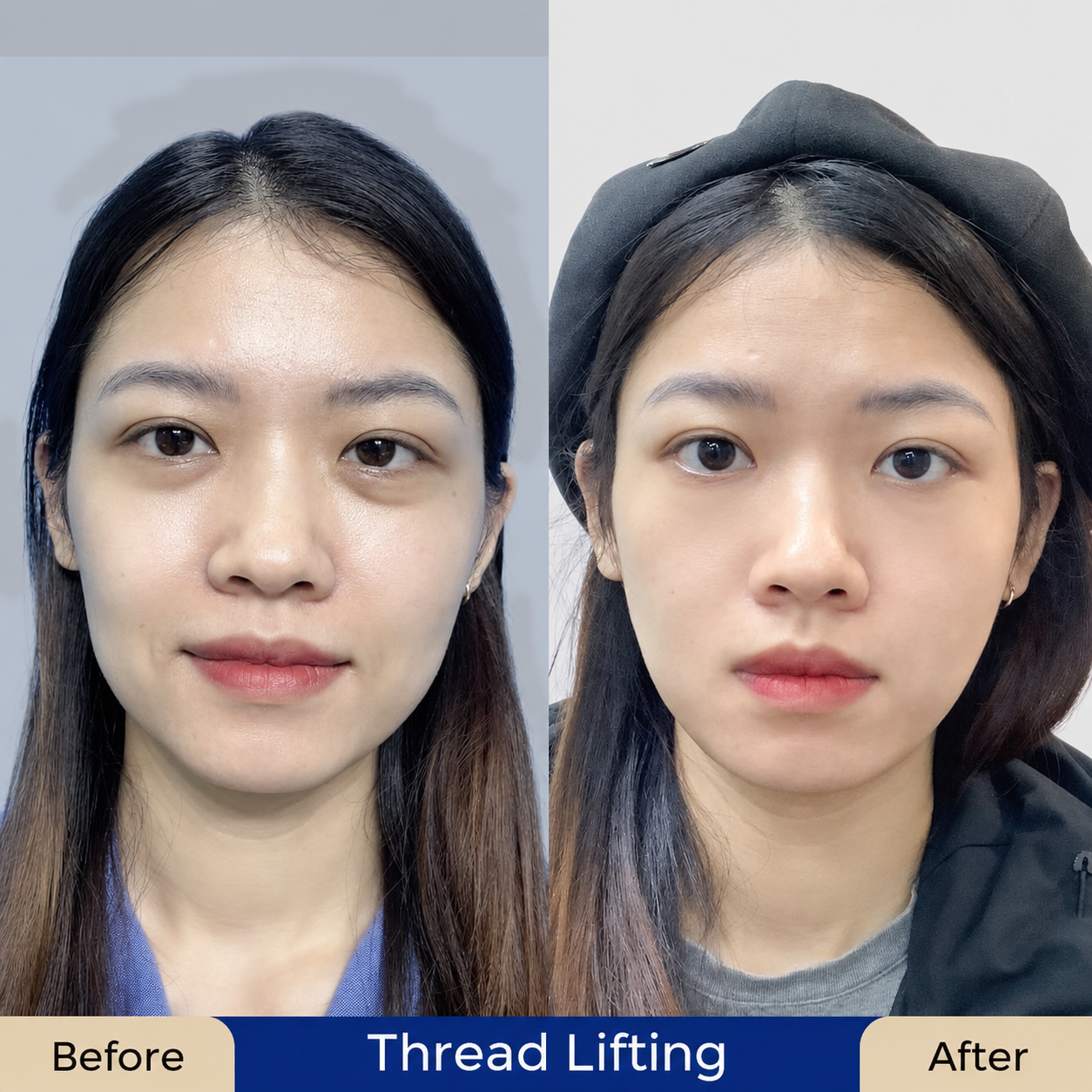
Patients have reported satisfaction with their results after undergoing a thread lift at Kangnam.
Thread-lifting services at Kangnam are listed with clear pricing information.
Before treatment, patients receive information about:
Clear consultation allows patients to review the treatment plan and financial information before deciding whether to proceed
Patients are commonly advised to avoid strenuous exercise for approximately two to four weeks after a collagen thread lift.
High-intensity activity may:
Patients should avoid activities that involve strong or repetitive facial movements, particularly during the first several days.
Examples may include:
The exact restriction period depends on the number of threads used, treatment area, thread type, degree of swelling, and the doctor’s assessment.
Facial massage should generally be avoided during the early recovery period. The original recommendation is to avoid massage for approximately one month.
After this period, patients who wish to resume massage should consult their doctor and use only gentle techniques that do not directly press or pull on the treated areas.
Information about common complications caused by incorrect pressure or thread displacement is available in Thread Lift Side Effects.
Yes. Sun protection is important after a collagen thread lift because the skin and insertion points are still recovering.
Ultraviolet exposure may:
Protect the facial skin carefully when going outdoors after a thread lift.
Patients should avoid prolonged exposure to strong sunlight, particularly between 10:00 a.m. and 4:00 p.m.
When going outdoors, patients should:
Sunscreen should not be applied directly over open or incompletely healed insertion points unless approved by the doctor.
Patients should also avoid saunas, steam rooms, very hot showers, and other sources of excessive heat during the early recovery period.
In addition to dietary restrictions, face washing, makeup, exercise, massage, and sun protection, patients should follow these recommendations.
Keeping the head elevated during sleep may help reduce swelling.
Patients should avoid:
Patients should not squeeze, rub, pull, or repeatedly touch the treated areas.
Excessive pressure may cause:
Any prescribed pain medication, antibiotics, or anti-inflammatory drugs should be taken according to the doctor’s instructions.
Patients should not self-medicate or alter the dosage without medical advice.
Follow-up allows the doctor to assess:
Mild swelling, bruising, tenderness, and tightness may occur after treatment. These symptoms should generally improve gradually.
Patients should contact their doctor promptly if they experience:
Some thread-related complications require early medical treatment. Patients should not attempt to massage, cut, reposition, or remove the thread themselves.
Following appropriate aftercare instructions after a collagen thread lift can help support recovery, reduce swelling and irritation, and protect the treatment result.
Patients should avoid washing or rubbing the face too soon, applying makeup during the early healing period, engaging in strenuous exercise, undergoing facial massage, consuming alcohol, smoking, and exposing the skin to excessive sunlight or heat.
Dietary restrictions should be personalised rather than applied rigidly to every patient. The most important measures are maintaining good hygiene, avoiding pressure on the treated area, following the doctor’s instructions, and seeking medical attention when unusual symptoms occur.
Overseas Vietnamese patients who are considering a thread lift may submit photographs for a preliminary remote assessment. However, the final treatment plan must be confirmed through an in-person consultation.
Collagen Thread Lift: Procedure, Benefits, and Recovery
X-Line Thread Lift: A Non-Surgical Facial Rejuvenation Option