Date posted: 18-11-2026 | Last updated : 19-11-2026
After Brazilian Butt Lift (BBL) surgery, clients are generally advised to avoid direct pressure on the buttocks for at least 6–8 weeks, use a BBL pillow when sitting is necessary, and have their health assessed before traveling by air. For international clients traveling to Vietnam for surgery, it is advisable to plan a sufficiently long stay to allow time for follow-up appointments, wound assessments, and confirmation from the surgeon that they are medically fit for long-distance travel.
Sitting After BBL: Avoid sitting directly on the buttocks during the initial recovery period. When sitting is necessary, use a BBL pillow positioned beneath the thighs according to the surgeon’s instructions.
Resting and Sleeping Positions: Sleeping on your stomach or side may be recommended when appropriate for your surgical condition. Avoid prolonged pressure on the buttocks.
Air Travel: There is no universal rule that allows all patients to fly after two weeks or four to six weeks. Long-haul flights require an individual assessment of the risk of blood clots.
Length of Stay in Vietnam: Your stay should be long enough to attend follow-up appointments and address any postoperative concerns or complications that may arise.
Before Returning Home: Your surgeon should examine you and assess whether you are medically fit to travel safely.
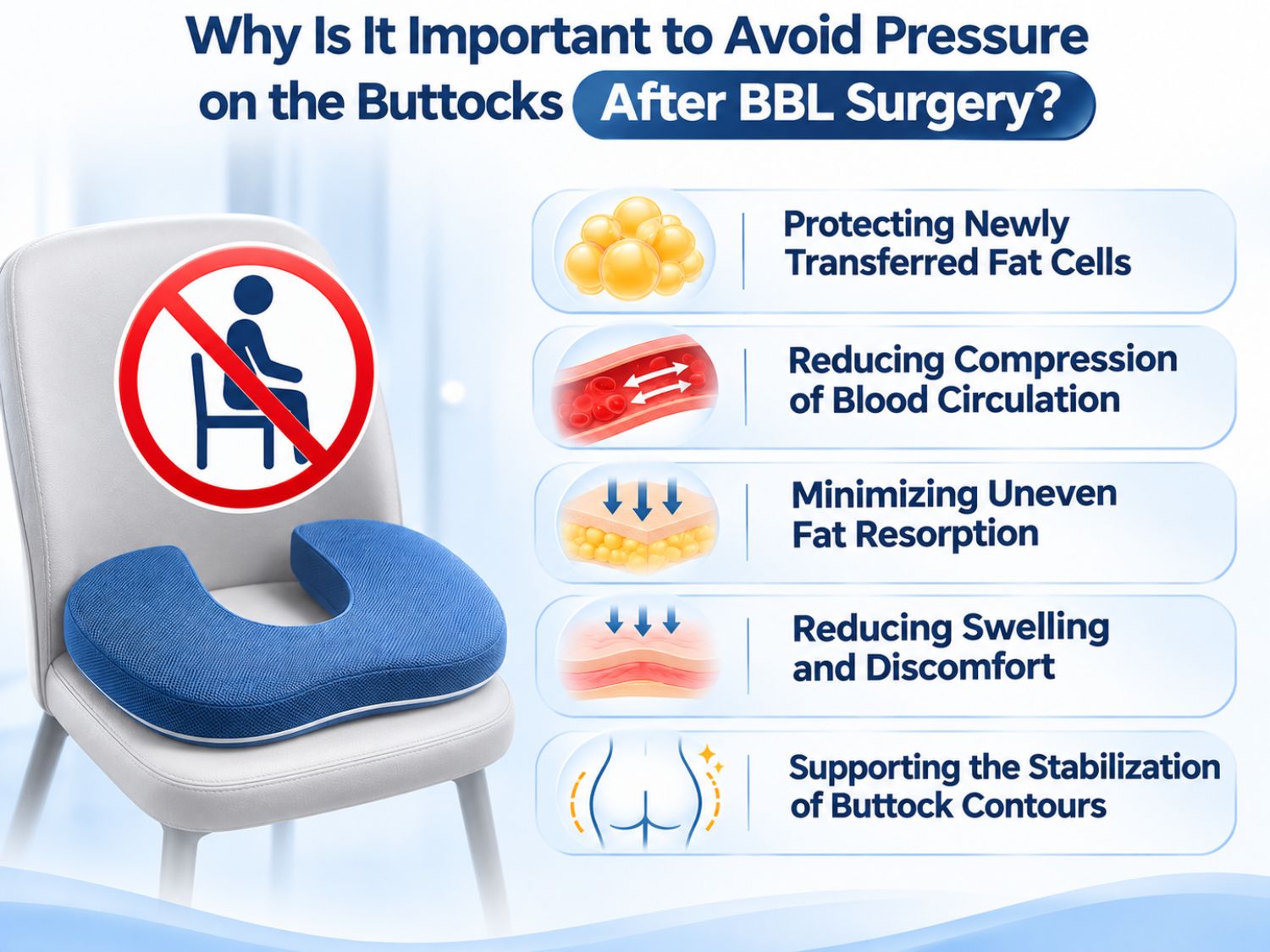
1. Why Is It Important to Avoid Pressure on the Buttocks After BBL Surgery?
After Brazilian Butt Lift (BBL) surgery, clients should avoid sitting or lying directly on their buttocks to protect the newly transferred fat cells, support the development of a blood supply to the grafted fat, and reduce the risk of compromising the final body-contouring results.
The main reasons include:
- Protecting Newly Transferred Fat Cells: After fat is transferred into the buttocks, the fat cells initially depend on nutrients supplied by the surrounding tissues before developing a stable network of blood vessels to support their survival.
- Reducing Compression of Blood Circulation: Prolonged pressure may reduce blood circulation in the fat grafting area, potentially affecting tissue recovery and the survival of the transferred fat cells.
- Minimizing Uneven Fat Resorption: Some of the transferred fat may be naturally absorbed by the body during recovery. Excessive pressure may contribute to uneven fat retention and irregularities in the distribution of volume.
- Reducing Swelling and Discomfort: Avoiding direct pressure on the buttocks may help reduce tightness, tenderness, and discomfort in the recently operated area.
- Supporting the Stabilization of Buttock Contours: Minimizing pressure during the early recovery period helps protect the treated area while the tissues heal, although it does not guarantee that all transferred fat cells will survive.
2. How to Sit, Sleep, and Manage Daily Activities During the First Few Weeks After BBL
During the first 6–8 weeks after Brazilian Butt Lift surgery, clients should limit direct pressure on the buttocks, prioritize sleeping on their stomach or side when appropriate, and engage in gentle physical activity according to their surgeon’s instructions. Adjusting sitting, sleeping, and daily activity habits helps reduce pressure on newly transferred fat, supports blood circulation, and promotes the recovery process.
- Sitting Position: During the first two weeks, direct sitting on the buttocks should be avoided as much as possible. When sitting is unavoidable, a BBL pillow may be placed beneath the thighs to shift body weight away from the fat grafting area. However, prolonged sitting should still be avoided.
- Sleeping Position: Sleeping on the stomach or side is generally preferred, provided that the position does not place pressure on the surgical area. Avoid sleeping on your back with direct pressure on the buttocks during the initial recovery period, unless your surgeon provides different instructions.
- Gentle Walking: Once your surgeon allows you to do so, stand up and take short walks several times throughout the day. Gentle movement helps support blood circulation and reduce the risk of blood clot formation.
- Daily Activities: Limit bending forward, squatting, lifting heavy objects, or performing movements that stretch the buttock area. Assistance with everyday activities may be necessary during the first few days after surgery.
- Compression Garments: Wear compression garments as prescribed to support the areas where liposuction was performed, while avoiding inappropriate or excessive pressure on the newly grafted buttocks.
- Exercise and Physical Activity: Avoid running, gym workouts, squats, and other high-impact activities that place significant stress on the buttocks until your surgeon confirms that it is safe to resume them.
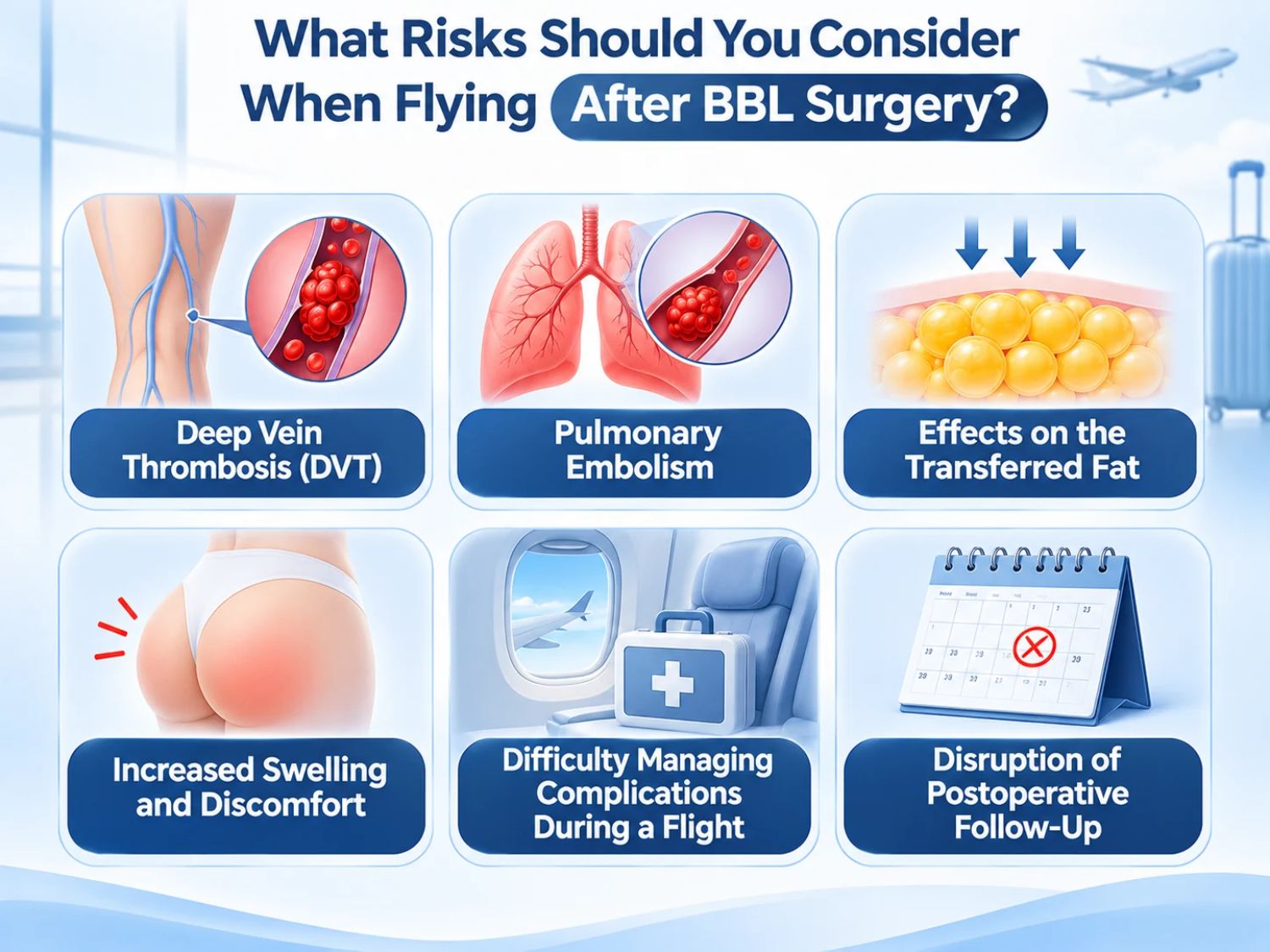
3. What Risks Should You Consider When Flying After BBL Surgery?
Flying after Brazilian Butt Lift (BBL) surgery may increase the risk of deep vein thrombosis (DVT), pulmonary embolism, swelling, and pressure on the newly transferred fat, particularly during long-distance travel in the first few weeks of recovery. Clients should undergo a medical assessment and obtain clearance from their surgeon before flying back to their home country.
Important risks to consider include:
- Deep Vein Thrombosis (DVT): Surgery and remaining seated or immobile for several hours increase the risk of blood clot formation in the deep veins of the legs. The risk is higher among clients with a history of blood clots, obesity, or the use of estrogen-containing medications.
- Pulmonary Embolism: A blood clot can travel from the legs to the lungs, obstructing the pulmonary arteries and potentially becoming life-threatening. This is a serious complication that requires particular attention when taking long-haul flights after surgery.
- Effects on the Transferred Fat: Prolonged sitting places pressure on the buttocks, which may interfere with local blood circulation and affect the stabilization and survival of newly transferred fat cells.
- Increased Swelling and Discomfort: Sitting for extended periods, limited mobility, and changes in cabin pressure may contribute to leg swelling and increase feelings of tightness or discomfort in the recently operated areas.
- Difficulty Managing Complications During a Flight: If bleeding, increasing pain, shortness of breath, or other unusual symptoms occur, immediate access to specialized medical care may be difficult while onboard an aircraft.
- Disruption of Postoperative Follow-Up: Returning home too soon may cause clients to miss scheduled follow-up appointments, potentially delaying the detection and management of complications such as fluid accumulation, infection, or wound-healing problems.
According to the U.S. Centers for Disease Control and Prevention (CDC), travel lasting more than four hours may increase the risk of deep vein thrombosis because passengers remain seated and relatively immobile for prolonged periods. Recent surgery, a history of blood clots, obesity, and the use of estrogen-containing medications are additional factors that may further increase this risk.
Source: CDC – Understanding Your Risk for Blood Clots with Travel.
4. How Should You Prepare Before Your Return Flight?
Even after your surgeon confirms that you are medically fit to travel, careful preparation is still necessary to reduce pressure on the surgical areas and minimize prolonged periods of immobility.
- Consult Your Surgeon Before Booking Flights: Provide details about your destination, total flight duration, layover times, and any additional travel segments by car, bus, or train.
- Choose a Convenient Seat: An aisle seat may make it easier to stand up, stretch, and move around when your surgeon permits.
- Bring a BBL Pillow: Position the pillow correctly according to your surgeon’s instructions to prevent direct pressure on the buttocks from the aircraft seat.
- Move Your Legs Regularly: Perform ankle flexion and extension exercises, raise and lower your heels, and activate your calf muscles while seated. Stand up and walk periodically if your surgeon has confirmed that it is safe to do so.
- Stay Adequately Hydrated: Drink an appropriate amount of water throughout the journey, limit alcohol consumption, and avoid wearing excessively tight clothing.
- Ask for Assistance with Luggage: Do not lift heavy suitcases or place luggage into overhead compartments yourself unless your surgeon has approved these activities.
- Prepare Your Postoperative Medical Records: Carry your aftercare instructions, a list of medications you are currently taking, and the contact information of the surgical facility.
5. How Long Should You Stay in Vietnam After BBL Surgery?
After Brazilian Butt Lift (BBL) surgery, international clients should generally plan to stay in Vietnam for at least 10–14 days to allow for postoperative monitoring and follow-up appointments. For long-haul flights or clients with a higher risk of complications, a stay of 2–4 weeks or longer may be necessary. These timeframes are intended for travel planning and do not guarantee that every client will be medically fit to fly after a specific number of days or weeks.
- Before Surgery: Undergo a health examination and an assessment of your risk of blood clots. Discuss your medical history, current medications, and planned return flight with your surgeon.
- During the First Few Days After Surgery: Monitor pain, swelling, bruising, wound condition, and your ability to move comfortably. Follow the prescribed medication schedule and postoperative care instructions.
- During the Follow-Up Period: Your surgeon will examine the liposuction areas, fat transfer sites, wound healing, and any unusual symptoms. Surgical drains or sutures, if present, will be removed according to your actual recovery progress.
- Before Leaving Vietnam: Attend a follow-up examination, have your ability to travel safely assessed, discuss appropriate blood clot prevention measures, and receive instructions for continuing postoperative care after returning home.
6. Warning Signs That Require Immediate Medical Evaluation After BBL Surgery
After Brazilian Butt Lift (BBL) surgery, clients should seek immediate medical attention if they experience severe pain, rapidly increasing swelling, fever, unusual wound discharge, swelling or pain in one leg, or shortness of breath. These symptoms may indicate infection, hematoma formation, deep vein thrombosis, or potentially life-threatening embolic complications.
Important warning signs to watch for include:
- Severe or Rapidly Worsening Pain: Pain that becomes progressively more intense and does not improve with prescribed medications may be associated with a hematoma, infection, or tissue damage.
- Unusual or Excessive Swelling: Rapid swelling of one buttock, marked tightness or firmness, or significantly greater pain on one side may indicate a hematoma, fluid accumulation, or another complication in the surgical area.
- Fever and Signs of Infection: A temperature of 38°C (100.4°F) or higher, spreading redness and warmth around the incision, increasing pain, or cloudy, foul-smelling wound discharge requires prompt medical evaluation.
- Unusual Skin Discoloration: Dark purple patches, unusually pale or cold skin, or blister formation on the buttocks may indicate impaired blood circulation or tissue injury.
- Swelling and Pain in One Leg: Unilateral leg swelling, calf pain, redness, warmth, or unusual tightness may suggest deep vein thrombosis (DVT) and requires urgent medical assessment.
- Shortness of Breath, Chest Pain, or Fainting: These are emergency warning signs that may be associated with pulmonary embolism caused by a blood clot or fat embolism following BBL surgery.
- Heavy Bleeding, Dizziness, or Extreme Weakness: Bleeding that continuously soaks through dressings, a rapid heartbeat, lightheadedness, or fainting may indicate significant blood loss or a circulatory complication.
7. Frequently Asked Questions About Flying and Recovery After BBL Surgery
Does a BBL Pillow Protect the Transferred Fat During Air Travel?
A BBL pillow can help reduce direct pressure on the buttocks when positioned correctly. However, using a BBL pillow does not guarantee that all transferred fat cells will survive, nor does it replace measures intended to prevent blood clots.
Clients should continue following their surgeon’s sitting restrictions, movement recommendations, and travel-related precautions, even when using a specialized BBL pillow.
Is It Better to Choose a Direct Flight After BBL Surgery?
A direct flight may reduce the overall travel time, but you will still need to remain seated for an extended period.
It is important to consider your ability to move around, the duration of the flight, and your surgeon’s recommendations. Connecting flights are not automatically safer, especially if layovers and transfers significantly increase the total travel time.
What Should I Do If I Am Not Medically Fit to Fly Home on My Scheduled Date?
You should contact your surgeon for a medical examination and an updated assessment of your recovery.
Your surgeon can advise you on whether your travel plans need to be adjusted and what additional monitoring or care may be necessary.
You should not leave Vietnam or proceed with your return flight until your medical condition has been evaluated and you have been cleared to travel safely.
Buttock Implants vs Fat Transfer: Advantages, Disadvantages, and Risks You Should Know
Fat Survival Rate After BBL: How Much Fat Remains and How Long Do the Results Last?