Autologous buttock fat transfer is suitable for individuals with sufficient fat reserves who want softer, more natural-looking buttocks while improving their overall body contours. Buttock implants are more suitable for individuals with limited body fat who want a more noticeable increase in volume and projection. BBL carries risks such as fat embolism, fat necrosis, and volume loss after fat transfer, while buttock implants may cause infection, implant displacement, capsular contracture, or nerve damage. Both procedures must be performed by a qualified surgeon at a licensed medical facility.
Autologous fat transfer: Uses the patient’s own fat to create a softer appearance while simultaneously contouring donor areas such as the abdomen, waist, or thighs.
Buttock implants: Provide a more noticeable increase in volume and projection, making them suitable for individuals with limited fat reserves.
Longevity of results: Some of the transferred fat will be absorbed by the body. Implants can maintain results long-term but are not considered lifetime devices.
BBL risks: Fat embolism is a particularly dangerous complication that can cause respiratory failure and death.
Implant risks: Include infection, implant displacement, capsular contracture, wound dehiscence, and nerve damage.
Choosing a procedure: The decision should be based on available fat reserves, soft tissue coverage, gluteal muscle structure, overall health, and aesthetic goals.
1. What Are the Differences Between Buttock Implants and Autologous Fat Transfer?
Autologous buttock fat transfer and buttock implant surgery differ primarily in the materials used, surgical techniques, and methods of increasing buttock volume.
Autologous Buttock Fat Transfer
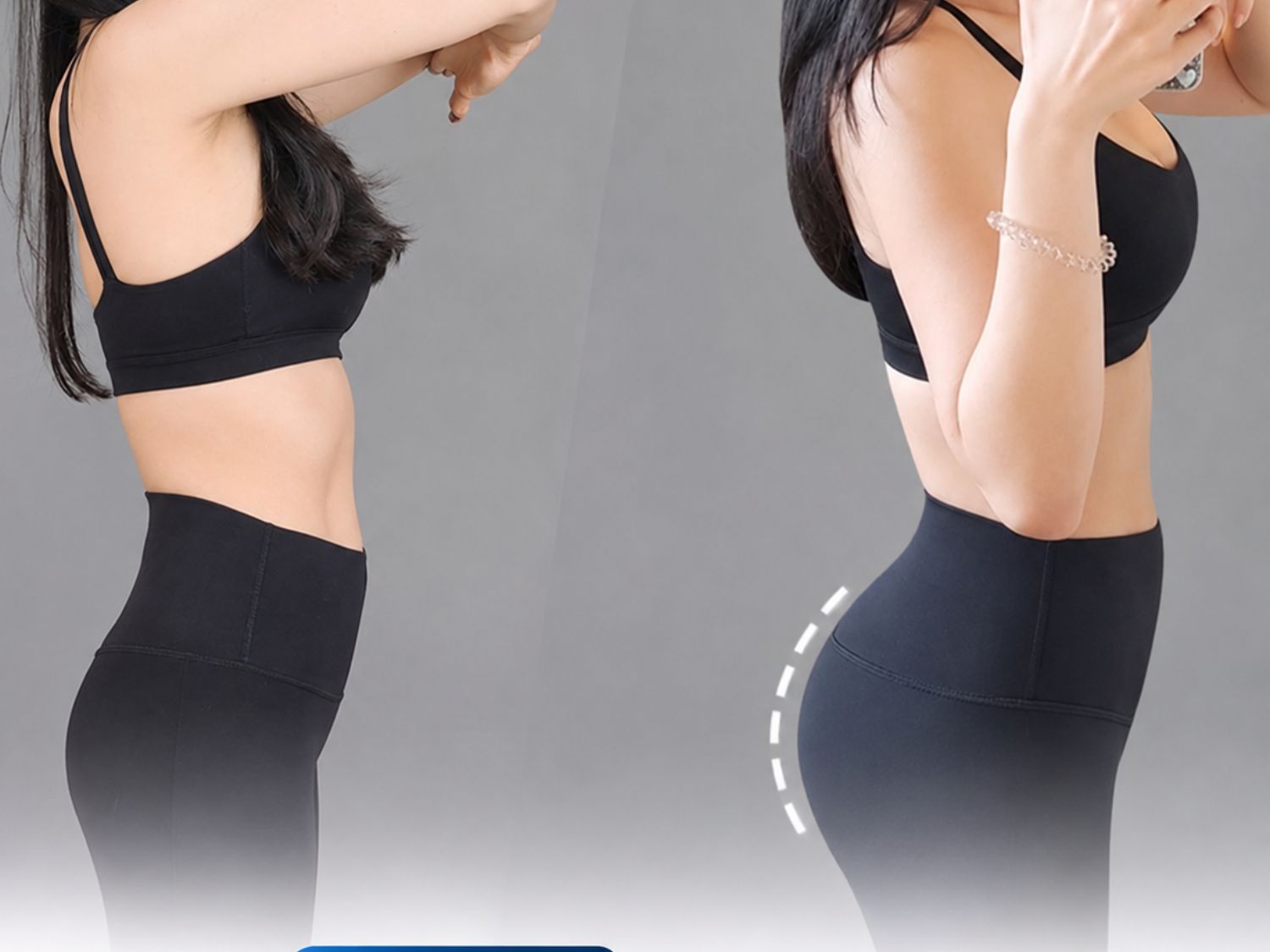
BBL uses the patient’s own fat to increase buttock volume and improve the shape of the buttocks. The procedure generally consists of three stages:
- Liposuction: The surgeon uses liposuction techniques to harvest fat tissue from areas with excess fat, such as the abdomen, waist, back, or thighs.
- Fat Processing: The harvested fat is processed to remove excess fluid, blood, and unwanted components, leaving suitable fat tissue for transfer.
- Fat Transfer: The surgeon injects the processed fat into the subcutaneous tissue of the buttocks, distributing it to areas that require additional volume or contour improvement.
Because the procedure uses the patient’s own tissue, it does not require artificial implants to be placed inside the body. Patients can also improve the contours of the fat donor areas.
Buttock Implant Surgery
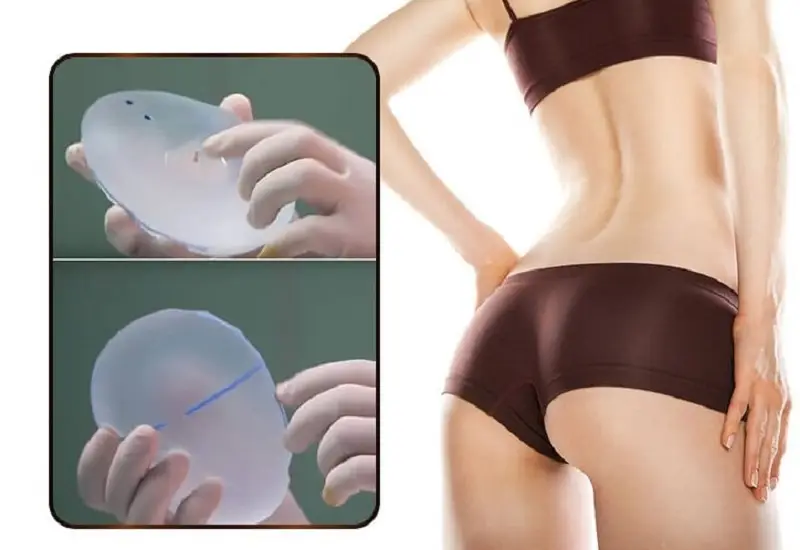
Buttock implant surgery uses specially designed silicone implants to increase buttock volume and projection.
The surgical procedure generally involves:
- Making a surgical incision, usually within the intergluteal cleft.
- Creating an implant pocket at the predetermined location.
- Inserting the silicone implant into the surgical pocket.
- Closing the incision and monitoring the recovery process.
The implant’s size and shape must be selected based on soft tissue coverage, muscle structure, skin elasticity, and aesthetic preferences. Implants that are too large for the surrounding tissue’s supporting capacity may increase the risk of complications.
According to the joint statement on gluteal fat grafting safety endorsed by the International Society of Aesthetic Plastic Surgery (ISAPS), the American Society of Plastic Surgeons (ASPS), and several other professional organizations, fat must be injected into the subcutaneous tissue layer, above the gluteal fascia, to minimize the risk of fat embolism. These organizations also support the use of ultrasound during surgery to monitor cannula tip positioning and control the plane of fat injection.
Source: ISAPS – Statement on Patient Safety During Gluteal Fat Grafting.
2. Advantages and Disadvantages of Autologous Buttock Fat Transfer (BBL)
BBL is a popular choice because it uses the body’s own fat tissue, does not require artificial implants, and can be combined with contouring of multiple body areas. However, the results depend significantly on available fat reserves and the survival of fat cells after transfer.
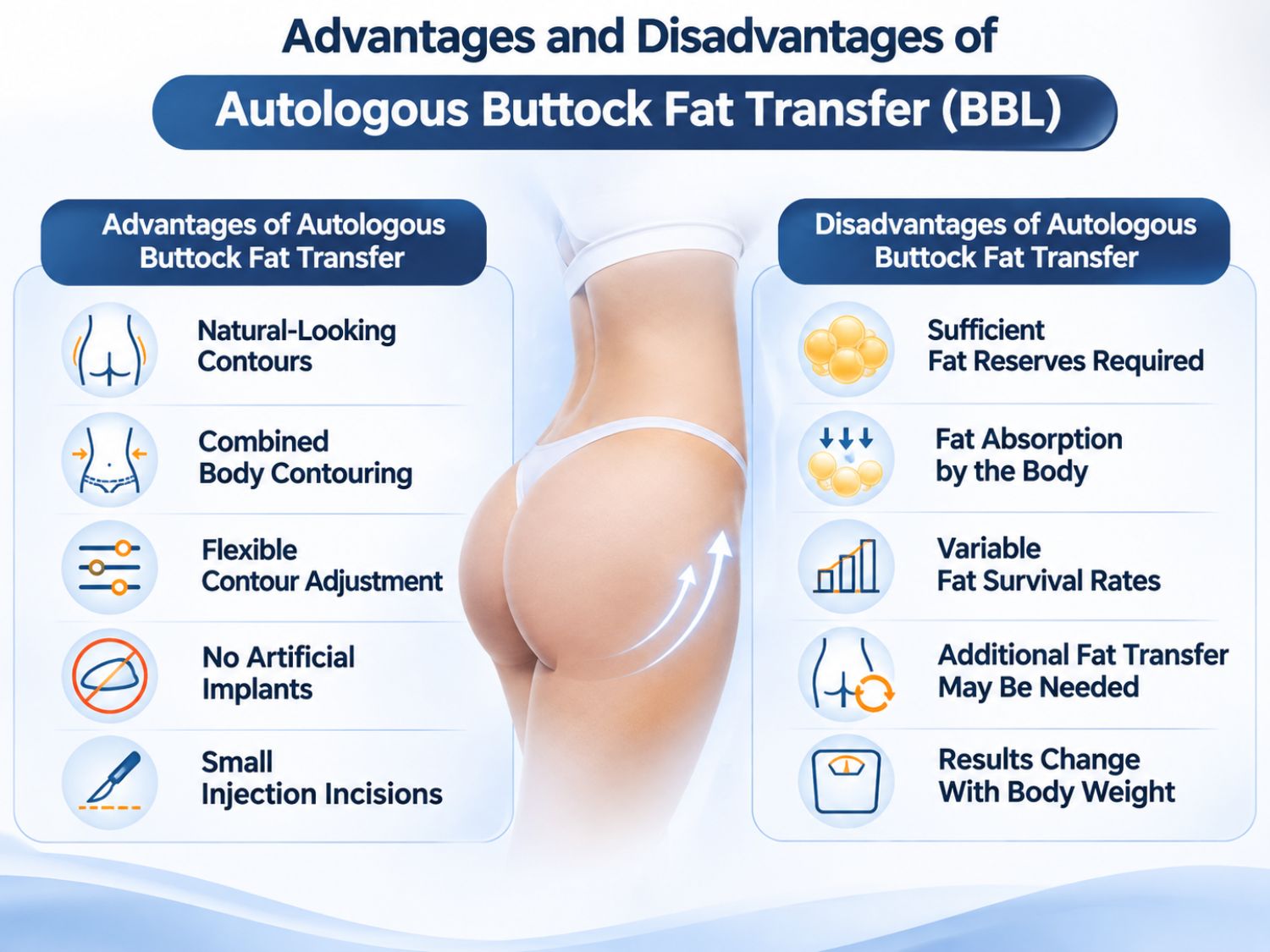
Advantages of Autologous Buttock Fat Transfer
- Natural-Looking Contours: Since the procedure uses the patient’s own fat, the buttocks generally feel softer and more similar to natural tissue after recovery.
- Combined Body Contouring: The surgeon can remove excess fat from the abdomen, waist, back, or thighs and use suitable harvested fat to increase buttock volume.
- Flexible Contour Adjustment: Fat can be distributed to hollow, indented, or volume-deficient areas to improve fullness and symmetry between the two buttocks.
- No Artificial Implants: The procedure does not leave silicone implant materials inside the body.
- Small Injection Incisions: Fat harvesting and injection sites generally require only small access incisions rather than the longer surgical incision associated with implant placement.
Disadvantages of Autologous Buttock Fat Transfer
- Sufficient Fat Reserves Required: Individuals who are very thin or have limited fat in areas such as the abdomen, waist, and thighs may not have enough donor fat to qualify for the procedure.
- Fat Absorption by the Body: Some transferred fat cells do not survive long-term and are absorbed by the body during recovery. As a result, buttock volume after stabilization is generally lower than immediately after surgery.
- Variable Fat Survival Rates: Fat survival depends on injection technique, the condition of the recipient tissue, blood circulation, and postoperative care.
- Additional Fat Transfer May Be Needed: Some patients may require another procedure if the remaining fat volume does not meet their aesthetic goals.
- Results Change With Body Weight: Significant weight gain or loss can also affect the volume of the transferred fat cells.
3. Advantages and Disadvantages of Buttock Implants
Buttock implant surgery is an option for individuals who want a noticeable increase in buttock volume but do not have sufficient fat reserves for BBL.
Advantages of Buttock Implants
- Predictable Volume Selection: The surgeon can select implant sizes and shapes based on the patient’s body structure and aesthetic goals.
- Suitable for Slim Individuals: The procedure does not depend on excess fat in the abdomen, waist, or thighs.
- More Noticeable Projection: Implants can help improve flat, underdeveloped, or volume-deficient buttocks.
- Not Absorbed Like Autologous Fat: Silicone implant volume does not decrease because of the body’s absorption of fat cells.
- Long-Term Results: Implants can maintain their volume for many years if they remain intact and no complications develop.
Disadvantages of Buttock Implants
- Use of Artificial Materials: Silicone implants are foreign materials placed inside the body and may feel different from natural buttock tissue.
- Implant Visibility or Palpability: Individuals with thin skin and limited fat and soft tissue coverage may have a higher risk of visible implant edges or being able to feel the implant when touched.
- Surgical Scarring: The procedure requires an incision to insert the implant, usually located in the intergluteal cleft. Scar appearance depends on individual healing characteristics and the wound-healing process.
- Recovery Requires Special Precautions: Patients must control pressure on the buttocks and adjust their sleeping and sitting positions during the initial recovery period.
- Possible Revision Surgery: If an implant becomes displaced, infected, painful, or causes complications, the surgeon may recommend revision, replacement, or implant removal.
4. What Are the Potential Risks and Complications of Each Procedure?
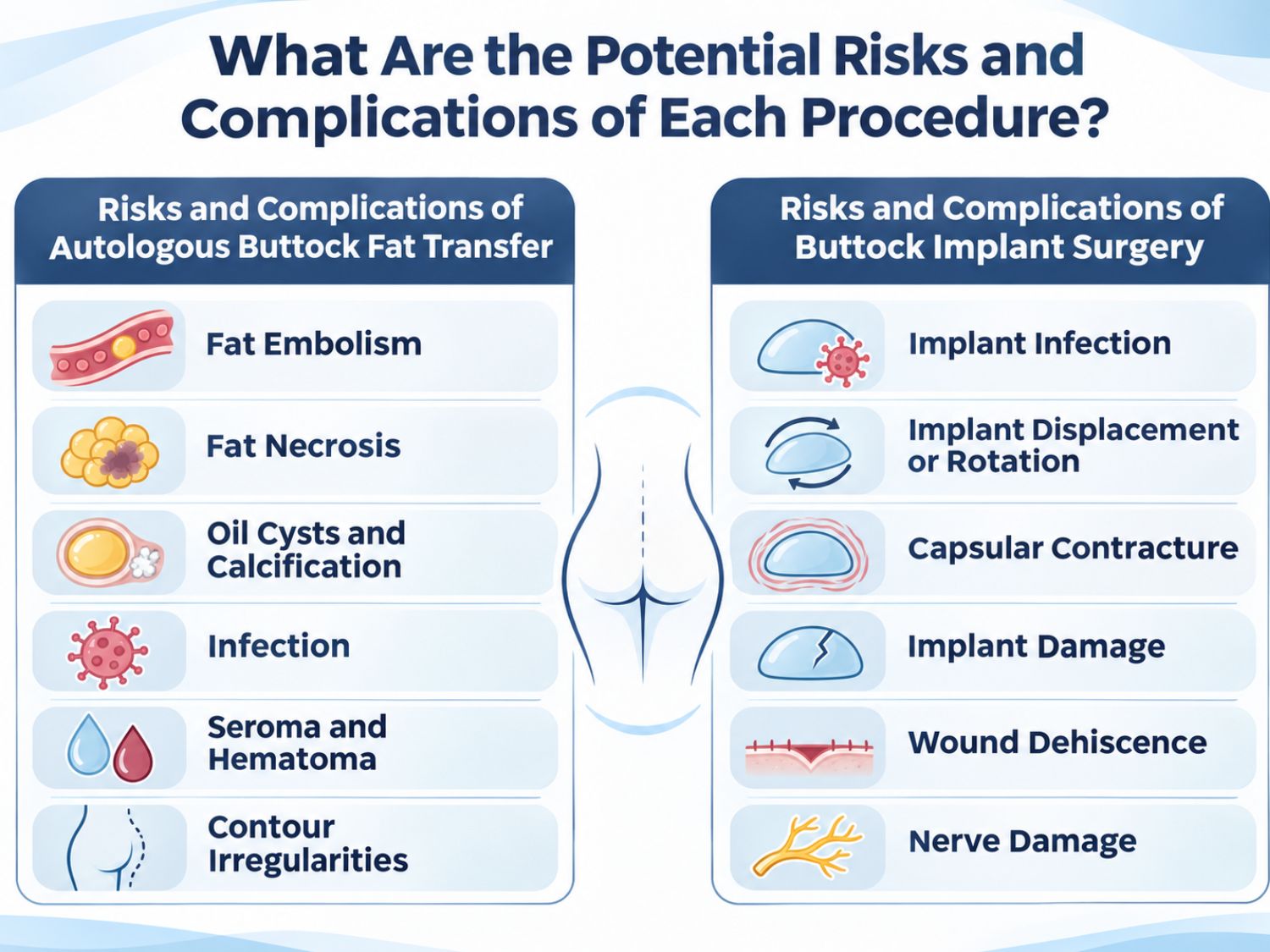
Both autologous buttock fat transfer and buttock implant surgery carry risks of complications during and after surgery. However, each procedure has its own specific risks: buttock fat transfer carries risks of fat embolism and fat necrosis, while buttock implant surgery carries risks of infection, capsular contracture, and implant displacement.
Risks and Complications of Autologous Buttock Fat Transfer
- Fat Embolism: This is one of the most dangerous complications of BBL. It occurs when fat enters the bloodstream and travels through the circulatory system, potentially causing pulmonary embolism or affecting the heart. Severe cases can lead to respiratory failure, cardiovascular collapse, and death.
- Fat Necrosis: Fat cells that do not receive sufficient blood supply and oxygen may die, resulting in areas of hardened tissue, abnormal lumps, or irregularities on the surface of the buttocks.
- Oil Cysts and Calcification: Damaged fat tissue may form oil-filled cysts or areas of calcification, affecting the sensation and appearance of the buttocks.
- Infection: Bacteria may enter through the liposuction sites or fat transfer areas, causing inflammation and tissue infection.
- Seroma and Hematoma: Fluid or blood may accumulate in the surgical areas. Some cases may require medical intervention for drainage or treatment.
- Contour Irregularities: Uneven fat distribution or differences in fat survival between the two sides may result in asymmetrical buttocks, indentations, or an uneven surface.
Risks and Complications of Buttock Implant Surgery
- Implant Infection: Bacteria may develop around the implant or at the incision site. Severe infections may require implant removal.
- Implant Displacement or Rotation: The implant may move away from its original position or rotate within the implant pocket, resulting in asymmetry between the buttocks.
- Capsular Contracture: The body forms a layer of scar tissue around the implant. In some cases, this tissue may contract excessively, causing pain, deformity, or reduced softness in the buttock area.
- Implant Damage: Silicone implants may become damaged or lose their structural integrity, requiring medical evaluation and treatment.
- Wound Dehiscence: The surgical incision may separate, heal slowly, or expose the implant, increasing the risk of infection.
- Nerve Damage: Some patients may experience prolonged pain, numbness, altered sensation, or injury to nearby nerves.
5. Who Is Suitable for Autologous Fat Transfer or Buttock Implants?
The most suitable procedure depends on available fat reserves, buttock anatomy, overall health, and aesthetic goals. Patients should undergo an assessment by a qualified plastic surgeon before making a decision.
Suitable Candidates for Autologous Buttock Fat Transfer
- Have sufficient excess fat in the abdomen, waist, back, or thighs for harvesting and processing.
- Want to increase buttock fullness while maintaining a soft, natural feel.
- Have hollow, indented, or volume-deficient areas in the buttocks.
- Want to combine liposuction and buttock contouring in a single surgical procedure.
- Are in suitable health for surgery and have realistic expectations regarding the amount of fat that can survive.
Suitable Candidates for Buttock Implant Surgery
- Have a slim body type, limited excess fat, and insufficient fat reserves for autologous fat transfer.
- Want a noticeable increase in buttock volume and projection.
- Have suitable muscle structure and sufficient soft tissue coverage for the planned implant size.
- Want to increase buttock volume without depending on fat cell survival.
- Are in suitable health for surgery and can follow postoperative care instructions.
6. Recovery Time and Long-Term Results of Buttock Fat Transfer vs. Buttock Implants
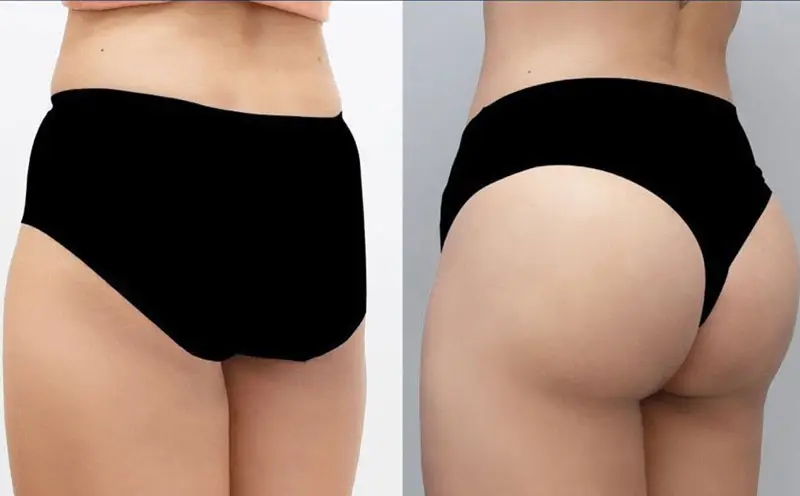
Recovery time and the longevity of results differ between autologous buttock fat transfer (BBL) and buttock implant surgery. BBL generally requires approximately 3–6 months for the transferred fat to stabilize, while buttock implant surgery typically requires 6–8 weeks for patients to resume most daily activities. Implants may maintain their shape long-term if they remain stable.
Recovery Time After Buttock Fat Transfer (BBL)
- Weeks 1–2: The buttocks and liposuction areas commonly experience swelling, bruising, pain, or tightness. Patients should avoid sitting directly on their buttocks and minimize pressure on the fat transfer areas.
- Weeks 3–4: Swelling and bruising gradually decrease. Patients may engage in light activities and find daily activities more comfortable, but must continue following instructions to avoid pressure on the treated areas.
- Weeks 6–8: Many patients can return to most daily activities. However, high-intensity exercise should only be resumed with the doctor’s approval.
- Months 3–6: The transferred fat gradually stabilizes, and buttock volume and contours become more defined.
Long-Term Results: Approximately 60–80% of the transferred fat may survive after the stabilization period, depending on the surgical technique, individual healing characteristics, and the recipient tissue’s ability to support the grafted fat. Surviving fat cells may remain long-term, but their volume can still increase or decrease with changes in body weight.
Recovery Time After Buttock Implant Surgery
- Weeks 1–2: Swelling, bruising, pain, and tightness in the buttock area may occur. Patients should limit strenuous activities and avoid positions that place pressure on the surgical area.
- Weeks 3–4: Swelling and pain generally decrease, while walking and daily activities become easier.
- Weeks 6–8: Most patients can return to their usual daily activities, depending on their recovery progress and the doctor’s assessment.
- Months 3–6: The surrounding soft tissue gradually adapts to the implants, and the buttock contours become more stable.
Long-Term Results: Buttock implants can maintain their volume for many years, but they are not lifetime devices. Their lifespan depends on the implant material, the condition of the surrounding tissue, implant positioning, and any complications that may develop. Patients need regular monitoring and may require revision surgery or implant replacement when necessary.
7. Frequently Asked Questions About Buttock Fat Transfer and Implants
Can Thin Individuals Undergo BBL Buttock Fat Transfer?
Some thin individuals may still have sufficient fat reserves in the abdomen, waist, back, or thighs to undergo BBL. However, if there is not enough suitable donor fat, the surgeon may not recommend this procedure to avoid harvesting and transferring fat beyond safe limits.
Do Buttock Implants Feel Natural?
The sensation after implant placement depends on the implant size, positioning, and thickness of the surrounding muscles and fatty tissue. Individuals with sufficient soft tissue coverage may achieve more natural-looking contours, while those with thin tissue coverage are more likely to have visible implant edges or feel the implant when touched.
Can Buttock Implants Rupture or Need Replacement?
Yes. Buttock implants may become damaged, shift out of position, become infected, or develop other complications. Some cases require revision surgery, implant replacement, or removal. Buttock implants should not be considered permanent medical devices.
Private: Brazilian Butt Lift in Vietnam: Is BBL Surgery Safe and How Much Does It Cost?
Non-Surgical Rejuvenation in Vietnam: Suitable Treatments for a 7-Day Trip