Date posted: 21-10-2026 | Last updated : 21-10-2026
The best time to visit Vietnam for surgery or medical treatment is generally during months with favorable weather conditions, a suitable treatment schedule, and sufficient recovery time before returning home. Patients traveling to Hanoi may prefer September–November or March–April, while Ho Chi Minh City is generally more convenient from December to April due to lower rainfall.
Hanoi and Northern Vietnam: Consider September–November or March–April to avoid excessively hot weather.
Ho Chi Minh City and Southern Vietnam: December–April generally has less rainfall, making travel, medical examinations, and follow-up appointments more convenient.
Recovery time: Allow sufficient time to stay in Vietnam after surgery and avoid booking your return flight too early.
Treatment schedule: Book appointments in advance, especially if your trip coincides with Lunar New Year (Tet) or other public holidays.
The most suitable time to visit Vietnam for medical treatment depends not only on the weather but also on your health condition, type of surgery, length of stay, and the doctor’s availability. Patients should consider all these factors before booking their flights.

Patients can still undergo surgery or medical treatment in Vietnam during the summer or rainy season, provided they are medically fit, the healthcare facility meets professional standards, and an appropriate postoperative care plan is in place. There is no basis for claiming that all surgeries performed during hot or rainy weather are more dangerous than those performed during cooler months.
However, each season has certain considerations.
Summer in many parts of Vietnam is characterized by high temperatures and humidity, which can make outdoor travel tiring.
Patients who have recently undergone surgery may experience several inconveniences, including:
If undergoing surgery during the summer, patients should prioritize air-conditioned accommodation, limit outdoor activities, and follow wound hygiene instructions.
Heavy rainfall does not directly cause surgical failure, but it may affect travel arrangements.
Potential issues to prepare for include:

In particular, patients traveling to Central Vietnam during the stormy season should check weather forecasts before departure.
The most important consideration is not to avoid summer or the rainy season entirely, but to ensure appropriate recovery conditions and prevent weather-related disruptions from affecting necessary medical treatment.
Patients can still travel to Vietnam during Tet or other public holidays, but they should book appointments in advance and confirm the working schedules of doctors and hospitals. Certain services, surgical schedules, and support arrangements may be adjusted during holiday periods.
Lunar New Year (Tet) usually falls in January or February, depending on the year. During this period, travel demand increases as many people return home to visit their families.
If you are planning surgery during this time, consider the following:
The recommended length of stay should be determined by the treatment method, extent of the procedure, and follow-up requirements. The same schedule should not be applied to every patient. Major surgeries generally require longer monitoring periods than minimally invasive procedures.
Procedures such as breast augmentation, liposuction, rhinoplasty, or facial bone contouring surgery may require postoperative monitoring and follow-up appointments before patients return home.
Doctors need to assess:
Patients should not assume that resting for just a few days is sufficient before flying home after every type of surgery.
Procedures such as cosmetic injections, certain laser treatments, or skincare treatments may have shorter recovery periods than surgery.
However, patients should still ask their doctors about the required monitoring period, possible post-procedure reactions, and activities that need to be restricted.
If treatment requires multiple sessions, the schedule should also account for the intervals between appointments.
Specialist consultations, laboratory tests, endoscopic examinations, and medical treatments require different amounts of time depending on their purpose and the examination results.
If abnormalities requiring a biopsy, additional intervention, or further treatment are detected, the return travel schedule may need to be adjusted.
For medical conditions requiring prompt attention, patients should not wait for favorable weather but should seek examination and treatment as directed by their doctor.
Patients should ask their doctors about the expected length of stay before booking flights and allow for the possibility of extending their stay if their health has not fully stabilized.
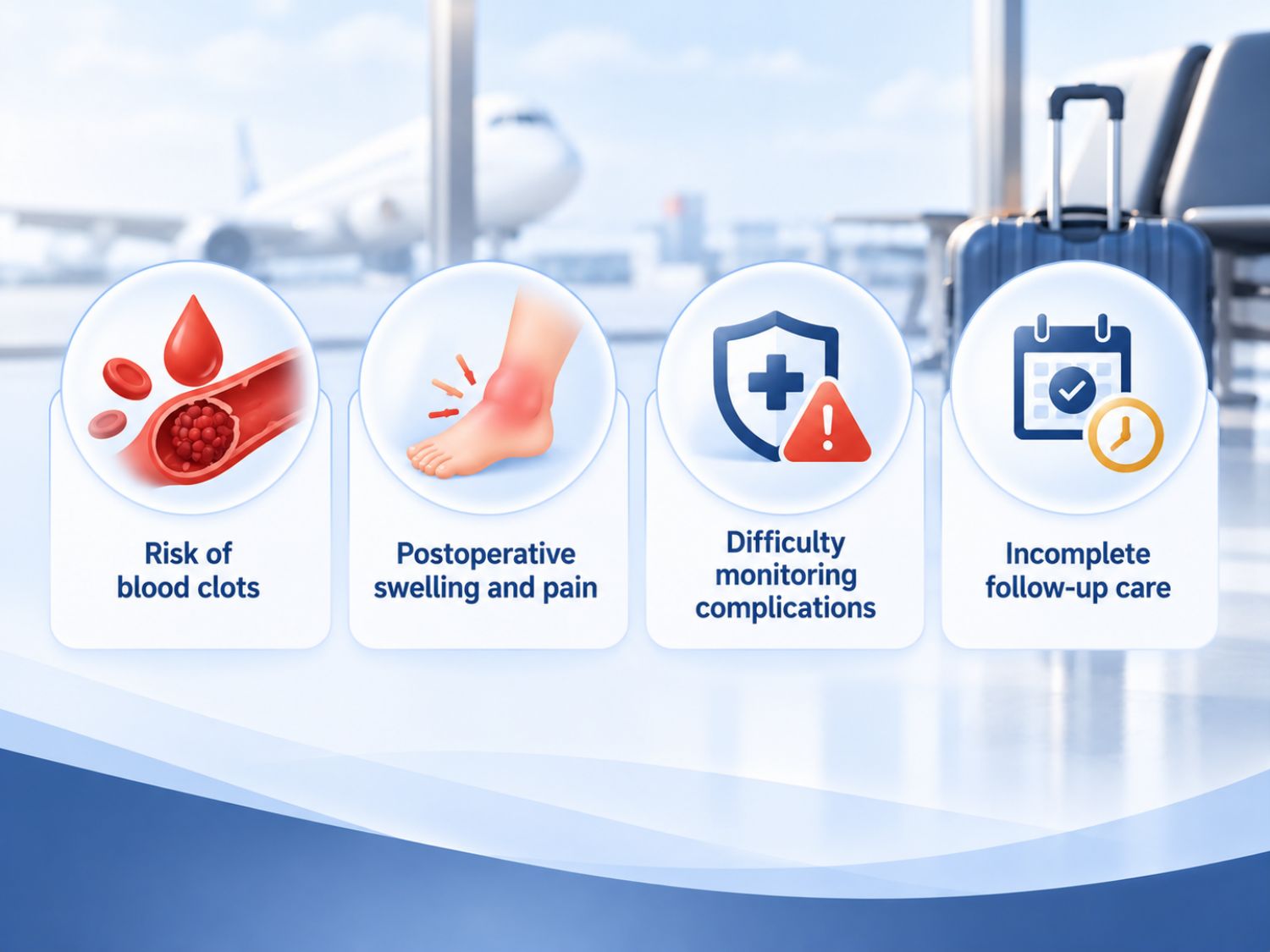
When you can fly after surgery depends on the type of procedure, your recovery progress, flight duration, and your treating doctor’s assessment. Flying too soon may increase the risk of complications, particularly when you must remain seated for several hours.
According to the article Planning a Summer Trip: What You Need to Know About Medical Tourism published by the American Society of Plastic Surgeons (ASPS, 2024), plastic surgeon Kristy Hamilton stated: “The further they are away, the longer I ask them to stay in town.”
Important reasons for caution include:
Patients should prepare a travel plan in advance, including selecting a healthcare facility, arranging an online consultation, confirming examination appointments, determining the length of stay, and organizing postoperative care. Early preparation helps minimize unexpected changes.
Step 1: Choose Your Treatment and Medical Facility
First, identify the procedure you wish to undergo and select a suitable medical facility.
For cosmetic surgery, you should verify the hospital’s operating license, the procedures it is authorized to perform, and the qualifications of the doctor.
Not every facility within the same healthcare system is authorized to perform all types of surgery.
Step 2: Book an Online Consultation From Abroad
Patients can contact the medical facility through its official communication channels to discuss their treatment needs in advance.
Information to prepare includes:
Online consultation results provide only a preliminary assessment and do not replace an in-person examination before surgery.
Step 3: Confirm the Proposed Examination and Treatment Schedule
After the consultation, patients should request confirmation of:

Step 4: Check the Weather, Flights, and Accommodation
You should check the weather forecast for your destination city, choose suitable flights, and prioritize accommodation near the medical facility.
If your trip falls during the stormy season or a public holiday, prepare a backup plan in case your flight schedule changes.
For major surgeries, avoid booking return flights too close to the scheduled surgery date.
Step 5: Prepare a Postoperative Care Plan for After Returning Home
Patients should agree with their medical facility in advance on follow-up arrangements and communication methods in case problems arise after returning home.
If direct medical care or treatment for complications is needed, patients must have a plan for accessing healthcare services in their country of residence.
A well-planned medical trip should account not only for the surgery date but also for appropriate care before, during, and after returning home.
Hot weather may cause patients to sweat more and experience greater discomfort when caring for surgical wounds. However, wound healing depends largely on overall health, the type of surgery, surgical techniques, and postoperative care, rather than outdoor temperature alone.
You can combine sightseeing with your trip before surgery if your health and schedule allow. After surgery, you should prioritize rest and avoid strenuous activities, swimming, or excessive walking until your doctor gives permission.
You should contact the medical facility as soon as your flight schedule changes so that your appointment can be adjusted. Whether the surgery date can be changed depends on the doctor’s availability, operating room schedule, and your health condition at the time of the procedure.