Patients can combine dental crowns and porcelain veneers in one trip to Vietnam if each tooth has an appropriate clinical indication for the chosen treatment. Some cosmetic restorative cases can be completed within approximately 5–7 days over several appointments. The actual timeline depends on the number of teeth involved, the patient’s oral health, laboratory fabrication time, and any adjustments required after the restorations are fitted.
Combining both treatments is possible: Dentists may recommend full-coverage crowns for teeth that require extensive restoration and veneers for teeth suitable for partial coverage.
Estimated treatment time: Some cases can be completed within approximately 5–7 days, but this is not a guaranteed timeframe for every patient.
Pre-travel assessment is necessary: Photographs and X-rays can support an initial consultation, but the final treatment recommendations must be based on an in-person examination.
Allow time for possible adjustments: Set aside an additional 1–2 days after the estimated appointment schedule for checkups and adjustments if needed.
Prepare your dental records before returning home: Keep copies of X-rays, material information, the treatment plan, and aftercare instructions to facilitate follow-up care in your home country.
1. How Many Days Are Needed to Complete Dental Crowns and Veneers in Vietnam?
For patients without underlying dental conditions requiring prior treatment and with a manageable number of teeth involved, a stay of approximately 5–7 days may be considered. This is an estimated planning timeframe, not a guarantee of completion for every case.
The treatment duration depends on several factors:
- Number of teeth: Restoring a few teeth is generally less complicated than redesigning the smile across multiple teeth in both arches.
- Oral health condition: Tooth decay, gingivitis, periodontitis, or dental pulp conditions may need to be treated beforehand.
- Complexity of the restoration: Cases requiring adjustments to the shape, color, and alignment of multiple teeth may need additional trial and fitting time.
- Fabrication time: The dental laboratory needs time to manufacture crowns and veneers based on conventional impressions or digital scans.
- Adjustment requirements: If the restorations do not achieve the desired fit, color, or bite alignment, the dentist may need to make adjustments before permanent placement.
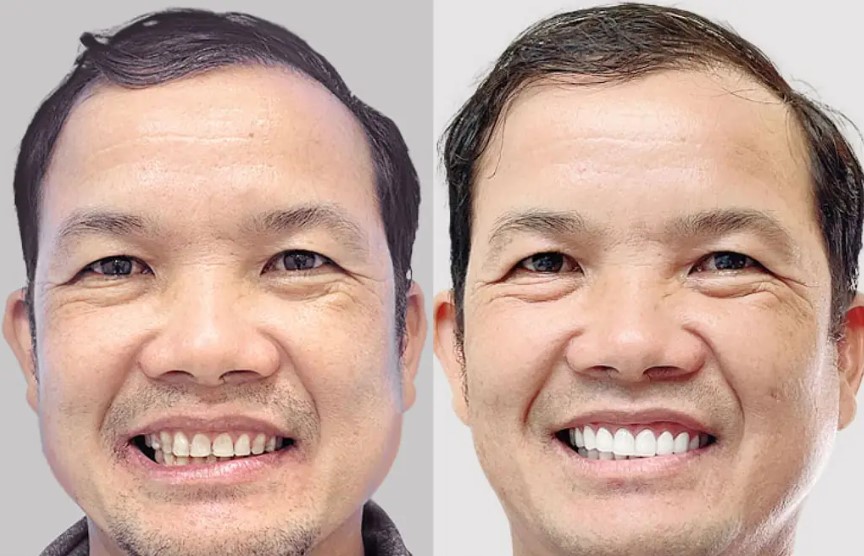
According to Vietnam Tourism’s dental tourism guidance, dental crowns and veneers generally require multiple appointments over approximately one week. However, the actual treatment duration still depends on the dentist’s treatment plan and the laboratory’s production capacity. Reference: Dental Treatment in Vietnam for Travelers.
2. A 5–7-Day Dental Treatment Schedule in Vietnam
A 5–7-day dental treatment schedule in Vietnam may be suitable for international patients seeking services such as porcelain veneers, dental crowns, or certain other dental procedures. If combining treatment with dental implants, patients who meet the necessary conditions may have the implant posts placed during this trip, but they will generally need to return several months later for the final crowns.
Day 1 – Dental Examination and Treatment Planning
- Examine the teeth, gums, and bite alignment.
- Take X-rays or perform other imaging examinations when indicated.
- Assess each tooth to determine which teeth require crowns and which may be suitable for veneers.
- Discuss the desired tooth color, shape, and aesthetic results.
- Agree on the treatment method, materials, estimated costs, and appointment schedule.
Day 2 – Tooth Preparation and Impressions
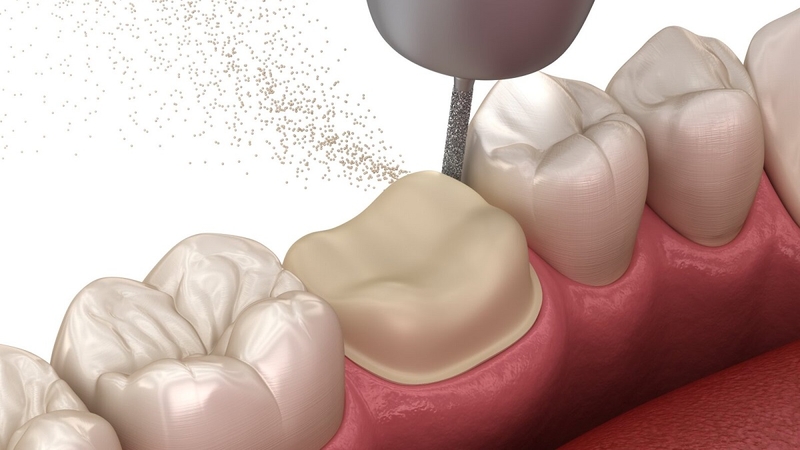
Once the treatment plan is confirmed, the dentist performs professional cleaning or addresses any necessary dental issues before restoration. The teeth are prepared according to the treatment plan, followed by conventional impressions or digital scans. The resulting data is then sent to the dental laboratory. Temporary crowns or restorations may be used while waiting for fabrication, if necessary.
Days 3–4 – Fabrication of Dental Crowns and Veneers
The dental laboratory uses the impression or scan data to design and manufacture the restorations according to the agreed shape, dimensions, and color. While waiting, patients can rest or explore the area if the dentist has not recommended any activity restrictions. If temporary restorations are being used, patients should avoid excessively hard or chewy foods to reduce the risk of dislodgement or breakage.
Days 5–6 – Trial Fitting and Placement of Restorations
The dentist tries the crowns and veneers on the teeth and checks their fit, color, shape, and bite alignment. If necessary, adjustments are made before the restorations are permanently bonded or cemented. Patients should immediately inform the dentist if they experience discomfort, an uneven bite, or difficulty bringing their teeth together naturally.
Day 7 – Post-Placement Checkup and Collection of Dental Records
The dentist rechecks chewing function, contact points, and the condition of the gums around the restorations. Patients receive instructions on oral hygiene and aftercare, along with information about the materials used, treatment records, and warranty policies, if applicable.
3. Cases That May Require a Stay of More Than 7 Days
Certain conditions may extend the treatment schedule beyond the estimated timeframe. In these cases, properly treating underlying dental conditions and ensuring restoration quality are more important than rushing to complete treatment before the departure date.
- Underlying dental conditions requiring treatment: Tooth decay, gingivitis, periodontitis, or pulp damage must be assessed and treated before restorative procedures. Depending on the severity, the dentist may recommend additional appointments or a monitoring period.
- Root canal treatment is required: Not every tooth receiving a crown needs root canal treatment. However, if a tooth has an underlying pulp condition, the dentist must determine the appropriate treatment before proceeding with restoration.
- Multiple teeth or full-mouth restorations: Redesigning the smile across multiple teeth requires careful assessment of tooth shape, color, the relationship between the upper and lower arches, and bite alignment. Trial fittings and refinements may require additional time.
- Complex bite alignment or teeth grinding: These factors affect material selection, restoration design, and the risk of fractures after treatment.
- Changes identified during the in-person examination: The actual dental condition may differ from the photographs or X-rays submitted before the trip. In such cases, the dentist may need to revise the initial treatment plan.
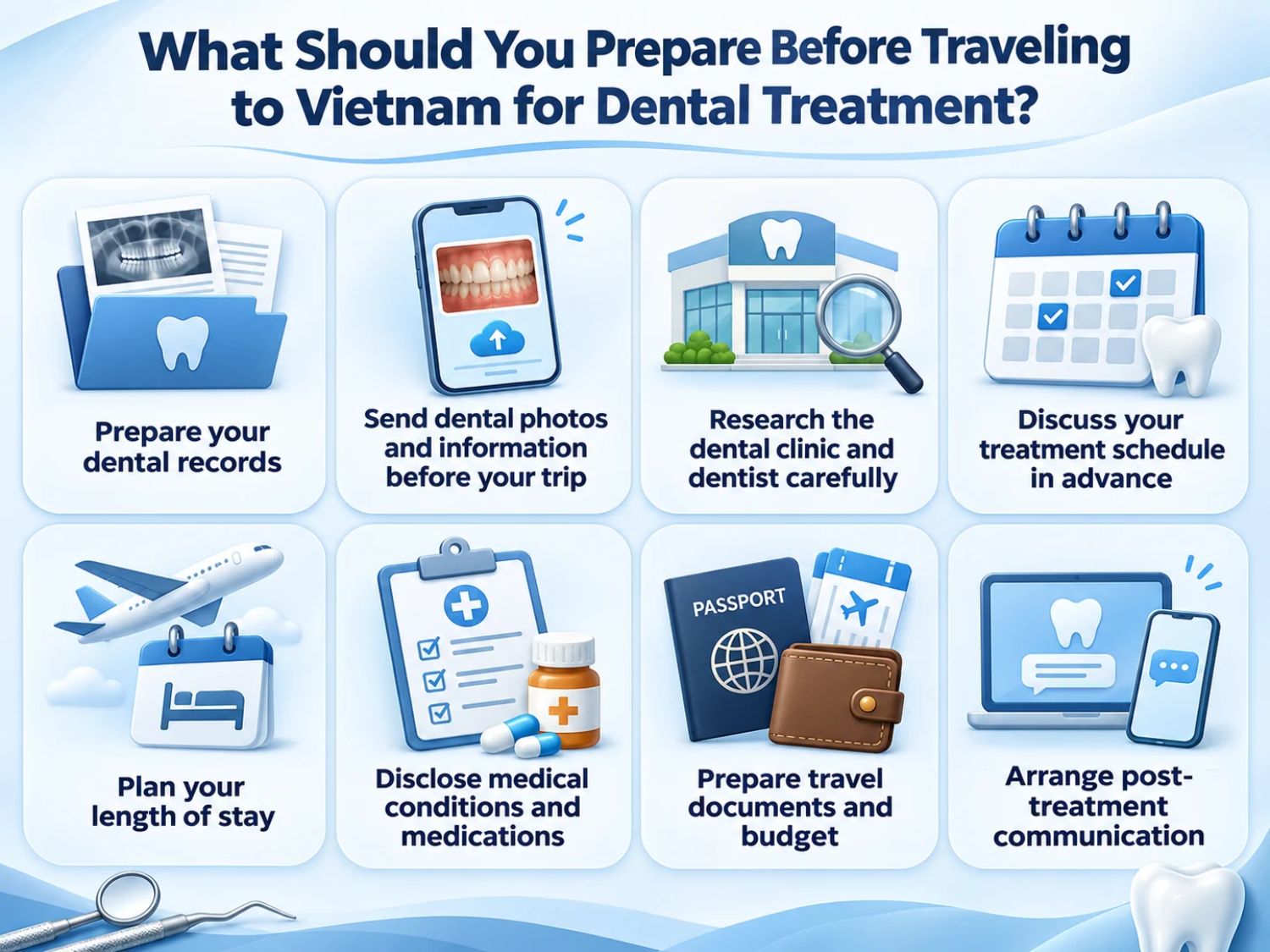
4. What Should You Prepare Before Traveling to Vietnam for Dental Treatment?
Before traveling to Vietnam for dental treatment, you should prepare your dental records, research the dental clinic, plan your length of stay, and discuss your treatment plan with the dentist in advance. Proper preparation helps minimize unexpected costs, avoid unnecessary travel delays, and ensure you have enough time for any adjustments after treatment.
- Prepare your dental records: Bring dental X-rays, Cone Beam CT scans (if available), examination results, medical records, and a list of medications you are currently taking. If you have previously undergone root canal treatment, dental implant placement, crown placement, or oral surgery, provide the dentist with the relevant information.
- Send dental photos and information before your trip: Take photos of your teeth from different angles and describe any symptoms or concerns, such as toothache, sensitivity, missing teeth, or cosmetic goals. This information allows the dental clinic to provide an initial consultation but does not replace an in-person examination or diagnostic imaging when necessary.
- Research the dental clinic and dentist carefully: Choose a licensed dental facility with dentists experienced in your intended procedure, appropriate diagnostic equipment, and clearly defined sterilization protocols. You should also ask about the materials used, total treatment costs, warranty policies, and how potential complications will be managed.
- Discuss your treatment schedule in advance: Ask how many days each treatment stage will require, how long dental crowns take to fabricate, and when follow-up appointments should be scheduled. Some porcelain crown and veneer treatments can be completed within a few days. However, dental implant placement and the final crown restoration are usually separated by several months to allow the implant to integrate with the jawbone.
- Plan your length of stay: Avoid booking your return flight too close to the expected treatment completion date. Allow extra time for the dentist to check your bite, restoration fit, and gum condition, and to make adjustments if temporary or permanent restorations need modification. If you undergo implant surgery, bone grafting, or sinus lifting, your required stay should be determined according to your individual condition.
- Disclose medical conditions and medications: Inform your dentist about cardiovascular disease, diabetes, blood clotting disorders, drug allergies, pregnancy, or any other underlying medical conditions. In particular, never stop taking blood thinners, diabetes medication, or prescribed medication before dental treatment without your doctor’s instructions.
- Prepare travel documents and budget: Check your passport, visa requirements, flight tickets, travel insurance, and payment methods. Ask the dental clinic for a detailed cost breakdown covering consultations, diagnostic imaging, procedures, materials, medication, and potential additional charges.
- Arrange post-treatment communication: Ask how to contact your dentist if you experience unusual symptoms after returning home and how to obtain your dental records, imaging results, and details of the materials used. For dental implants or complex restorations, arrange a follow-up plan either in Vietnam or in coordination with a dentist in your home country.
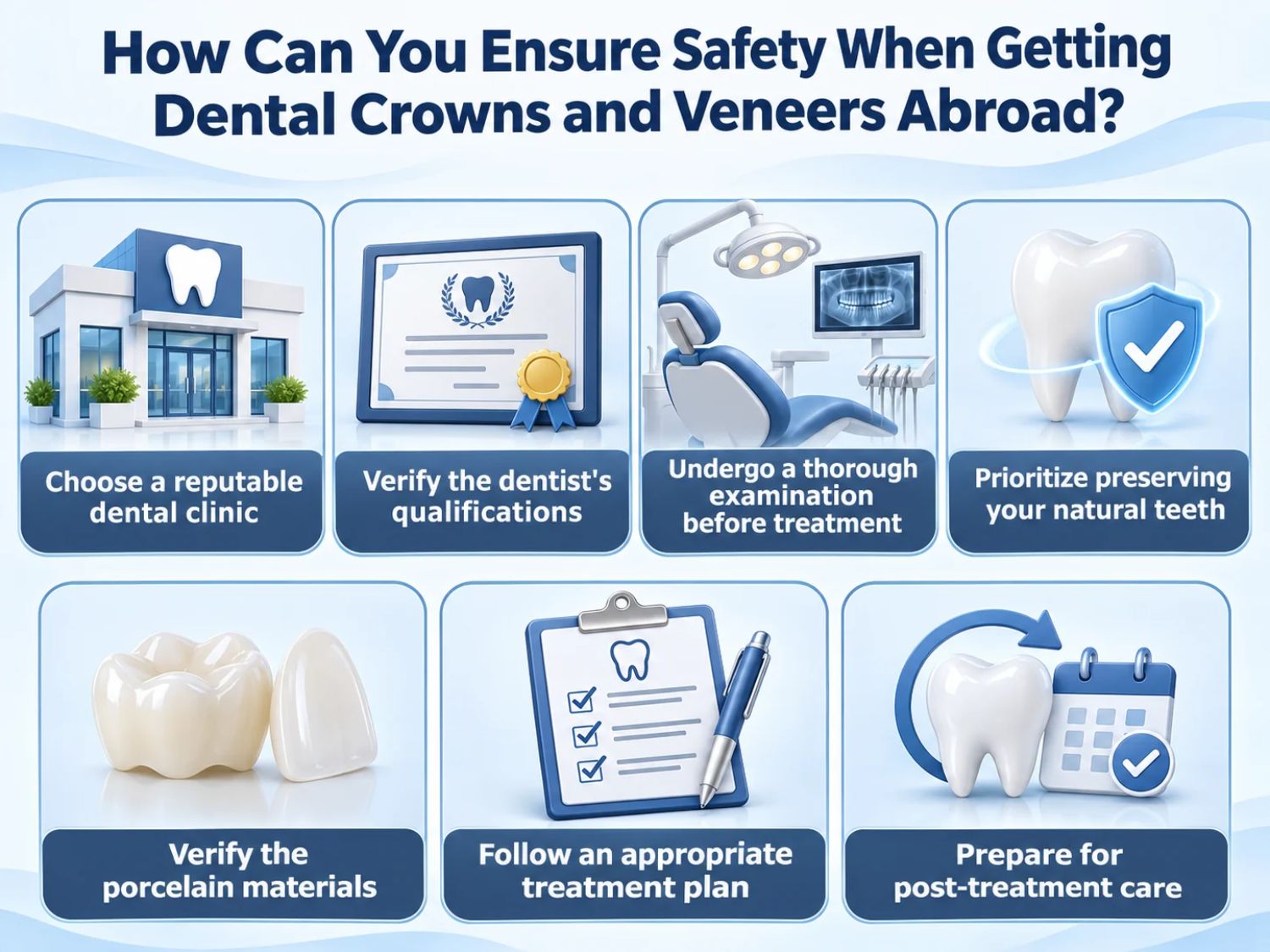
5. How Can You Ensure Safety When Getting Dental Crowns and Veneers Abroad?
To ensure safety when getting dental crowns and veneers abroad, prioritize licensed dental facilities, dentists with expertise in restorative dentistry, and porcelain materials with verifiable origins. You should also undergo a thorough assessment of your natural teeth, agree on a clear treatment plan, and arrange appropriate aftercare before returning home.
- Choose a reputable dental clinic: Check its operating license, approved scope of practice, sterilization standards, and available equipment. Prioritize facilities with restorative dentistry services and transparent information about their dentists.
- Verify the dentist’s qualifications: Research the dentist’s academic qualifications, professional license, and experience with veneers and porcelain crowns. Review similar treatment cases rather than relying solely on promotional photographs.
- Undergo a thorough examination before treatment: The dentist should assess your tooth enamel, tooth structure, gums, and bite, and recommend X-rays when necessary. Conditions such as tooth decay, gingivitis, and periodontitis should be treated before restorative procedures.
- Prioritize preserving your natural teeth: Veneers should only be recommended when the teeth are suitable for bonding, while crowns may be appropriate when more extensive structural restoration is needed. Ask your dentist to explain how much natural tooth structure must be removed and whether less invasive alternatives are available.
- Verify the porcelain materials: Request the brand name, manufacturer, country of origin, and warranty policy. Agree on the shade, shape, and design of your restorations in advance to reduce the likelihood of having them removed and remade.
- Follow an appropriate treatment plan: Agree on the schedule for examination, tooth preparation, impressions, try-in appointments, and final cementation. Do not rush the procedure or skip essential checks of bite alignment and restoration fit.
- Prepare for post-treatment care: Keep copies of your dental records, X-rays, material information, and aftercare instructions. Clarify how to contact your dentist, understand the warranty policy, and establish a plan for managing complications after returning home.
6. How to Care for Your Teeth After Completing Dental Restorations and Returning Home
After getting porcelain crowns and veneers, proper oral hygiene and regular dental check-ups help maintain oral health and reduce the risk of complications involving your restorations.
- Brush your teeth regularly: Use a soft-bristled toothbrush and fluoride toothpaste. Brush gently at least twice a day.
- Clean between your teeth: Use dental floss or appropriately sized interdental brushes to remove plaque between teeth and around the margins of your restorations.
- Avoid biting hard objects: Do not chew ice, bite your nails, or use your teeth to open packaging. These habits can cause veneers or porcelain crowns to crack or chip.
- Manage teeth grinding: If you regularly grind your teeth or clench your jaw, ask your dentist whether you should wear a night guard while sleeping.
- Attend regular dental check-ups: You can continue routine examinations with a dentist in your home country while maintaining contact with the clinic that performed your restorations for questions about your dental records or warranty.
7. Frequently Asked Questions About Completing Dental Treatment in One Trip to Vietnam
Can I Get Porcelain Crowns on Some Teeth and Veneers on Others at the Same Time?
Yes. Your dentist can combine both procedures if each tooth meets the clinical requirements and the restorations can be coordinated in terms of shade, shape, and bite alignment.
Can Porcelain Crowns and Veneers Be Completed in 5 Days?
Yes, porcelain crowns and veneers can be completed within 5 days, provided your oral health is stable, the number of teeth requiring restoration is manageable, and the dental clinic has an efficient treatment workflow. However, the actual timeline depends on the complexity of your case, the condition of your teeth and gums, and the number of adjustments required.
What Should I Do If I Experience Problems After Returning Home?
Contact the dental clinic that performed your treatment and provide photographs, a description of your symptoms, and any relevant dental records. If you experience pain, swelling, loose restorations, or cracks, visit a local dentist for an in-person examination.