Facelift surgery does leave scars, but they are usually difficult to notice when the incisions are carefully positioned and the wounds heal properly. Surgeons design incisions along the hairline, the natural creases in front of the ears, around the earlobes, and behind the ears to minimize scar visibility during everyday activities. Scar maturation typically takes approximately 6–12 months, during which the scars gradually soften and fade. However, scars may still become visible, widen, or develop a raised appearance due to excessive tension, infection, or an individual tendency toward abnormal scarring.
Facelift incisions are typically positioned along the hairline and within the natural creases around the ears.
Scars may develop as flat scars, hyperpigmented scars, widened scars, hypertrophic scars, or keloids.
Suturing techniques, tension on the incision, and individual healing characteristics directly affect scar quality.
Scars usually continue to change over 6–12 months, sometimes longer.
Proper postoperative care and early treatment of abnormal scar changes can help minimize unfavorable scarring.
1. Where Are Facelift Surgery Incisions Typically Located?
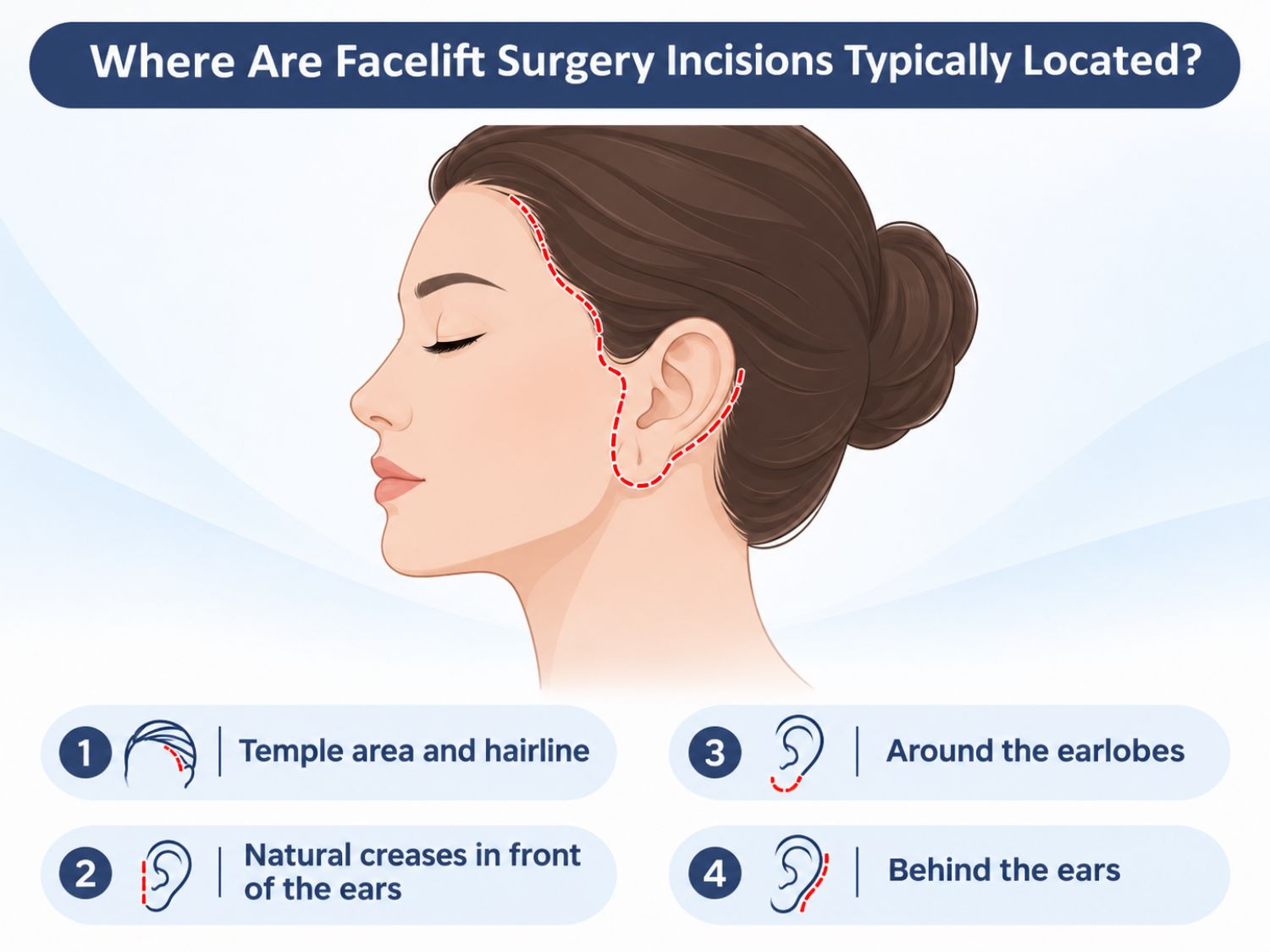
Facelift incisions are commonly made in the temple area, along the hairline, within the natural creases in front of the ears, around the earlobes, and behind the ears. The surgeon determines the incision locations based on the areas requiring lifting and repositioning, the degree of skin sagging, and the surgical technique being performed.
- Temple area and hairline: The incision may be positioned within the hair-bearing scalp or close to the temporal hairline. With certain techniques, the incision is designed to minimize changes in the position of the hairline after surgery.
- Natural creases in front of the ears: The incision usually follows the contour immediately in front of the ear, taking advantage of the natural boundary between the facial skin and the ear to make the resulting scar less noticeable.
- Around the earlobes: The incision may curve around the earlobe before continuing behind the ear. This area requires precise suturing to prevent excessive tension that could pull the earlobe downward, cause elongation, or lead to an unnatural appearance.
- Behind the ears: The incision typically continues along the crease behind the ear and may extend into the hairline at the back of the neck, depending on the extent of lifting and repositioning required.
2. What Types of Scars Can Develop After Facelift Surgery?
After facelift surgery, incisions may heal into normal flat scars or develop hyperpigmented scars, widened scars, hypertrophic scars, or keloids. Each type has distinct characteristics in terms of color, size, and the extent of scar tissue growth.
- Normal flat scars: These are thin scars that remain level with the surrounding skin surface. They may initially appear slightly pink or red but gradually fade as the injured tissues heal and recover.
- Hyperpigmented scars: The skin along the incision develops a brown or darker color than the surrounding area due to post-inflammatory hyperpigmentation. This condition may be more noticeable in individuals whose skin is prone to developing increased pigmentation after inflammation.
- Widened scars: The scar becomes broader and may appear pale or pink. This is often associated with prolonged tension on the incision, unfavorable wound healing, or the technique used to close the wound.
- Hypertrophic scars: Scar tissue becomes thickened and raised above the skin surface but remains within the boundaries of the original wound. These scars may appear red and may cause itching or a sensation of tightness.
- Keloid scars: Fibrous scar tissue grows beyond the boundaries of the original wound. Keloids are generally raised, may continue spreading into the surrounding skin, and are unlikely to regress on their own without treatment.

3. Why Can Facelift Scars Become Visible or Aesthetically Unfavorable?
Facelift scars may become more noticeable due to excessive tension along the incision, inappropriate wound closure techniques, an individual predisposition to abnormal scarring, or complications during the recovery process.
Common contributing factors include:
- Inappropriate tissue dissection and repositioning: If too much lifting tension is concentrated on the skin rather than being properly distributed across the deeper supporting tissue layers, the incision may be subjected to excessive stress. This increases the risk of widened scars and earlobe distortion.
- Excessive skin removal: When more skin is removed than the surrounding tissues can naturally accommodate and close without excessive tension, the wound edges may be stretched. This is one of the factors that can increase the risk of widened scars and impaired wound healing.
- Wound closure and suturing techniques: Precise alignment of the skin edges, appropriate management of the underlying tissues, and proper distribution of tension across tissue layers all influence the final appearance of the scar. If the closure technique is unsuitable, the scar may become uneven, raised, or pulled out of its natural position.
- Predisposition to keloid or hypertrophic scarring: Individuals who have previously developed keloids or hypertrophic scars after injuries, surgery, or piercings may have a higher risk of abnormal scar formation. This medical history should be discussed with the surgeon before undergoing facelift surgery.
- Postoperative complications: Infection, hematoma formation, wound separation, or delayed wound healing can interfere with the normal recovery process and negatively affect scar quality.
- Everyday activities and external factors: Excessive skin stretching, resuming physical activity too early, applying strong pressure to the surgical area, or failing to protect the scar from sunlight once the wound has healed sufficiently for appropriate skin care may affect the final aesthetic outcome.
4. How to Care for Your Incisions and Minimize Unfavorable Scarring After Facelift Surgery
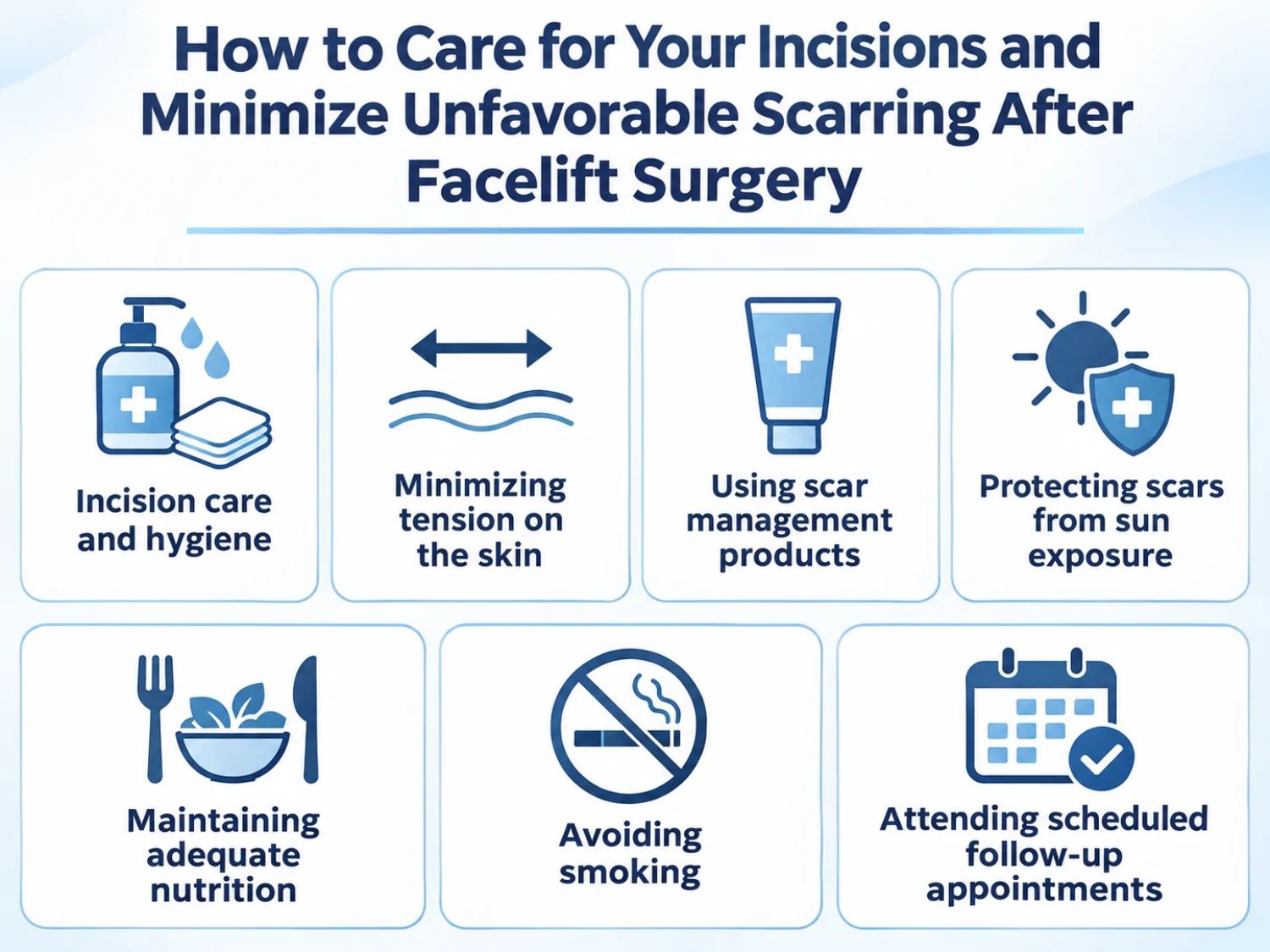
Proper postoperative care helps surgical incisions heal effectively, reduces the risk of infection, and minimizes the likelihood of unfavorable scar formation. Clients should keep their incisions clean, avoid activities that place excessive tension on the wounds, and only use scar treatment products once the incisions have fully closed and the surgeon has approved their use.
- Incision care and hygiene: Clean the surgical area according to the surgeon’s instructions, keep the wounds dry, and avoid picking at scabs, pulling at sutures, or applying cosmetic products directly to the incisions without medical approval.
- Minimizing tension on the skin: Avoid facial massage, excessive stretching of the facial skin, sleeping with pressure on the surgical areas, or performing movements that could place stress on the incisions during the early stages of recovery.
- Using scar management products: Once the wounds have completely closed, the surgeon may recommend silicone gel or silicone sheets to help improve the appearance of scars. These products should not be applied to open wounds or incisions that are still producing discharge.
- Protecting scars from sun exposure: Limit direct exposure to ultraviolet (UV) radiation, use appropriate physical sun protection, and apply suitable sunscreen once the treated skin has healed sufficiently to tolerate skincare products.
- Maintaining adequate nutrition: Consume sufficient protein, vitamins, and minerals through a balanced diet to support tissue regeneration and wound healing.
- Avoiding smoking: Nicotine can constrict blood vessels, reducing blood and oxygen delivery to the tissues and potentially impairing wound healing.
- Attending scheduled follow-up appointments: The surgeon should monitor wound healing, assess scar development, and provide adjustments to the postoperative care plan when necessary.
In particular, clients should not independently use scar treatment medications, topical corticosteroids, or undergo additional aesthetic procedures without professional assessment. Using these treatments at an inappropriate stage of healing may cause skin irritation or interfere with recovery.
According to the American Society of Plastic Surgeons (ASPS), traditional facelift incisions are commonly positioned along the hairline and around the ears. Once healed, these incisions are generally concealed within the hairline and the natural contours of the face and ears.
Source: Diagnosis and Treatment – American Academy of Dermatology
6. What Treatments Can Improve Unfavorable Scars After Facelift Surgery?
Unfavorable scars following facelift surgery may be improved through silicone-based treatments, corticosteroid injections, laser therapy, or surgical scar revision. The most appropriate treatment depends on the type of scar, its size, location, age, and the condition of the surrounding tissues.
Treatment approaches commonly considered include:
- Red or hyperpigmented scars: For red scars caused by increased blood vessel formation, the surgeon or dermatologist may consider vascular laser treatment. If the scar appears darker due to hyperpigmentation, pigmentation-targeted treatments may be considered after evaluating the underlying cause.
- Hypertrophic scars: Silicone gel or silicone sheets may help improve scar thickness and texture. For noticeably raised scars, the doctor may recommend corticosteroid injections to reduce excessive fibrous tissue formation.
- Keloid scars: Treatment may involve a combination of corticosteroid injections, laser therapy, or other supportive interventions. Surgical removal of a keloid alone carries a high risk of recurrence, so additional preventive treatments are often necessary.
- Widened scars: If a scar has matured but remains wide and aesthetically noticeable, the surgeon may consider scar revision surgery, which involves removing the existing scar and carefully closing the wound again.
- Scars causing earlobe or ear contour deformities: The surgeon needs to assess the tissue structure and degree of scar-related tension or contracture to determine an appropriate corrective procedure.

7. Warning Signs Around Facelift Incisions That Require Medical Evaluation
After facelift surgery, clients should seek medical evaluation if they experience progressively worsening pain, increasing swelling, warmth or redness, purulent discharge, wound separation, or unusual changes in the color of the skin surrounding the incisions.
Warning signs to watch for include:
- Increasing pain and swelling: Particularly when discomfort does not gradually improve but instead becomes increasingly severe.
- Warmth, swelling, and spreading redness around the incision: These symptoms may indicate an inflammatory response or a possible infection.
- Cloudy discharge or fluid with an unusual odor: This may indicate an infection at the surgical site.
- Separation of the wound edges: An incision that opens or fails to remain closed may prolong the healing process and increase the risk of unfavorable scarring.
- Dark purple discoloration or unusual paleness of the skin surrounding the incision: These changes require prompt medical evaluation because they may indicate impaired blood circulation or inadequate blood supply to the tissues.
8. Frequently Asked Questions About Scars After Facelift Surgery
Will Facelift Scars Be Visible When I Tie My Hair Up?
Facelift scars may become visible when the hair is tied up, particularly if the incisions extend behind the ears or into the hairline at the back of the neck.
However, scar visibility depends on the precise location of the incision, scar width, color, and the stage of scar maturation. Thin scars positioned within the natural creases around the ears are generally less noticeable than scars located on exposed areas of the skin.
How Soon After Facelift Surgery Can I Start Using Scar Cream?
Scar treatment products should only be used once the incisions have completely closed, with no remaining open areas or discharge, and after the surgeon has approved their use.
Silicone gel and silicone sheets are commonly considered options for helping improve the appearance of scars during the healing and maturation process.
Can Facelift Scars Disappear Completely?
It is not possible to guarantee that facelift scars will disappear completely because surgery inevitably causes tissue injury that the body must repair through the wound-healing process.
However, when healing progresses favorably, scars can gradually become thinner, flatter, and lighter in color, making them difficult to notice during normal daily activities.
Recovery After Facelift Surgery Abroad: How Long Should You Stay, and How Many Years Do the Results Last?
Mini Facelift vs. Full Facelift: Which Procedure Should You Choose Based on Your Age?