
Date posted: 21-07-2026 | Last updated : 28-07-2026
Nose filler is a non-surgical aesthetic option for people who want to make the nose appear higher, straighter, or more refined without undergoing rhinoplasty.
Dermal filler may improve selected contour concerns and create better balance with the face while generally requiring less recovery time than surgery.
However, the nose is considered a high-risk injection area because important blood vessels connect with the circulation around the eyes. Therefore, treatment should only be performed by a qualified medical professional with detailed knowledge of facial vascular anatomy.
Nose filler, also known as non-surgical rhinoplasty or liquid rhinoplasty, is a minimally invasive procedure in which dermal filler is injected into selected areas of the nose to adjust its contour.
It may be used to improve:

Nose filler may create a straighter or more defined nasal profile without surgery.
The most commonly used products are hyaluronic acid fillers. Hyaluronic acid is a substance naturally present in the body, but commercial fillers are manufactured medical products rather than filler taken directly from natural tissue.
After injection, the doctor assesses the contour and may make limited adjustments to achieve a balanced result.
Nose filler does not:
Although no surgical incision is made, filler injection still penetrates the skin and should not be described as completely non-invasive.
Nose filler may be considered for people who:

Patients seeking a mild, temporary nasal enhancement may be suitable for filler treatment.
The original content lists a large nasal tip, short tip, or wide alar base as indications. Filler cannot physically reduce a large tip or narrow wide nostrils. Adding volume may sometimes make these features appear larger.
Nose filler may not be appropriate for patients with:
Patients who have undergone previous rhinoplasty or filler treatment require additional assessment because scar tissue and altered anatomy may increase complexity.
Many patients can resume light daily activities shortly after treatment.
Temporary effects may include:
Although recovery is usually shorter than after rhinoplasty, patients should avoid scheduling treatment immediately before an important event or international flight.
The contour change is visible immediately after injection, although swelling can temporarily affect the appearance.
The final early result is usually assessed after the tissues settle.
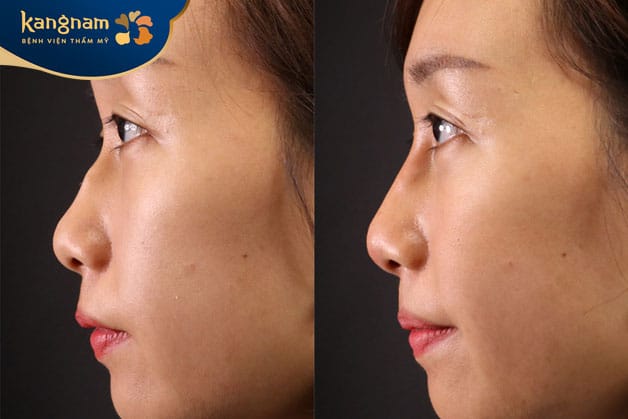
A carefully planned injection may create a straighter and more balanced nasal contour.
A natural result depends on:
Nose filler does not involve surgical cutting, cartilage harvesting, general anaesthesia, or a nasal splint.
However, it is not risk-free. Serious complications can occur even after a small injection.
The initial price is generally lower than surgical rhinoplasty.
However, filler is temporary, so repeat treatments may make the long-term cost substantial.
Patients should compare:
A typical nose filler process may include the following steps.
The doctor discusses the patient’s goals and evaluates:
The doctor should explain what filler can and cannot improve.
Patients should disclose:
Patients should not stop prescription blood thinners without approval from the prescribing doctor.
Avoiding alcohol before treatment may reduce bruising. A complete ban on caffeine is not medically required for every patient, although excessive caffeine may contribute to anxiety or temporary blood-pressure elevation.
The nose and surrounding skin are disinfected using an appropriate medical solution.
A clean technique reduces infection risk but cannot guarantee zero complications.
The doctor injects small amounts of filler into carefully selected areas.
Treatment may involve:
Neither a needle nor a cannula eliminates the risk of vascular occlusion.
The injector should use a conservative volume and continuously assess:
After treatment, the doctor checks:
Patients should receive written aftercare instructions and emergency contact information.
There is no standard filler volume that is appropriate for every nose.
The original content suggests approximately 1.5 cc, but this may be more than necessary for many patients and should not be presented as a routine amount.
A conservative treatment may use less than 1 cc, while some cases may require additional product over more than one session.
The amount depends on:

The appropriate filler volume should be individually determined and kept as conservative as possible.
Using more filler does not necessarily create a better result.
Excessive volume may increase the risk of:
Treatment should be based on anatomy rather than attempting to use a full syringe or a predetermined number of cubic centimetres.
Nose filler may be performed safely in suitable patients, but it cannot be described as harmless or completely safe.
Common temporary effects include:
Other possible complications include:
The most serious risk is accidental injection into or compression of a blood vessel.
This may reduce blood flow and cause:
Blood vessels around the nose communicate with vessels supplying the eye.
In rare cases, filler may enter the vascular system and cause:
These complications can occur rapidly and may be irreversible.
Patients should seek emergency care immediately for:
Hyaluronic acid filler can often be treated with hyaluronidase when medically appropriate.
However, dissolving treatment does not guarantee complete reversal of every complication, particularly when tissue or vision damage has already occurred.
Mild redness or swelling may improve within several hours, but this does not mean the filler has fully settled.
A more realistic timeline is:
Hyaluronic acid filler does not need to “dissolve into the body” to work, and ordinary nose filler does not primarily create results by stimulating natural collagen within one to two days.
The immediate effect comes from the filler physically adding volume and changing contour.
Cabin pressure does not normally cause filler to move.
However, patients should consider delaying travel because:
Patients travelling internationally should discuss timing with the treating doctor and should not leave immediately after treatment without an observation period and clear emergency plan.
Nose filler commonly lasts approximately 6–12 months, although some hyaluronic acid products may remain visible for longer.
Duration depends on:
The filler does not always disappear completely by an exact date. Small amounts may persist longer than expected, especially after repeated injections.
Patients should not automatically receive repeat injections on a fixed schedule. The nose should first be reassessed to avoid excessive product accumulation.
To maintain the result, patients may consider additional treatment when the effect has clearly decreased and the doctor confirms that further filler is appropriate.
Because the nose is a high-risk vascular area, treatment should only be performed in a licensed medical setting by a qualified doctor experienced in facial injections and complication management.
Patients should verify:
During the first 24–48 hours, avoid:
Touching the skin does not automatically cause infection, but unclean hands and repeated manipulation may increase irritation or displace recently injected product.
Alcohol may increase bruising, flushing, and swelling.
Patients may be advised to avoid it for at least 24–48 hours, depending on the doctor’s guidance.
Alcohol does not directly “remove” the filler effect.
For the first several days, patients may be advised to avoid:
Ordinary sunlight does not normally cause filler to move, but excessive heat may temporarily worsen swelling or redness.
For the first one to two days, avoid:
Longer restrictions may be recommended depending on the treatment.
Patients should drink fluids normally.
Excessive water intake does not prevent swelling or make filler settle faster.
Makeup may be delayed until injection sites have closed and any bleeding has stopped.
Patients should:
Contact the medical team urgently for:
Seek emergency medical care immediately for:
Nose filler is most appropriate for adding volume and camouflaging mild contour irregularities.
It cannot reliably:
In some patients, adding filler may make the nose appear larger.
Those with complex structural problems or a desire for long-term reduction and reshaping should discuss surgical rhinoplasty with a qualified surgeon.