Date posted: 21-07-2026 | Last updated : 27-07-2026
Rib cartilage rhinoplasty offers several potential benefits, including strong structural support, a natural-looking nasal contour, and the ability to correct complex nasal deformities.
Because the cartilage is harvested from the patient’s own body, the risk of true allergic reaction is low. However, patients may still wonder whether rib cartilage rhinoplasty is permanent and how it differs from rhinoplasty using ear cartilage.
The following article explains the procedure, benefits, expected longevity, suitable candidates, and postoperative care.
Rib cartilage rhinoplasty is a surgical procedure that uses cartilage harvested from the patient’s rib area to reshape and support the nose.
Depending on the treatment plan, rib cartilage may be used alone or combined with a medical-grade synthetic implant.
The procedure may address concerns such as:

Rib cartilage may be used to reconstruct a damaged or structurally weak nose.
When a combined approach is selected, the surgeon may use:
The exact material should be chosen according to the patient’s anatomy rather than using the same combination for every case.
Rib cartilage is useful when a large amount of strong graft material is required. It may provide structural support and allow correction of more complex nasal concerns.
Rib cartilage can be carved and shaped according to the patient’s facial proportions.
Potential aesthetic benefits may include:

A carefully shaped rib cartilage graft may create a refined and natural-looking nasal contour.
However, a natural result depends on the surgeon’s design, graft preparation, fixation, skin thickness, and healing response.
Because the cartilage comes from the patient, true allergic reactions are uncommon.
This may make rib cartilage useful for patients who:
The term “implant rejection” is often used informally. With synthetic implants, the main concerns are usually infection, inflammation, extrusion, displacement, or skin pressure rather than classic immune rejection.
Autologous cartilage reduces some implant-related risks but does not eliminate complications.
Rib cartilage provides a relatively large amount of strong material.
It may be used to reconstruct:
This can be beneficial for patients with:
Rib cartilage does not guarantee complete correction of every defect. Complex revision cases may require staged treatment or additional surgery.
The original content states that rib cartilage rhinoplasty saves surgical time and recovers quickly. In practice, it is often more complex and may take longer than procedures that use only an implant or ear cartilage.
This is because surgery may involve:
Many patients may return to light activities within approximately seven to fourteen days, but the nose is not fully healed at this stage.
Autologous rib cartilage generally integrates well with surrounding tissues and has a low allergy risk.
However, possible complications include:
Therefore, rib cartilage rhinoplasty should not be described as completely safe or risk-free.

Rib cartilage may be considered when the nose requires substantial structural support or when other donor cartilage is insufficient.
Potential candidates include:
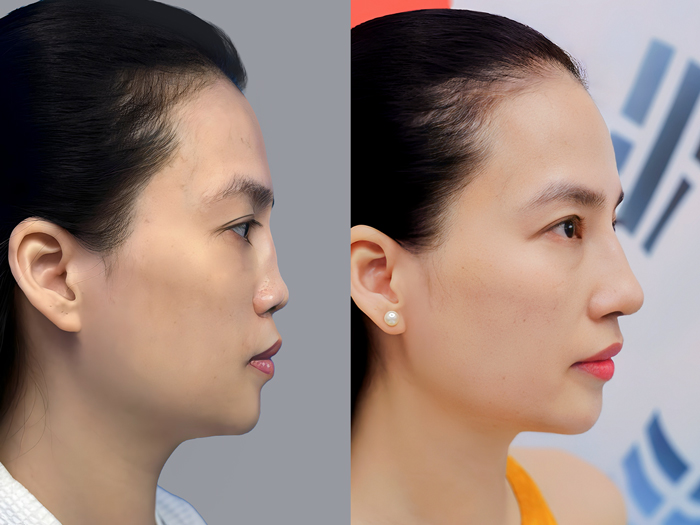
A low, short, deviated, or structurally damaged nose may require rib cartilage reconstruction.
A busy schedule or limited time in Vietnam is not, by itself, a reason to choose rib cartilage.
Because the procedure may involve a longer recovery and additional donor-site care, overseas Vietnamese patients should allow sufficient time for monitoring before travelling.
Patients may not be suitable when they have:
A typical rib cartilage rhinoplasty process at Kangnam may include the following steps.
The surgeon evaluates:
The patient’s concerns and desired result are also discussed.
Before surgery, the patient may undergo:
These steps help determine whether the patient is medically suitable.
The surgeon marks the proposed:
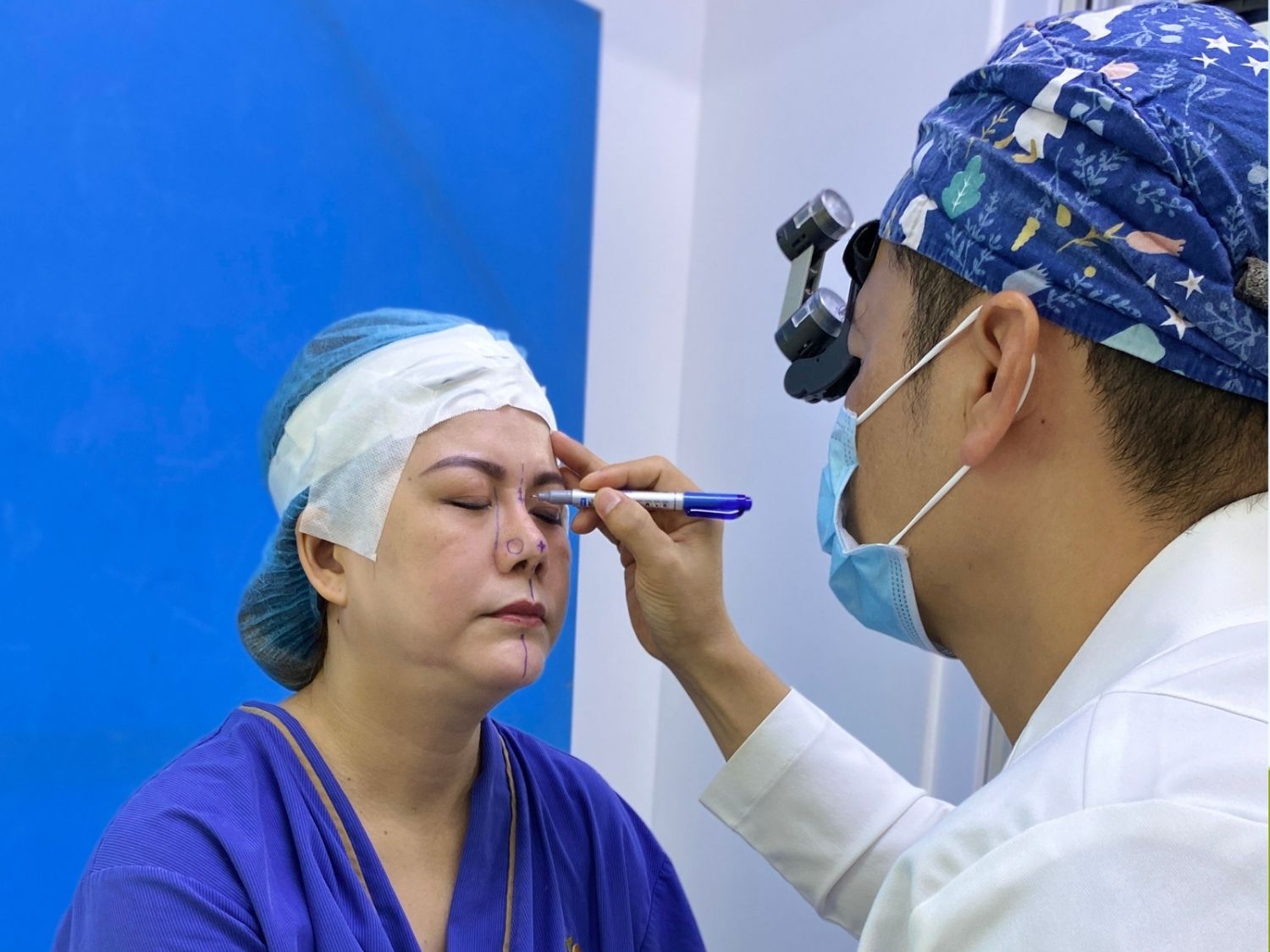
The proposed nasal shape is measured and designed before surgery.
Computer simulation may assist communication, but it cannot guarantee that the final result will look identical to the image.
Rib cartilage rhinoplasty is commonly performed under general anaesthesia because both the nose and chest donor area are treated.
The patient should be monitored by qualified anaesthesia personnel.
General anaesthesia carries risks such as:
The surgeon makes a small incision over the selected rib area and removes a suitable segment of cartilage.
The graft is then carved according to the surgical plan.
Possible donor-site concerns include:
The surgeon places and fixes the cartilage to:
Careful carving is important because rib cartilage may change shape after surgery.
A nasal splint may be applied to protect the nose and support early healing.
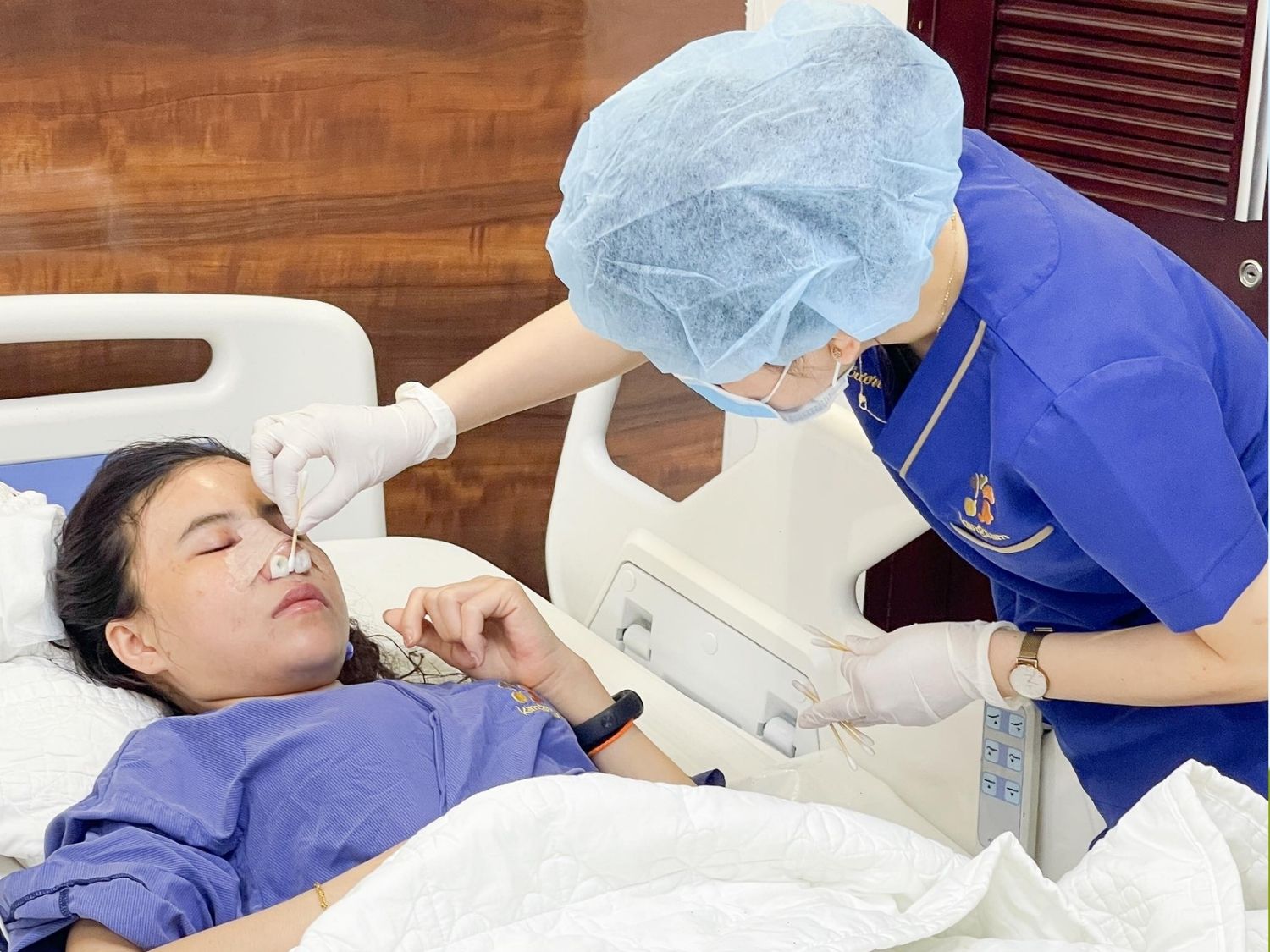
The splint helps protect the reconstructed nasal framework during early recovery.
The patient should not move or remove the splint without medical instructions.
Rib cartilage rhinoplasty may provide a long-lasting result, but it should not be described as guaranteed to last forever.
Once the graft has healed and stabilised, it may remain in place for many years.
However, the result can change because of:
Rib cartilage generally does not simply disappear after successful surgery, but it may change in shape or volume.
Therefore, the more accurate expectation is that rib cartilage rhinoplasty can be long-lasting, rather than absolutely permanent.

Many patients do not require additional surgery.
However, revision may be considered when there is:
Patients should choose a qualified surgeon and receive a clear follow-up plan before returning overseas.
Remote monitoring can support routine recovery, but complications may still require in-person treatment in the patient’s country of residence.
Both rib and ear cartilage are harvested from the patient, but their properties and surgical uses are different.
| Comparison | Ear Cartilage Rhinoplasty | Rib Cartilage Rhinoplasty |
|---|---|---|
| Donor site | Outer ear | Chest or rib area |
| Available amount | Limited | Relatively abundant |
| Texture | Soft, flexible, and naturally curved | Stronger and more rigid |
| Common use | Tip coverage, alar support, small contour corrections | Bridge reconstruction, septal support, tip projection, complex revision |
| Extent of correction | More suitable for limited changes | Suitable for extensive structural correction |
| Surgical complexity | Generally less complex | More complex and usually longer |
| Donor-site recovery | Usually localised ear soreness and a hidden scar | Chest discomfort and a visible or concealed chest scar |
| Main risk | Limited amount and possible ear contour changes | Warping, chest scar, donor-site pain, and longer recovery |
| Typical candidate | Patient needing minor tip refinement or implant coverage | Patient with severe deformity, revision needs, or major cartilage deficiency |
Ear cartilage is generally too soft and limited in quantity to build a high, strongly supported nasal bridge by itself.
Rib cartilage provides greater structural strength but requires more extensive surgery.
Neither material is automatically better for every patient.
A very high bridge may:
The design should match the patient’s skin and facial structure rather than following a fixed beauty standard.
With age, rib cartilage may become calcified and less flexible.
Calcified cartilage can be:
Age alone does not automatically prevent surgery. Imaging and physical assessment may help determine whether the cartilage is suitable.
Rib cartilage rhinoplasty should be performed at a licensed hospital or surgical facility by a doctor experienced in structural and revision rhinoplasty.
Patients should review:
Marketing claims, celebrity endorsements, and social-media popularity should not replace medical due diligence.

Kangnam states that it provides rhinoplasty procedures for domestic and overseas Vietnamese patients, including complex and revision cases.
Potential services may include:
The hospital should not guarantee:
Patient testimonials and public-figure experiences represent individual outcomes and should not be interpreted as proof of guaranteed treatment quality.
Appropriate postoperative care is important for both the nose and the rib donor site.
Patients should take:
Medication should be used only at the prescribed dose and duration.
Patients should not independently add or stop medication.
During early recovery, patients should avoid:
Gentle walking may be encouraged when approved.
Patients should not:
Forceful nose blowing may increase pressure and contribute to bleeding or swelling.
When sneezing, patients may be advised to keep the mouth open to reduce nasal pressure.
The original phrase “không vì mũi” appears to be a typing error and is interpreted as “do not blow the nose forcefully.”
Smoking, vaping, and nicotine products may impair blood supply and increase the risk of:
Alcohol should also be limited or avoided according to medical instructions.
When instructed, patients may use sterile saline and clean cotton swabs to remove dried discharge around the nostrils.
They should not:
There is insufficient evidence that seafood, beef, water spinach, chicken, eggs, or glutinous rice routinely cause infection, swelling, or raised scars after rhinoplasty.
These foods do not need to be avoided unless:
A balanced diet should include:
Follow-up allows the doctor to assess:
Overseas Vietnamese patients should allow enough time in Vietnam for early postoperative monitoring.
A general recovery timeline may include:
Revision rhinoplasty and patients with thick skin may require more than one year for the result to settle.
Patients should contact the medical team for:
Emergency assessment is required for:
Autologous Cartilage Rhinoplasty: Techniques, Benefits, Risks, and Cost
S-Line Rhinoplasty: Benefits, Procedure, Recovery, and Aftercare