
Date posted: 21-07-2026 | Last updated : 25-07-2026
Necrosis is a serious complication that may occur when lip filler is injected unsafely. What are the warning signs of lip filler necrosis, and can the condition be treated? In the following article, dermatology specialists provide a detailed explanation.
Lip filler necrosis occurs when tissue dies because it does not receive an adequate blood supply. It is most commonly associated with vascular occlusion, in which filler is accidentally injected into a blood vessel or compresses an important artery around the lips.
When blood flow is restricted, the affected tissue receives insufficient oxygen. Without prompt treatment, this may lead to ischaemia, tissue injury, ulceration, and necrosis.
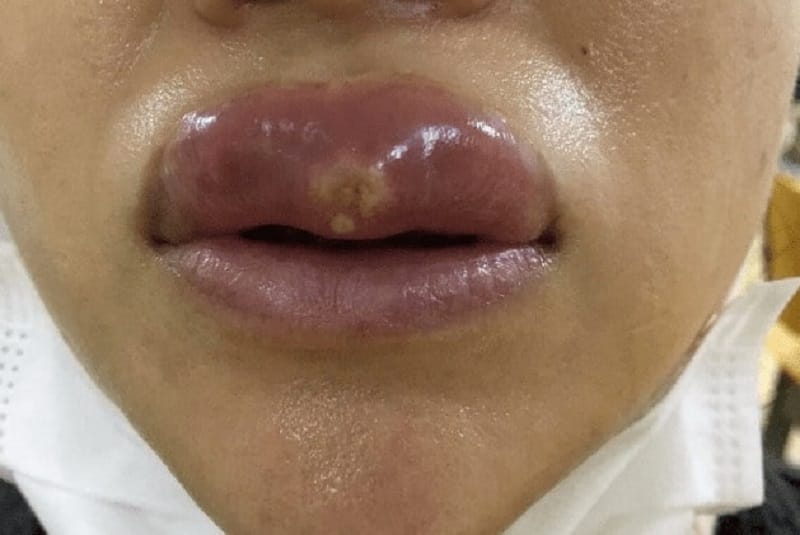
Lip tissue may become necrotic when filler is injected using an incorrect technique.
The main factors that may contribute to lip filler necrosis include incorrect injection technique, an inexperienced injector, unsuitable filler products, and inadequate infection-control procedures.
An insufficient understanding of facial anatomy, injection depth, blood-vessel location, and emergency management can increase the risk of accidental intravascular injection or excessive pressure on a blood vessel.
Incorrect technique may lead to:
Counterfeit, contaminated, non-approved, or untraceable filler products may increase the risk of inflammatory reactions, infection, tissue injury, and other serious complications.
Patients should be able to verify the product name, manufacturer, batch number, expiration date, packaging, and regulatory status before injection.
Needles, cannulas, and other instruments that are not sterile may allow bacteria to enter the injection site.
An untreated infection can progress to:
Poor hygiene, repeated pressure, unapproved massage, or failure to seek treatment when abnormal symptoms appear may worsen a filler complication.
However, vascular occlusion is primarily related to the injection itself and cannot always be prevented through aftercare alone.
The FDA recognises accidental injection into a blood vessel as a rare but serious filler risk that may cause tissue necrosis, visual impairment, blindness, or stroke.
Possible signs of lip filler necrosis include severe or worsening swelling, intense pain, abnormal skin colour, ulceration, discharge, and altered sensation.
Symptoms may develop immediately or progress over several hours or days.
Mild swelling and bruising are common after lip filler injections. However, swelling should be considered abnormal when it:

Unusual pain during or shortly after injection is an important warning sign of possible vascular compromise.
Patients may experience:
Vascular-occlusion guidelines emphasise that early recognition of ischaemia and prompt treatment are essential to prevent tissue necrosis.
Yellow fluid, white pus, blood-stained discharge, or an unpleasant odour may indicate:
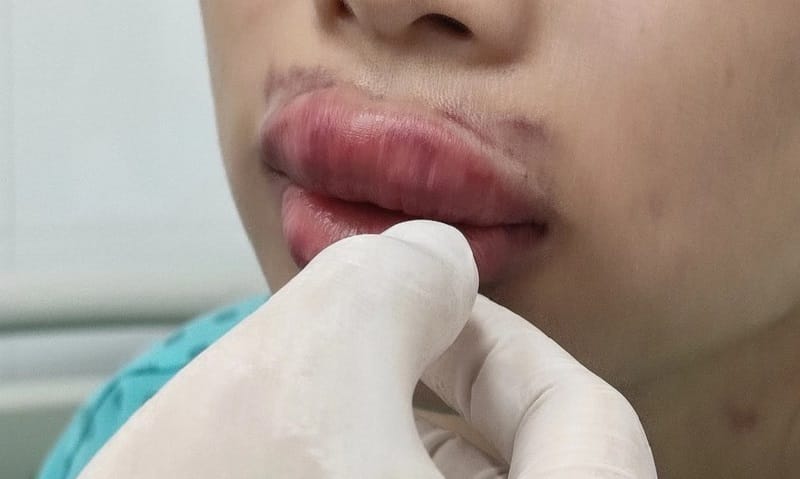
White pustules, painful lumps, or firm areas beneath the lip may be associated with infection, inflammation, filler accumulation, or tissue damage.
Colour changes are among the most important warning signs.
The lips or surrounding skin may become:
Blanching or a pale appearance may indicate reduced blood supply. Grey, purple, or black tissue may suggest more advanced ischaemic injury or necrosis.
The lip may develop:
Patients may experience:
If any of these warning signs occur, the patient should seek immediate assessment from a qualified medical practitioner. They should not wait until the following day to see whether severe pain or skin discolouration improves.
Any visual disturbance, eye pain, severe headache, facial weakness, difficulty speaking, or stroke-like symptom requires emergency medical care. The FDA advises immediate medical attention when symptoms suggest injection into a blood vessel.
Lip filler necrosis may be treatable, particularly when vascular occlusion is recognised and managed before irreversible tissue death occurs.
Early intervention offers the best opportunity to restore circulation, limit tissue damage, and reduce the risk of permanent scarring.
When a vascular occlusion is caused by hyaluronic acid filler, a doctor may inject hyaluronidase to break down the filler and relieve the obstruction.
Hyaluronidase treatment may need to be:

Hyaluronidase is only effective for hyaluronic acid-based fillers. It does not dissolve every type of injectable filler.
Consensus guidance indicates that prompt diagnosis and targeted hyaluronidase treatment are central to managing hyaluronic acid filler-related vascular occlusion.
When ischaemia is suspected, the treating doctor will assess:
The patient may require urgent referral to a specialist or hospital, depending on the severity and location of the complication.
Patients should not attempt to manage suspected vascular occlusion themselves. Home massage, heat, aspirin, antibiotics, or topical medication should not be used unless specifically directed by the treating doctor.
If there are signs of infection, the doctor may prescribe appropriate antimicrobial treatment after assessing the wound.
Treatment may include:
Topical antibiotic ointment alone may not be sufficient for a deep or spreading infection.
In severe cases where tissue has already died, treatment may include:
The recovery period depends on the extent and depth of tissue damage.
After the emergency stage has been controlled, the doctor may recommend additional treatment to manage:
Massage should only be considered after the acute complication has resolved and when specifically recommended by the treating specialist.
Choosing a licensed facility, a qualified medical practitioner, and a traceable filler product can help reduce the risk of vascular occlusion and other complications.
Patients should choose a licensed medical or aesthetic facility where filler injections are performed by a doctor or another appropriately authorised healthcare professional.
The injector should have detailed knowledge of:
The facility should keep hyaluronidase available when hyaluronic acid filler is injected and have a clear emergency referral pathway.
Patients should request to see:
The product should be opened in front of the patient whenever possible.
Patients should keep the injection area clean and follow the doctor’s instructions.
Sterile saline may be used when recommended, but the patient should avoid repeatedly wiping, rubbing, or touching the lips.

During the early recovery period, patients may be advised to avoid:
Patients should not massage, squeeze, press, or attempt to reshape the lips unless specifically instructed by the treating doctor.
Pressure cannot safely correct a suspected vascular occlusion and may delay appropriate treatment.
During the first several hours or days, patients may need to avoid:
The original reference to avoiding heavy glasses is generally relevant to filler placed around the nose rather than the lips.
Patients should eat nutritious foods, including vegetables, fruit, and suitable sources of protein, and drink enough water according to their individual needs.
A fixed requirement of exactly two litres per day is not appropriate for everyone because fluid needs vary with body size, climate, activity, pregnancy, and medical conditions.
Patients with known food allergies or previous reactions should avoid the relevant foods.
There is insufficient evidence that every patient must avoid glutinous rice, chicken, beef, seafood, or water spinach to prevent lip-filler necrosis or raised scars.
Necrosis is caused primarily by impaired blood supply or severe infection—not by eating a particular food.

Patients should avoid foods that cause a known allergic or inflammatory reaction in their own case.
Lip filler can provide rapid aesthetic improvement, but serious complications may occur when filler obstructs a blood vessel, when poor-quality products are used, or when treatment is performed incorrectly.
Recognising early signs of lip filler necrosis—including unusual pain, blanching, mottled colour, progressive swelling, numbness, discharge, or ulceration—allows the patient to seek urgent treatment before tissue damage becomes more severe.
Anyone who suspects vascular occlusion or necrosis should immediately contact a qualified medical practitioner or emergency department. They should not massage the area, wait for symptoms to resolve, or attempt home treatment.
Patients seeking safer filler treatment should consult Kangnam’s dermatology or aesthetic medical team for an in-person examination and an individual treatment plan.