
Date posted: 21-07-2026 | Last updated : 06-08-2026
Chin filler injection is a non-surgical aesthetic procedure that can improve a recessed or short chin, enhance facial proportions, and create a more refined facial profile. It has become increasingly popular among people seeking chin augmentation without surgery.
Although the procedure is relatively quick and minimally invasive, it should only be performed at a reputable medical facility by a qualified practitioner. Proper injection technique, authentic filler products, and appropriate aftercare are essential for achieving natural-looking results and reducing the risk of complications.
A chin filler injection involves administering a suitable amount of dermal filler into specific areas of the chin. The doctor then carefully shapes and distributes the filler to increase chin projection or length while maintaining harmony with the patient’s overall facial proportions.
The filler helps restore volume in areas where soft tissue is deficient. This allows the doctor to reshape the chin without altering the jawbone or performing surgery. The procedure usually takes approximately 20–30 minutes, depending on the treatment plan.
Hyaluronic acid is one of the most commonly used ingredients in temporary dermal fillers. It is naturally found in the human body and is generally well tolerated. However, as with any injectable treatment, adverse reactions and complications may still occur, particularly when the procedure is performed incorrectly or when unsuitable products are used.
When administered correctly, chin filler can create a more balanced, defined, and refined chin contour.
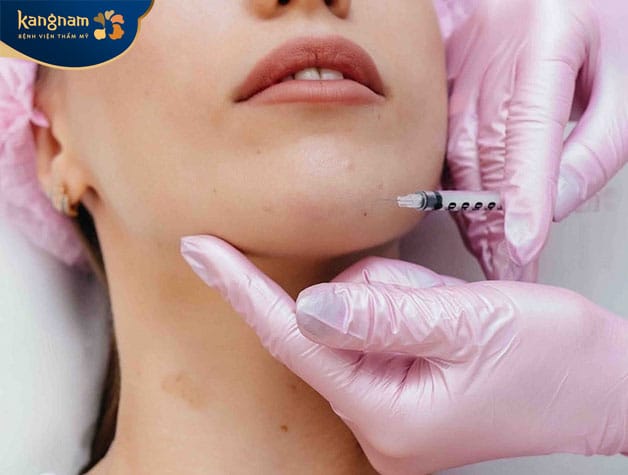
Chin filler is a minimally invasive cosmetic treatment that may help create a slimmer and more proportionate chin without surgery. It may be suitable for:
Chin filler may not be suitable for everyone. Patients with active skin infections, certain autoimmune conditions, blood-clotting disorders, allergies to filler ingredients, or other relevant medical conditions should be assessed carefully before treatment.
Ms Jolie Nguyen, a 24-year-old patient living in the Czech Republic, was considering chin filler to achieve a more defined V-line profile. However, she was concerned about how long it would take for the chin to settle after treatment.
According to Dr Donald Trung, a specialist in maxillofacial and aesthetic surgery at Kangnam Aesthetic Hospital:
“Most patients can return to their normal activities within a few hours after the injection. Mild swelling, tenderness, or bruising may still be present. The filler commonly begins to settle within 24–48 hours, although the final appearance may take several days or longer, depending on the filler product, the amount injected, the patient’s tissue characteristics, and their individual healing response.”
The initial settling period is usually one to two days, but mild swelling may continue for several days. Patients should follow all aftercare instructions and avoid pressing or massaging the treated area unless specifically instructed by their doctor.
If swelling does not gradually improve, or if the patient develops increasing pain, skin discoloration, pus, fever, visual disturbances, or unusual bruising, they should seek immediate medical assessment. These symptoms may indicate infection, vascular compromise, or another complication requiring urgent treatment.
Before treatment, the doctor will examine the patient’s chin, assess their facial proportions, and recommend an appropriate filler product and injection volume.
The total cost depends on:
In many cases, approximately 1–2 cc of filler may be required for chin augmentation. At Kangnam, the listed price ranges from approximately VND 5 million to VND 14 million per cc, depending on the filler product.
| Filler product | Estimated cost | Procedure time |
|---|---|---|
| EPTQ filler – South Korea | VND 5 million/cc | Approximately 20 minutes |
| Genyal filler – Switzerland | VND 10 million/cc | Approximately 20 minutes |
| Teoxane filler – Switzerland | VND 9.4 million/cc | Approximately 20 minutes |
| Juvéderm filler | VND 12 million/cc | Approximately 20 minutes |
| Aquamid filler | VND 14 million/cc | Approximately 20 minutes |
Prices may change over time and may vary depending on the treatment plan. Patients should contact Kangnam directly for the most up-to-date quotation.
Kangnam Aesthetic Hospital has provided aesthetic services to domestic and international patients for many years. Patients choose Kangnam for several reasons.
The filler products used at Kangnam are supplied by established manufacturers and have clear product labels, batch information, and traceable origins.
Before treatment, the doctor will recommend a suitable filler based on the patient’s facial anatomy, desired outcome, medical history, and budget.
Patients should always ask to see the original packaging, product name, expiration date, and batch number before the filler is administered.
Chin filler procedures at Kangnam are performed by trained medical practitioners with experience in facial anatomy and aesthetic injection techniques.
A thorough understanding of blood vessels, nerves, soft tissue planes, and facial proportions is essential when injecting the chin. Accurate product placement can help improve aesthetic outcomes while reducing the risk of asymmetry, nodules, vascular complications, and other adverse effects.
Kangnam is equipped with medical facilities and technology designed to support patient assessment, treatment, monitoring, and follow-up care.
Modern equipment may assist doctors during consultation and treatment planning. However, patient safety and treatment results still depend primarily on accurate diagnosis, appropriate product selection, sterile technique, and the practitioner’s clinical expertise.
Kangnam offers additional support for overseas Vietnamese patients who plan to return to Vietnam for aesthetic treatment.
Depending on availability and the selected service, support may include:
These services may help patients arrange their treatment more conveniently and reduce unnecessary waiting time.
Patients may experience improvements such as:
Treatment outcomes differ between individuals. Results depend on the patient’s original anatomy, the filler product, injection volume, treatment technique, and individual tissue response.
Chin filler can enhance facial contours, but it cannot produce the same structural changes as chin implant surgery or corrective jaw surgery.
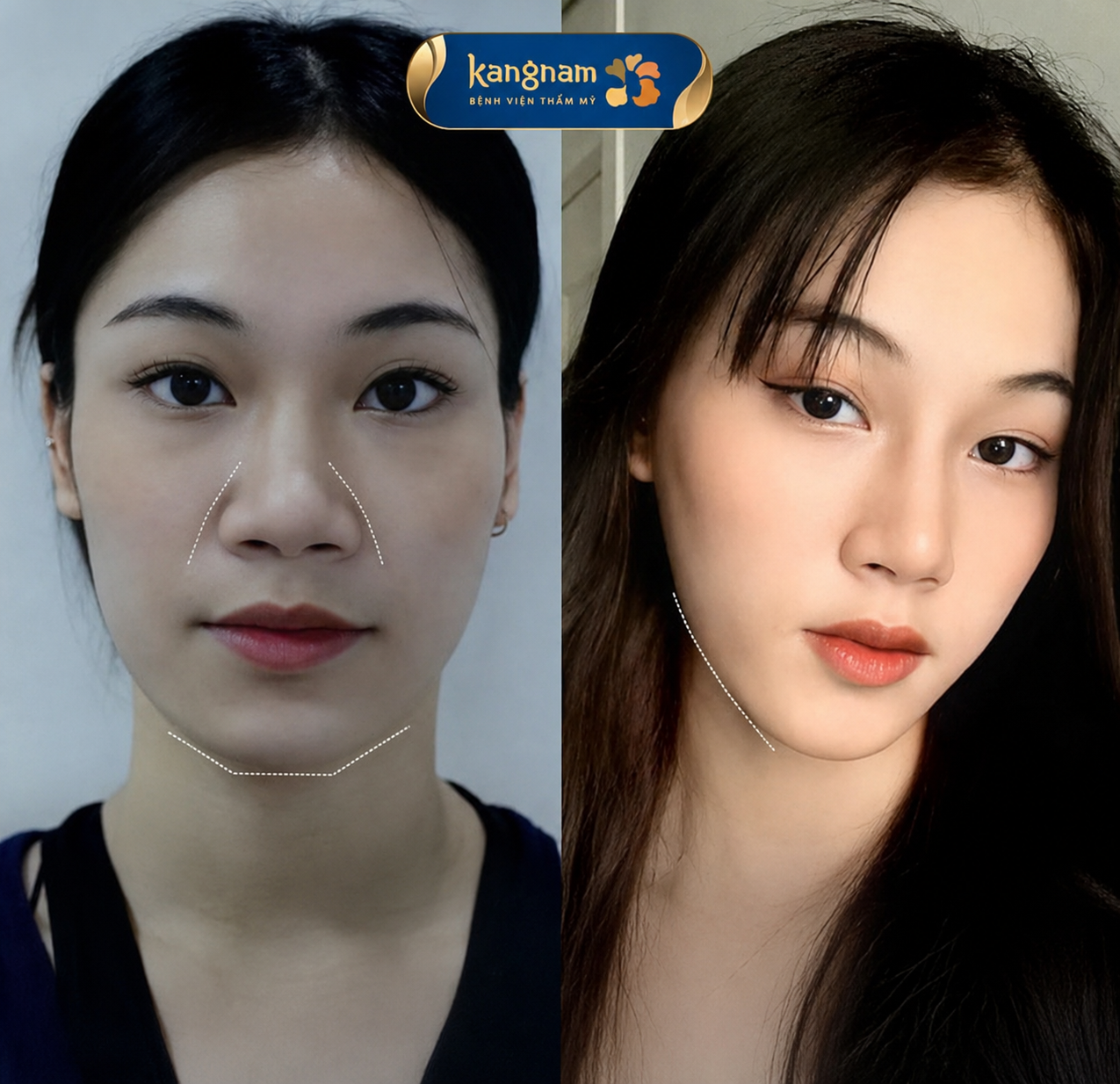
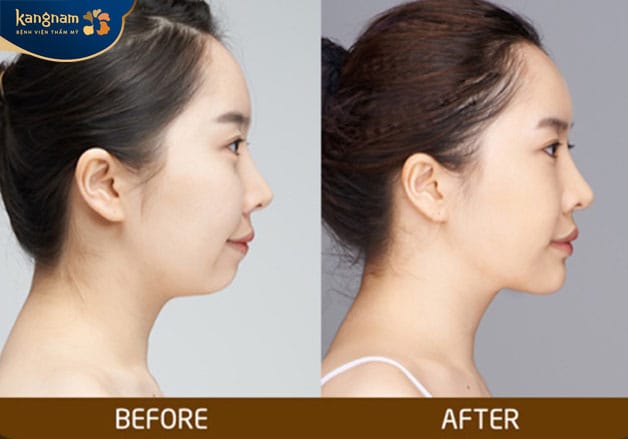
Customer results after chin filler treatment at Kangnam.
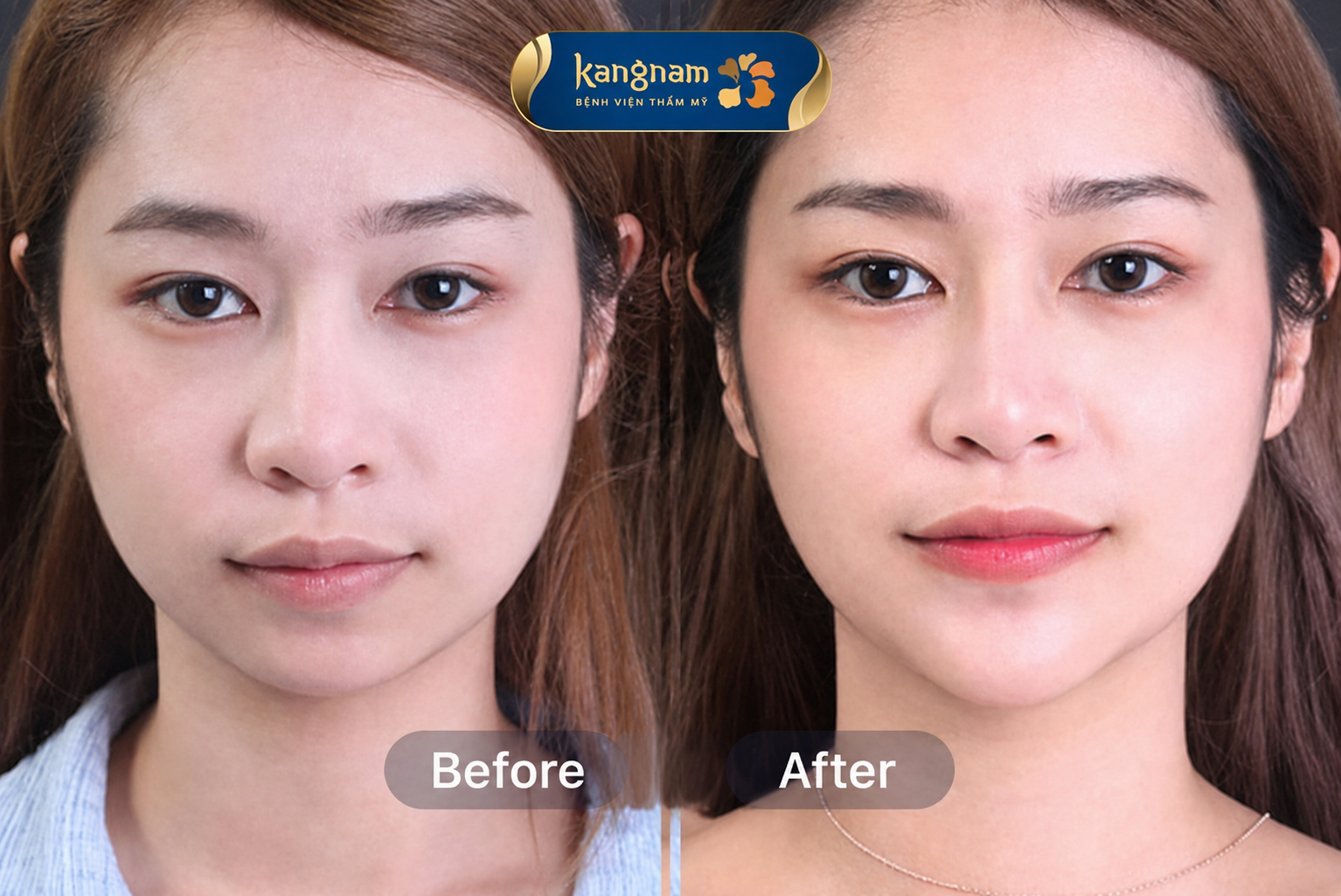
The chin appears more projected and proportionate following treatment.
Hyaluronic acid chin filler is generally considered safe when an approved product is administered by a properly trained medical practitioner.
However, no injectable procedure is completely risk-free. Possible side effects and complications include:
Patients should avoid unlicensed facilities, unqualified injectors, unusually cheap services, and filler products with unclear origins. Counterfeit or non-approved products and incorrect injection techniques may significantly increase the risk of serious complications.
The longevity of chin filler varies depending on:
Many temporary hyaluronic acid chin fillers may last approximately 9–18 months. Some products may last for a shorter or longer period.
The filler is gradually broken down and absorbed by the body. Maintenance treatment may be considered when the effect begins to diminish. Patients should not undergo repeat injections too frequently or without reassessment by a qualified practitioner.
Permanent or semi-permanent fillers may have different benefits and risks and should be discussed carefully with the treating doctor.
Although chin filler is minimally invasive, appropriate aftercare is important.
Patients should:
There is generally no strong medical evidence that every patient must routinely avoid beef, chicken, sticky rice, or water spinach after filler injections. Dietary restrictions should be based on the patient’s allergies, medical condition, and their doctor’s specific recommendations.
Chin filler injection is a quick, minimally invasive treatment that can improve a short or mildly recessed chin and create a more balanced facial profile.
Despite being a non-surgical procedure, chin filler still carries potential risks. Patients should choose a licensed medical facility, ensure that authentic filler products are used, and have the treatment performed by a qualified practitioner with a thorough understanding of facial anatomy.
A detailed consultation is necessary to determine whether chin filler is appropriate and whether the expected results can be achieved safely.
How Long Does It Take for Filler to Settle?